
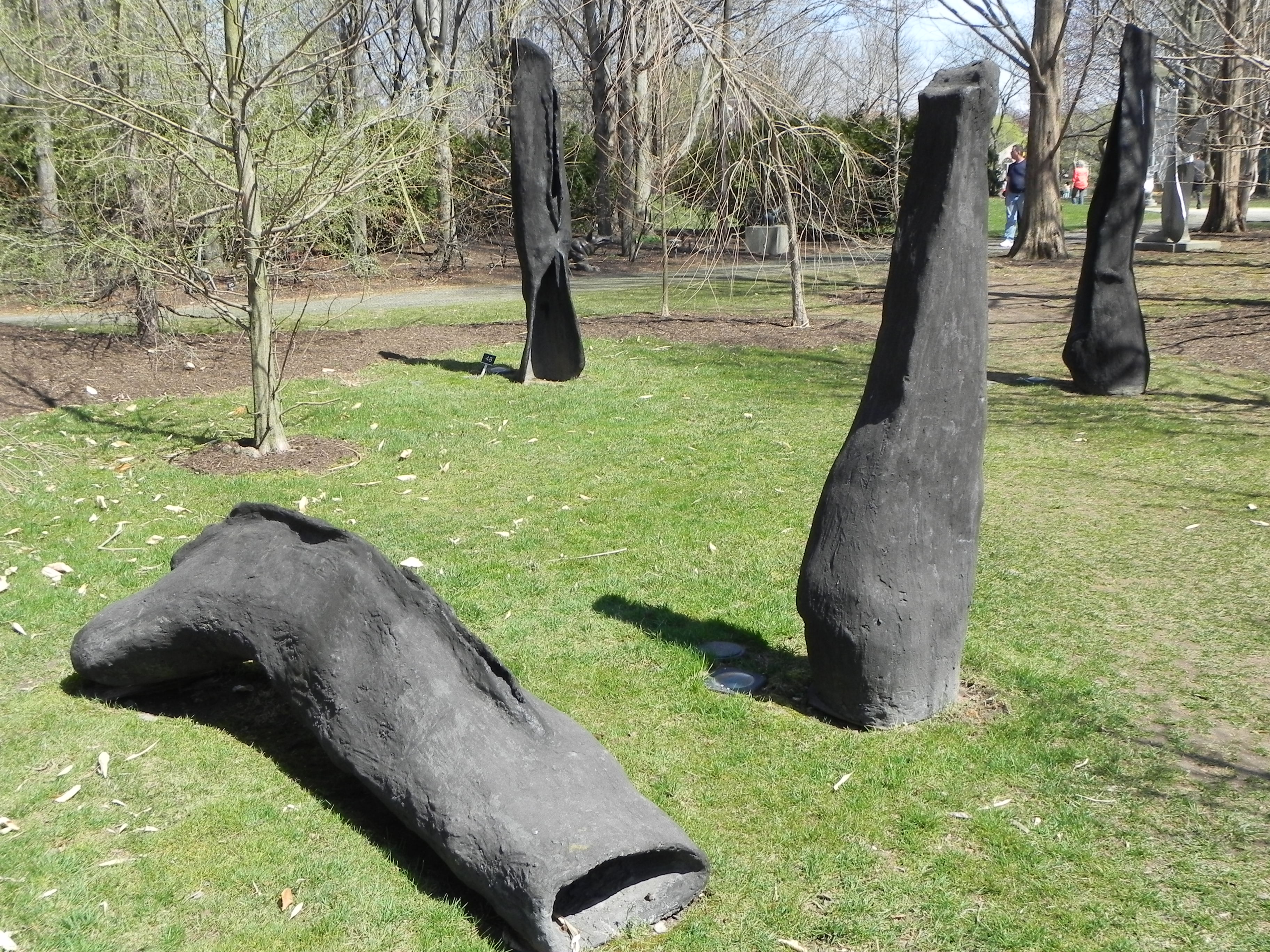
Asherah has, from lack of new material, fallen into a quiet retirement among the gods. For a while there no shortage of new books appeared, including my first, which explored many aspects of this shy goddess. While academia has pushed her to her logical limits, she has thrived in the world of popular imagination. I was reminded of this during a recent visit to Grounds for Sculpture, a whimsical park in Hamilton, New Jersey featuring the work of many artists. The appreciation of art works on many levels. A piece of sculpture can take on new meanings when viewed from different angles, and a piece that seems to make no sense can become imbued with meaning when new perspective is added. Sometimes it is the title of the sculpture. A friend had pointed out to me last year that one of the artworks was entitled, Excerpts of a Lost Forest: Homage to Ashera, by Tova Beck-Friedman. Ironically the sculpture is from the same year as my finished dissertation on Asherah, a continent away. I must have seen this sculpture many times, but without knowing what it was, had paid no attention.
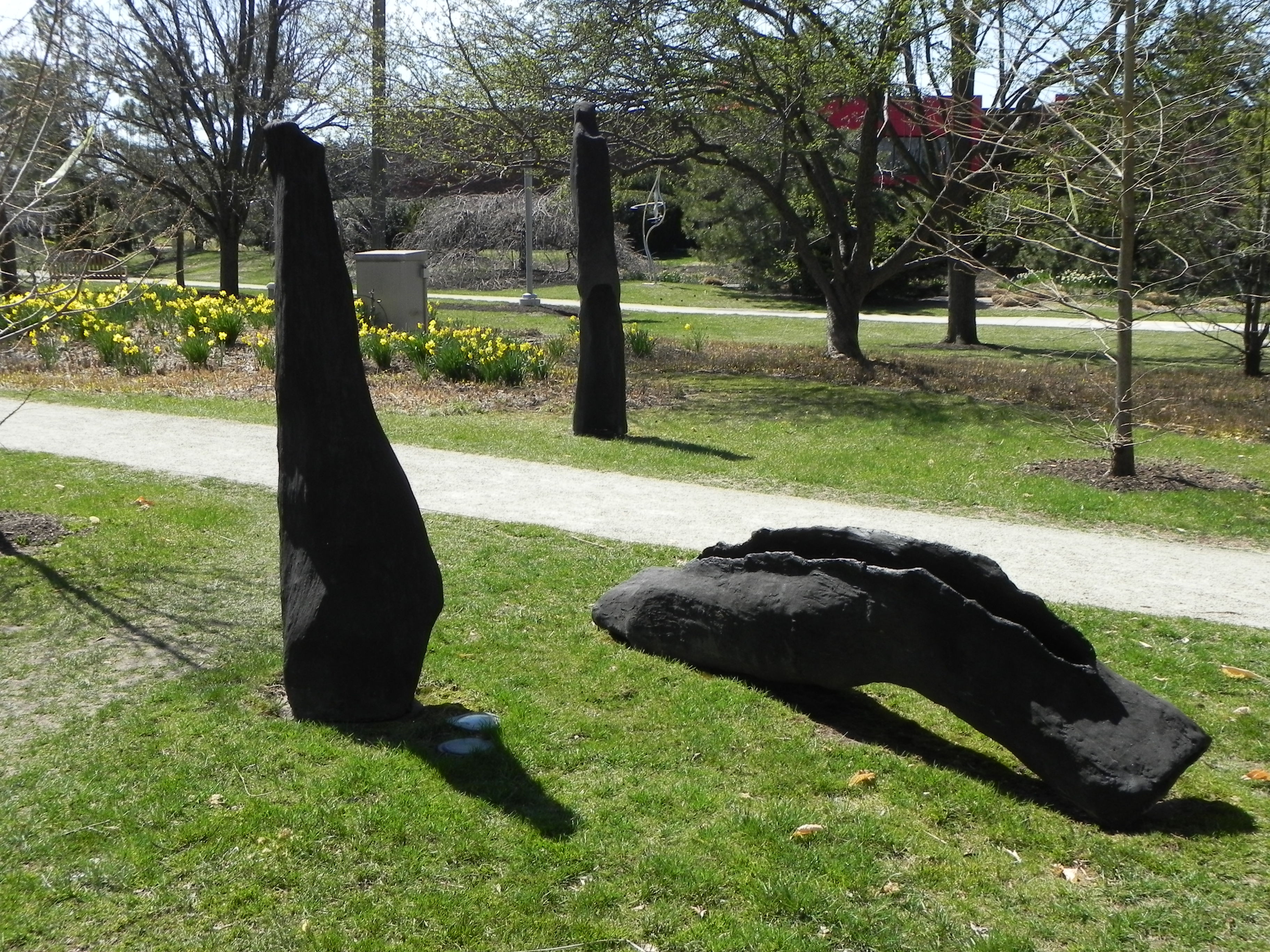
Asherah is often considered a goddess of trees. My research indicated, however, that such an association was premature. Of course, any discourse that has the Harvard University stamp of approval is decidedly fact, despite contrary evidence. Nevertheless, the dendrite nature of the goddess has persisted into popular culture and even into the world of abstract sculpture. The loss of a forest is, no matter whether goddesses are involved or not, tragic. Asherah has become the protectoress of trees.
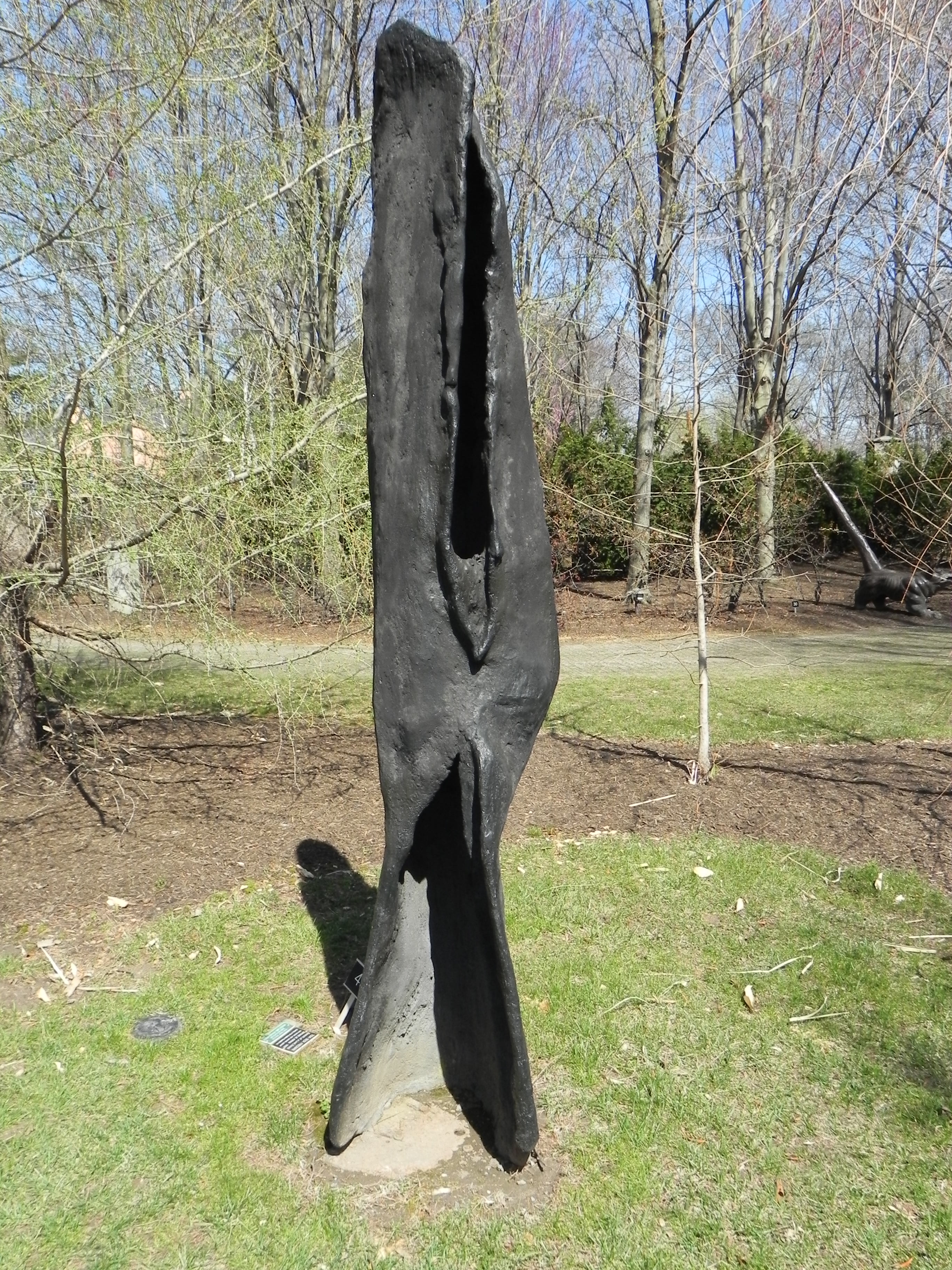
The nature of this particular lost forest isn’t clear. At first it might appear that a fire has gone through, claiming the vitality that once thrived in green leaves and mottled bark. I sense that something more is happening here. Asherah is, above all, the divine female. Here single-most constant role in antiquity was as the spouse to the high god. The loss of the forest still speaks to the on-going repression of women. We like to think that our society is headed toward equality, but progress is painfully slow. As usual with lack of momentum, religious institutions lead the way in conservatism. In the largest Christian body in the world, and in some of the fastest growing religions on an international scale, women are kept from leadership roles on the basis of gender alone. Monotheism declares there’s one god for two sexes. Those who experience life from the other side are like trees falling in the forest. We still don’t know if anybody hears.
 Steve A. Wiggins