Through the Woods

The thing about appreciating bad movies is that it’s difficult to be disappointed.  On a recent weekend I’d watched a horror film that didn’t sit well with me (or maybe it was the last night’s supper), and I decided I needed to see something else.  Something that was free on my streaming service.  I’d read about Transylvania 6-5000 someplace, but I couldn’t remember where.  The list of stars won me over: Jeff Goldblum, Ed Begley Jr., Jeffrey Jones, Geena Davis, Michael Richards—why don’t more people talk about it?  Because even for a comedy it has trouble working.  Well, a horror comedy, to be precise.  Emphasis on the comedy, which tries too hard.  I couldn’t get over the fact that this was a tall guy movie—Goldblum, Begley, Jones, and Richards are all over six feet tall.  Usually other actors literally have to look up to them.
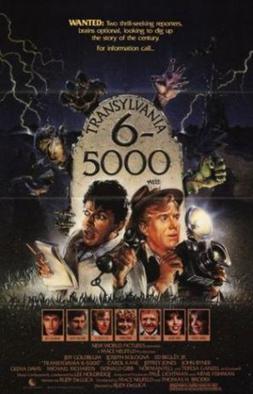
Even though it’s a groaner, it’s not without worth.  It was filmed in what used to be Yugoslavia when it was rare for anything to come from behind the Iron Curtain.  Set in Transylvania, it wasn’t too far off.  (Transylvania is located in Romania, of course.)  Some of the performances aren’t bad, Davis’ vampire nods to Frank-N-Furter in Rocky Horror, and Carol Kane is fun to watch as Lupi.  The male roles are generally the problem.  In case you’re wondering, the plot is that two reporters—Goldblum and Begley—are sent to Transylvania to find a story.  The locals laugh at them, insisting Transylvania’s a modern country with no monsters.

When the classic monsters do appear, they all have rational explanations.  There are riffs off vampires, werewolves, Frankenstein’s monster, swamp monsters, and the mummy.  There’s even a mad scientist.  The problem is the movie really doesn’t give itself over to either comedy or horror.  There are ways to make that combination work.  And, as with C.H.U.D., the title put me off.  I didn’t know until reading about it later that it was also a riff, but from the Glenn Miller song “Pennsylvania 6-5000.”  I’d never heard the song before and was unfamiliar with its title.  Rudy De Luca, the director, had worked with Mel Brooks and perhaps if they’d collaborated on this one the results might’ve been better.  So, it’s a bad movie.  That doesn’t mean it isn’t worth watching.  Movies like this sometimes serve as an homage to the monsters with whom we grew up, and who even met Abbott and Costello in their own lifetimes.  Just be prepared not to take it too seriously and not to laugh too much.

November’s Vampires

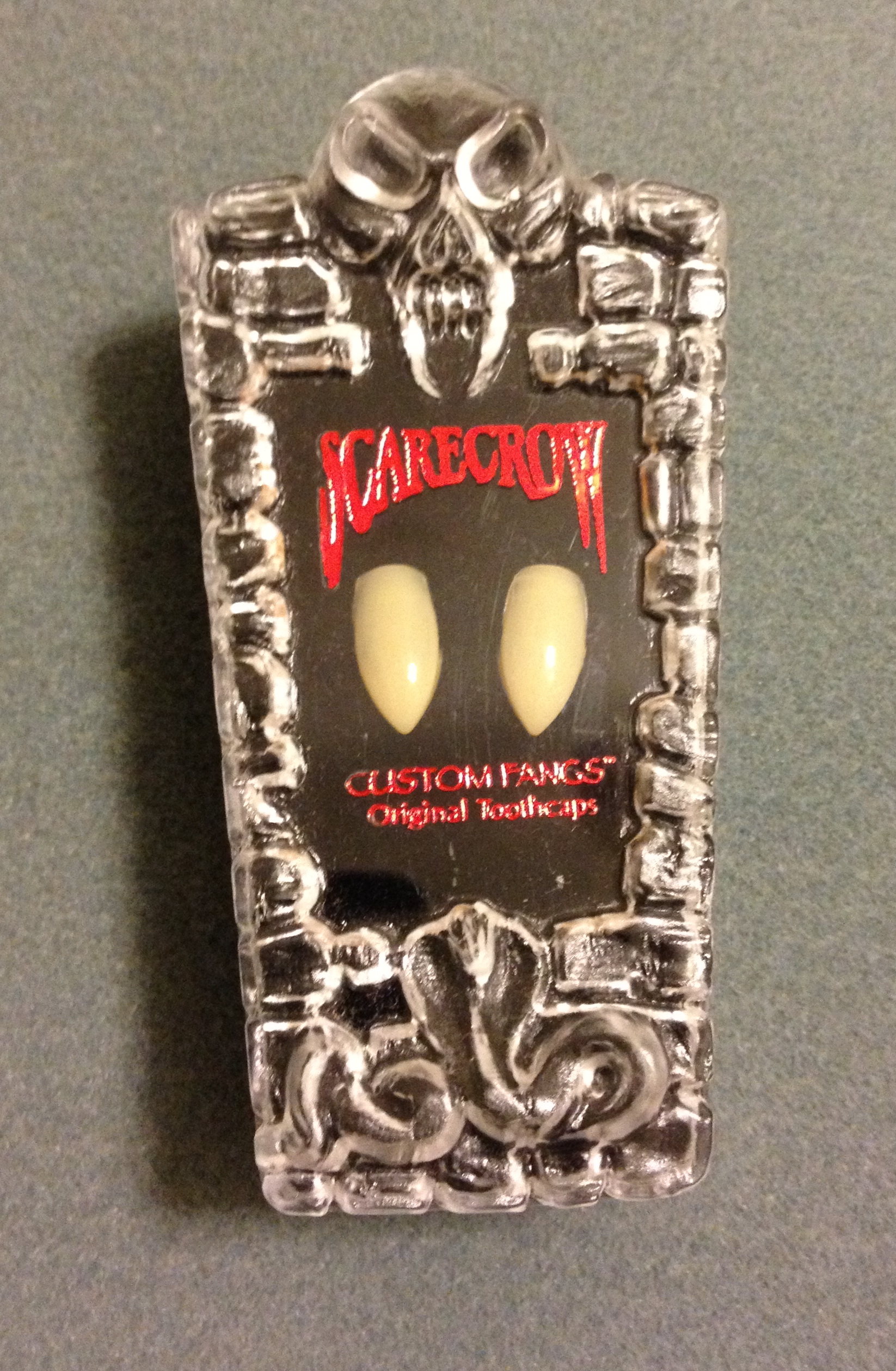
It may have been the year without a Halloween here in the northeast coastal region of the United States, but it looks like some of the spirit has persisted into November. My daughter was disappointed when, due to storm damage, our local borough cancelled Trick-or-Treating for this year. So I was intrigued when I spotted a news story yesterday discussing Prince Charles’ relationship to Vlad the Impaler, the historical Dracula of yore. (And a good Christian by his own reckoning.) I wondered about the timing of the story until I noticed the gothic script on Google’s search page and realized that yesterday was Bram Stoker’s 165th birthday. Well, it would have been, supposing that he has remained dead since 1912. Completely unrelated to this anniversary, I read Dracula again in September through October and realized just how religiously charged a story it is. The Church of Ireland, to which Stoker’s family belonged, was Anglican in name and identified with both Catholic and Protestant traditions. In Dracula the more Catholic side seems to predominate.

Prince Charles’ connection to Vlad Tepes suggests perhaps a deeper meaning. The short news clip I saw (I can’t recall which network it was on) noted that the connection is being promoted by Romanian tourist agencies. Nevertheless, Prince Charles appears in the material acknowledging his hereditary connection to Vlad III, and noting that Transylvania has much to teach us. (He goes on to explain that the people of Romania have a lot to teach other Europeans about sustainable practices.) I could not help but note the irony of a member of the royal family, however, inviting comparison with a character who came to be known as the drainer of other people’s blood. Taking that which by no rights belongs to them.

Perhaps it never occurs to those with great wealth that what they amass is absconded from others. In a world that holds to a social contract that values money—which is merely a symbol—for some to have excess means that others will have less than adequate amounts. I’ve always had trouble understanding such selfishness. Perhaps it was being raised in a Christian environment with siblings with whom I was expected to share. Maybe it was just a part of the sober assessment of the social injustice I began to notice when I was a teenager. Somehow I’ve never felt entitled to much, but I do wonder how others can justify taking more than they need while knowing that many others suffer from real want. It is a matter of degrees, I realize, and we all do it to some extent. I have never complained about taxes because I know that my eyes too may be blinded by the beguiling glitter of gold. When the very wealthy don’t pay taxes (not pointing any particular fingers here), they too, like Prince Charles, may claim to be true descendants of Dracula.

Just add vampire of choice