Is the Truth Under There?

Each semester I introduce my Hebrew Bible students to the dangers of “biblical archaeology.” Not that there is any wrong-headedness in excavating sites of importance to ancient Israel, but I warn them of requiring proof for religious beliefs. Early archaeologists digging in the lands of the Bible were open about their agendas — “proving” the Bible to be “true.” The problem is proof is certain only in mathematics, not in matters of faith. Truth cannot be known, but must be believed. When archaeologists excavate the unknown, they cannot know in advance what they might find.

As a young academic wannabe, I volunteered at Tel Dor in the summer of 1987. Before the introductory orientation sessions Dor was only a shadow of a reference to one of King Solomon’s administrative cities mentioned in 1 Kings; I knew nothing of its location or importance. I’d had enough of seminary to be skeptical of many truth claims even then, and the irreverent outlook of many of my fellow diggers underscored the secular nature of the venture. We were digging for the truth, but we might not recognize it when we found it. Apart from the scorpions and tarantulas, we unearthed many mute trinkets from Israelites silenced by time. My square team was assigned to the city gate; we were seeking the coveted fourth chamber to place the city in a Solomonic context.

To the best of my knowledge, our humble efforts did not prove the Bible was true. After manually hauling out tons of dirt, we found what appeared to be a gate chamber and perhaps even a rubbish heap. Of these two features the rubbish heap was the more interesting to me. Here it was that the cast-offs of ancient life had been consigned to oblivion only to be rescued by bewildered strangers far in the future. Truth is often in what we hide. It may not be glamorous or worthy of biblical paeans, but it is that part of our lives that we discard. Finding “Solomon’s” gate proved nothing, but what “his” people threw away contained nuggets of the truth.
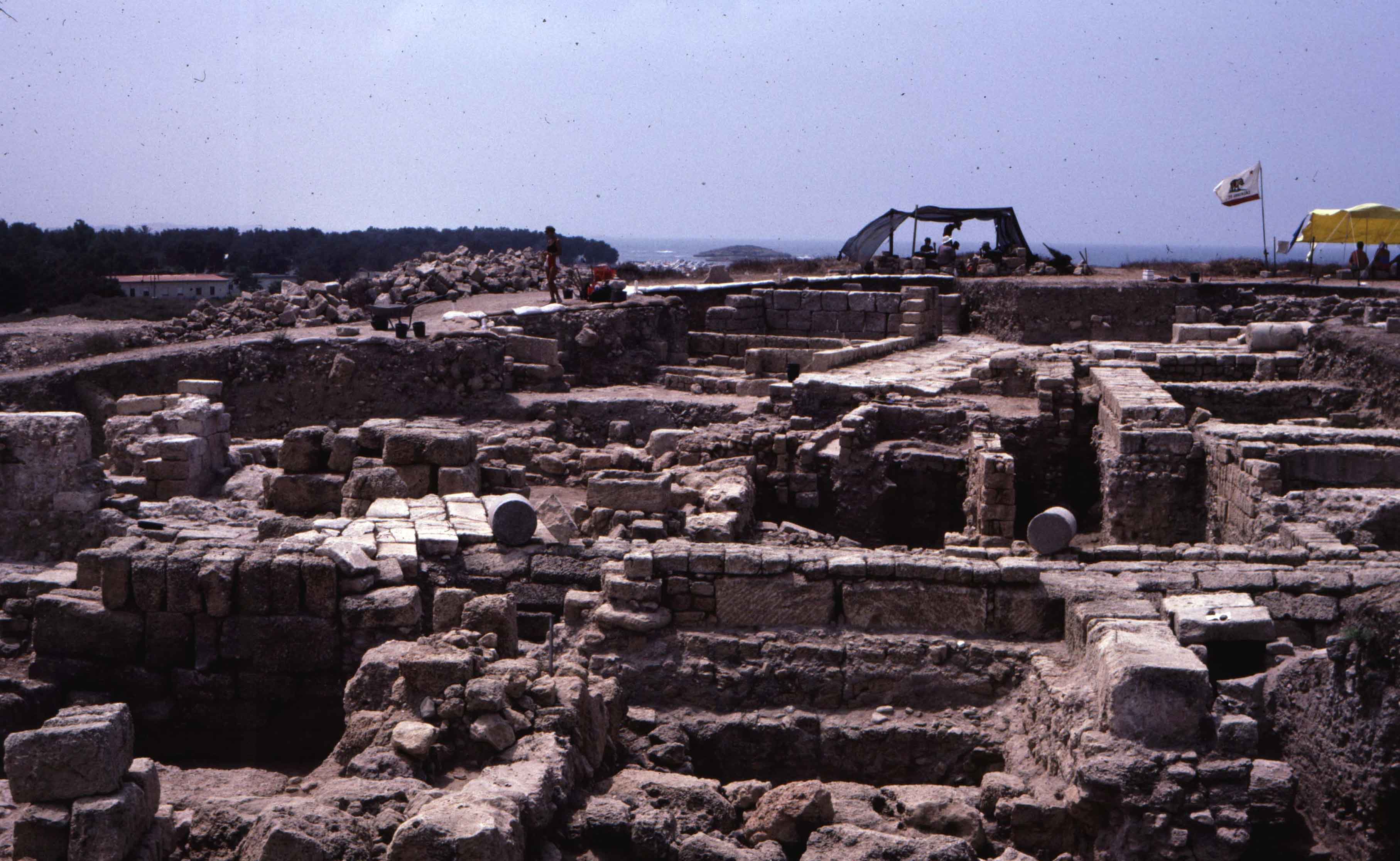
Is the Truth Under There? Tel Dor 1987

Ortho-right or Ortho-wrong?

As a child reared in a seriously religious household far, far away from anything with even a whiff of orthodoxy about it, my first encounter with this traditional form of Christianity involved more curiosity than fear. What was this religion that claimed to go back to the very earliest apostles? Did Jesus wear one of those unusual hats? I never recalled seeing paintings of Peter, or Mark, or even Thomas wearing a medallion of the theotokos. Apparently I’d been routinely misinformed. The haunted, deeply spiritual grimaces on the faces of orthodox students my age were almost intoxicating. It was all new and exotic to me.

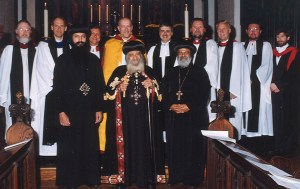
Several years later I find myself having been subjected to a variety of orthodoxies and the only thing they seem to have in common is the conviction that all the others are wrong. I once had a boss who was enamored of Greek Orthodoxy. (I later learned that this is the gateway orthodoxy, leading to more foreign strains.) Presently his interest shifted to the Russian variety and I eventually found myself cowering in the glare of the Coptic Pope Shenouda III’s eminence. How had a kid from humble beginnings come so far? A couple jobs and a few hundred miles later, my new boss turned out to be Syriac Orthodox. Phone calls to the office would come in languages I’d never even heard before. Being a northern European mutt, maybe I was simply jealous of the pride of ethnic purity. No fancy traditional dress to haul out for exotic dances at annual celebrations of mutthood (Lederhosen and stuffy tweed, anyone?)

Basking in the eminence of the Coptic Pope

Basking in the eminence of the Coptic Pope

All of this exposure to orthodoxy has led to heterodox thoughts in my heretical brain. It seems that the basic premise of orthodoxy is that the final truth was revealed just once, up front, and it left no room for growth. The expectation that Jesus would shortly be back didn’t leave much space to consider what complications would set in once people developed nuclear weapons, landed themselves on the moon, or devised genetic engineering. Complexities and complications that early Christianity could never have foreseen chaw like ravenous beavers on the stilts propping up this edifice. I am a firm believer in religious freedom and have never urged anyone to change her or his personal faith. But I do seriously wonder how any religious system, in the light of our limited brains, could ever expect anyone to believe that it had comprehended the whole of all truth for all time. It is all too wonderful for one condemned by a birth outside of ethnic Christianity.