Scary Television

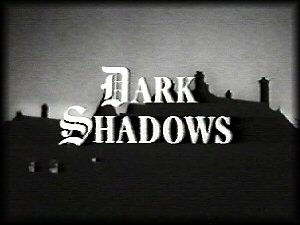
Since noting some months ago that I’d discovered Dark Shadows on Amazon Prime, it’s no surprise that I’m squeezing in an episode here and there, where I can.  Amazon begins “Season 1, Episode 1” at the point Barnabas Collins appears.  This was actually ten months into the daily, but it saves a few hundred dollars buying the DVDs.  I honestly remember little more than impressions of the soap opera from childhood.  I can’t say which episodes I saw during the initial run, but I do know that they were formative in my appreciation of horror.  It turns out that many famous people in various media were childhood fans of the show.  It certainly wasn’t the slickest production but it manages a mood that’s difficult to match.  It’s what Edgar Allan Poe called “effect,”—he felt that a short story should maintain a single effect, something that he did most notably in his macabre tales.

I recently watched, in Amazon’s numbering (and I realize Amazon didn’t come up with this, it was a rebroadcast release that someone decided should start when the show became popular) episode 22 in season one.  This particular episode surprised me in that it actually had a legitimately scary ending.  Now, soap operas are very slow unfolding of stories, as most television watchers know.  Things don’t change quickly and action-packed content requires a lot of time to set up and film, whereas daily shows simply don’t have the time to do that.  They rely on people being drawn into the story and wanting, needing, to find out what happens next.  By episode 22 the savvy viewer had already figured out that Barnabas Collins was the vampire.  Nobody had explicitly said so yet, however.

Maggie Evans, his favorite victim, has been “ill” in bed from loss of blood.  Under Barnabas’ spell, she sends away her boyfriend and Victoria Winters—the original impetus for the entire series—has come to sit with her through the stormy night.  As the two women argue about the proper care for Maggie’s condition, the storm continues, flashing lightning through the French doors in Maggie’s room.  The wind blows the doors open and a flash of lightning shows the silhouette of Barnabas standing in the garden.  I have to admit, even at my age and with my background of horror movie watching, that moment scared me.  The genius of the show is that Barnabas is such a likable character.  As the narrative develops, as it does beginning in episode 23, we come to see that Barnabas is a sad, reluctant monster.  Perhaps if I’ve time enough, I should write a book about it.  But then, I barely have a moment to squeeze in an episode now and again.


Being a Fan

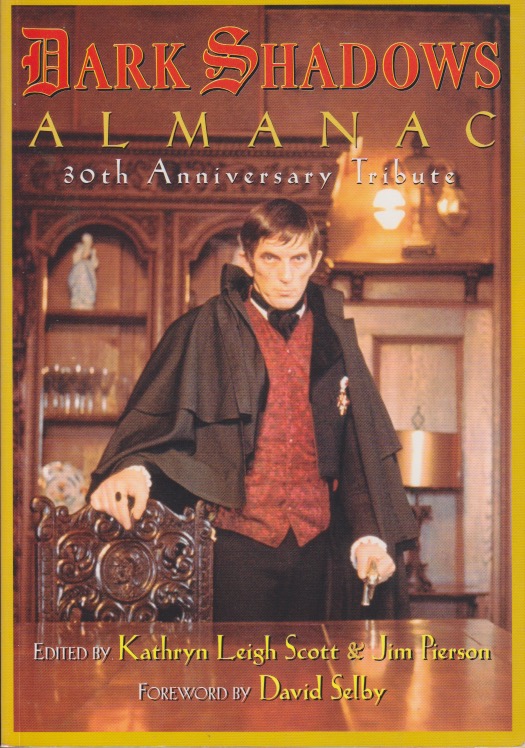
Fandom is a weird thing with me.  Having wide-ranging interests, coupled with an at times obsessive personality, my likes are intense but fall short of the kind of fan who purchases everything associated with their fascination.  A friend kindly sent me the Dark Shadows Almanac, edited by Kathryn Leigh Scott and Jim Pierson.  I try my best to read books friends  send me, and working my way through the Almanac, I realized just how far short of real fandom I fall.  Dark Shadows was likely my gateway to horror.  Watching it after school is one of my early memories.  But I was quite young at the time and beyond Barnabas, Quentin, the wonderfully gothic house, and the opening music and waves crashing into the rocks, specifics didn’t last.  Dark Shadows was one of the earliest fan-congregating shows.  Before Comic-Con, there were Dark Shadows conferences.  Kids eagerly bought all things Barnabas related.

I was about seven when the show hit its zenith.  I do remember watching it, and the wonderful, creepy feeling it gave me.  As a child I couldn’t have named any of the actors.  A lot was happening in my life at the time.  My mother was divorcing my alcoholic father.  My grandmother, who lived with us, lay bed-ridden and dying in what had been our dining room.  We lived in a run-down old apartment with very little money.  Heavy stuff for a kid.  And television also offered funny shows in the evening.  And Saturday morning cartoons (which included, yes, Scooby-Doo). I’ve always been amazed at just how much stuff there is in the world and I yearn to understand it deeply.  It was probably pretty much fore-ordained that I would try to be a professor.

Reading the Almanac not only reinforced how influential the series was, it also made me aware of just how complicated producing a television show is.  Many, many people are involved, specialists in artistic and technical fields.  Most of them make modest livings with, if they’re lucky, mentions in the credits.  The stars we know.  I think, for me, Barnabas Collins was a father stand-in.  What I noticed, even as a child, was that he was sad.  A certain type of person is drawn to sad individuals.  I always want to cheer them up because I know how it feels.  This is the part of me that wanted to be a minister.  I tried that a number of times but it never worked out either.  Reading an almanac like this isn’t really a deep intellectual exercise, but it is a learning experience.  And one of the things we might learn about is ourselves, whether a true fanatic or not.


Childhood TV

It’s probably safe to say that most Americans my age were influenced by television when they were young.  Since I’m a late boomer, I fit into the “monster boomer” category and I suspect that if you gathered us all in a room you’d discover we had some of the same watching habits.  I confess to having watched a lot of TV.  I will also admit that some of it was absorbed particularly deeply.  I mean, I liked shows like Scooby-Doo, Jonny Quest, Get Smart, Gilligan’s Island, and even The Brady Bunch.  While I still quote from a couple of these from time to time, they never penetrated as deeply as a number of other early fascinations.  I saw nowhere near every episode of The Twilight Zone, but those I did see absolutely riveted me.  They still do.  As an adult I’ve read many books on or by Rod Serling.  There’s depth there.

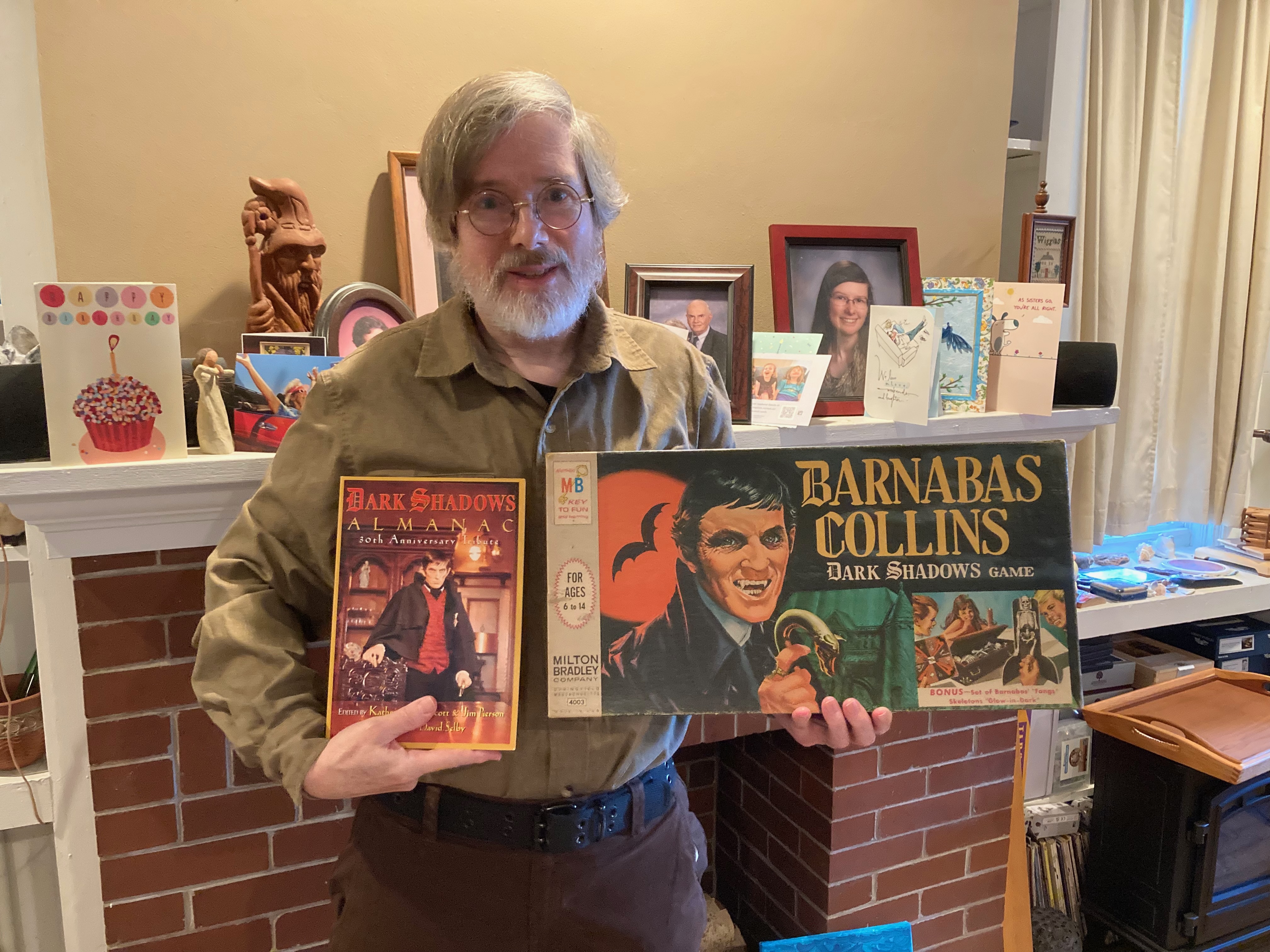
Another strong contender for real influence is Dark Shadows.  Again, I never saw all the episodes but it created in me a feeling that no other television show did.  My breath still hitches, sometimes, when I think of it.  I watched the show and I bought used copies of the novels by Marilyn Ross.  As an adult I even collected and read the entire lot of them.  And I’ve read a book or two about Dark Shadows.  And one about Dan Curtis, the creator of the series.  Recently a good friend, aware of this particular predilection, sent me the Barnabas Collins game and a copy of The Dark Shadows Almanac.  I have to admit that it was difficult to work the rest of that day!

Probably the last very influential television show—more from my tween Muppet Show era—was In Search of…  This I watched religiously, and, like Dark Shadows, I went out and bought the tie-in books by Alan Landsburg.  One thing all three of these series (Twilight Zone, Dark Shadows, and In Search of…) have in common in my life is that I purchased the accompanying books.  Those that I foolishly got rid of when I was younger I have reacquired as an adult.  Sure, there’s some nostalgia there, but these shows were more than mere entertainment.  They have helped make me who I am today (whoever that is).  I rediscovered my monster boomerhood after losing my tenuous foothold in academia and saw that other religion scholars were writing books about these somewhat dark, and deep, topics.  So I find myself with friends ready to help indulge a fantasy and a shelf full of books that many my age would be embarrassed to admit having read.  But chances are they too were influenced by television, even if they hide it better.


Meeting Buffy

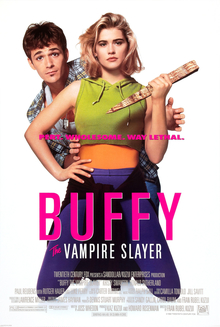
I have a confession to make.  I had never, before just recently, seen any of Buffy the Vampire Slayer.  This is kind of embarrassing because it was being talked about even as I was just starting to teach at Nashotah House.  And it has been discussed in religion and horror books quite often.  I understood that the television series was considered better than the original movie, but I felt that it was important to go to the source, at least to start.  Joss Whedon, it is reported, distanced himself from the film he wrote because it began taking a different direction than he’d envisioned.  The television series, which was praised among any number of critics, was more what he had in mind.  Still, the film isn’t terrible.  The concept of a ditzy blonde being an unwitting vampire hunter is entertaining and Kristy Swanson plays a pretty good Buffy and Donald Sutherland a great Merrick.

Having not seen the series to compare, the movie stands fairly well on its own.  Vampire comedy horrors can be quite entertaining.  The plot here is a bit overwrought and the love story feels tacked on to the vampire narrative.  It lacks the strong through line characteristic of Joss Whedon movies.  So, Buffy doesn’t realize that she’s a slayer, a kind of reincarnated vampire hunter.  Merrick convinces her by telling her what her dreams have been.  And Buffy has preternatural abilities—reflexes beyond human reach.  And the vampires have been awaking in Los Angeles.  The story just doesn’t hold together as well as it should.  I was a bit surprised, however, to find the Bible quoted a time or two.

The charm, which also led me to read about Abraham Lincoln as a vampire slayer, is the unexpected juxtaposition.  A cheerleader, or the best president we’ve managed to elect in this divided country, and vampires?  Even more, vampire slayers?  Vampires, although monsters, are often symbolic and sometimes sympathetic ones.  Buffy’s vampires aren’t charming.  Sometimes funny, yes, but they aren’t the tormented souls that elicit human sympathy.  And Buffy adds its own backstory mythology.  In Dracula Van Helsing was a mortal aware of vampire habits.  Buffy sees this as a predetermined role, specifically female in nature.  I’m not sure if I’ll be able to carve out the time to watch the television series.  But at least, at this point, I have been able to put a bit more flesh on the character of an unlikely vampire foe.  It only took me thirty-three years.


Telling Vision

My wife and I don’t watch much television.  In fact, we had very poor television reception from about 1988 (when we married), until we moved into this house in 2018.  That’s three decades without really watching the tube.  As we’ve been streaming/DVDing some of the series that have made a splash in those three decades, I’ve discovered (I can’t speak for her) that there were some great strides made in quality.  We began with The X-Files, then moved on to Lost.  We viewed Twin Peaks and started to watch Picket Fences, but the digital rights have expired so we never did finish out that series.  (Don’t get me started on digital rights management—the air will quickly turn blue, I assure you.)  Of course, we did manage to see Northern Exposure when it aired, but it should be mentioned for the sake of completion.  These were all exceptional programs.

Netflix (in particular) upped the game.  We watched the first three seasons of Stranger Things (and I’d still like to go back and pick up the more recent ones we’ve missed), and I watched the first episode of The Fall of the House of Usher (I didn’t realize until writing this up that it was only one season, so maybe I should go back and finish that one out too) and was very impressed.  Since we couldn’t finish Picket Fences, we turned to Wednesday.  Now, I was only ever a middling fan of The Addams Family.  I watched it as a kid because it had monsters, as I did The Munsters, but neither one really appealed to me.  Wednesday’s cut from a different cloth.  In these days when escapism is necessary, this can be a good thing.

Photo credit: Smithsonian Institution

Like most late boomers, I grew up watching television.  In my early memories, it’s pretty much ubiquitous.  We were poor, and our sets were black-and-white, but remembering my childhood without TV is impossible.  It was simply there.  The shows I watched formed me.  Now that I’m perhaps beyond excessive reforming (although I’m not opposed to the idea), I’m looking for brief snippets of something intelligent to wind up the day before I reboot to start this all over again.  We save movies for weekends, but an entire workweek without a break in nonfictional reality seems overwhelming on a Sunday evening.  It seems that I may be warming up to my childhood chum again.  This time, without network schedules, and limited time to spend doing it, we just may be in a golden age for the tube.


Television

Television has lost its prominence in the internet age.  Those of us entering the “senior” category of life’s grades were raised on television.  I know I watched far too much as a kid.  Now I consider the wasted opportunity to grow minds, and sensibilities, through television.  Mostly I blame the sit-com.  There’s not much learning going on when someone else contrives scenarios to make you laugh on a weekly schedule.  They are beguiling and I watched more than my fair share of them when I was younger.  Now, as an adult, I value the more profound examples of early viewing.  We didn’t watch The Twilight Zone with the devotion of Gilligan’s Island, but those episodes I did see had a profound effect.  The same is true of Dark Shadows.  One thing these shows had in common was that they were quite literate, eschewing the mindless competition.

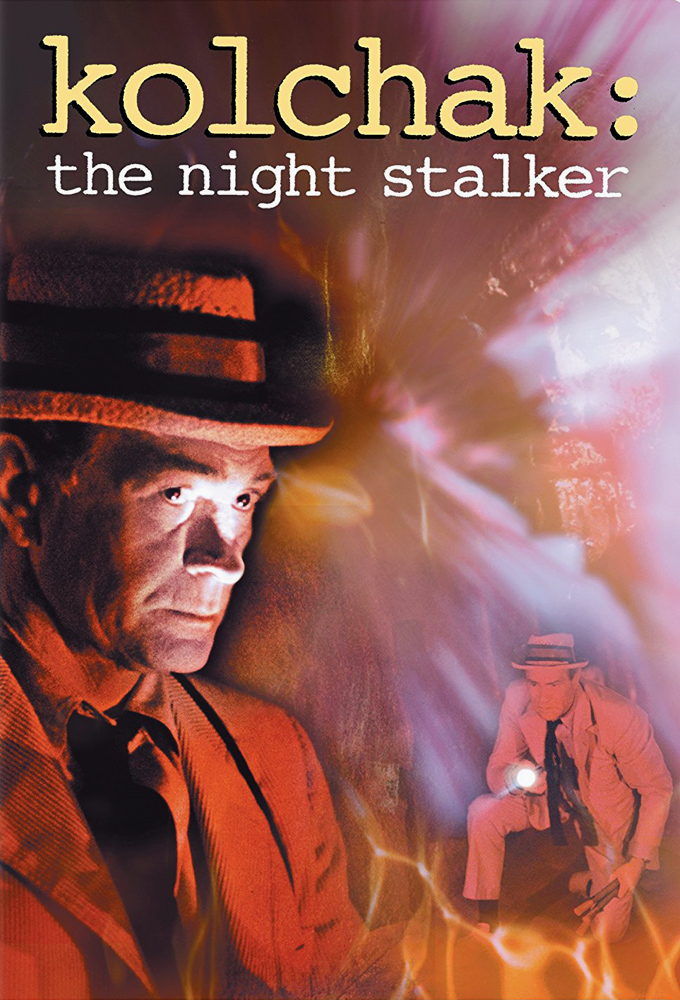
College led to me no longer watching television regularly.  That hiatus lasted until my wife and I began watching a couple of weeklies after I’d return from Nashotah House.  While at the seminary full-time, television reception was quite poor and we tended toward rented movies on VHS.  By the time we moved to New Jersey television had changed so that you needed some kind of magic box to watch even commercial channels.  We relied on DVDs of shows we wanted to see.  That’s how Lost came into our lives.  Now, however, facing senior issues (health, people dying, wondering if retirement might ever happen) I’ve started to revisit television I missed.  The X-Files is pretty prominent.  Being an historian at heart, I’ve been exploring the inspirations for The X-Files, picking up Kolchak: The Night Stalker, and Twin Peaks.  I have to balance this with time for writing since work still claims the lion’s share of my waking hours.

Photo credit: Smithsonian Institution, via Flickr’s The Commons

I’ve lost track of what’s on the tube.  Now we spend workday evening hours watching intelligent television that we missed back when it aired.  We can’t afford it all, of course.  Dark Shadows, for example, has over 1200 episodes and “complete sets” are pricey.  Lost was either a birthday or Christmas present years ago.  I bought The Twilight Zone over a decade ago for a week that I knew I was going to be home alone.  We accumulated The X-Files over a number of years.  Twin Peaks, since it was only two seasons, wasn’t too expensive.  Kolchak is on Amazon Prime.  Many of these shows are a kind of therapeutic watching for me.  Some might call it escapism, but it runs deeper than that.  It becomes part of who we are.


Fun Homework

I recently discussed the two Kolchak movies: The Night Stalker and The Night Strangler.  In those posts I noted that I’d not grown up with Kolchak.  My reason for watching them was part of a self-assigned homework project.  You see, I’d begun watching the series online.  I realized backstory was missing, and, despite what literary critics are fond of saying, I like backstory.  After a couple of episodes I decided I needed to see the movies before moving through the rest of the series.  As it turns out, you can do the movies without the series or the series without the movie.  Regardless, I soldiered on through all twenty episodes.  This series was terribly influential for the kinds of things I eventually cottoned onto.  Kolchak was formative for the X-Files and many “monster of the week”-formatted series.  I felt like a poser having never had watched it.  This telinematic experience was good homework.

Originally a television movie produced by Dan Curtis, of Dark Shadows fame, the first film was successful enough (very successful, in fact) to cause a second one.  The second film also performed well, but instead of a planned third, ABC decided on a weekly series instead.  Only twenty episodes were aired and the run was cancelled before all the ordered episodes were filmed, or even scripted.  Still, this small franchise had a solid following and led to a number of other successful franchises in its wake.  The monsters are definitely fun, but Darren McGavin’s Kolchak does tend to get on your nerves after a while.  Even McGavin was reputedly ready to leave the show as things started to get pretty silly near the end—an animated suit of armor, a very cheap humanoid-alligator, and Helen of Troy hardly seemed conventional monsters.  

In fact, the Helen episode (“The Youth Killer”), although it had a solid premise, didn’t convince that Helen was a monster.  She prays to Hecate to steal the youth of “perfect” young people around Chicago and rejuvenates herself as the twenty-somethings age and die in a matter of minutes.  And a Greek cab driver (former Classics teacher) is the one who helps Carl crack the case.  Famous for its quirky humor, this one just seemed to have all engines fail.  Of course, the series lived on as a cult classic and can be found in a variety of media today.  I’m glad to have had this particular homework assignment.  Television had a number of influential shows in the seventies, and it feels like coming home to have caught up on one that I initially missed.  Even with Cathy Lee Crosby and a monster I just couldn’t buy.


More Than Dark Shadows

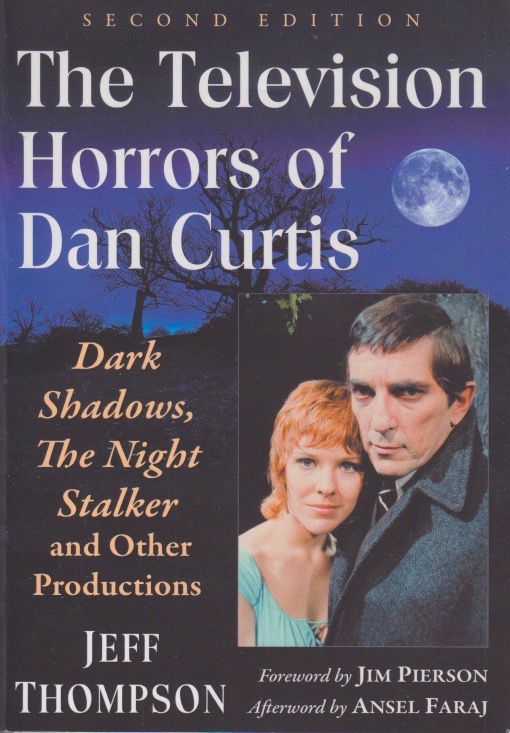
The Television Horrors of Dan Curtis is one of those books that makes me feel less alone.  Jeff Thompson is not only a true fan of Curtis’ voluminous quality output, but he knows more about Dark Shadows than might seem possible.  I knew I wanted to read this book as soon as I learned of it.  As I’ve confessed many times before, although Dark Shadows was formative for me, I’m a mere dabbler.  I saw a fair number of the original run on afterschool television, I read the novels, but I never dove in.  I was more of a wader.  Still, this book demonstrates that many people were influenced by Dark Shadows, some that you might not expect.  But the book is about Dan Curtis and his horror work (mostly).

Dan Curtis went on to a kind of fame for his war epics (considered “serious” work), The Winds of War and War and Remembrance.  Although he directed some theatrical movies (all of which I’ve seen), he mostly stuck to work in television.  One of the results of this is that he never attained the level of appreciation of a number of auteurs who focused on Hollywood.  And it’s also clear that Curtis was interested in more than just monsters.  I personally dislike gangster and war movies (although my great-uncle Melvin Purvis was one of his interests).  Curtis found them worth of his considerable talents.  As Thompson makes clear, however, even as his own death was approaching, Curtis knew that, like Washington Irving, his early work would be that for which he was remembered.  That’s because Dark Shadows went where nobody else dared to go, and it’s memorable even today.

I learned a lot from this book.  Enough to know that Curtis was an enigma.  He remains less recognized as a director and producer than many Hollywood personalities that are household names.  Still, if pressed, a number of people even today would recognize some of Curtis’ work, whether or not they associate it with him.  Dark Shadows went through a short television reboot, for instance, and a second reboot attempt before being made into a movie by Tim Burton.  This book, however, made me watch some movies I had only known vaguely before.  And it has inspired me to watch others as well.  Curtis was an incredibly hard worker, and a man with definite opinions.  It’s perhaps a bit surprising that he never really attained the kind of fame that other “content producers” did.  Even his Wikipedia article is brief.  This book helps uncover a large amount of information behind a person who influenced many people without the glamour associated with that level of impact.


Holy X

It took several years, but we finally closed the X-Files.  It was shortly after we bought the house, I believe, when we decided to watch the series the whole way through.  This was prompted by my wife giving me season eleven as a present, and I was wondering if I’d lost track of the thread.  We recently finished the last episode of the last season, with the movies interjected into the correct locations.  It was an impressive franchise.  I didn’t watch The X-Files when it originally aired.  We didn’t watch TV in those days (Nashotah House didn’t have cable and reception was awful), but another reason was that I was unmercifully teased for being interested in such things as a kid, and now it was trendy.  Once I got started, though, I was hooked.

Copyright: FOX; fair use screen capture

A few things struck me this time through, but one of the bluntest instruments to hit me was just how profoundly religion was interlaced with the series.  Many episodes involve religion directly, and others address faith and belief, even if outside the confines of established religion.  Since I tend to pause to reflect, I come a bit late to the table most of the time.  If I’d been on the ball, and if I’d begun writing books on horror sooner, I might’ve found a project in the religion of the X-Files.  As it is, several books have been written analyzing the series.  Maybe that’s where I’ll turn next.

You see, the original projected end for the series was season seven in 2000.  The mythology was wrapped up, and David Duchovny was leaving the show, which was, in essence, the story of Fox Mulder.  Two more seasons were ordered, however, with Fox on the run.  Things again were wrapped up in season nine.  Season ten came to air in 2016 and we watched it in real time, with primitive streaming.  In 2018, however, moving ended up being chaotic, and any watching would have to wait.  It seems pretty clear that, even with endless resurrections of the Smoking Man—Mulder’s Darth Vader—that the crisis of the world’s end (on which season ten ended) had finally been resolved.  That season, however, was eerily prescient regarding the pandemic.  Season eleven was a strong pushback against the Trump presidency with its “fake news” and constantly shifting facts.  Many of the episodes note how dangerous this is.  At the end it seems that the miraculous son, dead and resurrected, immaculately conceived, survives, as do the father and, if it’s not reading too much into it, a holy spirit.