
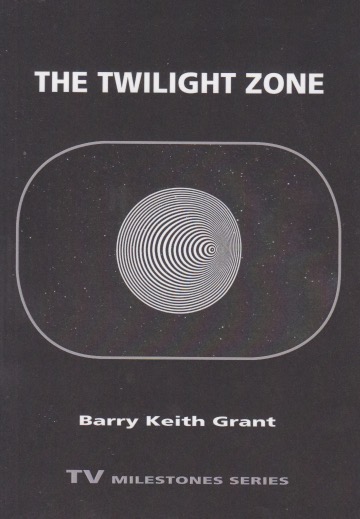
An unenviable task, it must be, to try to sum up The Twilight Zone. Barry Keith Grant, however, has done an admirable job in this TV Milestones volume. He addresses in a forthright way one of the questions on my mind quite a bit as of late—what are the borders of genre? For a creative species such as our own, with imaginations that range far and high, we blend unlikely ingredients. The Twilight Zone had finished its initial run before I ever watched television, but I was around to catch early reruns. Their focus on the weird, the unusual, the twist ending, informed my childhood love of the strange. They also helped shape my imagination. This little book helps to capture some of that.
I haven’t watched every episode of the series yet. I’ve been making my way through it slowly since I really don’t have much time for watching, and I tend to give priority to movies. Still, The Twilight Zone was one of the most influential television programs of all time, as Grant demonstrates. Although he tries, it may be impossible to determine just why so many people use it as a frame of reference. Even with my penchant for analyzing, I can’t work out what it was about those disparate, discrete episodes that so captured me. Perhaps like most influences, it was specific episodes that hit very deep. That showed new ways of thinking about things. That opened up worlds of possibilities.
I was exposed to Serling’s stories not only through my own reading, but also through school. I have no hope of remembering what grade it was in, but in one of my English classes we were assigned “The Monsters Are Due on Maple Street.” I was probably lost in the haze of puberty and adolescence at the time, but I remember well how that story made me feel. And the teacher pointing out how people behaved when they were afraid. Perhaps appropriately, Grant ends his book with a quote from that very episode. Others, however, stayed with me as well. Perhaps that’s the thing that’s so remarkable about the Zone—some episodes are not easily forgotten. We’re accustomed to the flood of anodyne media that dowses us with entertainment of little consequence. Some Twilight Zone episodes were that way as well. But when we experience something significant, we tend to remember it and remember it well. So many episodes did that kind of work on a mind too young to make lasting life decisions. I guess I’m still waiting for Mr. Serling to step into frame and explain it.
 Steve A. Wiggins