Staunching Stigma

Independence Day is not a great movie.  As my readers know, that doesn’t stop me from watching.  I’ve seen it a few times.  Watching it post-UFO/AUP disclosure via the New York Times, I was struck by something.  Even in the diegesis of the movie, where alien craft, clearly visible, hover over major cities, when Russell Casse tells the military he’d been abducted, people roll their eyes.  Of all the stigmas our culture has invented that of the “crazy people” who see “flying saucers” is one of the deepest and most persistent.  Even after the Times, and the US Navy admitted they were real, and their tech is not of human origin, people refuse to believe.  I’ve followed this for some time.  I read a book by Donald Keyhoe before I was old enough to drive.  Like most thinking people on the topic, I kept quiet about it.  Stigma.

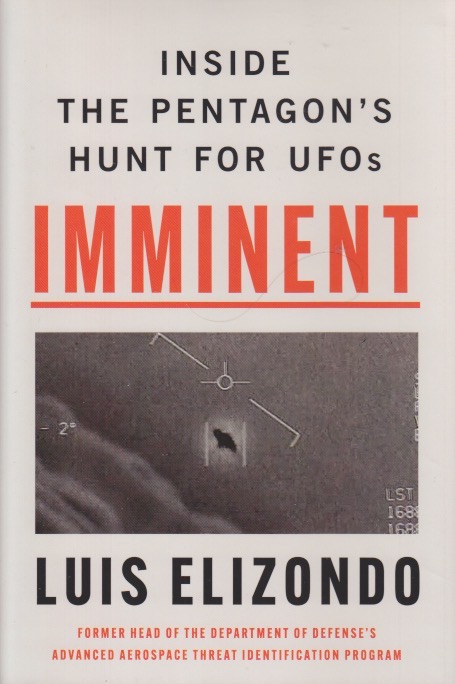
When I received Luis Elizondo’s Imminent for a Christmas present, I was secretly very pleased.  You see, the evidence has been in plain sight (Poe nods knowingly) for decades, for those who don’t accept ridicule as an immediate response.  The Keyhoe book I read was published in 1955.  It was my grandfather’s book.  For sure, the stories casting doubt on Elizondo’s reputation and sanity began almost immediately after he cooperated with journalists in 2017 when a fraction of the truth made the New York Times.  Between Keyhoe and Elizondo, many insider, “death bed” books had revealed that this was something we should pay attention to.  People laughed.  Oh, we love to laugh.  Imminent, however, is quite a sobering book.  I’m not sure full disclosure will ever happen, but it’s trickling out and a finger in the dam can’t hold forever.

Stigma as a means of social control is unfortunately effective.  I’ve always felt that mocking what you don’t understand is a poor way to get smarter.  Still, for those willing to consider the evidence over the years, there’s been plenty to study.  Either there’s something to this or our government and military are filled with pathological liars (outside the Oval Office, I mean).  It seems far more reasonable to examine the evidence, when it becomes available.  There are contractors in the military-industrial complex (Eisenhower warned us about this decades ago) who benefit from keeping secrets.  Imminent is an eye-opening book.  Hopefully it will be widely read and the implications taken seriously.  It’d be too bad if a catastrophe were necessary to stop the stigma, after it’s too late to do anything about it.
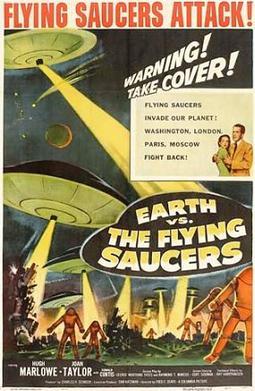

Alien Invaders

I’ve been pondering genre for some time now.  And since Stephen King assures me (not personally) that Earth Vs. the Flying Saucers is horror, I figured I’d give it a try.  In fact, given the various themes of the movie, I’m surprised I hadn’t seen it before.  The title pretty much gives it away—aliens try to take over Earth with a swarm of flying saucers.  Two scientists figure out how to make their saucers stall, and even though the aliens have a disintegration ray that pretty much destroys anything, the earthlings prevail.  Having summarized it all in less than a hundred words, is there really anything worth comment here?  I think so.

Like many older movies this one makes use of stock footage to fill in action sequences and to keep the budget reasonable.  So there are big guns going off and rockets being launched.  (This was a pre-Sputnik movie and it depicts America having eleven satellites in orbit.)  But the additional footage that stayed with me was a scene of two planes colliding and crashing.  It was clear these weren’t models and the footage was authentic, apart from the flying saucer shooting the planes.  It turns out that this scene was indeed real, and that the pilots of both planes died in the crash.  During an air show outside Spokane, Washington in July 1944 this collision was caught on film by a Paramount news crew and it was reused in this film.  This got me to thinking about war footage—something that really only became possible in the Second World War.  And what we now see today in real time on the internet because the world is wired.

It’s as if those who wage war are fine with it as long as people with a conscience don’t know what happens.  There’s even a phrase used to excuse unspeakable barbarism during combat: the haze of war.  This we know about our species—there’s a tipping point beyond which rationality shuts off and we’re no longer responsible for our behavior.  We also know that war puts people in that zone.  It was fine as long as only surviving warriors were left to tell the stories of their bravery.  Photographing, particularly in motion pictures, combat revealed a much darker truth.  Well, at least in Earth Vs. the Flying Saucers the enemies under attack were fictional.  Except.  Except, some of the casualties were real people whose final moments were caught on camera.  Be sure to get out and vote today, if you’re in the United States.  There’s a party even less understanding than aliens out there, desiring to take over.


Revisiting Witch Mountain

Suspension of disbelief is essential for many movies.  When a friend pointed out that Disney had rebooted Witch Mountain, of course I suspended.  Recast as a new millennium-style action sci-fi movie, it really didn’t rock the critics, but there’s a lot going on in it.  Shall we start at the beginning?  The opening credits sympathetically establish the reality of UFOs as alien visitors to Earth.  In other words, we know from the beginning that the kids are aliens, not witches.  And the chasing begins immediately and doesn’t let up.  Not only is the government after the kids, so is a “bounty-hunter”/“terminator” from their home planet.  A body-building cab driver and an ostracized academic (with you there!) work to get the kids back to their ship, which is being held by said government in Witch Mountain.

In a nod to the original an RV is thrown in, and the setting at a Los Vegas UFO convention ads a kind of surreal twist. That’s what was kind of disturbing, in my experience—the blending of “nut job” UFO enthusiasts and the reality aspect prompted by the prologue.  UFOs, like most things in American culture, have become extremely divisive.  With nods to everything from The X-Files to Close Encounters, and many enthusiastic high-fives to Star Wars, there are mixed messages and there’s too much going on.  It’s difficult to process.  The cameo by Whitley Strieber was a nice touch.  Long gone are the locals with shotguns trying to find witches.  Witch Mountain itself is a government facility more secure than Area 51.

The reimagining of the story is signaled by the change of title to Race to Witch Mountain.  So the story seems to have gone off the rails at some points.  I always find movies where people faced with the obvious “supernatural” simply refuse to believe, fascinating.  It is, after all, about belief.  The plot, with its “our planet is dying—yours is too” message, is a bit tricky to decipher.  There are those convinced that we need to abandon Earth to other worlds where we can continue our acquisitiveness unhampered, and those who believe we should repair the damage here.  As I say, everything is divisive.  Overall, the movie seems to say that the system kinda works, so let’s keep with it.  And wreck lots of stuff along the way.  I couldn’t help but notice the borrowed trope from Pirates of the Caribbean, “You’re a good man, Jack.”  It seems Jack is a favored protagonist name.  And strange things like that happen on planet Earth, at least seen through the Disney lens.


Unidentified

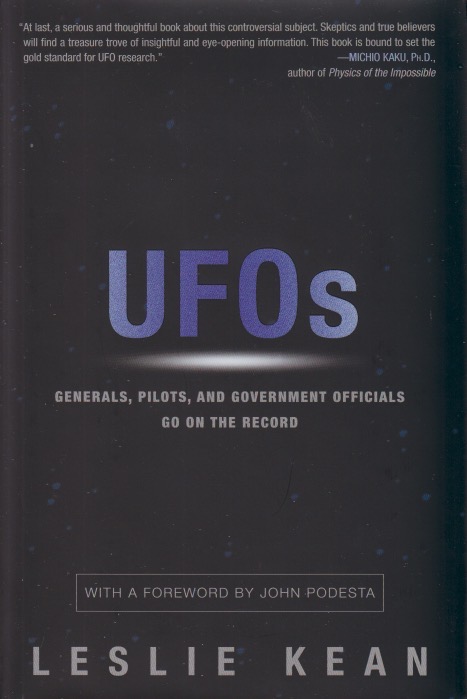
Some topics are subject to ridicule.  The poster child for this is UFOs.  What’s so remarkable about Leslie Kean’s book is that she began as a skeptic.  She points out that before a sea change takes place intense ridicule against the new idea is normal.  Then Kean did an extraordinary thing—she actually looked at the evidence.  UFOs: Generals, Pilots, and Government Officials Go on the Record is a remarkable book.  It’s filled with stories of the power of conversion.  Many UFO experts were skeptics at first, completely dismissive of the phenomenon, until they took a close look.  Official government files, even those available to the public, demonstrate the reality of UFOs.    Interestingly, as Kean highlights, the average person now no longer really requires convincing.  The elites (government officials, scientists, and mainstream media) are slow to accept the fact that UFOs/AUPs exist, even if we can’t say for sure what they are.  And they still like to poke fun.

Skepticism is necessary for science.  We can’t simply accept anyone’s word for something.  Kean’s book, which contains pieces written by an international group of high-ranking witnesses, points out that strong evidence does exist.  And it is possible that some group (not “the government”) does have more information than they’re sharing.  I also found it interesting that a number of countries—many, in fact—treat UFO reports from pilots seriously.  In the UK they are required to report them, for example.  In the United States, they are instructed to keep their mouths shut.  They doesn’t stop them from seeing what they do, however.  Still the ridicule taboo remains.

Ridicule of what we don’t understand must be a deeply ingrained defense mechanism.  As Kean notes, it took centuries before a heliocentric model was accepted.  People laughed.  And as recently as the nineteenth century it was considered impossible for rocks to fall from the sky.  Paradigms had to shift.  Meanwhile, people laughed.  We seem to have an aversion to anything in the sky other than God and angels.  Even in current models that assure us that the universe above us stretches on to infinity.  The only one “up there” is divine.  So we laugh at anyone who’s mastered the skies.  Until we catch up.  Heavier than air flight was impossible in my grandparents’ lifetimes.  People laughed at the idea.  It took me over a decade to find the courage to read this book—it made a little splash when it came out, but it didn’t change much.  Until the U.S. Navy fessed up.  Other countries had already done so.  Maybe we should see a psychologist about that laughing reflex, though.


Upon Further Occlusion

Admittedly the source is GBN, but the headline is irresistible: “Nasa ‘quietly funding’ theological conferences amid ‘demonic’ UFO fears.”  Essentially an interview with Nick Pope (no relation to “the Pope”), the story posits that NASA has been spending on theology because of fears that UFOs might be demons.  Nick Pope is a recognized ufologist, but the story doesn’t state where he acquired the information on NASA’s spending habits.  Pope did work for Britain’s Ministry of Defence, and has had a long-standing interest in UFOs.  And some US congressional members have stated that they believe said UFOs are demons.  I’d still like to see some documentation, however, before accepting that NASA’s paying for conferences in a discipline that’s on decline in academia.  Seems a little difficult to believe.

It also seems like this would be a more exciting theological conference than the one I attend.  Perhaps even stranger than UFOs is the use of the word “theology.”  In British English the word tends to mean what “religious studies” means in these (still) United States.  American English understands theology to be a distinct part of religious studies—the discipline that is occupied with philosophical questions within a specific tradition.  The one probably most familiar is Christianity, where historical theology and systematic theology are often on seminary curricula.  I’ve noticed more and more Jewish and Islamic theology cropping up in recent years.  I always take pains to say I’m not a theologian (in the American sense).  Maybe it would just be easier to consider UFOs.

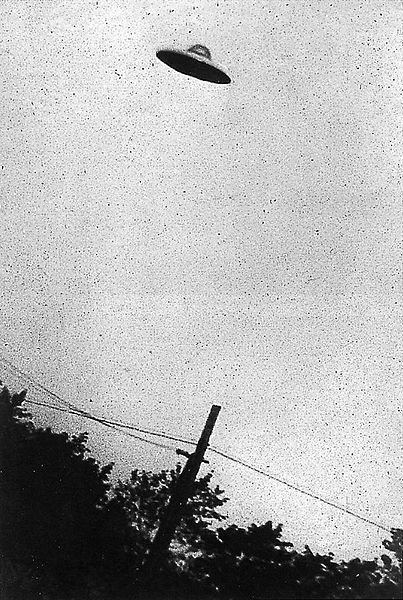
Image credit: George Stock, public domain via Wikimedia Commons

There’s no doubt that theology gave us demons.  One of the points I was trying to make in Nightmares with the Bible is that that’s not entirely true.  Demons came first, and theology later.  People have, historically, always believed there were other entities that behaved with intelligence.  Generally they were more powerful than mere humans.  It was really only around the time that Christianity began that such entities were coded as purely evil.  Those who posit that UFOs are demons really aren’t up on their theology, which makes me wonder what kinds of conferences NASA is spending its money on.  If it is.  This seems plausible because the government often spends on things that are unexpected.  I personally would like to see a bit more of it funneled towards education, but I’m just one voter.  In any case, if there are such conferences, and if they’re British style theology, please put me on the mailing list.


Brain Exercise

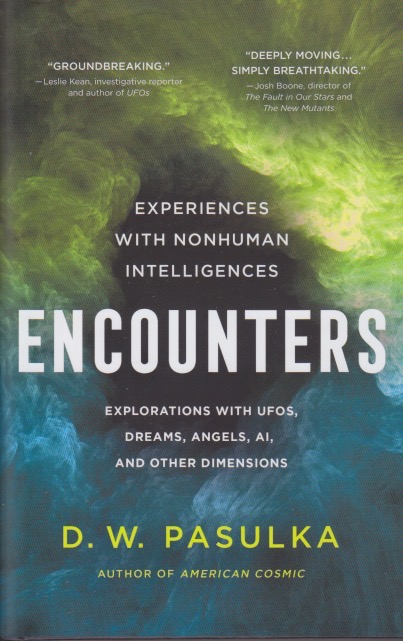
Why do we read, if not to expand our minds?  I’ve read all of Diana Walsh Pasulka’s previous books but Encounters is mind-blowing.  I feel particularly honored that a scholar of religion has been able to put together so many pieces of a very strange puzzle.  Pasulka’s first book was about Purgatory.  Having grown up Catholic that seems a natural enough choice.  Her second book, American Cosmic, focused on a topic that academics were just starting to address at the time—UFOs.  That book justly earned her acclaim.  Encounters takes a few steps further into the mysteries of being human.  Those who experience UFOs have much in common with people who have other extraordinary encounters.  The profiles in this book will give you pause time and again.

Many of us have felt that the unfortunately successful government strategy of ridicule toward experiencers has been a blanket covering up the truth for too long.  I was interested in UFOs as a child and was unmercifully teased for it.  One of the reasons I was interested was that I learned, when I was about eleven, that my grandfather had been interested as well.  I was only two when he died, so there was no way to learn this personally.  It came through discovering a couple of his books that my mother had kept.  Since she was one of five siblings, it’s difficult to say if he’d had any other books on the subject, but being a reasonable kid, I wondered why this was a forbidden topic.  You could talk about ghosts (at least a little bit) and be considered “normal.”  Mention UFO’s and you’re insane.

When the Navy’s video recordings of UFOs—renamed UAPs—were released in 2019, there was silence in the room for about half an hour.  Serious people began to realize there might be something to this.  Of course, those who’d internalized the ridicule response continued to fall back on it, perhaps as a defense mechanism.  That revelation has allowed, however, serious consideration of what is a very weird phenomenon.  I’ve deliberately avoided saying too much about what Pasulka covers in her book.  As I generally intend when I do this, what I’m hinting is that you should read this book.  You should do so with an open mind.  If you do, you might find yourself thinking in some new ways.  Of course, some will ridicule.  Others, however, may walk away with an expanded perception of reality.


First Second

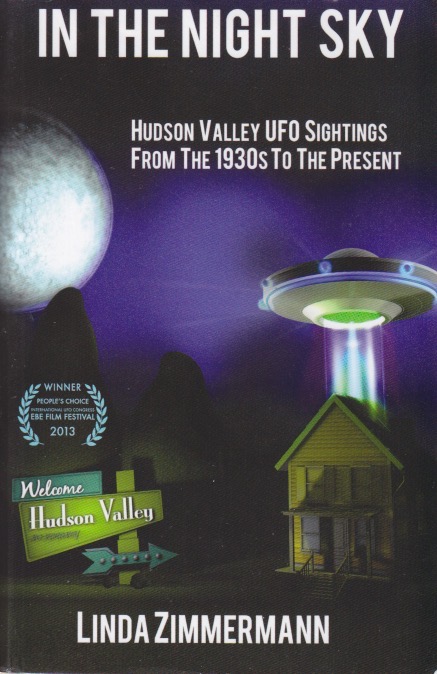
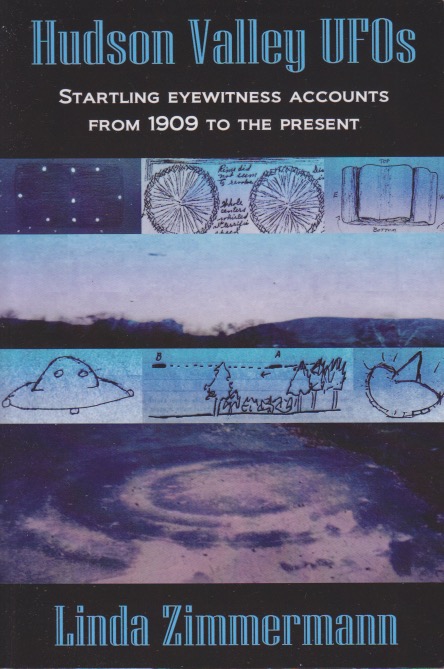
The thing about self-published books is that titles sometimes confuse.  I’d read Linda Zimmermann’s Hudson Valley UFOs without realizing it was a sequel.  Part of the reason is that her previous book was titled In the Night Sky.  Since I have a compulsion for completion, I knew I’d have to circle back to read the first book, even though it might take months to get on my schedule.  I realize the title of this book is based on her documentary by the same title (which seems to be unavailable for viewing these days), and the subtitle, Hudson Valley UFO Sightings from the 1930’s to the Present, does the heavy lifting of saying what the book is about.  So why am I reading about this in the first place?  Well, UFOs have continued to be in the news lately, which is interesting in its own right.  But also I’ve been reading about the Hudson Valley for some time.

Although I’ve never lived in the Hudson Valley (or New York, for that matter), I have family connections.  My maternal grandfather’s family had deep roots in the upper Hudson Valley and I’ve always wanted to move there but jobs never aligned with hopes.  That hasn’t prevented me from maintaining an active interest in the area.  Besides, I like weird stuff—if you read this blog that’s self-evident.  There do seem to be places where strange things seem to concentrate.  (I mentioned this in regard to the Denver Airport recently.)  I’m one of those people who’s always found New York City a weird place, and it’s the southern end of that corridor.

In any case, Zimmermann’s book is pretty much like her second one on the subject.  She provides accounts of UFOs from witnesses who responded to her call for reports in preparation for her documentary.  I tend to think that many people can tell what’s supposed to be in the sky from what’s not.  I’m also aware that many people don’t have the background of trying to identify whatever they see and that mistakes are often made.  It doesn’t help that Zimmermann includes some accounts that are pretty clearly crackpot cases.  Some editing would’ve helped (which is true of many self-published books).  What’s so interesting about this collection is that what many people report seeing is so similar.  For those of us who don’t live in the Hudson Valley and who’ve never seen anything odd on our trips there, this may be the closest we get to the strangeness overhead.


Unidentified

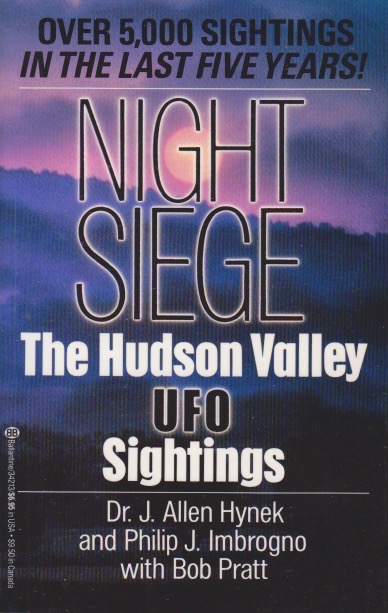
Some places are quite ordinary.  Once you get to know the people, however, you begin to find some oddities.  That’s all normal.  Other places, however, are strange for one reason or another.  One such region is the Hudson Valley in New York.  With all the UFO news the past couple of years, I grew curious about the sightings in the Hudson Valley from about 1983 to 1986.  This was a period when hundreds of sightings were reported of an object flying low and slow, and even hovering, over several locations throughout the region.  They were investigated by J. Allen Hynek and Philip J. Imbrogno, and written up with the help of Bob Pratt.  Night Siege: The Hudson Valley UFO Sightings was published by a mainstream house (Ballantine, a division of Random House).  Not exactly belles lettres, the book is pretty bare bones.  It contains some interesting information, however.

Hynek, who worked for years with Project Bluebook and who was a bona fide scientist, was ailing as the book was written.  Indeed, he died before this book was published.  His name is the big draw, however, since he was a respected authority in the field.  Some questions have been raised about Imbrogno’s accounts of himself, but that shouldn’t take away from the data collected on the Hudson Valley phenomenon.  In short: in a period of mostly two years (1983 and 1984) several “flaps” of reports came in regarding an object that was described in similar terms by hundreds of people, many of them well-educated professionals.  The authorities trotted out mundane explanations that don’t fit the evidence, although even noted skeptics stated that the sightings were unexplainable.  Part of the weird Hudson Valley.

But not just there.  In 1997 a large number of people in Phoenix reported a similar object over Arizona.  This one made national news and even led to stunts by uncomfortable politicians.  We’ve become such an arrogant species that we’re reluctant to admit there are things we just can’t understand, it seems.  Or that there might not possibly be anyone smarter than us anywhere in this vast—indeed, infinite—universe.  I don’t pretend to know what people were seeing in the Hudson Valley, or in Phoenix, but I also don’t pretend that ruling out logical possibilities will give an answer.  I tend to think that when large numbers of people see something that’s unexplained, it’s an insult to our collective intelligence to make up something and refuse to consider the options.  The solution, to me, seems to be to read.  Widely.  Even if it only raises more questions.


Not Just Horsemen

With the way they’ve been in the news, UFOs have started to arouse some curiosity.  Since I’ve been reading about the culture of the Hudson, Linda Zimmermann’s Hudson Valley UFOs caught my eye.  I hadn’t realized that the book was essentially self-published.  There are legitimate reasons for self-publishing, primarily that established presses can be quite standoffish.  What you find in book form is largely determined by publishers who decide what will or won’t merit their attention.  Self-publication comes with its own set of problems, including marketing and, as I written before, lack of editing.  Zimmermann’s book is quite interesting but could have used some editorial attention.  It does aid credibility.  Subtitled Startling Eyewitness Accounts from 1909 to the Present, the book is essentially that, collated accounts, some in their own words, some retold.

As became clear shortly after starting the book, this is a second volume for a previous book that I hadn’t heard of.  There is a fascination reading such accounts.  Many can be dismissed and each should be treated with some skepticism.  The thing is, there are so many reports from this area that it’s difficult to jettison the lot.  People with nothing to gain, withholding their names, see things in the sky they can’t explain.  As Zimmermann points out, Project Blue Book didn’t help with its prosaic and often bizarre explanations that are harder to believe than the eyewitness accounts, many of them from Air Force personnel.  What’s emerged in recent years—some would argue since the end of the Second World War—is that the government actively advocated ridicule and intimidation, perhaps because of secret weapons testing.  This policy has made the truth behind UFOs difficult to excavate.

Books like Zimmermann’s have their place in collecting information.  Civilians, however, generally lack the resources necessary for analysis.  Governments worldwide have recently been coming out of the closet.  They too have been treating this seriously while telling everyone simply to ignore it.  People are curious by nature and we live in an apparently infinite universe.  Strange things happen and ridicule is one of the surest ways to shut down serious discussion.  There’s quite a bit of information in this book, and some of it could help point to the long associations of the Hudson Valley with the unusual.  Mainstream publishers are beginning to lose their shyness about the topic and we as a species don’t know as much about this universe as we think we do.  As long as we talk about what we see, this will remain a topic of interest.


Religion and Its Objects

UFO religions—or should they now be called UAP religions?—have long been of interest to scholars of religion.  A recent piece on Religion Dispatches titled “With Release of Pentagon Report, UFO Narrative Belief System Is Suddenly Supported by Military Witness Testimonies,” by Diana Pasulka, explores this.  Anyone following mainstream media is perhaps experiencing a bit of whiplash on the topic since, prior to admission of interest by the government, the official stance was to ridicule the entire topic.  That’s the reason what were long known as Unidentified Flying Objects now have to be called Unidentified Aerial Phenomena.  Since a government can never admit it made mistakes, it simply changes the terminology.  My interest here, however, is in the connection with religion.

I’ve explored the connection between horror and religion from time to time—ahem—and so it is natural enough to wonder about the relationship between religion and UAPs.  (Or should I stick with UFOs?)  The two have some commonalities.  Initially, both deal with the unknown.  Indeed, the word monster comes from a root denoting an omen, or a revelation.  Something isn’t a revelation unless it’s been keep hidden.  So with UFOs.  The government’s long interest, which had been somewhat successfully hidden, allowed for a reveal.  Religions, however, tend to thrive on hidden things.  The monotheistic religions, for example, claim to inform us about what God has chosen to reveal about (generally) himself.  Even today when pushed into a theological corner, believers will appeal to mystery.  Both monsters and UFOs live in mystery.

Science prefers things out in the light.  Is it any wonder that scientists are reluctant to apply themselves and their hard-earned credentials to the UAP problem?  Those of us in religious studies generally have little to lose.  It’s not like we’ve got prestige on our side, or some billion-dollar grant riding on our reputation.  We can afford to take a look and monsters and other unknowns and see how they trigger the religious impulse.  Pasulka’s article has more to do with credibility.  UFO religions have long struggled with being considered outsider belief systems.  UFOs were publicly ridiculed, so any religion that focused on them was, by extension, laughable.  I’ve long believed that ridicule serves little purpose when it comes to belief systems.  Making fun of a mystery is less common than shaming those who believe in what we’ve been told definitely isn’t real.  Until suddenly it becomes real.  Is there any question why religions develop when mysteries remain?


Laugh Out

Is it safe to discuss this now, or are people going to laugh at me?  That’s the feeling that has attended any talk of UFOs until recent days.  Ironically, if the Ancient Astronaut people are right, we may’ve been visited from elsewhere ever since we’ve called this planet home.  In any case, now that UAPs are out of the bag, some are beginning to discuss how they might impact religion.  (Yes, “impact” can be a verb.)  Thus I came across a story titled “If UFOs are real, how would they impact our faith?” on Times NewsKingsport Times News, based in Tennessee, ran this as an opinion piece.  While not deeply probing, it did raise the question of how all the recent UFO news affects people’s religious outlooks.

Image credit: George Stock, via Wikimedia Commons

As a country we’re both deeply religious and in denial about the fact that we’re deeply religious.  I’m convinced that this is behind the political woes we face: the educated have become more secular and religious literalism is considered laughable.  Yet it’s clearly there.  Ironically, UFOs were considered laughable until the US Navy admitted that they were real and had no idea what was going on.  Laughing at something we don’t understand is hardly ever a step towards enlightenment.  So the article concludes that even if aliens are here, things will be fine if we continue to go to church as normal.  Any extra-terrestrial visitors change nothing.  Strangely, one of my earliest memories is of attending a rural church service one evening where the program was on flying saucers and Christianity.  This was entirely in earnest, and nobody in the congregation was laughing.

Others interested in the topic have discussed religion and UFOs over the years, but perhaps the answer is yet another of those unknowns.  Religion is a remarkably adaptive phenomenon.  Scientists suggest it’s hardwired into our brains, even as those same brains give us evidence that some of those beliefs are misplaced.  What we can’t do is stop thinking about it.  As I watch politics continue to tear this country apart, I realize it’s not really politics we’re talking about after all.  It’s religion.  Meanwhile people are learning that the government has been keeping secrets about what’s up there in the heavens.  There are elected and appointed officials who’ve gone on the record saying they believe UFOs are demonic.  While that hardly seems like a scientific approach to something truly unknown, it is a religious one.  Only those who laugh rather than listen will find this news at all. 


Is This Contact?

And speaking of the X-Files—but ah, I shouldn’t jest!  In fact, I strongly advocate avoiding the ridicule response when a claim seems outlandish.  A few weeks ago I posted on a review of Alan Steinfeld’s Making Contact: Preparing for the New Realities of Extraterrestrial Existence, a book just out.  The review I’d seen made reference to the aspects of religion and paranormal in the book, and given the mainstream media’s treatment of the topic of UFOs lately, I thought I should see what was being said.  As you might expect for a collection of essays, the tome is a mixed bag.  While ridicule is excluded, a healthy skepticism is necessary.  Amid the contributors with known credentials are those who make claims that are difficult to verify.  Much like the rest of life, you’re left making choices.

Amid all of this, where does religion come in?  Books like this often reveal the deep biblical literalism of our society.  Amid the authors who haven’t held government (although that’s hardly a situation where critical thinking is necessary) or university posts, there is clearly the assumption that the Bible is literally true.  Cherry-picked verses are “explained” by the presence of UFOs or aliens, with the supposition that if it’s in the Good Book it must be true.  This kind of simple credulity is quite common, but it does make you wonder if all the homework’s been done.  I know, I know, biblical scholars spoil all the fun!  If one piece of the puzzle doesn’t fit, however, perhaps the picture hasn’t been put together correctly.

That’s not the extent of the religious—or better, spiritual side of the topic.  Many of the essays are written from a somewhat “New Age” perspective with vibrations, and energy, and universal guidance of spiritual beings.  Other essays deal with government whistle-blowers who seem to tell a coherent story of secrecy and deception on the part of those in power.  No matter how you slice it, reading this book without ridicule is a perception-bending experience.  It may not be the one book everyone needs to read to get up-to-date information on where things stand in public perception, but it will make you think.  Given how much the topic has been in the media lately, and how it has at last been treated without snide asides, may be cause for hope.  “No go” topics may be vanishing, if only because our military admits to taking this one seriously.  And there seem to be, as always, religious implications.


Who’s Upstairs?

The other day the New York Times ran yet another article on UFOs.  This topic, which has been maligned since the 1940s, is now being discussed without mockery in the mainstream media.  Perhaps following the Trump presidency nothing’s impossible to believe.  There are, interestingly enough, many writers who connect UFOs with religion.  And these aren’t all writing about UFO religions, of which there are many.  Exploring the Outer Edges of Society and Mind ran a piece on biblical UFOs earlier this month.  The topic was taboo, of course, when I was teaching (I remember a colleague laughing when I told him I covered it in a course called Myth and Mystery) but it too is now becoming mainstream.  I don’t need to summarize the Outer Edges piece here since it’s easy enough to follow the link and read, but I would point out that a longstanding connection exists between UFOs and religion.

A spate of books on UFOs came out in the seventies and eighties.  Some of those more or less overlooked by the media focused on religion—often the Bible—and how UFOs play into it.  Quite often the biblicist writers identified these unknown objects in the skies as either angels or demons.  This continues to this day with some congressional leaders (many of whom are too religious for the good of the nation) averring that UFOs are “demonic.”  Frankly, if demons are incorporeal, I wonder why they need to fly around in saucers.  Perhaps they too grew up eating too much Quisp for breakfast.  In any case, the connection was made early and it remains.  When we see something in the sky we used to give it a religious explanation.  Now we chant “drones.”

In his article David Metcalfe begins by noting the forthcoming publication of Alan Steinfeld’s Making Contact: Preparing for the New Realities of Extraterrestrial Contact with the mainstream publisher St. Martin’s Press.  The difference between yesteryear with its Quisp and its flying saucer houses, and today is that people are starting to be serious about the topic.  This, I expect, is one of the benefits of increasing technology.  People are seldom without a camera in their pocket these days and although there are plenty of drones and other strange things flying around, the classic UFO hasn’t gone away.  A generation of people endured ridicule and scorn for being gullible.  Now the gray lady herself is asking questions with nary a smile.  Perhaps we’re becoming more tolerant and perhaps we’re more willing to believe we’re not alone in the universe.  Some would claim that even the Bible got in on the act millennia ago.

Image credit: George Stock, via Wikimedia Commons

Looking Up

A few days ago—maybe weeks—I posted on discovering David J. Halperin’s website.  His book, Intimate Alien: The Hidden Story of the UFO, had been on my reading list since it came out.  Like Diana Pasulka and Jeffrey Kripal, Halperin is a religion scholar exploring UFOs.  “In its essence,” he writes, “the UFO is a religious phenomenon.”  I would tend to agree although Halperin holds a somewhat different interpretation than many ufologists do.  Noting the deep, Jungian connections with such archetypes as quaternaries, and the profound experiences of death and sex, Halperin builds a case for UFOs as a modern myth.  Myth in the sense that we religion scholars use it, that is.  Myth is not a falsehood, but its exact opposite.  Myth is truth expressed in ways that aren’t, and can’t be, literal.

Using this impressive interpretive matrix he considers some of the classic—and a few novel—cases such as the Socorro, New Mexico case and Roswell.  He traces the phenomenon to its modern beginnings in 1947, but interestingly for a biblical scholar, considers seriously what Ezekiel might have seen.  Here the quaternaries come in quite helpful.  He spends considerable time on the abduction phenomenon, exploring what needs such stories might meet.  Many of them involve individuals in unusual social circumstances and that adds credence to his interpretative model.  He also considers the adjunct Men in Black.  I had been unaware of the Shaver Mystery until reading this book.  He ends by considering John Lennon’s famous New York UFO sighting.

Halperin offers a non-dismissive paradigm that allows for a high degree of rationalism.  Since I’ve suggested elsewhere on this blog that the paranormal is kin to religious studies, I’m always glad to see some validation of this when someone publishes a successful book on the subject.  Outrè topics, if they’re to be considered at all, fall within the open borders of religious studies.  Ironically perhaps the most human of the humanities, it is a field rife with unusual experiences that sometimes lie beyond the reach of empirical measure.  UFOs represent the problem of occasional phenomena.  You can’t get them into the laboratory and they aren’t repeatable.  How are we to study them?  Since several military organizations, including the US Navy, are now taking the subject seriously, it would seem that academic fields should follow.  Most don’t, or won’t.  Religious studies is braver, it seems to me, than many disciplines.  It takes on the unusual and tries to find respectful ways to understand what it finds.


No Go Subjects

The problem with being eclectic is that you never catch up with everything.  Although I was once a professor of Hebrew Bible—not technically the field in which I’d studied—I read (both past and present tenses) widely.  Anyone who’s brave enough to follow this blog for any length of time must know that.  I tend to think the element that ties them all together is religion, or a curiosity about religion.  I have read material on science, art, psychology, history, geology, astronomy, literary theory, mythology, the paranormal, religious traditions, monster theory, to name just a few.  Because of my interests across standard disciplinary lines, I often wonder about “no go” subjects.  No go subjects are interests that will likely ruin your prospects of getting either a job or basic human respect.  Although the government is taking serious interest in the topic, one of those subjects is UFOs.

For historians of religion such as myself, the study of UFO religions is sometimes acceptable.  Indeed, there is a correlation between some evangelical sects and the UFO phenomenon.  I experienced that firsthand as a child when my mother drove us to a church meeting where a guest preacher was discussing UFOs and God.  I have only the vaguest recollections of that event in my then young mind, but it did leave me with the question of why respectable people aren’t allowed to look at certain subjects.  Why does taboo even exist in an academic setting?  I recently ran across David Halperin’s website.  I’d known of him because his recent book, Intimate Alien, had gotten a lot of press.  What I didn’t know was that he was formerly a professor of religious studies.

It seems to me that many of the interesting, outré topics fall into the baskets of religion scholars.  We touch the taboo objects that nobody else will.  Why?  Because there should be no “no go” categories.  Sex?  Religion scholars study it.  Politics?  We’ve got it covered.  Paranormal?  We go there too.  Perhaps it’s because religion scholars have so little to lose.  We’re not high on the prestige list.  I tend to think, however, it is because people who go into religious studies are innately curious.  (Not all, of course, but many.)  We’re drawn to that which doesn’t fit into the everyday, the ordinary.  Transcendence, seeking that outside of which we daily operate, haunts us.  Why do people scoff at what they don’t understand?  Doesn’t it make more sense to look at it and try to increase our comprehension?  To me it seems to be basic human nature, even if the interest is literally out of this world.