Cthulhu’s Revenge

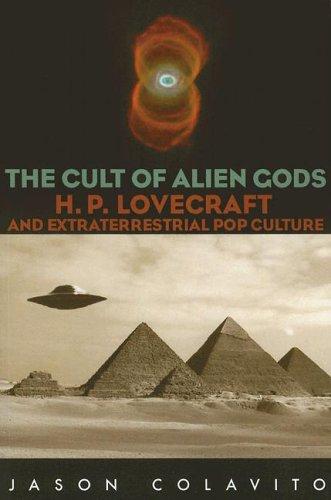
H. P. Lovecraft. Monsters. Aliens. UFOs. Ancient Egyptians. Sumerians. Is there nothing this book doesn’t have? Having read many of H. P. Lovecraft’s stories over the years, I have always been taken by how, as a writer, Lovecraft disappeared from public attention only to spring back in the 1990s. I discovered Lovecraft while doing research on Dagon, the putative “fish god” of the “Philistines.” Every time I typed the name of the deity into Google, I came up with pages and pages of Lovecraft. In my lonely room on a gray Wisconsin campus, I began to read his stories and shiver with fear as I walked across a dark parking lot to my car. Jason Colavito obviously has a great appreciation for Lovecraft as well, and his book The Cult of Alien Gods: H. P. Lovecraft and Extraterrestrial Pop Culture is a fun read for a November night. Colavito suggests that the “ancient astronaut” craze that has informed many a young mind stems back to Lovecraft’s fiction. Cthulhu and his ilk.

I’m not sure that Colavito convinced me that the ideas of ancient aliens began with Lovecraft, but he does an excellent job of exposing the foibles of many theorists who build houses of cards on shifting sand. One of the most interesting connections Colavito makes is that Creationism and Ancient Astronaut-ism are not dissimilar. “Both are, in essence, a concession that science is the ultimate arbiter of truth, and both seek to (mis)use science to give absolute authority to their beliefs” (331-2). This is an aspect of Creationism I hadn’t considered before. In the uncompromising desire for scientific respectability, the only option open is to bend science to the will of religion. This distortion must be carefully executed, convincing the followers that true science has validated a religious ideal. Rhetoric and occluding argumentation must be utilized carefully here. It seems Cthulhu has world domination in his squishy mind again.

Lovecraft famously gave us fantasy worlds where ancient space creatures left their impressions as gods upon a vulnerable humanity. Mysteries of the past—and Colavito doesn’t deny there are mysteries—are so easily explained by dei ex machina, and working with fantasy is so much easier than working with physics. To approach the mysteries with an answer already in hand, however, is to deny science its glory. As a civilization we owe much to a scientific understanding of the universe we inhabit.
Mary in the Sky with Sequins?

Shortly before Easter in the district of Yopougon in the Ivory Coast, a large group of Christians saw the Virgin Mary against the sun. UFO enthusiasts saw an alien in the same event. Several eyewitnesses ended up blind after staring into the sun. The video of this purported miracle is available on YouTube,

but even watching the “miracle” on a dim computer monitor hurt my eyes. If you want to see Mary, I suggest a good pair of Ray-Bans. The alleged vision occurs a couple of minutes into the video – let the audience reaction be your guide if you decide to watch. All that I saw was what may be categorized as an optical illusion or pareidolia, although it does look a bit like a walking person. Objective information on this miracle is decidedly lacking on the web.

I never pretend to have the answers on unexplained phenomena. I find human arrogance amazingly resilient despite all that we still don’t comprehend. In the midst of all that might exist out there in the 99.99 percent of the universe we haven’t explored, I remain skeptical that we know all there is to know. One thing is certain, however; if something unknown appears in the skies some will call it Mary, others Jesus, and yet others an angel. (Conspiracy theorists claim it is Project Bluebeam.) Religious belief and paranormal belief are close cousins. Both involve explaining something that science cannot yet comprehend. If the figure were moving any faster, I might be inclined to accept that it is Carl Lewis.

In an unrelated story, it seems that the Allen Telescope Array of the Search for Extraterrestrial Intelligence (SETI), Frank Drake and Paul Allen’s baby (anticipated by Carl Sagan), is being shut down. Earth-based governments are reassessing spending priorities and finding a cosmic big sibling who might help us out of our mess down here has become a luxury we can’t afford. ET may phone from home, but on this end the receiver will be off the hook.

Religions tend to bolster the self-importance of human beings. While I believe we are ethically and morally bound to help one another, I find it difficult to believe, when looking at the way governors are operating today (Christie one of Time’s 100 most important people? Christie eleison!) that Homo sapiens are anywhere near the top of the cosmic intelligence scale. I just hope that if it is Mary in the sky with sequins that she remembered to bring her SPF 2012 sunscreen along.


Inspired Lunacy

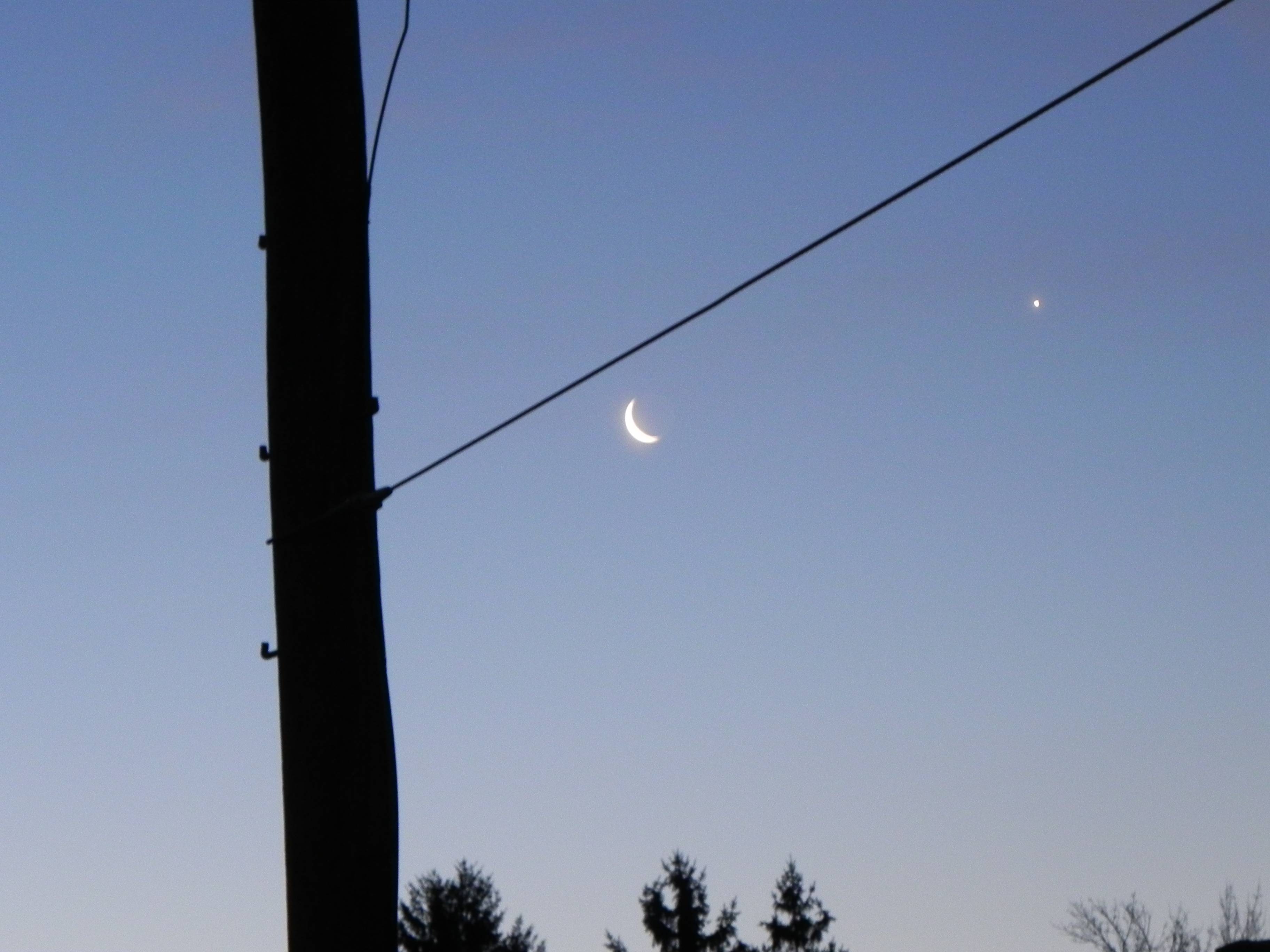
The moon is too easily ignored. Perhaps we fill our nights with too many other diversions that we easily overlook the millions of tons of rock high over our heads. When I introduce students to the importance of the moon in ancient religions they often seem surprised by the fact. The moon? It gives no heat, it is constantly changing, and sometimes it disappears altogether. Rather wimpy god to worship, don’t you think? Tonight the moon is back in the public eye because it is in perigee, its closest approach to earth in 18 years. In the facile language of the media, it is an “extreme super moon” (sounds like something you could buy at Wal-Mart). As with most ancient Near Eastern religions, modern perceptions, often vaguely scientific, do not encompass the enormity of phenomena before we became masters of the night.

The moon races Venus to perigee

In some ancient Near Eastern religions the moon was superior to the sun. We know that the moon’s light is reflected from the sun – something that did not fit their cosmology. Instead, in those regions often brutalized by a hot sun, the moon appeared kinder, gentler. It’s light helps to make many nights less intense and it never burns you. Since it is easier to stare directly at the moon, it makes an effective timepiece as well. Its changes are periodic and predictable. For a world without electricity, where nights were only infrequently shortened with oil lamps, and where daylight savings time would have made no sense, the moon ruled.

Actually, the moon played a role in developing the concept of the Trinity. Three great luminaries regularly appear in our skies: the sun, moon, and Venus. These days when most people have difficulty locating Venus, and generally no interest to do so, it goes without recognition that it is the third brightest natural object in the sky. In fact, Venus is bright enough regularly to stimulate UFO reports. A celestial triad thus ruled the skies of antiquity, and in many of those cultures the moon was the greatest of the three. So give the moon a few minutes of your time tonight as it gets closer to the earth than it will be again for many, many years. Perhaps it may give us a bit of understanding on the origins of some of our religious ideas that persist to this day.


Back to Paranormalcy

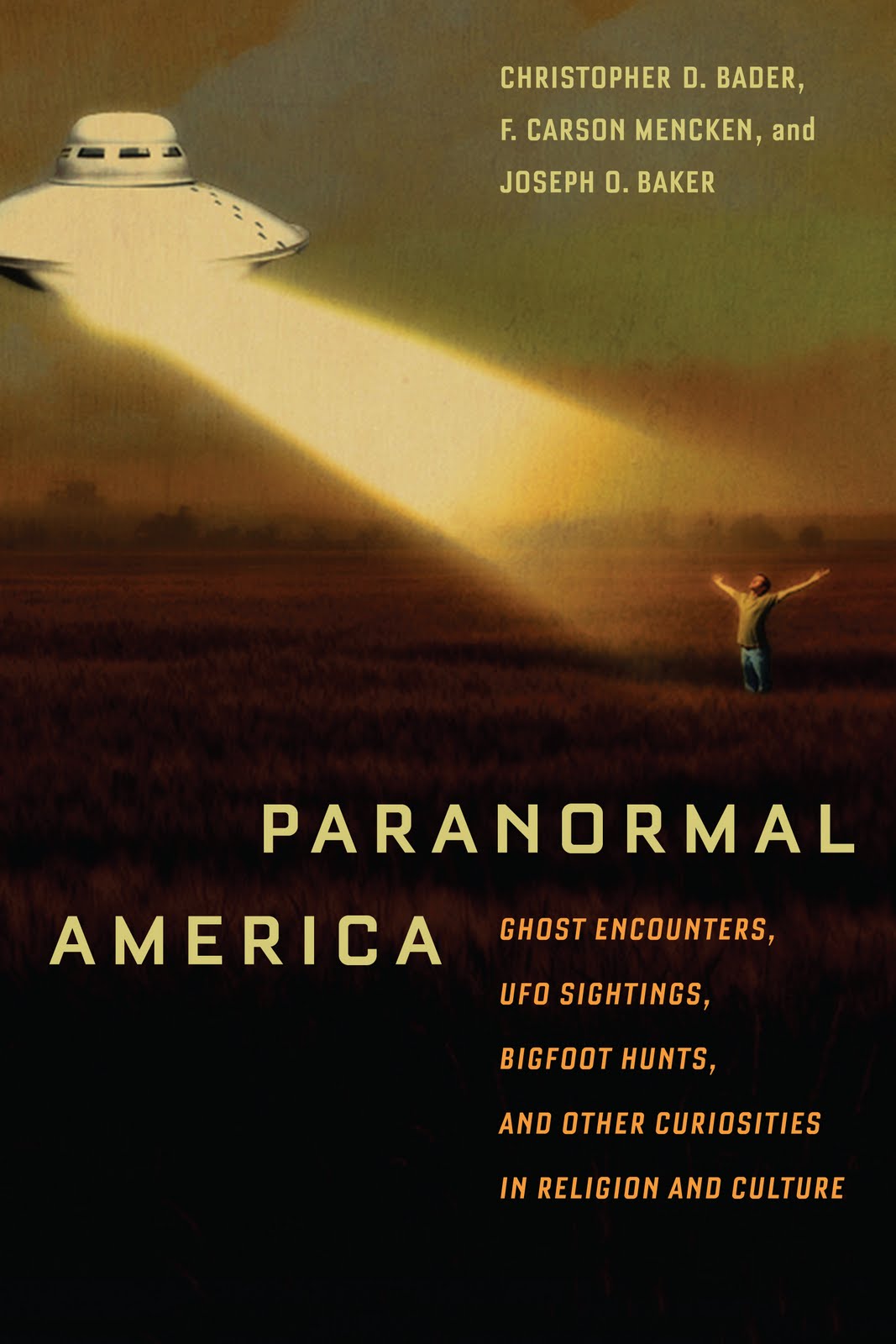
Belief is a paranormal phenomenon. Or so it would seem. Having just finished the fascinating sociological study of Christopher Bader, F. Carson Mencken, and Joseph Baker, Paranormal America: Ghost Encounters, UFO Sightings, Bigfoot Hunts, and Other Curiosities in Religion and Culture, the implications are thought-provoking. I’ve known the work of Christopher Bader, the lead researcher, for some time. Instead of trying to prove or disprove the phenomena under study, he performs a rare feat in actually addressing something most scholars avoid: what people really believe. As becomes clear throughout the book, a substantial majority of Americans believe in some paranormal phenomena at some level. The official story is that nobody believes this stuff, but the numbers beg to differ.

It is appropriate that such a topic should be undertaken by sociologists of religion. One of the difficulties the authors have is differentiating between religion and paranormal. Both religion and paranormal subjects involve going beyond empirical evidence. There is no “proof” that their objects of interest/devotion exist. The authors ultimately decide that what separates belief from God from belief in aliens is a matter of numbers: is it a generally accepted belief or one that is outside the norm (i.e., paranormal)? Since a vast majority of Americans believe in God, that is religion. Since far fewer believe in ghosts, they are paranormal. As I have suggested before, the main problem is one of definition. Religion stands on a continuum with “paranormal” beliefs. One society validates, the other it castigates.

I sensed a hesitation as I read this study. Grouping psychics alongside ghost hunters may seem reasonable, but how do Bigfoot and UFOs fit in? Those who research these latter topics often claim they are physical phenomena, as real as the keyboard I’m using, only undiscovered. Does an unsubstantiated phenomenon qualify as paranormal? Who decides what is really real? Academic institutions often distance themselves from subjects that might be suspect. (They also distance themselves from fair hiring practices as well, but that is perfectly normal.) It seems to me that the problem with “paranormal” comes in the grouping. Some of the individual subjects may indeed have merit: ghosts are perceived, reported, and some would say even photographed and recorded. They make up one of the earliest facets of religious belief. The psychic down the street has a less sure pedigree.

These fringe subjects, regardless of veracity, have a wide following. Even highly educated people generally believe in some form of “paranormal” phenomenon. Religion, widely accepted and practiced, ventures beyond the empirical as well. The difference is only, it seems, a matter of degree. Where is Fox Mulder when we really need him?