Writers and Readers

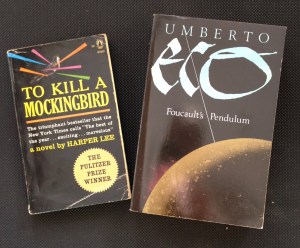
Writers are immortals. Well, at least as long as our species lasts. As a mere internet writer, I suppose that I’m not alone in wanted published books to my name. Solid books that don’t disappear in a power outage. There’s an immortality, no matter how mildewed or mouse chewed, to being in a book. Just two days ago Harper Lee died. And Umberto Eco. On the same day. Like many American kids, I was assigned To Kill a Mockingbird in school. Although I would go for decades without re-reading it, the novel stayed with me powerfully, the way that classics do. When it was assigned to my daughter’s high school class, I read it again, reinforcing the story that held me captive when I was a teen. In many ways it was an introduction into that confusing and convoluted world of adults. It was true, like most fiction is.

Umberto Eco I discovered in seminary. The Name of the Rose was one of the choices for assigned reading in Medieval Church History. Although less of a classic, it was no less real for all that. The work that hit closer to home, however, came when living in the Medieval city of Edinburgh. Foucault’s Pendulum was frightening in its conspiratorial intensity. Esoteric fanatics gather in an unholy profusion. Then, in the midst of reading it, a package, hand-addressed, arrived in my student mailbox. From Germany. Curious, I opened it only to discover a mound of tracts on Satanism, all the scarier for being written in German. They seemed to point to a conspiracy, just as I was reading about in Eco’s novel. Only after much searching (there was no internet to speak of in those days) did I trace them to the Schiller Institute. How they got my name, I never did learn.
IMG_2678

I haven’t read all the works of Lee or Eco. In fact, there are few writers whose entire oeuvre I’ve managed to read. That doesn’t mean that I love them any the less. All it takes is a powerful novel and you can be hooked for life. I leaned this in a profound way reading Moby-Dick in seminary. If there is another book that should be added to the Bible, that is the one. Writers are one of our least appreciated resources. They are, however, among the true immortals of our breed. Harper Lee and Umberto Eco left this world on the same day, only never really to leave it at all.
Secret Religion

Recently I read an article about a religion called Sabbateanism. I’d never heard of it before, so I turned to the collective wisdom of the human race—the Internet—and came away only more confused. There are so many religions in the world today that no one person can rightfully claim to be an expert on them all. The Sabbateans, it seems, are a secret sect, so not being able to learn about them should not be surprising after all. A Google search soon suggested reading about Illuminati and I realized I was once again in the realm of the conspiracy theory. A few months ago my wife and I began reading a book on the Freemasons (we both have grandparents who were Masons, so it has always been an area of interest). The book, however, was so convoluted that we had to give up. As Poe long ago realized, the best place to hide something is in plain sight. As I pulled up to a stoplight recently, I noticed the car in front of me had the masonic emblem hidden as a decal on its brake lights. Was I on the road to enlightenment?

Sabbateans, it seems, can be traced back to a seventeenth-century rabbi called Sabbatai Zevi, who lived under Muslim rule. Apparently he converted to Islam, but was also recognized as a messiah (there have been more than a few) and his followers went underground. We are told, at least by Wikipedia (where the article suffers from lack of verification) that several groups resemble, or may have derived from, the Sabbateans. It should come as no surprise that a secretive religion would be difficult to verify. That’s the whole point. Most religions claim that a certain small cross-section of believers has some esoteric knowledge that the rest of us lack. It would be difficult to claim any kind of authority if they didn’t.

Conspiracy theories are endlessly fascinating. Whether it is the Bilderberg Group or the Rosicrucians, we’re just sure somebody’s holding out on secret knowledge and power that keeps the rest of us in the dark. Mainstream religions, which tend to train their clergy in mysterious seminaries with arcane knowledge, have always been critical of secret societies. Catholics claimed Masons to be heretical, while Protestants claimed them to be too Catholic. Every religion, however, has its secrets. Umberto Eco and Dan Brown (it hurts just to use those names together in the same sentence) both recognized the appeal of the conspiracy theory in popular literature. The Illuminati, I’m told, are largely taken as a joke on the Internet. In my quieter moments I tent my fingers and consider: that’s just the way they’d want it to be, isn’t it?

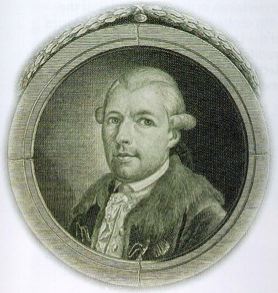
Who is this man?

Who is this man?


Kermit’s Secret

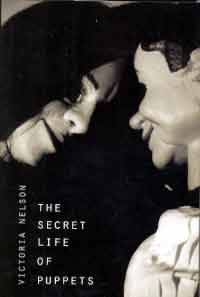
When I was a post-graduate student in that Gothic city of Edinburgh, I decided to spend some time reading Umberto Eco’s Foucault’s Pendulum. It was intended as harmless entertainment, but as anyone who has read it knows, the story soon unravels into an unbelievable world of dark religions that haunt a naive protagonist. While I was reading it, a packet, hand-addressed to me, with no return address, came to my student mailbox. The contents consisted of several tracts, in German, warming of the dangers of Satanism. No letter, no explanation. Foucault’ s Pendulum had me paranoid already, and this strange package completely unnerved me. Well, I’m still here to tell the tale. While reading Victoria Nelson’s brilliant The Secret Life of Puppets, I learned that she had a strange episode while reading the same novel. It was an apt synchronicity.

Nelson is a scholar who should be more widely known. I found her because her recent Gothicka was prominently displayed in the Brown University bookstore in May. I saw it after taking a personal walking tour of H. P. Lovecraft sites. Synchronicity. I had read, in a completely unrelated selection just a couple of months ago, Jeffrey Kripal’s Authors of the Impossible. Synchronicity. For many years I have honed my Aristotelean sensibilities, following devotedly in the footsteps of science. Problem is, I have an open mind. It seems to me that to discount that which defies conventional explanation is dirty pool in the lounge of reality seekers. I have always been haunted by reality.

I’m not ready to give up on science. Not by a long shot. Like Nelson, however, I believe that there may be more than material in this vast universe we inhabit. Indeed, if the universe is infinite it is the ultimate unquantifiable. The Secret Life of Puppets is alive with possibility and anyone who has ever wondered how we’ve come to be such monolithic thinkers should indulge a little. For me it was a journey of discovery as aspects of my academic and personal interest, strictly compartmentalized, were brought together by an adept, literary mind. Religion and its development play key roles in the uncanny world of puppets. Those who wish to traverse the realms they inhabit would do well to take along a guide like Nelson who has spent some time getting into the puppets’ heads.