Book Ends

Screen Shot 2014-12-30 at 12.40.34 PM

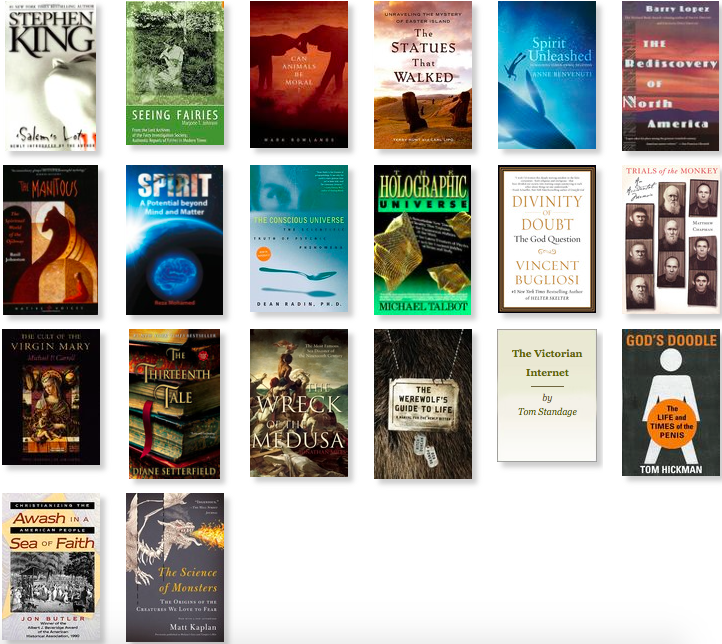
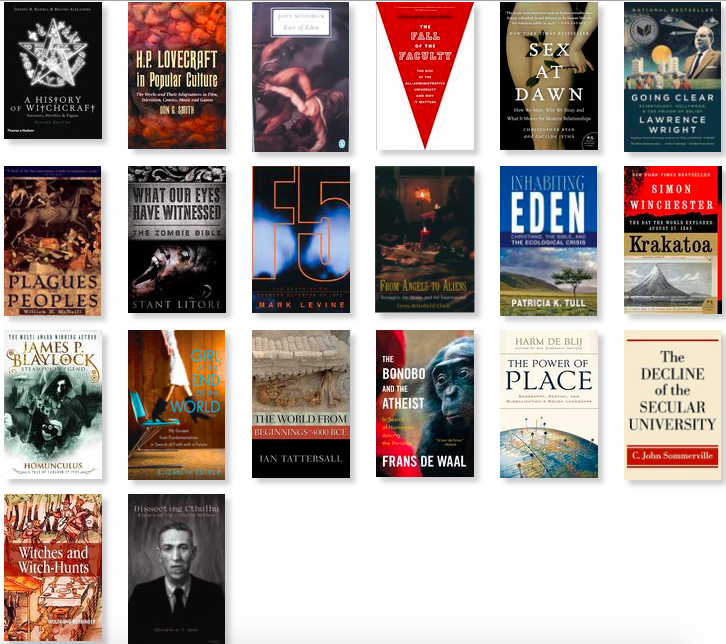
It’s the end of another year of reading. Since Goodreads keeps track of my booklist, I see by their accounting I finished 95 books in 2014. The final day of the year seems an appropriate time to reflect on those that made the greatest impact on me. Starting at the beginning, Jacques Berlinerblau’s The Secular Bible immediately struck me as a book of high importance. In an era when religion is constantly considered irrelevant, Berlinerblau gives this trite brushoff the lie. Likewise Jeff Kripal and Sudhir Kakar’s Seriously Strange opens questions that must be addressed if we ever hope to find the truth. Frans de Waal’s The Bonobo and the Atheist and Christopher Ryan and Cacilda Jethá’s Sex at Dawn both raise, in fundamental ways, the question of what it means to be human. Benjamin Ginsberg’s The Fall of the Faculty is essential to understanding the current crisis in higher education. Edward Ingebretsen’s Maps of Heaven, Maps of Hell is a roadmap through the genre of horror and its importance to society. The Miracle Detective by Randall Sullivan again highlights the question of what counts as reality. Nonbeliever Nation by David Niose shows the importance of separating politics from religion. Dean Radin’s The Conscious Universe brings science to bear on unanswered questions.
Screen Shot 2014-12-30 at 12.41.24 PM

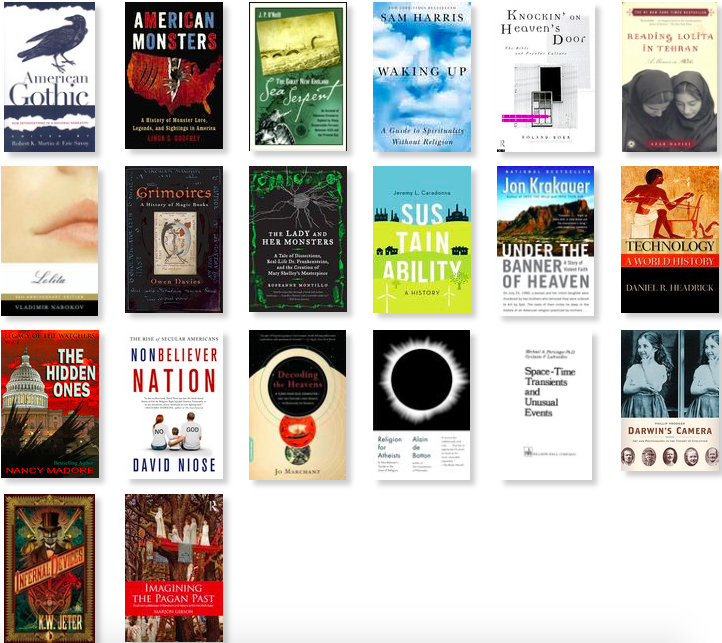
Books specifically concerning religion also deserve some highlighting. Karen McCarthy Brown’s Moma Lola is crucial for comprehending, in a sympathetic way, voudun in a major city. Patricia Tull’s Inhabiting Eden makes a clarion call for religions to pay attention to the needs of the environment. Going Clear by Lawrence Wright is a good introduction to Scientology, while Jon Krakauer’s Under the Banner of Heaven serves a similar function in regards to Mormonism. Sam Harris’s Waking Up shows the need even atheists have for spirituality, complicating the sharp divide we are offered most of the time. Religion for Atheists, by Alain de Botton, also demonstrates the continuing usefulness of religion in a secular age. Vincent Bugliosi’s Divinity of Doubt calls both theists and atheists to task. Spirit Unleashed by Anne Benvenuti allows animals to have souls.
Screen Shot 2014-12-30 at 12.42.12 PM

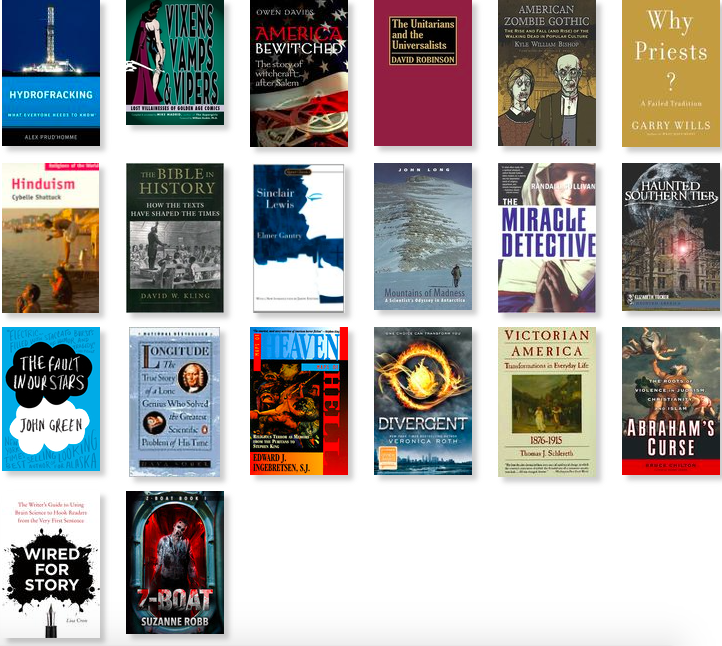
Fiction always makes a part of each year’s reading as well. This year found me reading several ponderous tomes, but I very much enjoyed the lighter fare by Ransom Riggs, in Hollow City. James P. Blaylock’s Homunculus and K. W. Jeter’s Infernal Devices slaked my steampunk thirst temporarily. John Green’s The Fault in Our Stars and Vladimir Nabokov’s Lolita were both difficult to read as a father, but important literature nevertheless. All of these books and more have individual posts dedicated to them on this blog. I always feel compelled to make clear that I find the books I read, whether highlighted here or not, one of the most rewarding aspects of my year. The long daily commute I normally endure would be torture without my books. Each year, each day I’m thankful for those who write them, and I look forward to an equally stimulating 2015 spent with my face buried in books.
Screen Shot 2014-12-31 at 5.04.15 AM


Exceptionalism

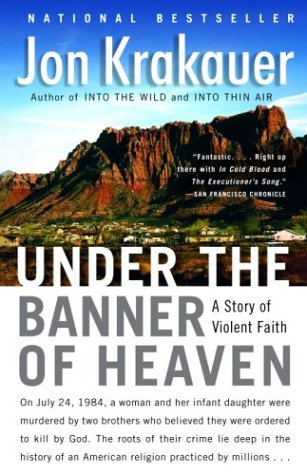
UnderTheBannerOfHeavenSome years ago I was invited to a famous person’s house along with some intellectuals—we’re all mature here, so names aren’t necessary. It’s no surprise that I ended up at the children’s table, being soft-spoken as I tend to be. The discussion had turned to international affairs, and since I can barely manage my own affairs I didn’t have much to say. Eventually it was suggested that if rule of law could take hold in the Middle East, strife would end. I finally spoke up, loudly injecting a “no” into the conversation. The problem with religious-based conflict is that the rule of law has been subordinated to the divine will. That is very well illustrated in Jon Krakauer’s Under the Banner of Heaven: A Story of Violent Faith. As Krakauer explains in his conclusions, he had set out to write a book that explored the history and background of his polite, abstemious, and law-abiding Mormon neighbors and friends. The story, however, takes a darker turn.

What Krakauer delivers is not a slam on Mormonism, but rather something far more difficult—an attempted even-handed history. As even Mormons at the various trials depose in the book, the faith has some strange beliefs. All religions do. For a religion less than 200 years old, the Latter-Day Saints also have an impressive violence in their history; parts of this book are like a fantasy novel, they seem so unlikely. Again, nothing unusual here. All religions have violent episodes. In general, religions aren’t violent—people are. The problems arise when the true believer (and there always will be) insists that religion trumps the rule of law every time. As Krakauer shows, those who violate society’s laws are not insane. They are, however, not judging the world by the same standards of the wider society. It’s just that, occurring as it does in the light of an historical period, the strangeness of how a religion starts is clearly illuminated in Mormonism. No number of apocalyptic horsemen will be able to stop the religious imagination once it is fired up. The problem with lines in the sand is that they easily move.

Perhaps the most disturbing tenet of Joseph Smith’s latter-day revelations is that of polygamy. Like a young Augustine, Smith had an eye for the ladies. Personal indulgence at the hand of a religious founder is not at all unusual. The problem is, the women in this book have been abused and traumatized in a religion, not unlike Judaism, Christianity, or Islam, that asserts (or has asserted) male superiority. Girls as young as thirteen or fourteen being married off to men three times their age to join what is essentially a harem doesn’t offer these young ladies a chance to become their own person. The majority of Krakauer’s study focuses on Fundamentalist Mormon sects, and not the mainstream Mormons who have great political power and occasionally run for president. Still, this is a very important book. It is not primarily about the Mormons. It is about those who can’t see beyond a blind faith in what would otherwise be a perfectly good piece of fantasy literature.