Parochial Education

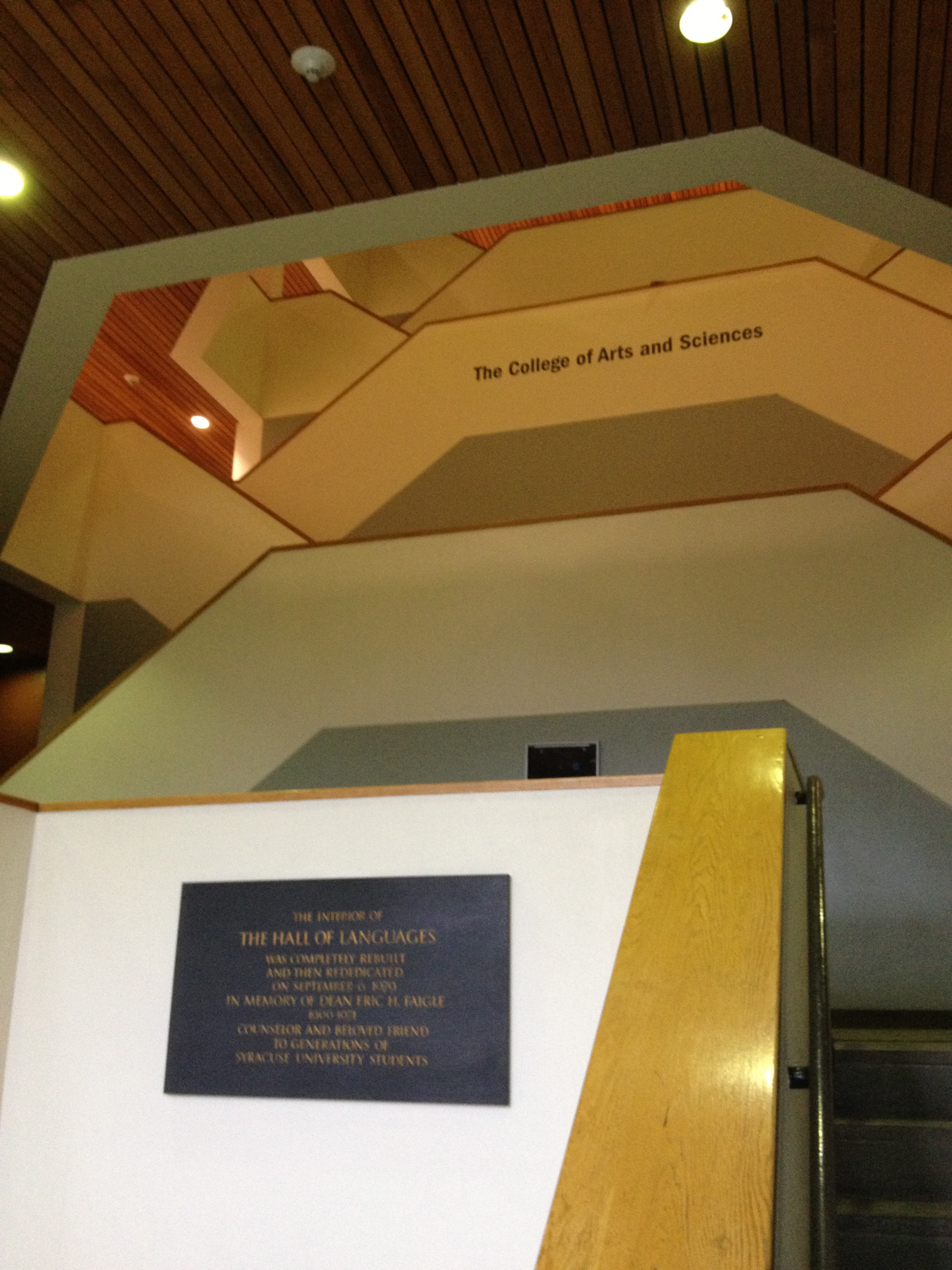
I’m sitting in King David’s Restaurant in Syracuse, New York. I’ve spent two days speaking with a wide diversity of religion scholars, and I’m realizing religion is not yet dead. A few days ago I wrote about the Burnt Over District and the Second Great Awakening. It occurs to me as I climbed the hill to the Religion Department in the rain, that I am on the trail of that Great Awakening. Syracuse University began as a Methodist school. Today, although affiliated with the United Methodist Church, it considers itself non-sectarian. Yet without those abstemious Methodists, they wouldn’t be here. The Methodists, now primarily represented by the United Methodist Church, owe their explosive growth to the Second Great Awakening. Out on the frontiers—for America was a rural nation—the revivals became showcases of the social, the supernatural, and the salacious. The Methodists and Baptists, in terms of numbers, benefited immensely.

With their enviable population base, the Methodists invested in higher education. Syracuse University, just up the hill, Adrian College, Boston, Central Methodist, Drew, Duke, Emory Universities, Florida Southern College—you could go nearly through the alphabet and not exhaust their schools—all owe their beginnings or present stature in part to those thrifty Methodists. Believers in an educated clergy, they reached out to embrace an educated laity as well. Although many of these institutions grew up and left their religion behind, the Methodists have impressed their stamp on American higher education unlike nearly any other denomination. Even when numbers in the pews decline, the Methodists will have left a legacy on the wider culture through their belief in education. About the only other Christian group invested so heavily in higher education has been the Catholic Church. Even so, the Methodist academic reputation climbs a bit higher.

I spent many happy years among the Methodists. Their way of looking at life, officially, anyway, isn’t extremist. Some aver that John Wesley was an extreme evangelist. Today he’d be snowboarding down the Alps to seek the unsaved, a Red Bull or two in his belly to stoke that restless fire. His followers, via media Methodists, eased into the mainstream—in some ways defined the mainstream. Methodism was good for a kid who needed to fit in. So as I sit in King David’s Restaurant, reflecting over my past that has landed me in this most unusual place, I am thinking about my Methodist roots. I’ve failed to impress those Methodist institutions where I was once courted for a circuit riding future. Now I watch as they educate other people’s kids. It is a safe guess that King David wouldn’t even be here if it hadn’t been for John Wesley and his personal need for assurance. If only more churches took education so seriously.
Climb that hill
Climb that hill


Making Light

Back when I was a starry-eyed camp counselor in the Western Pennsylvania Conference of the United Methodist Church, “Christmas in July” was a chic (in as far as Christians can be chic) trend. Kids lucky enough to be at camp that week were treated to a neo-Christian holiday that included a half-birthday for Jesus and cheap gift-giving. (The fact that Jesus’ birthday, in as much as it can be determined, is mid-way between December and July seemed a strangely mute point.) Our “gifts” were generally manufactured from natural products found in the woods and were a diversion to help the homesick campers concentrate on the truly Christian practice of getting stuff. Interestingly, here on Midsummer (the solstice is actually the first day of astronomical summer, but our pagan forebears were more into astrology, it seems, than astronomy) we are on the second most-celebrated holiday in the northern latitudes. With its midnight sun in the far north, and warm temperatures starting to make a regular appearance, light outweighs darkness for just a little bit, and life is never easier than this. No wonder Midsummer appeals to the archetypal mind.

Of course, Christianity could not accept a purely natural holiday, attributed as it was to the beneficence of heathen gods. In an even more dubious exercise than fixing the date of Jesus’ birth, Midsummer became the nativity of John the Baptist, or St. John’s Eve. While some scholars dispute the historical existence of Jesus (not terribly convincingly), the case against John the Baptist might be a little stronger. The prototypical forerunner, the herald announcing something greater than himself is so uncharacteristic of religious folk that it lends itself to considerable doubt. John is described like Elijah, one of the greatest prophetic figures of biblical times. John’s birthday? Anybody’s guess. Since he is second to Jesus, put his birthday on the opposite solstice. (I realize the solstice was June 20; at this early hour of the morning, I think today may also qualify.)

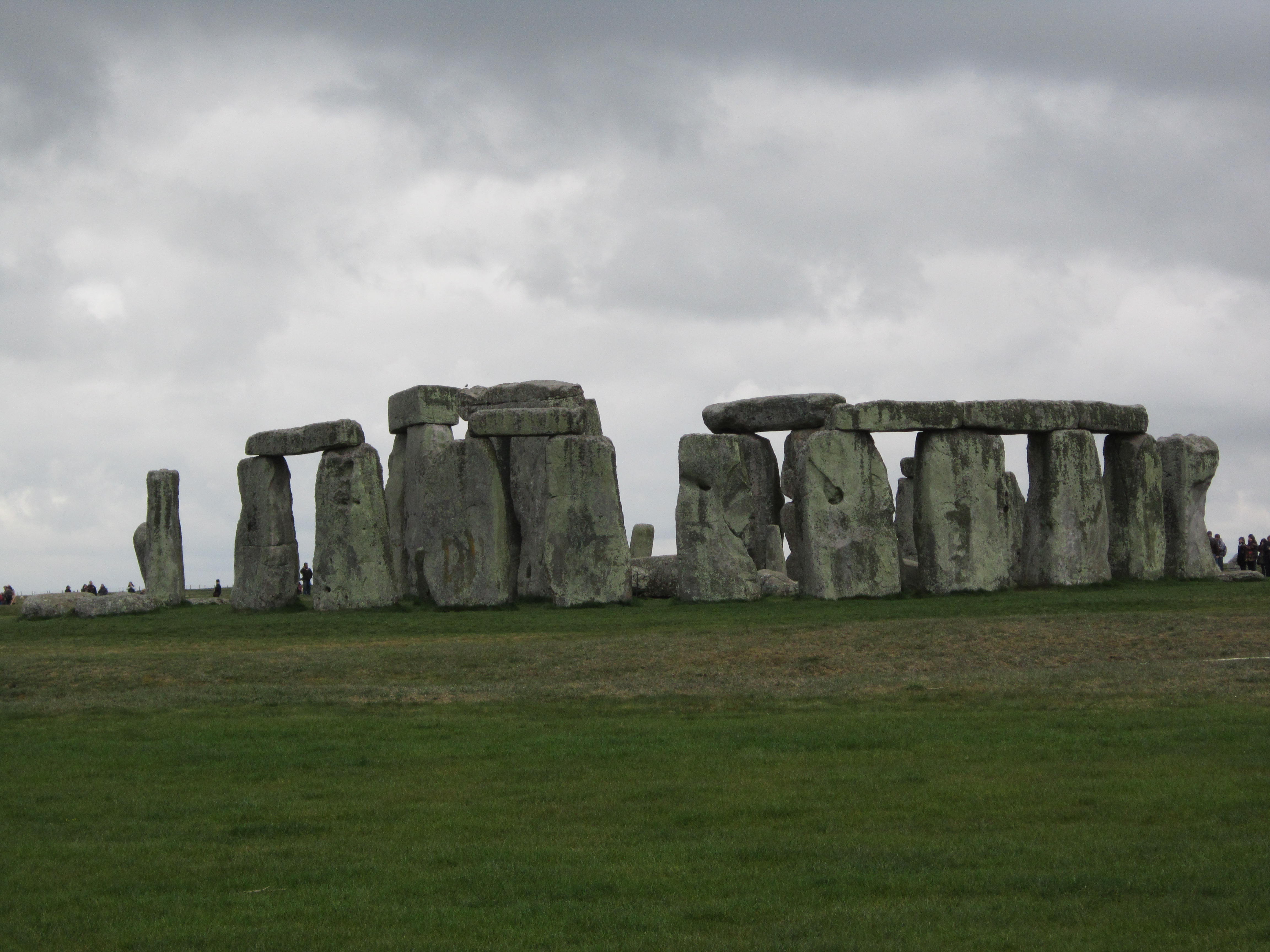
Back at Easter, historically near the vernal equinox, I found myself at Stonehenge. Knowing I was missing Druid priests by a full set of quarter days, it was still an exhilarating experience. Ancient people welcomed the return of increasing light with religious fervor. The effort it took to move these monoliths to the barren plains of Salisbury is nearly unimaginable. They represent, at some level, the invincible nature of the sun, our warmth and light. In physical, astronomical, terms they had no idea what the sun might be. It was, undoubtedly, the source of light and warmth, and even every lizard and turtle sunning itself on a rock participates in welcoming its return. So we’ve come to the solstice once again. It is the high point of the year. Now we begin our slow descent back into nights that will grow longer until the winter solstice once again reverses the trend. We don’t need Christmas in July–we already have it in June.


Jesus for President

From my economical hotel to Duke University was maybe a twenty-minute drive. As a stranger in town I prefered to stay off the heavily traveled corridors during busy morning commute times, never being sure when exactly my exit was coming up. So I took the backroads. Along the way I started to see churches with denominational names I’ve never even heard before. I quickly lost count of just how many houses of worship I passed. With all this rich fare, perhaps it is time to tighten the old Bible belt a bit. The short drive reminded me of my one and only fact-gathering trip sponsored by Nashotah House. I was sent to Asbury Seminary in Wilmore, Kentucky for a technology conference. Accompanied by an Episcopal priest and a Lutheran pastor, I was not the only one of us to feel a bit besieged by the in-your-face evangelicalism of Kentucky. My Lutheran colleague wistfully commented, “but the ELCA is ‘Evangelical.’” A different species of evangelical entirely.

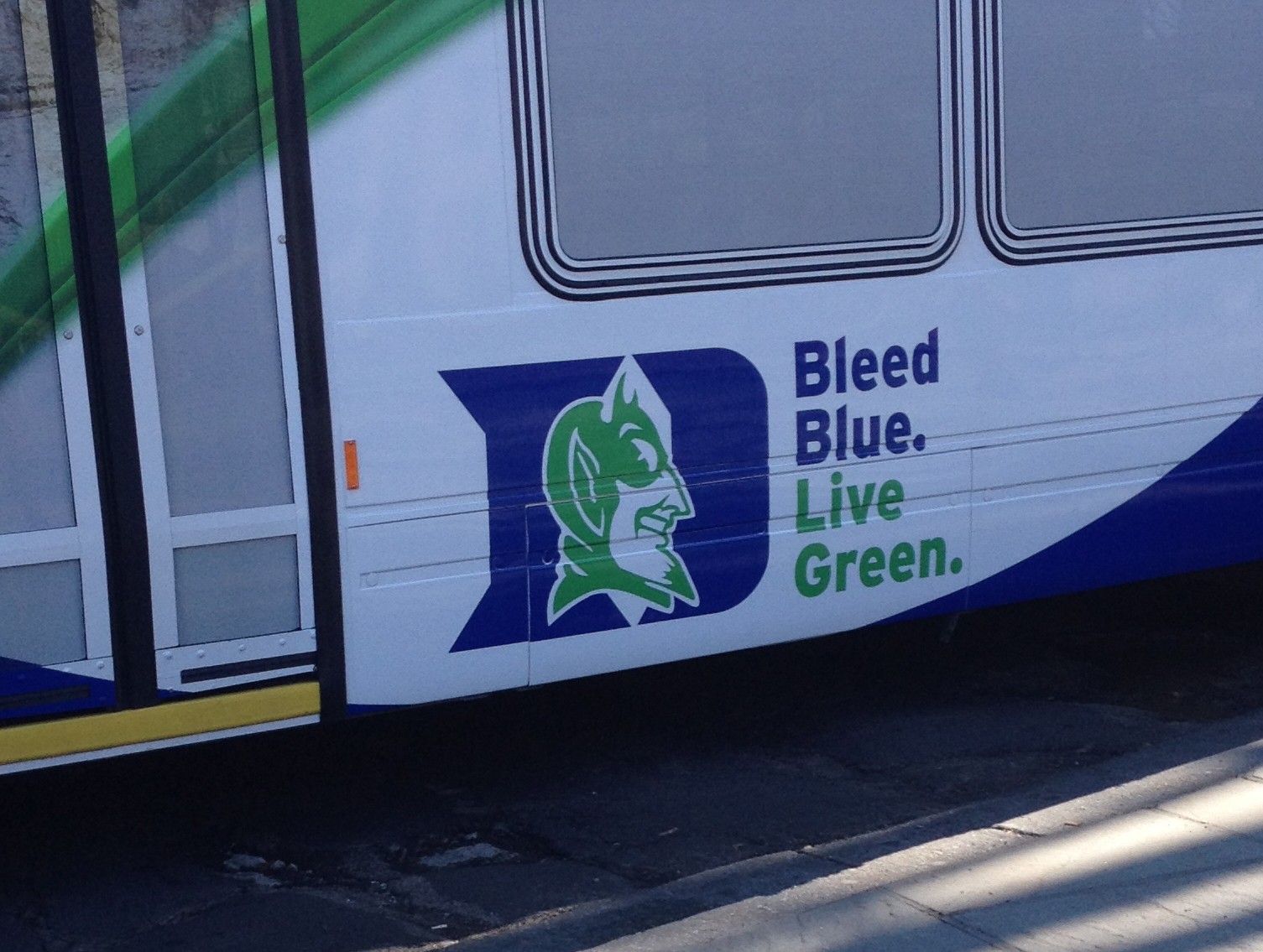
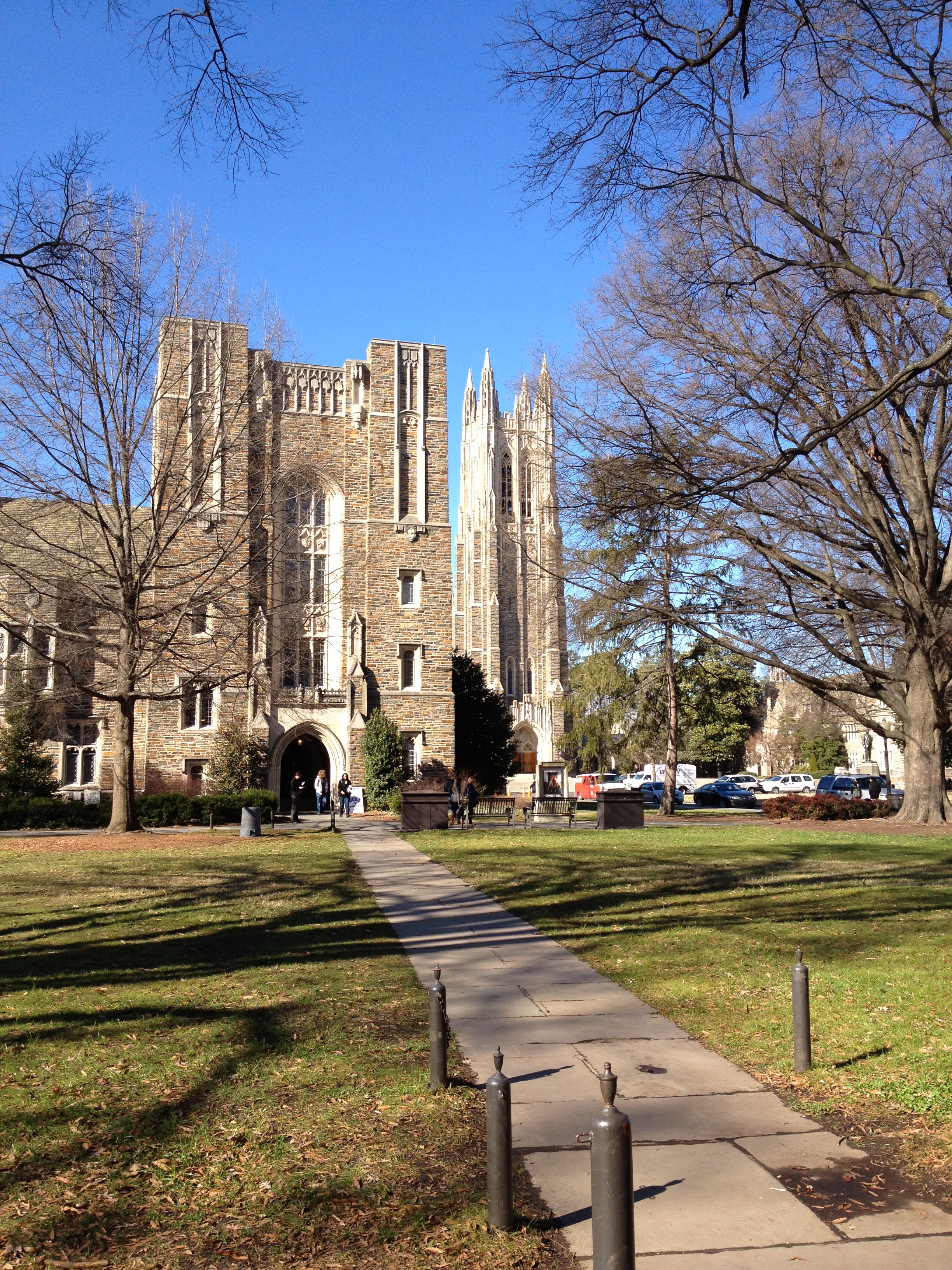
The chapel at Duke University easily dominates the west campus. The divinity school is one of the flagship seminaries of the United Methodist Church. Founded by the tobacco money of James Buchanan Duke (who also owned the estate in New Jersey where our ill-fated garden was planted this summer) and the fledgling Trinity College, Duke is an interesting mix of the sacred and profane; Eliade in quadrangles and limestone. The campus sports identity is the Blue Devils, and this diabolical emblem can be seen leering from tote bags and campus buses connecting east and west. Money and religion, devils and saints. Life offers many choices, and Duke, as an exclusive institution, serves the blended family of academics in Bible land.

One of my daughter’s favorite movies as a child was Disney’s Lilo and Stitch. In case you missed it, Stitch is an alien (you’ve got to love it already!), and Lilo is a little girl who loves Elvis, a true southern prodigy. The movie features Elvis singing Giant, Baum and Kaye’s “Devil in Disguise.” Although a song about love in crisis, “Devil in Disguise” seems a decidedly useful trope. Human institutions often disguise themselves as divine. After all, no suite trumps the God card. Religion is so prevalent in the Bible Belt that Christianity is less a religion and more a culture. That culture is at barbed odds with itself, for its deepest, darkest desires are out of line with the utter selflessness that Jesus seems to imply is at the heart of Christianity. Travel is one of the greatest teaching tools we have. Sometimes your own country can feel like foreign soil.