On Campus

It’s still the pandemic and I don’t get out much.  It seems prudent and only a little paranoid.  I had the opportunity to meet someone from Lehigh University recently.  The interesting thing is, I’ve become shy about going onto college campuses unless invited.  I can still usually pass for a professor (the beard and glasses help, along with a natural disheveledness) and I behave well in public.  Still, universities are all about belonging.  If you’re an alum you can come in.  You’ve paid a lot of money, and, the thinking goes, hopefully you’ll pay more.  Of course you’re welcome!  The last time I visited Boston University I remember thinking how small it was compared to my younger memories of wider corridors and more welcoming faculty.  Many ways exist for measuring how we grow.

When offered the chance for a quick stroll around Lehigh I had to say yes.  Like Syracuse University, it’s set on a hill.  From downtown south-side Bethlehem you need to walk up.  Even growing up in Pennsylvania I didn’t hear much about Lehigh.  The western part is dominated by the University of Pittsburgh and the eastern by Penn.  In the middle there’s Penn State.  There are actually many colleges in the commonwealth, about 140 if you separate out branch campuses.  Still, I was struck by the classic feel to Lehigh’s campus.  As you come down the hill it grows more modern, but I always like the older buildings.  Something about their solidity is comforting.  How’ve I been here nearly four years and not found it?

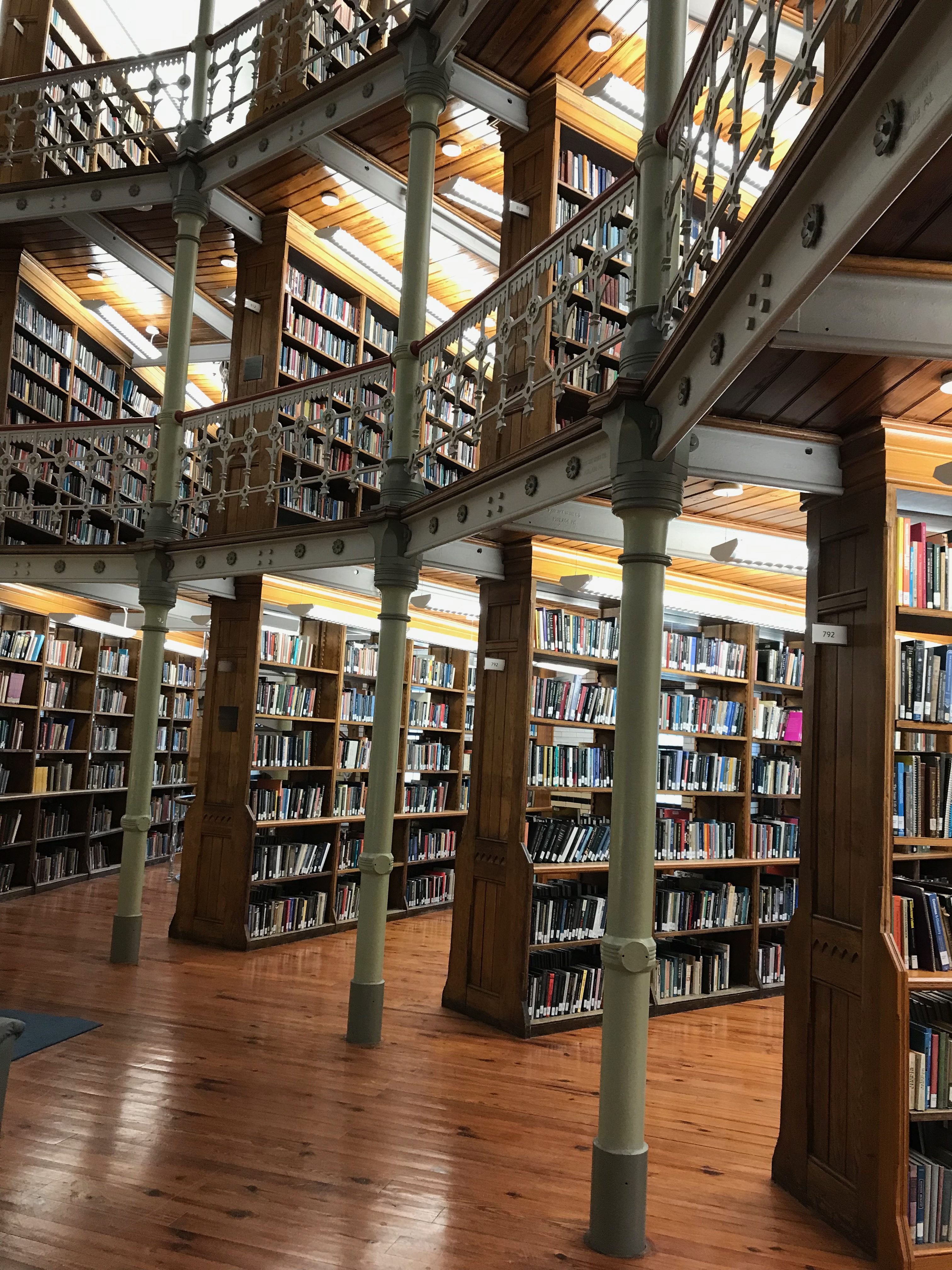
My host pointed out one of the libraries and suggested I stop in before leaving campus.  I had a mask and a minute so I did just that.  There’s a danger to stopping into libraries.  It’s too easy to fall in love in them.  I could see myself whiling away the hours there.  I spent plenty of hours in my own undergrad library, even though it wasn’t nearly so nice.  The only bad thing about visiting campuses is that I eventually have to face the exile from them I feel each and every day.  Many people can’t wait to graduate and get away.  Some of the rest of us never want to leave.  I suppose it’s an artificial environment, but if a small segment of the population can make it work, I wonder why we can’t get more of the world to emulate it.  I may not get out much, but I like to make those rare trips worth the effort.

The Campus Library

Perhaps it’s an odd kind of nostalgia.  Many people can’t wait to be done with school and get on with “life.” Some of us remain fixated at the learning stage and society used to shuffle us into colleges and universities where we could be safely ignored.  One of the refrains in the very long song that is this blog has been the lack of a university library.  Although I’ve tried to get to know the academics in the Lehigh Valley really only one has made an effort to befriend me and when I was asking him about library access he actually did something about it.  Such acts of kindness are rare and require a kind of thinking that takes into account the circumstances of the academically othered.  I’ll be forever grateful.

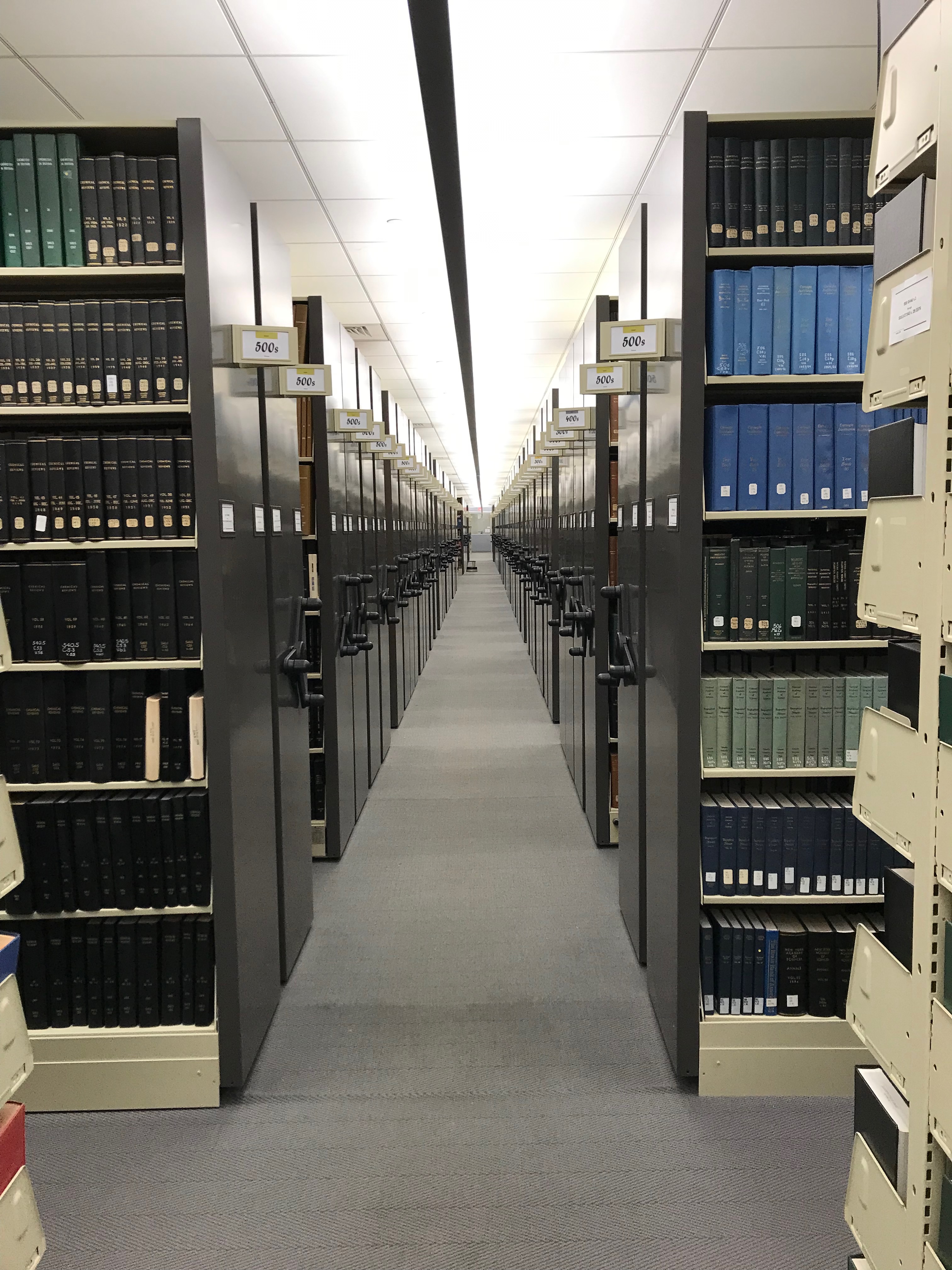
It’s been a long time since I’ve been in a college or university library.  Many are protective and/or restrictive, as if knowledge is only for those academically employed.  I had to look up a couple of references for an article I was writing.  My colleague checked with his institution and yes, I was welcome to come in and use their collection.  The night before going to campus I had a series of nightmares of various librarians barring my attempt to get to the books.  I’d been trying to get there (in real life) for weeks.  Between family work schedules, the occasional weekend blizzard, and the library being closed for spring break, it ended up taking about six weeks to find the time to drive there, negotiate parking, and look up the references.

Everyone has a place they belong.  Mine has unwaveringly been the college campus.  It is home to me, even if it doesn’t recognize me.  I’d almost forgotten the feeling of being let loose in the stacks.  It was a Saturday morning and there was almost nobody else there.  As early as Grove City College I cherished the feeling of spending time in the library.  Few other students were hanging out there, but those of us who belong on campuses know that being surrounded by books is the only place that will ever feel like home.  Having looked up my references I wished that I had more to do.  I’d been to both the Dewey and the Library of Congress sections and, being a weekend, I had much else to do.  Stepping back out onto campus I was filled once again with a poignant nostalgia.  Getting to where you know you belong is a lengthy journey.


Online Research

Given my current lack of a university library, and my continued rapaciousness for research I’ve had to sample internet offerings.  There’s a reason academics are skeptical of the internet’s research reliability.  Just about anything you want to verify brings you up against a paywall where you can sometime buy an article you could read for free if you were a professor, for about $15 or $20.  The privileging of academic information.  (Hey folks, I give it away here!)  In any case, I often run into websites on the topic on researching that give “facts” with a breezy assurance that isn’t followed up with footnotes, making me wonder where they got their information.  Who was the publisher?  Who says they know what they’re talking about?  No wonder alternative facts rule the day.

One of the things I learned in the course of my doctoral work is that those three insignificant letters, if applied correctly, indicate that you know how to do research.  Earning a doctorate is often considered (and sometimes is) a matter of becoming a specialist.  Those willing to peel back the top layer realize that underneath what’s going on is a transformation of your way of thinking.  You can find facts, but you can also weigh them in the balances.  You take no one’s word for it.  Unless, of course, they’re published by a prestige press.  And even then, if the lesson really sunk in, you’ll have your doubts.  The internet is a frustrating place to try to find reliable information.  Oh, it’s great for looking up phone numbers, and even for getting directions.  Just don’t trust it with history.

Currently at work on my fifth book, I’m finding research somewhat of a hurdle.  I’ve reached out to local universities and they seem only to want to let you in if you’re an adjunct (which is considered a conflict of interest in my current post).  You’re therefore locked out of knowledge.  I recently learned that JSTOR may be offering a fixed number of free articles to independent scholars.  If so, that is a great and farsighted boon.  You see, the problem is you need to look at the footnotes to know which articles are actually based on solid research.  There’s a move afoot that makes academic presses shudder.  The move for free information.  It’s the business of academic presses to sell it, of course—that’s where the money comes from.  So I sit here facing another paywall and I wonder is wisdom can ever truly be free.

Photo by Sharon McCutcheon on Unsplash

Free Knowledge

I was struck with an idea.  Not just any idea—an academic one.  I find myself out of practice, and wondering where to find sources when I have no access to an academic library.  I’ve spent my precious writing time for the past several days trying to bang out a respectable academic article.  It represents an area that my personal library does not cover adequately.  The fully employed academic has a library and interlibrary loan to support ideas that won’t let go.  It’s a bit more tricky for the independent scholar.  I’ve contacted local schools but during these pandemic times there is no public access.  Nor electronic access—thanks to all the fancy deals publishers make to try to keep the industry profitable.

The past few academic publications I’ve had were difficult to write, particularly the footnotes. Something the garden-variety academic doesn’t understand is that the university library is a privilege.  I read a lot.  Probably more now than when I was a professor.  Still, research leads you in directions you’d never anticipate.  It’s quite a wild ride, actually.  So with my current project (I can’t tell you what it is because someone with library access would easily be able to scoop it) I’ve had to buckle up.  As I was reading an obvious connection became clear.  It reminded me of the thrill of discovery.  The researcher has a drive for new knowledge—a treasure-hunter of the mind.  It is wonderful to be reminded that there’s more out there still to be discovered.

I’d almost forgotten how an insistent idea can push other projects out of its way.  I have any number of projects going simultaneously.  They get a few minutes’ attention before the work day starts and some of them mature enough to be sent for publication.  At any given time there’s a lot more standing behind those ideas that actually show up on this blog, or in a journal, or even in the fiction venues in which I publish.  But that idea just won’t let me go.  Even while I’m at work it lurks in the back of my mind.  The professorate, for all its limitations, doesn’t pin you down to a nine-to-five schedule even when the time would be better used otherwise.  The thing is, you can’t tame ideas.  Who would want to live in a world where you could?  So I keep working away, hoping to find a library or at least electronic access.  It’s just an idea I have.