Name Your State

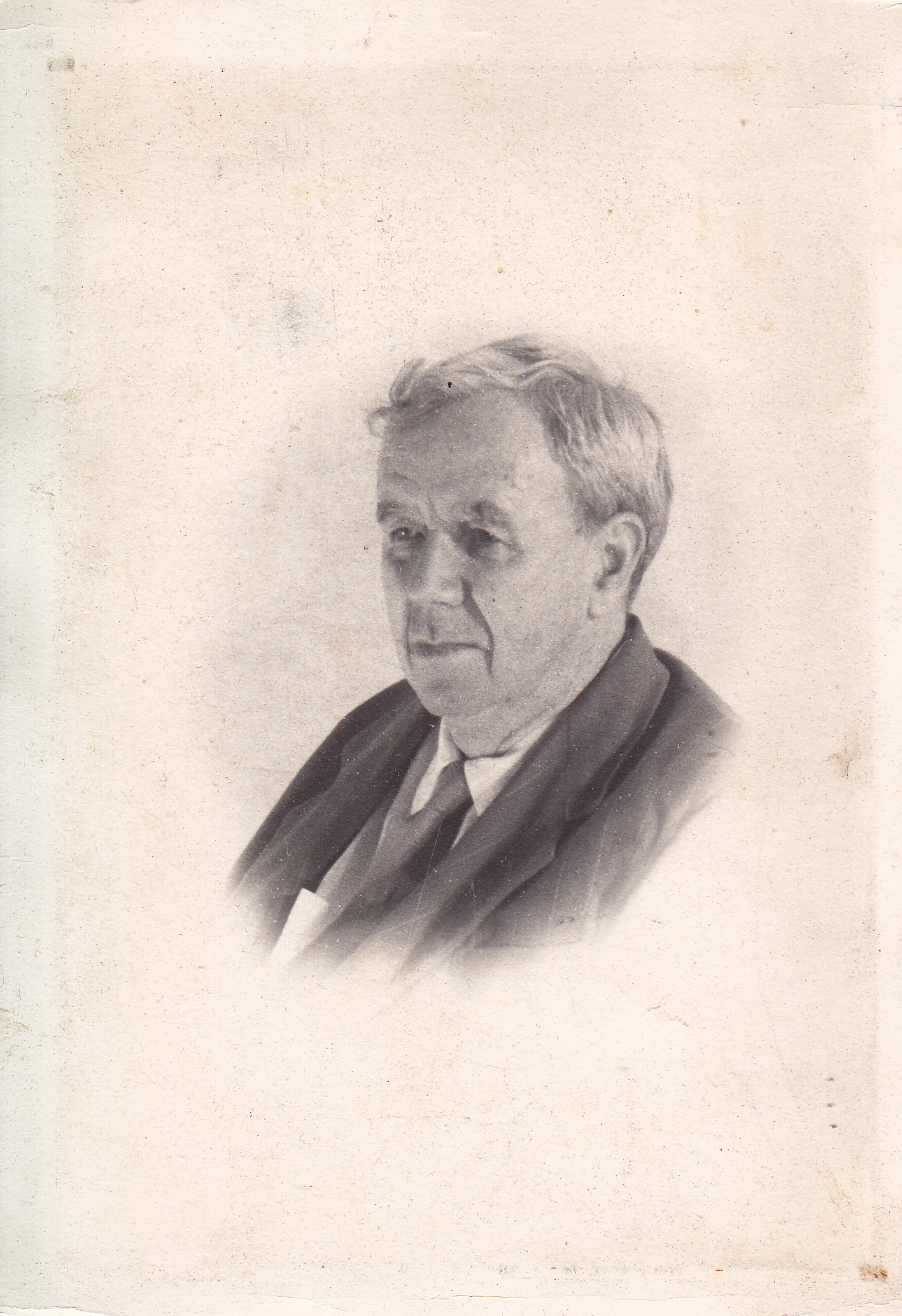
My grandfather’s name was Homer.  I’ve often wondered about that since he was from a long line of uneducated farmers.  Since he was born in Bath, New York, and since I’ve poked around upstate for genealogical purposes, I noticed that there were several place names derived from the classics, including Homer.  I suspect that’s where his name came from.  His ancestors had biblical names.  This got me to wondering about the many upstate classics town names of Utica, Syracuse, Ithaca, Corfu, Palmyra, and more.  A little (very little) research led me to Robert Harpur.  Harpur was a one-time clerk in the New York State Surveyor General’s office, and he assigned names to several towns, using classical sources.  I haven’t found a comprehensive list, but all of this makes me homesick for upstate, a place I’ve never lived.
My Homer

My mother’s paternal line had deep roots in New York state.  Nobody in the family went to college, although my grandfather did take a couple of courses at Cornell to qualify as a country teacher.  Then, many years later, my daughter moved to Ithaca.  We spent many fine weekends there and would’ve moved there had we been able to afford it.  It was a kind of homecoming.  But the connections have a way of wending their way around, as they often do.  Robert Harpur settled in Binghamton, New York.  Harpur College, now Binghamton University, State University of New York, was named after him.  Not aware of any of this, my daughter attended Binghamton University.  (There was even a picture of me on their website for a while, a photo snapped by someone as I sat in the financial aid office one parents’ weekend, begging for more money.)  I have no way of proving this, but it seems that Harpur’s interest in the classics may have led to my grandfather’s unusual Christian name.

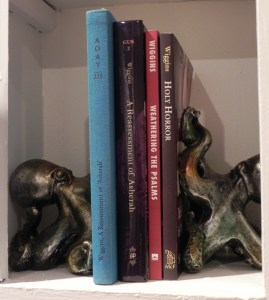
Here’s where it gets interesting.  Homer had a sister named Helen.  Of Troy?  (There’s also a Troy, New York.)  Perhaps a family name?  My records don’t really answer that for me.  And they had a brother named Ira.  Ira is a biblical name, but it also may be a variant of the name Hera, the wife of Zeus.  This had nothing to do with my writing my dissertation on Asherah, who is perhaps the namesake of Hera, or at least it has been proposed.  I doubt my ancestors would’ve named a son after a Greek goddess (the family was of Teutonic origins).  Or maybe great-grandpa Adam was more educated than he let on and had read the Iliad?  If only I could afford to get back to Ithaca I might just go on an odyssey of my own.

Upstate

Unrequited love is sometimes tragic.  Other times it’s merely sad.  People are attracted to places.  Or at least the idea of places.  I was born in Pennsylvania, but to a wandering family.  I keep looking for roots—my tribe.  I didn’t know my father well growing up, but my mother’s family, before taking on that rootless search for greener pastures, was from upstate New York.  For several generations.  I’ve tried many times to land a teaching post somewhere upstate, but in vain.  Even when I knew the people in the department and had been to campus, like that time at Syracuse University.  It was raining when I visited, back in my Routledge days.  I was taken by what I experienced there, never to be welcomed myself.  My family was from a bit further north, around Albany, the head of the Hudson Valley.

At the time I wasn’t aware that my childhood hero Rod Serling was born in Syracuse.  My daughter was at school in Binghamton, which is where Serling grew up.  That I knew.  Nor did I know that Dan Curtis, creator of Dark Shadows—that other childhood staple—had gone to college at Syracuse.  Something about upstate.  I’ve remarked to my family that when traveling in this part of the country I catch glimpses of familial facial features in some strangers.  A passing glance suggests that they might be distantly related.  My unknown tribe.  Economics, however, have always kept me away.  Even when I explained in my cover letters that I felt that special connection my applications were summarily brushed aside.  Probably by folk who knew who their tribe was.  Probably from somewhere else.

In this world of internet loneliness, we long for connection.  We lived in Wisconsin for over a decade.  The only people I really got to know were those I knew from Nashotah House.  And this was even with years of involvement with the PTO, serving on the building committee, and even being president one year.  People were busy even back then.  I was thinking perhaps I’d found my tribe in Wisconsin. But then…  The move to New Jersey put me close to my ancestral state, but not in it (my mother was born in Jersey).  Economics, that dismal science, dictated that a move had to be back to Pennsylvania, where I was born among strangers.  Our nation is one of many tribes, including those we sought to exterminate to steal their land.  We have plenty of space, but we value economics over belonging.  You may buy the presidency, but you can’t buy your tribe.


Eclipse 2024

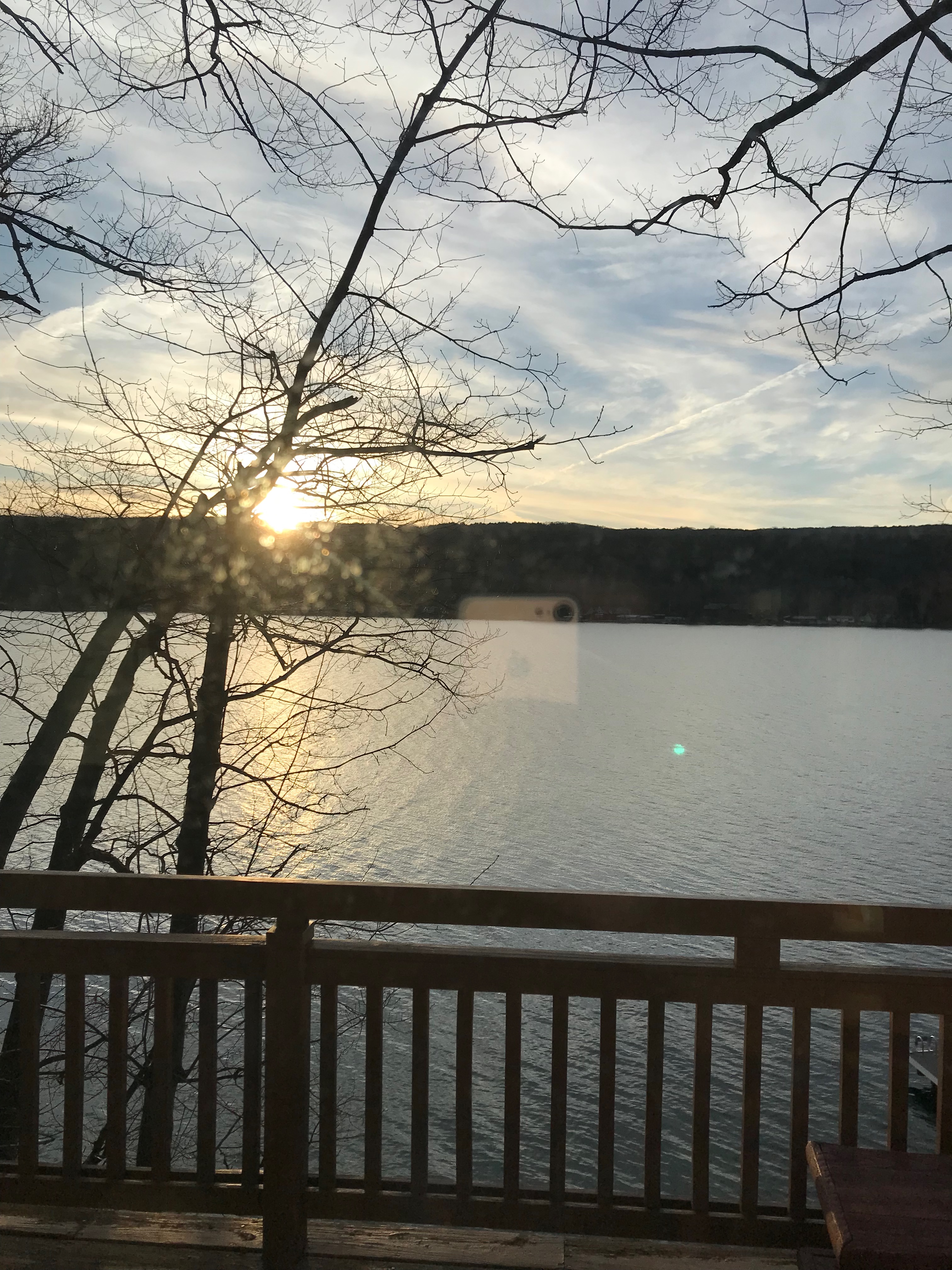
Eclipses.  They’re fully explainable.  Or are they?  Yesterday’s solar eclipse, with totality within driving distance of many Americans, led to an inexplicable need to see it.  April, we’re told, is the cruelest month and upstate New York is known for its “ever-changing skies.”  I admit I was skeptical.  Together with some friends we arranged to meet near the umbra, in Penn Yan, and to drive from there to totality up on Lake Ontario.  As is typical in New York, the day started out fair, with a few high clouds.  It was chilly, but this is April.  Our destination: Fair Haven Beach State Park.  The location was nice; we arrived early and found a good spot.  The clouds, however, were willful and wanted to remind us, like last week’s earthquake, that we’re not really in charge here.

As the day went on—totality for us was 3:20 p.m.—more and more people came into the park.  To its credit, with what must be a limited state budget, it absorbed many eclipse seekers without any trouble.  By 3:00 the cloud cover was heavy-ish.  Our friends had heard a sponsored eclipse speaker, however.  Totality was nothing like even 99%.  This would be of a different magnitude, even with clouds.  I remember three previous eclipses.  One in school with the pin-hole method where you really don’t see anything, one in Wisconsin after teaching one morning at Nashotah House, and the 2017 which I saw in midtown Manhattan.  None of this prepared me for totality.  Around 3:18 it started to look dusky.  We could catch glimpses (but no photos) of the crescent sun.  Within seconds it was completely dark.  It was another of those transcendent earthly things, like the earthquake three days earlier.

Perhaps I’m getting old enough to realize that you can’t really describe such feelings.  Maybe I’m getting sensible enough to understand such things are called ineffable for a reason.  All the planning, worrying, anticipating, was for this moment.  Yes, there were clouds overhead, but the park was full of cheering people.  They too had come here for something extraordinary and to my surprise I found tears in my own eyes.  I captured no photos of stunning clarity, but I had experienced something I’d heard about since childhood but had only glimpsed in the most crude of facsimiles before.  We were able to experience a kind of rebirth that comes only after night.  Conditions weren’t ideal, but are they ever?  And an encounter with the numinous always comes on its own terms.

The sun, hours before being eclipsed

The Other Mississippi

Salmon aren’t the only animals that head back to their ancestral homes late in life.  There’s a draw to where we’re from.  Many humans can’t physically return for socio-economic or emotional reasons, but there’s an urge that may transcend generations.  For me it’s always been traced through my maternal line to upstate New York.  My mother’s [redacted for security question purposes] family had been in the upstate region around Schenectady for generations, as traced back as far as the 1770s.  It was my maternal grandfather, branching off from his father (who made it as far as central New York) who eventually left the state, after teaching in a one-room schoolhouse, for which, in those days, you didn’t need to be a college graduate.  In any case, I have a fondness for the Hudson Valley and an interest in its history.  

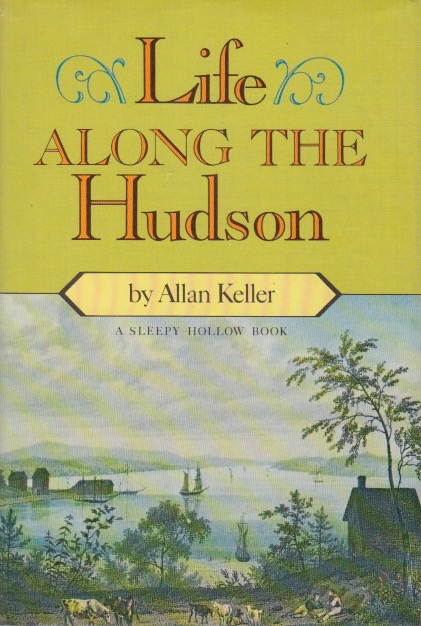
Allan Keller was a journalism professor who never became famous.  His Life along the Hudson is one of those charming, dreamy books about yesteryear.  Richly illustrated, it really isn’t a history (Keller wasn’t an historian) so much as a set of vignettes illustrating the role and importance that the river has had not only for New York state, but for the United States as a whole.  There are chapters about famous residents, battles of the Revolutionary War, historic houses, quirky facts, boating, and railroads.  It’s an interesting cross-section of a forgotten part of America.  Today when we hear Hudson River we tend to think New York City.  And while that’s not wrong, it certainly isn’t the whole story.  The Hudson early on connected Albany with Manhattan as they grew to be the two major points around which the Empire State expanded.

The book was never a bestseller.  It’s not particularly rare.  It is, however, a series of snapshots.  One of those was 1976, when the book was published.  The Hudson had become so polluted that major remediation efforts had to be put in place to redefine it from a cesspool to a beautiful waterway that took the breath away from many early travelers.  This valley was once considered one of the truly scenic spaces in the United States.  Now it’s pretty much a suburb of New York City, but it retains much of its earlier appeal, if you know where to look.  I’ve tried to find jobs that would allow me to move back to this region of upstate New York, but I’ve ended up in my own immediate home state of Pennsylvania.  I’d go back a couple more generations, if I could, but even salmon sometimes never make it back home.


The Good of Others

On a recent trip to visit family in upstate New York, the Sunday we had to leave (for work Monday is an implacable law), we decided to have lunch in a local park.  The weather was fine and there was plenty of social distancing, given the size of the grounds.  After a nice picnic and stroll, we realized it was getting late to start out in order to get home by my oddly early retiring time.  We headed back to our hosts’ car only to find it wouldn’t start.  They had a new battery and so we popped the hood and hoped to find something obviously wrong as we waited for the long response time for AAA in a rural area on a weekend.  We were a little concerned because we still had a long drive and no real way to get back to our own car, parked at our hosts’ residence.  A stranger came up and asked if we were having trouble.  Listening to the symptoms he said, “Do you mind?”  Putting his head under the hood, he said, “I’m a mechanic.”  He had our host try again and the car started right up.  He refused to take payment and wouldn’t even give his name.

Despite the fear the Republican Party tries so hard to spread, it has been my experience that good Samaritans abound.  When I’ve had car trouble far from home, I’ve never waited long beside the road before a stranger has stopped and asked if they could help.  Technology may make us feel more self-sufficient (we have smartphones and can call for our own help), but it doesn’t always work that way.  My wife had accidentally left her phone at our hosts’ place, and I’d forgotten to charge mine so the battery was depleted.  Uber would require an active, charged phone and our hosts were using theirs to communicate with AAA.  If the stranger hadn’t stopped by we would’ve been stuck, likely for hours.

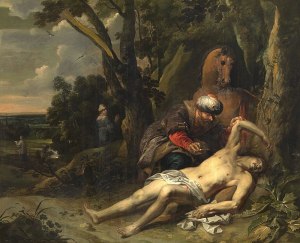
I oftenconsider how Calvinistic GOP thinking can be—assuming the “total depravity” of everyone and declaring that we must be kept in check by laws that maintain outdated concepts of both humanity and justice.  To be sure, there are dangerous individuals out there.  Would you want Trump to stop by if you were having car trouble?  What selfless behavior could you expect from that quarter?  Sucker!  In general, however, people are good.  They are motivated by what they think is right.  We’re in a pandemic.  The mechanic didn’t know us (we outnumbered him), he had no obligation to help.  Good Samaritans exist, and they are frequently found outside the yellowed leaves of Scripture.

Balthasar van Cortbemde – The Good Samaritan, via Wikimedia Commons


Almost Ancestors

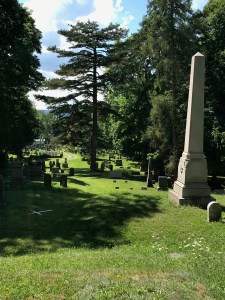
During the Covid-19 crisis, cemeteries seem to be safe places.  Not too many people are in them, at least not people that can spread the virus, and they always provide grounds for rumination.  Besides, being outdoor spaces they can get you someplace outside the same four walls you see all the time.  My wife and I both have an interest in genealogy.  We’ve worked on our family trees and even try to keep our Reunion software up-to-date.  This past weekend we visited a family burial plot in upstate New York.  My wife’s family has a more accomplished pedigree than mine does, and one of her ancestors here actually merited an obelisk and was written up in local histories as a noteworthy member of the community.  I also have ancestry in upstate, and we’ve traveled to some of their sites in the past, although their markers are usually harder to find.

Being in a cemetery, the logic of ancestor worship suggests itself.  Without these people history as we know it would’ve been different.  Without those who are our direct ancestors we wouldn’t even be here pondering our own insignificance.  We wish these headstones could talk, saying more than the names, vital dates, and perhaps a quote from the Bible.  We listen, hoping to gain knowledge of who they were.  It seems to me that cemetery histories would be a boon to genealogists.  For those of us whose predecessors were buried in small towns, such guides could be a real boon.  As it is, Find A Grave dot com is often a helpful resource, but who wouldn’t like to be written up in an actual book?  Network reception often isn’t great out here in rural America.

Graveyards are gateways to the past.  In a world that feels like it’s changing way too fast, it seems right to have these places—these sanctuaries—to stop and reflect.  They represent lives lived.  Peaceful after the trauma of day-to-day angst and struggle.  Unfortunately the pandemic is daily adding to the number of those who’ll be buried in cemeteries across the nation and around the world.  Although somewhat preventable, we have no national will to stop the tragedy.  So it is I find myself staring at a monument erected to someone I never knew, but without whom my life would’ve been vastly different.  It’s a sunny day and I’m outside amid a crowd that can cause me no harm, but who, at times like this, inspire me. 


Significant Places

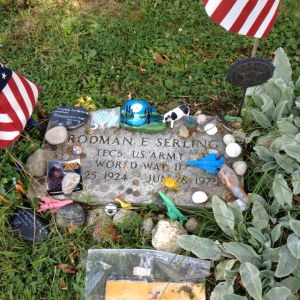
Upstate New York may not get the attention that the state’s largest city does, but it is a place of wonder.  One of those sources of significance is the unique blend of individuals who’ve impacted both American culture, and, in turn, my life, that called this region home.  It’s difficult to describe what I’m feeling as I’m standing next to Rod Serling’s grave.  This is a man who held a profound influence over my outlook by letting his imagination go where it would.  It’s more than the Twilight Zone—although its theme is one of the ringtones on my phone—it’s the sense that I somehow knew this man I never met.  It’s also the sense that his gravesite is so humble, in a rural area outside a small town, the kind that often featured in the stories he wrote and presented.  It’s the sense of connection.

As I young person I practiced writing short stories based on the mood set by the Twilight Zone, with a dash of Ray Bradbury thrown in.  From a small town myself, imagination was my means of enlarging my world.  We didn’t have the money to go many places but the magic box in our living room could take me to weird places alive with transcendence.  The results were beyond price and there was something deep and liberating here, even for a kid whose religion said it was all nonsense.  Even religion requires escaping sometimes.  I know the publishing world has moved beyond what was fashionable in the sixties and seventies, but that can’t dislodge the shard in my chest right now.  If there are spirits in cemeteries, they are here.

Some time ago I began, as I had time, uploading my photos of famous writers’ graves (along with those of other recognized names) on Pinterest.  On the way to Interlaken, I wondered aloud why nobody seemed to show an interest.  I find cemeteries peaceful places, and sacred spaces are those where people significant to us have been, in some form, at some time.  I know Rod Serling loved upstate New York.  It was his escape from the busy life of a writer whose cachet was marketable back in the days when anything seemed possible.  Retreats are those places we go to restore ourselves when work simply won’t allow creative people to have unstructured time.  I wasn’t expecting a huge mausoleum or towering monument here.  Others have found their way to this place nevertheless.  I am in a sacred place and the quiet here is kind of a prayer.


Bookish Dreams

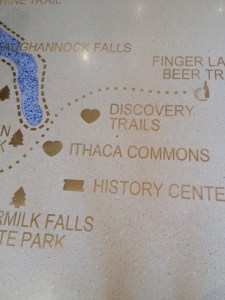
Driving into upstate New York via interstate 81 you’ll find a remarkable rest stop.  To put this into context, I should say that my wife and I have driven from Maine to Washington (not on a single trip) and from Wisconsin to Louisiana and South Carolina.  We’ve laid down considerable mileage together, and never have we encountered such a nice rest stop.  Clean, modern, and featuring local goods for sale, it’s a loving homage to the southern tier, the New York outside the city.  One of the features of this unusual facility is a terrazzo floor fresco highlighting the various points of interest within a couple hours’ drive.  Mostly when we stop here we look toward Binghamton and Ithaca, the cities we most frequently visit.  We stop to use the restroom and then drive on.

When we stopped over the holidays, however, we lingered a little bit.  There’s a display on Mark Twain—he lived in Elmira, New York for a time—and there’s an in-ground plaque outside to Rod Serling.  I spent some time looking over the points of interest in the floor map when my wife pointed out a site listed as Hobart Book Village of the Catskills.  I couldn’t believe that I’d been in this building dozens of times but had never bothered to look that far east.  Curious, I did a web search once we reached out destination.  There is, it turns out, a village in upstate known for its main street of book stores.  What perhaps impressed me even more was that it was considered significant enough to be given a kind of “Hollywood star” treatment in what is an often overlooked part of the state.

Now I can’t say what my impressions of Hobart are.  I’ve never been there, having just learned of it on a recent roadtrip.  What I can say is that my world suddenly began to feel just a bit more friendly knowing that such a place exists.  We live in a country that could indeed use a bit more positive influence.  Some of my happiest memories involve bookstores.  Back in my teaching days we made regular autumnal literary weekend trips, visiting sites haunted by writers.  Often we’d find an independent bookstore near such sacred places.  To many, I realize, this would smack of nonsense, but to those ensconced in literary dreams, it created pleasant memories.  You feel something in the air as you stand near the house or grave of an author.  Places are made sacred by what transpires within them.  The writing of books shapes the very space-time around them.  At least it does for those who even find inspiration in an interstate rest stop.


Ithaca Musings

Ithaca may be the ultimate hippie town. Open and accepting of diversity, it’s a place where anyone can speak out against what’s going on in the government and not worry about finding any objectors. Yesterday when I was in Buffalo Street Books, customers openly vented their frustrations with the way Washington’s handling things, and others joined in. There’s a sense of righteous anger here that hasn’t been fashionable since the days of the biblical prophets. You have heard it was said Watergate was a bad thing, but verily I say unto thee something much worse than Watergate is here. And although winter is still holding on in upstate New York, nobody doubts global warming is real.

From my first visit here, I knew that I wanted to live in Ithaca, but it is one of those places you can’t afford to live. Amazing how the liberal cities are the places people want to reside. Places where you can’t just turn off the realities of a diverse world just because some things make you uncomfortable. Places where if you notice that other people are different you are reminded that you, in their eyes, are the different one. There is no static, monochrome, cookie-cutter American. Why is this an idea so hard to sell? Capitalism leads to and fuels the desire to own. And owning leads to the desire to own more. I’ve often noticed this since being out of higher education—even within your own company others want what you have. The basic civility of the socialist is missing. That’s where the “me first” attitude leads.

In upstate New York, as in many parts of the nation, the very names remind us that others “owned” the land before Europeans arrived. Native American concepts of ownership were so different from the capitalist ones that forcefully landed on these shores that those views were forced, under firearms and steel, to assimilate to the foreigners’ ways. Capitalism takes no prisoners. Turnabout, they used to say, is fair play. We no longer feel that way as a nation. The interlopers have taken over. We’ve made the country in our own image. And it certainly isn’t any more noble for it. Being in a place like Ithaca always makes my spirits ebullient. The very concept of ownership is an odd one, I realize. Mere mortals can never really own anything. We can pretend to, or perhaps we can take a more enlightened view. We are all borrowing things here. And I would love to borrow a piece of real estate here in Ithaca.