Recession Value

While reading about recessions (am I getting old, or what?), I suddenly got the creepy feeling that our entire lives are unduly influenced by those who think they know what they’re doing.  Financially, that is.  The Great Depression and the Great Recession were both times of economic hardship because the rules capitalism put in place defined us as being in an era of lowered GDP, or gross domestic product.  Why?  Because there were no jobs.  Why?  Those who hold the purse strings (capitalists) had pulled them shut with all their might.  Then, like magic, depression and recession end and everyone tries to get back to business as normal.  To me this seems utterly ridiculous.  They call economics the dismal science for a reason, after all.  The fact is the rules are made by us.

Society is very complex.  This is one reason that people should really think hard about who they’ll vote for.  Leaders who think it’s all simple inevitably lead to disaster.  If I could, I would switch the world economy away from capitalism.  If I were president and were to try this, it would be a very, very slow process.  It would take generations.  Why?  Because this is a complex system.  Sudden changes don’t last.  Of course, to people who believe the universe took only six earth days to create and that a big flood wiped out all the dinosaurs (or maybe some were on the ark), complexity is anathema.  Of the devil.  Well, as they say, the devil’s in the details.
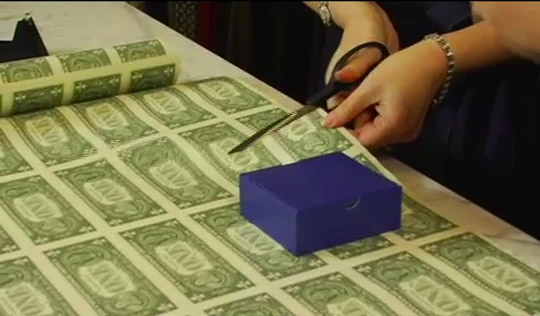
Image credit: I forgot where I found this; if anyone recognizes it please let me know!

And so we suffer through depressions and recessions.  To those of us with feet on planet earth, it doesn’t feel like much has changed.  We still need to sleep and eat and all that, but some “experts” are telling us why we have to pay more at the grocery store or at the fuel pump, and why those at the top of the pyramid seem to be all right, no matter what happens to the rest of us.  And we let it carry on.  Economic systems are simply a reflection of what people value.  The things we value most cost the most (it’s called supply and demand, AKA capitalism).  The most expensive material thing I own is my house, and truth be told, it’s mostly owned by the bank.  But the most valuable actual thing I own is my mind.  It can’t be bought.  And one thing it keeps on telling me is that all of this business about recessions and whatnot is rather silly.
Post-Pandemic

Something I’ve noticed: throughout this crisis business people have been fretting how hard it will be to reestablish everything “like it was” when this is all over.  I wonder if they’re not thinking big enough.  It seems to me that a system as fragile as capitalism is bound to tumble when something suddenly becomes more important than money.  Humans and mortality.  Most people fear death.  Religion, historically, has come to fill in that space, but as we grew more and more confident in our ability to prevent large-scale death capitalism, the real opiate of the people, stepped in.  Make money!  Buy things so that those of us with lots of money will get even more!  We’ll live extravagant lifestyles and laugh at those of you who’ll keep spending to keep us where we are!  Then people stop spending.  Nobody’s laughing now.

Is there not a better way to construct society?  Sure, some means of exchange is necessary, but do we have to give such power to an abstract concept such as money?  Granted, gods are abstract concepts too, but at least they’re spiritual rather than material.  That which is made of mere physical stuff is bound to disappoint eventually.  When our sun balloons out into a red giant, everything we know here on earth will be gone.  The physical stuff anyway.  I know this opens me to accusations of wishful, wistful, escapist thinking—maybe something spiritual will come rescue us—but I assure you it’s not that.  What I’m referring to is meaning.  There’s value in it, and you can’t buy it.

The coronavirus crisis has us all, on some level, asking about the meaning of it all.  God hasn’t intervened, and the numbers are still climbing.  Nature dictates that they will eventually stabilize, and decline.  Our capitalist society, however, is scrambling to figure how to make sure everyone pays their taxes, their bills, and somehow manages to find toilet paper (which is a great investment at the moment).  Are these the bases for meaning in life?  Can’t we do better than that?  Can’t we find a system that values what is truly unique and rare?  Each and every person on this planet.  And some of us would go a step further and include our animal people too.  Life.  Life is value.  Money can be thrown away, as we all know.  Sometimes quite easily.  As long as it lands in the coffers of those with too much, everybody’s happy.  Well, not everybody.  Maybe not even most.  Perhaps it’s a good time to reassess our priorities.


The Whole Truth

In a thoughtful piece on NPR, Adam Frank discusses “Are Scientific Truths Better Than Other Truths?(.)” He describes a Ivy League conference called to discuss this point, and although I get about as much attention as adults give Barney, I’ve been blogging about this topic for years now. If only I had an institution. Or an ivy leaf. But never mind that. The topic’s the thing, and indeed it is long overdue. Science works (at least most of the time) and so we don’t require any convincing on that point. The very title of the article, however, raises the specter of the question: are scientific truths better? There’s a lot of unpacking to do and I haven’t even left home yet. First of all, “truths.” Science provides the best explanation of phenomena that we have, given the data at the moment. Since science is, by definition, falsifiable, it doesn’t provide truths. As much as scientists must begrudgingly admit it, truths are spun out by philosophers and—God help us!—theologians. The scientists who want to give us truths should probably take philosophy 101.

microgaphia_schem_1_instruments

Then there’s that surprisingly difficult adverb “better.” Good, better, best. These are value words. Science cannot assess value. Gold is “worth” more than the lint in my pockets because humans have agreed that it is. Inherently, both substances are made of the same thing: atoms. The lint in my pocket may have more exotic elements than pure gold, but nobody’s going to pay anything for it. Value, as has been endlessly demonstrated, is in the purview of religion, ethics, and philosophy. If you have to you can add the dismal science to the mix, but even that is just a social science. No physicist can tell you if this meal is better than that. It’s a matter of perspective. If I value my beans enough, not even your pâté will tempt me.

I want to stick with this latter word “better” just a little longer. Perhaps because as an underemployed thinker I’m especially sensitive to the subject. In what sense is science “better” than humanities? Show me a scientist who’s never listened to music and I’ll show you a sad individual. When we come home from the lab we still want the creature comforts that people have devised whether through science, culture, or even religion. If you value that weekend, be sure to thank a monotheist. Science tells us no day of the week is any different than any other. In my experience there’s a world of difference between Saturday and Monday. For this inveterate and unrepentant humanities student, that’s the truth.