Scary Television

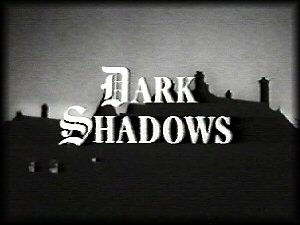
Since noting some months ago that I’d discovered Dark Shadows on Amazon Prime, it’s no surprise that I’m squeezing in an episode here and there, where I can.  Amazon begins “Season 1, Episode 1” at the point Barnabas Collins appears.  This was actually ten months into the daily, but it saves a few hundred dollars buying the DVDs.  I honestly remember little more than impressions of the soap opera from childhood.  I can’t say which episodes I saw during the initial run, but I do know that they were formative in my appreciation of horror.  It turns out that many famous people in various media were childhood fans of the show.  It certainly wasn’t the slickest production but it manages a mood that’s difficult to match.  It’s what Edgar Allan Poe called “effect,”—he felt that a short story should maintain a single effect, something that he did most notably in his macabre tales.

I recently watched, in Amazon’s numbering (and I realize Amazon didn’t come up with this, it was a rebroadcast release that someone decided should start when the show became popular) episode 22 in season one.  This particular episode surprised me in that it actually had a legitimately scary ending.  Now, soap operas are very slow unfolding of stories, as most television watchers know.  Things don’t change quickly and action-packed content requires a lot of time to set up and film, whereas daily shows simply don’t have the time to do that.  They rely on people being drawn into the story and wanting, needing, to find out what happens next.  By episode 22 the savvy viewer had already figured out that Barnabas Collins was the vampire.  Nobody had explicitly said so yet, however.

Maggie Evans, his favorite victim, has been “ill” in bed from loss of blood.  Under Barnabas’ spell, she sends away her boyfriend and Victoria Winters—the original impetus for the entire series—has come to sit with her through the stormy night.  As the two women argue about the proper care for Maggie’s condition, the storm continues, flashing lightning through the French doors in Maggie’s room.  The wind blows the doors open and a flash of lightning shows the silhouette of Barnabas standing in the garden.  I have to admit, even at my age and with my background of horror movie watching, that moment scared me.  The genius of the show is that Barnabas is such a likable character.  As the narrative develops, as it does beginning in episode 23, we come to see that Barnabas is a sad, reluctant monster.  Perhaps if I’ve time enough, I should write a book about it.  But then, I barely have a moment to squeeze in an episode now and again.


Fly by Night

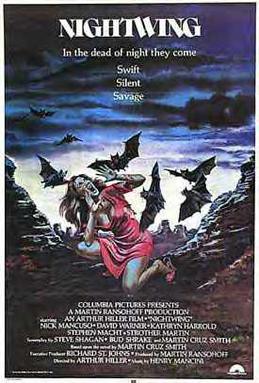
Nightwing is a movie I learned about by reading Stephen King’s Danse Macabre.  The idea has merit but falls below the expected level of any horror film of the era—and I’m a fan of seventies horror.  Those in the know suggest that this was supposed to be Jaws with vampire bats in the era when horror movies started to re-realize the dangerous potential of nature itself.  A basic problem underlies the dull pacing, non-indigenous actors playing Indians, and fatally overstuffed plot: vampire bats aren’t dangerous.  Bats are highly advantageous to the ecosystems in which they thrive and the idea that six or seven bites could drain a person of blood is ridiculous on the surface and looks rather silly in execution.  At least the later movie Bats (also bad) had genetically mutated mammals.  Eco-horror can be effective.  Natural bats are difficult villains, though.  

So, on Hopi lands an elderly priest summons the end of the world.  Releasing a god, the bats form the precursor to a native apocalypse.  Two tribes with differing views of white drilling rights on their lands argue over this while killer vampire bats attack.  They kill a group of Quaker missionaries.  Luckily, a British vampire bat killer is after the swarm.  He travels around killing bats, which, he says, are pure evil.  The deputy of the “good” tribe, which resists white incursion, eventually teams up with the bat killer because he saved his girlfriend who was going to leave him for medical school.  For some reason, two kinds of plague (including bubonic) are released but when the tribal priests all die during a rain dance it’s because of natural causes.  The leaders of the two tribes keep trying to catch each other out.

As the movie plods along, making the viewer root for the bats, the several dropped plot lines are left dangling like so many participles at the end.  The plagues?  Red herrings.  The tribal conflict?  Unresolved.  The special poison brought in to kill the bats?  Unused.  Total number of people killed to justify a wholesale bat massacre?  Nine.  Anytime I’m viewing a horror movie and I find myself repeatedly glancing at my watch, I know that something’s off.  It’s October and bats are a typical aspect of Halloween decor.  Nightwing, however, just doesn’t make them scary.  The movie was based on a novel which I’m now strangely tempted to read.  By all accounts, even though the author was partially credited with the screenplay, the book, as usual, is better.


That Night

I’m pretty sure I’ve seen Fright Night before.  It seems that it may have been on one of those trans-Atlantic flights where you exit the plane not quite sure what took place during those missing hours on earth.  I do recall that I had the hazy idea I wanted to see the movie under more controlled circumstances—with my feet on the ground and no pressurized cabin anywhere in sight.  It is certainly a passable vampire movie.  Tom Holland’s first as director.  Ironically, just the weekend before I’d had a hankering and rewatched Child’s Play, which he directed a few years after Fright Night.  I hadn’t realized they had the same director.  In any case, since the movie is now forty years old I’m not going to worry too much about spoilers.  Besides, I’d forgotten most of it since my last viewing, which was thirty or fewer years ago.

Copyright HAG ©2008

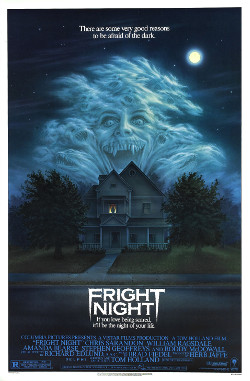
Charley Brewster and his mother live next door to a fixer-upper.  Charley, who’s a fan of the campy television show Fright Night, keeps getting distracted from his girlfriend Amy by goings on next door.  He immediately and correctly deduces that their new neighbor, Jerry Dandrige, is a vampire.  But nobody believes him, not even Amy.  As a teenager, he’s rather helpless and can’t take on the vampire alone.  When Amy sees their friend “Evil” has been transformed, she believes and eventually the unemployed star of Fright Night, Peter Vincent, styled “the vampire killer,” also joins them.  They have to stop Dendrige before Amy ends up a vampire forever.  There are a few good frights and the story still feels rather fresh.  The weird thing, it seemed to me, was the long, lingering reaction shots of Vincent (Roddy McDowall).  The pacing felt a bit off, but otherwise it was a fine movie.

The name Peter Vincent combines the two stars Holland wanted for the role, Peter Cushing or Vincent Price.  The campy performance of this character balances the body count and gore.  Although it involves teens, it landed an R rating, almost considered necessary for any serious horror movie.  The movie poster also makes it look like this might be more comedic than it is.  It has a distinctly 1980s horror film feel to it.  Now this is going to make me feel old, but I’m starting to be able to discern the differences between seventies and eighties horror films by remembering what those decades were like.  I don’t know when I saw Fright Night before, but I’m glad I saw it again.  And I’m keeping an eye on the neighbors, just in case.


Meeting Buffy

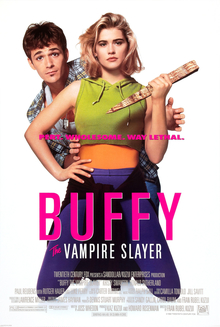
I have a confession to make.  I had never, before just recently, seen any of Buffy the Vampire Slayer.  This is kind of embarrassing because it was being talked about even as I was just starting to teach at Nashotah House.  And it has been discussed in religion and horror books quite often.  I understood that the television series was considered better than the original movie, but I felt that it was important to go to the source, at least to start.  Joss Whedon, it is reported, distanced himself from the film he wrote because it began taking a different direction than he’d envisioned.  The television series, which was praised among any number of critics, was more what he had in mind.  Still, the film isn’t terrible.  The concept of a ditzy blonde being an unwitting vampire hunter is entertaining and Kristy Swanson plays a pretty good Buffy and Donald Sutherland a great Merrick.

Having not seen the series to compare, the movie stands fairly well on its own.  Vampire comedy horrors can be quite entertaining.  The plot here is a bit overwrought and the love story feels tacked on to the vampire narrative.  It lacks the strong through line characteristic of Joss Whedon movies.  So, Buffy doesn’t realize that she’s a slayer, a kind of reincarnated vampire hunter.  Merrick convinces her by telling her what her dreams have been.  And Buffy has preternatural abilities—reflexes beyond human reach.  And the vampires have been awaking in Los Angeles.  The story just doesn’t hold together as well as it should.  I was a bit surprised, however, to find the Bible quoted a time or two.

The charm, which also led me to read about Abraham Lincoln as a vampire slayer, is the unexpected juxtaposition.  A cheerleader, or the best president we’ve managed to elect in this divided country, and vampires?  Even more, vampire slayers?  Vampires, although monsters, are often symbolic and sometimes sympathetic ones.  Buffy’s vampires aren’t charming.  Sometimes funny, yes, but they aren’t the tormented souls that elicit human sympathy.  And Buffy adds its own backstory mythology.  In Dracula Van Helsing was a mortal aware of vampire habits.  Buffy sees this as a predetermined role, specifically female in nature.  I’m not sure if I’ll be able to carve out the time to watch the television series.  But at least, at this point, I have been able to put a bit more flesh on the character of an unlikely vampire foe.  It only took me thirty-three years.


Hunting Vampires

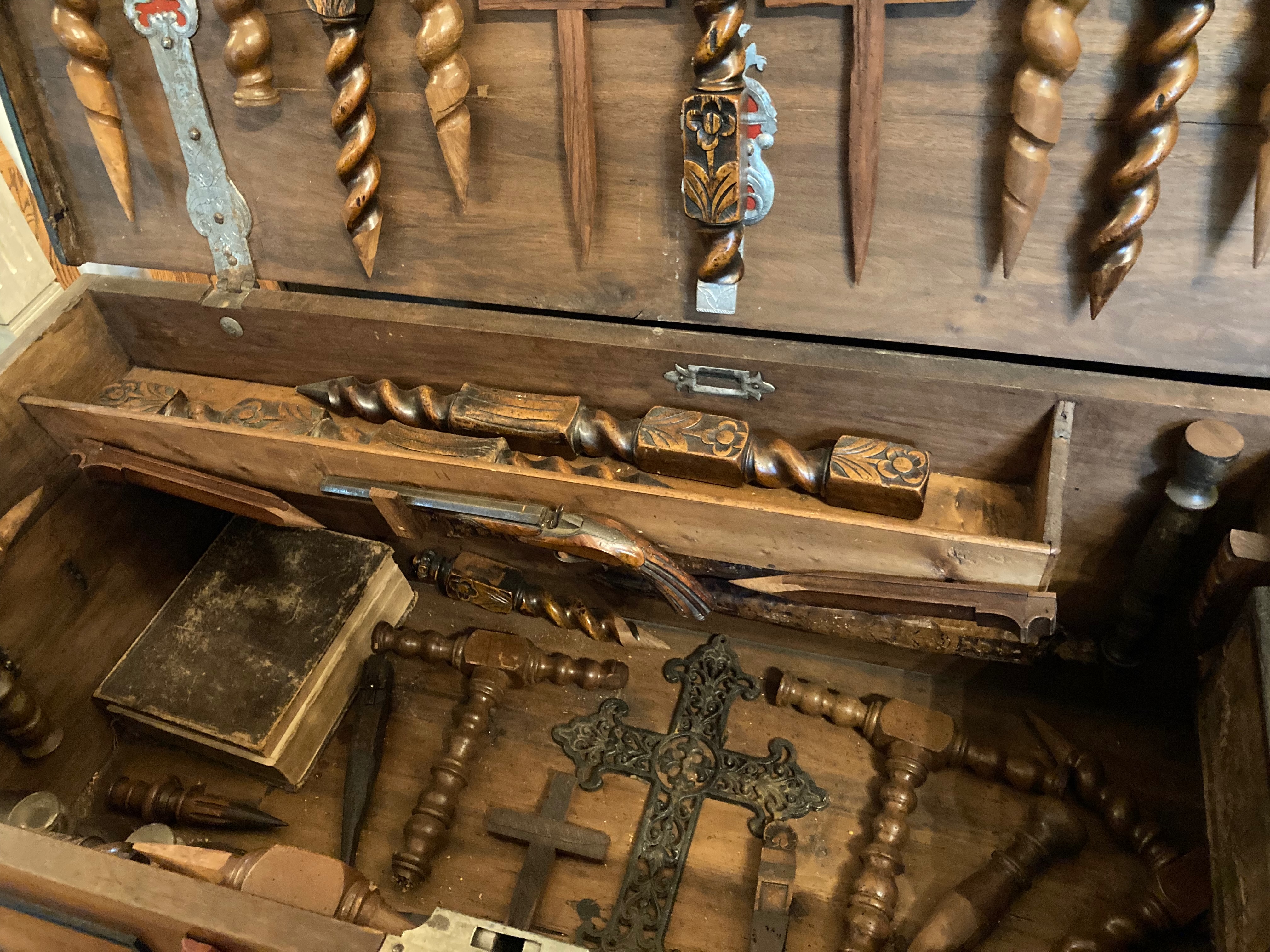
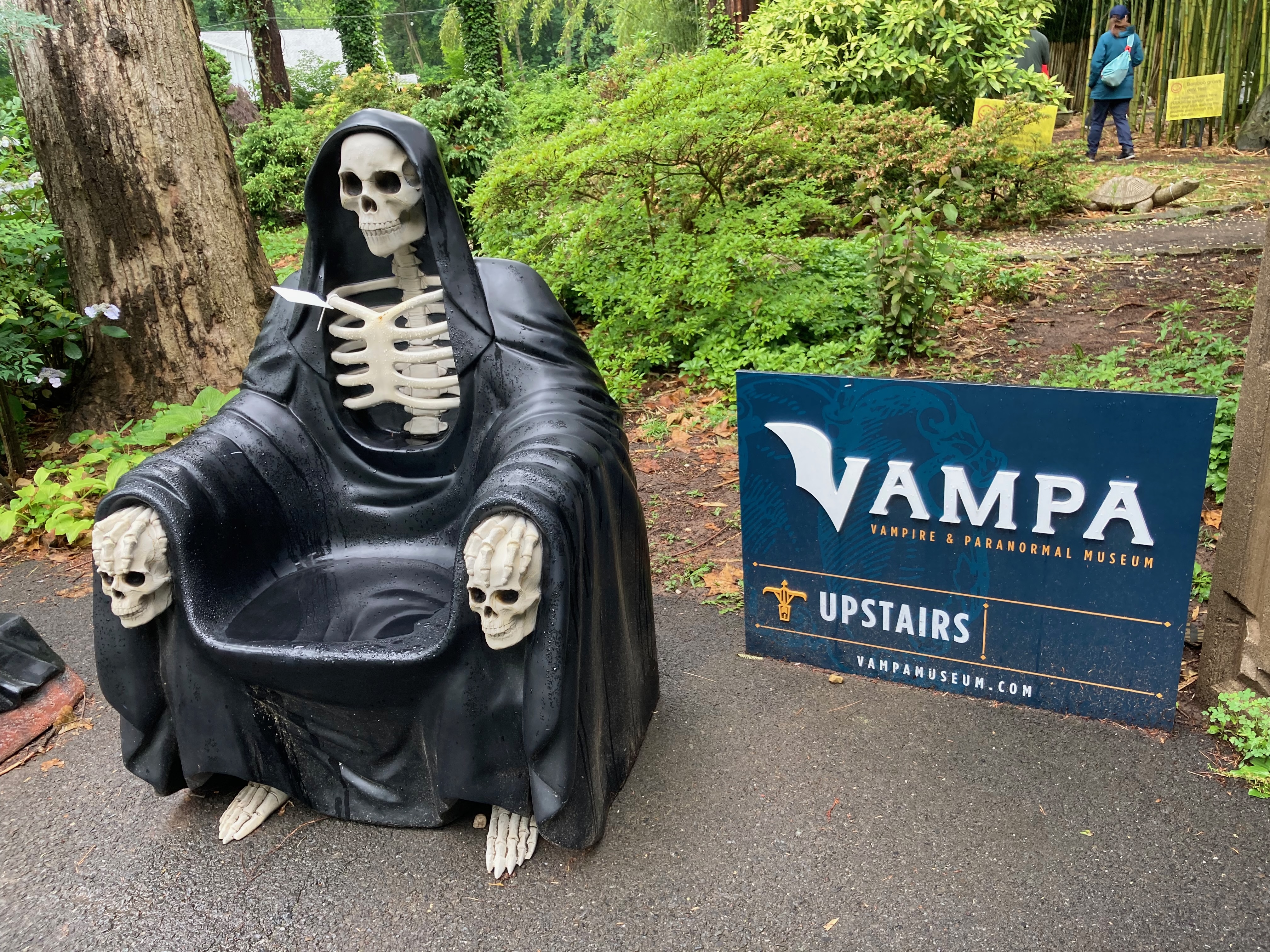
Many years ago some friends took us to the Mercer Museum in Doylestown, Pennsylvania.  Bucks County is one of those places where oddities persist, and I was very impressed by the fact that the museum had an actual vampire-hunting kit.  Now this was before the days of sophisticated cell-phone cameras and my snapshot, through glass, wasn’t very good.  There was no way to know, at the time, that a few years later Vampa: Vampire and Paranormal Museum would open up just a few miles down the road.  And that the latter would have a whole room full of actual vampire-hunting equipment (advertised as “Largest collection of vampire killing items ever in one location”).  A very real fear of vampires existed in Europe up until the technologies of the last century showed that humans don’t need the undead to create fear.  In any case, many chests of vampire-banishing implements line the first room.

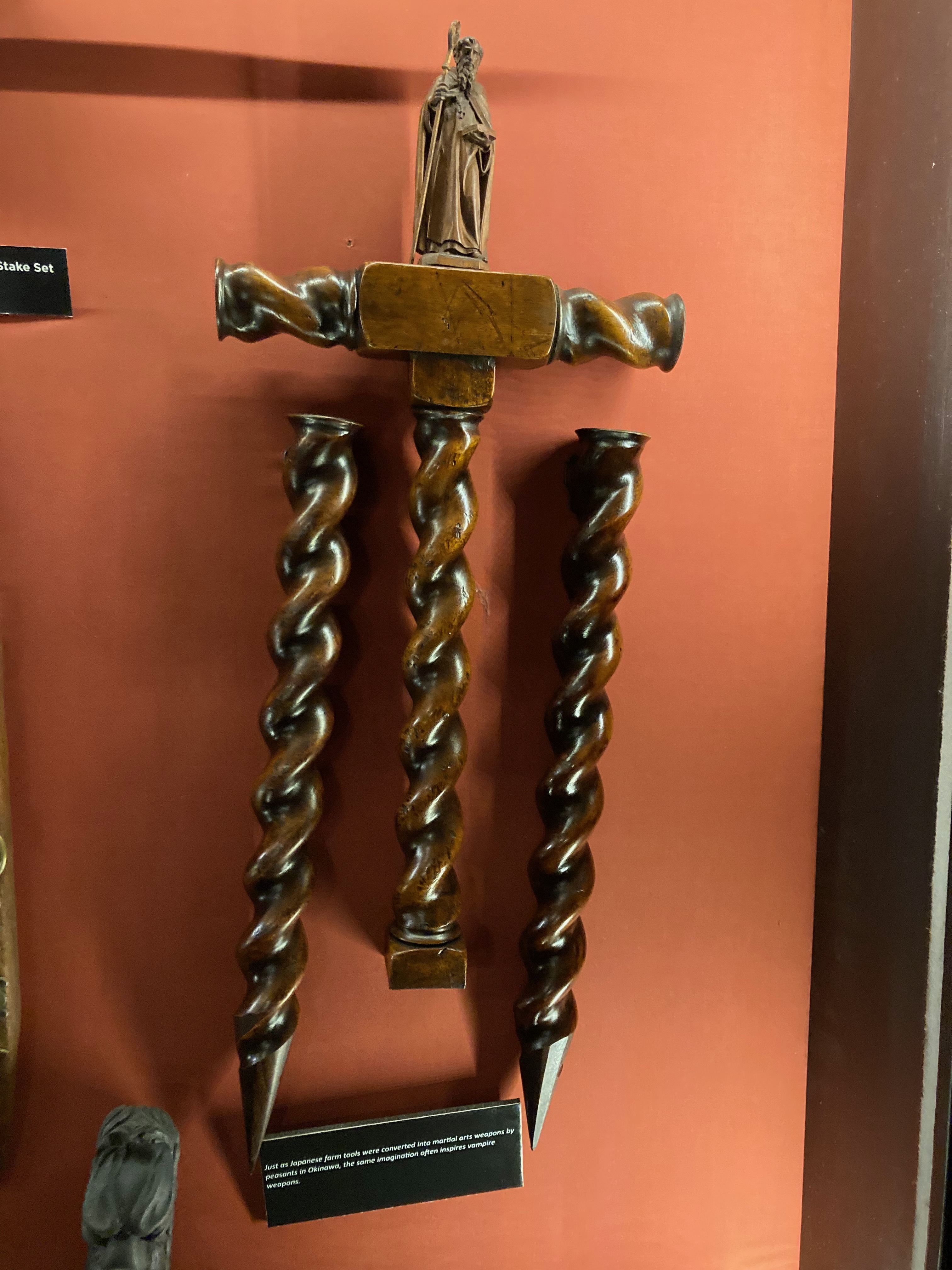
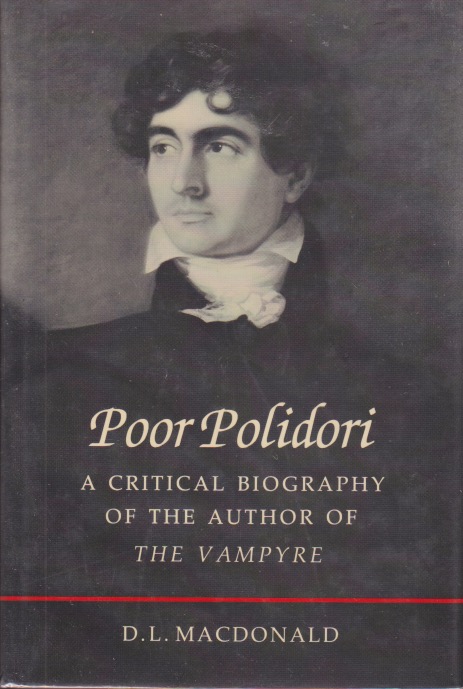
And stakes.  As my wife noted, in the movies they just grab a stake and mallet and get to work.  These were stakes made by craftsmen.  Many of them intricately carved, and, one suspects, officially blessed.  Matching sets of stakes and mallets seem like they were for display, rather like some firearm collectors these days proudly show off their guns.  The odd thing, to my mind, is that most of these artifacts weren’t medieval, but from the early modern period.  The earliest I saw was from the seventeenth century.  I had to remind myself that Europe was undergoing a very real vampire scare the decades before Bram Stoker wrote Dracula.  John Polidori, Lord Byron’s associate, had written a vampire novel in the early nineteenth century, well before Stoker’s 1897 classic.

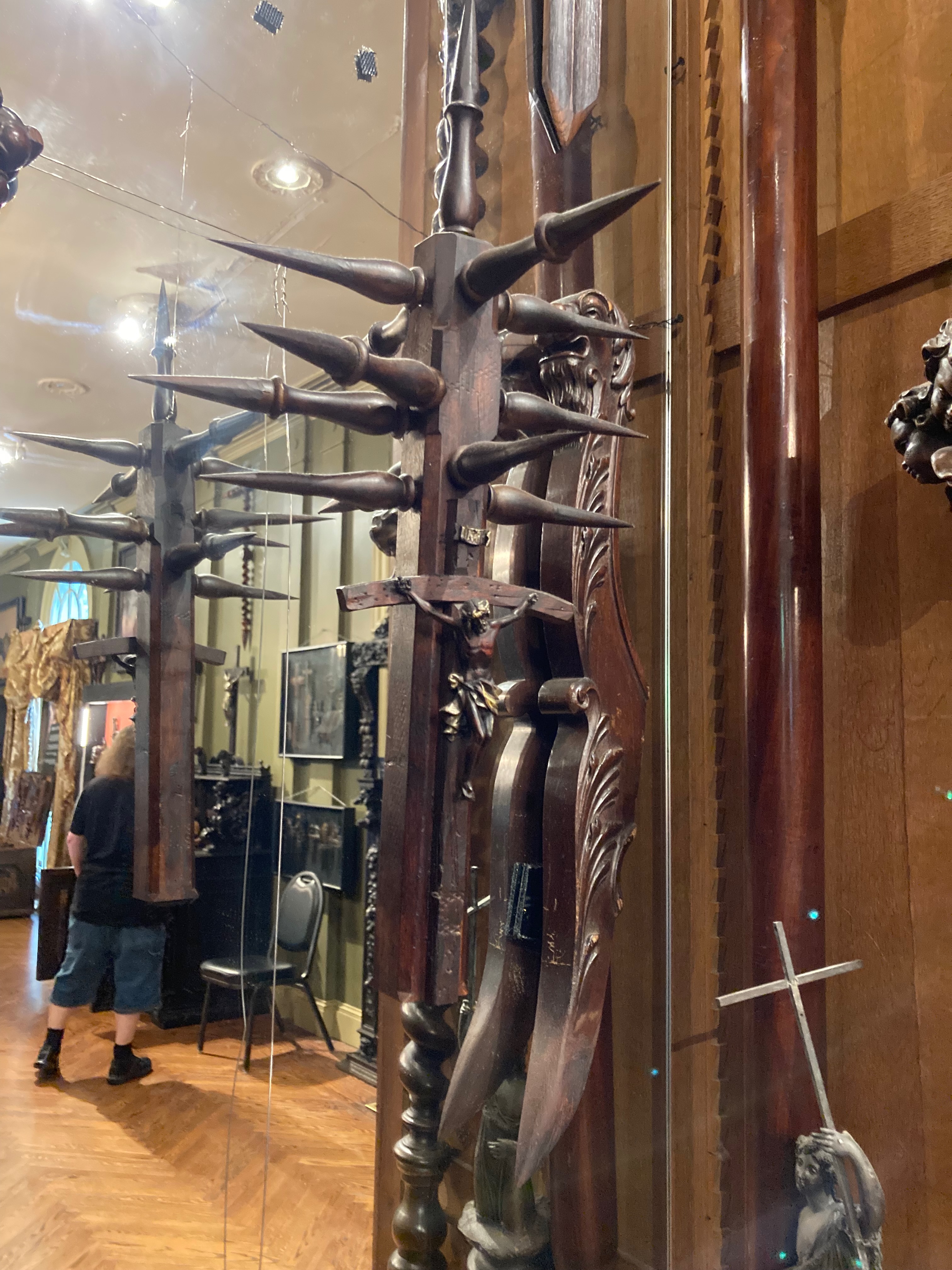
Vampire maces were of a higher magnitude.  The spiked mace, with crucifix, shown here, is an impressive piece of woodworking, as well as enough to make any vampire think twice before biting any necks in this house.  The idea of the Prince of Peace adorning such an instrument of violence encapsulates the contradiction of being human.  And the depths of our fears.  This museum is a testimony of our collective phobias.  Few people in this electronic age really believe in physical, supernatural, vampires.  There are people who do, of course, but most of us are so entranced by our phones as to completely miss a bat flitting through the room, let alone a full-fledged undead monster with fangs.  The fact is, over the centuries many people did gather what was needed to protect themselves from vampires in chests and cabinets, all in the name of fear.  

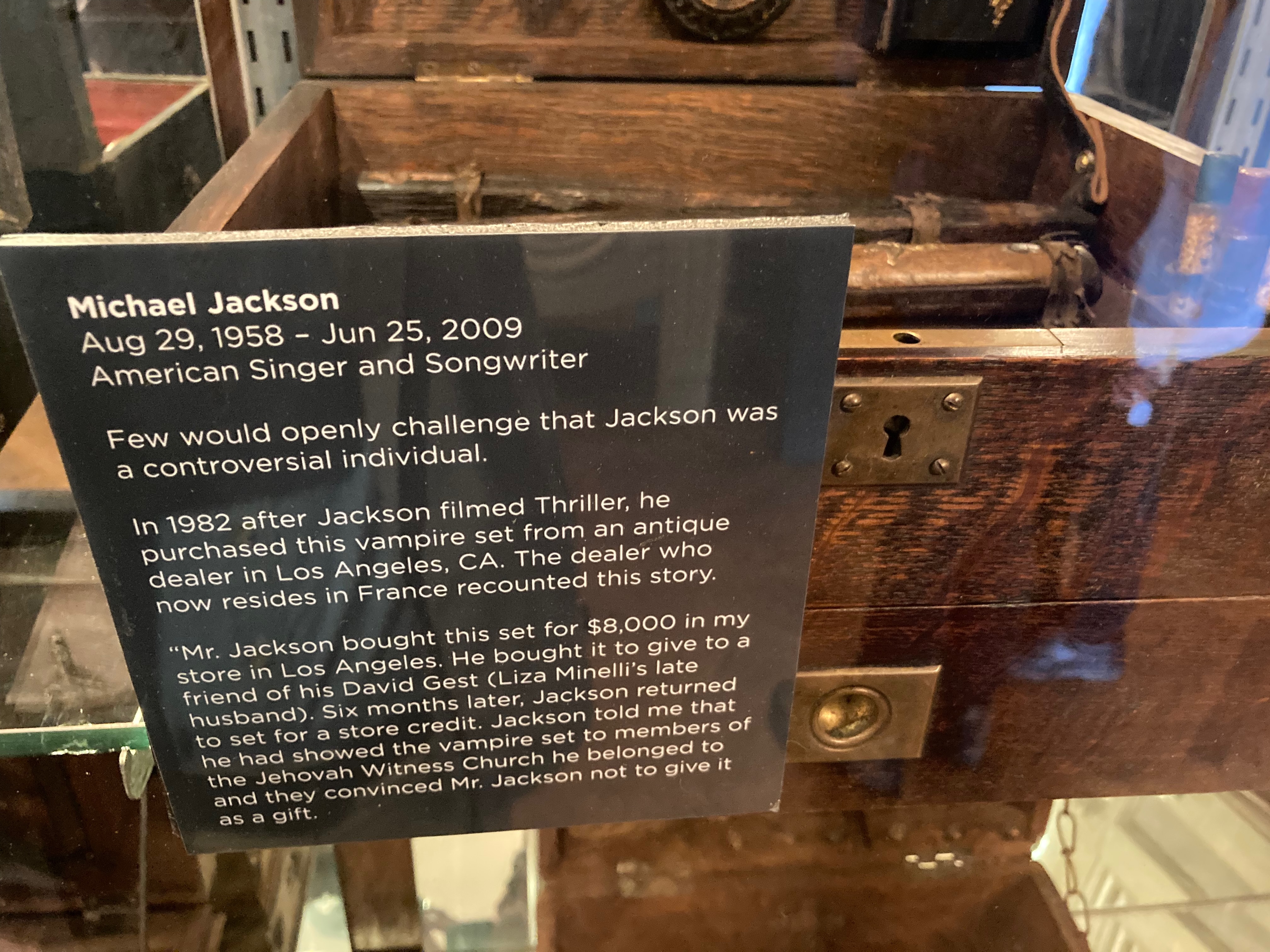
One final note: one of the vampire hunting kits was owned by Michael Jackson.  As the sign (with a typo) notes, the Jehovah’s Witnesses (to which both he and Prince belonged) convinced him not to give it as a gift.  Belief, it seems, persists even into the late twentieth century.


Scary Father’s Day

Given my circumstances, I never really celebrated Father’s Day growing up.  By the time I was old enough to get the concept, my father was long gone.  My step-father, some years later, was no real father.  Besides, we were poor and it was hard to think what such a celebration might entail.  All of which is to say that I never really expect much from the day myself.  My wife and daughter suggested we try Nightmare in New Hope again—this is the horror movie museum in New Hope, Pennsylvania, which had been closed last time we tried.  It was an appropriately rainy day, the kind we seem to specialize in around here.  I suspect that the museum will show up in a future blog post or two, but suffice it to say that it’s an impressive little collection.  It’s an odd feeling, this human desire to be in the presence of something you’ve seen in a movie.  I recommend it for any horror fans who happen to be along the mid-Delaware.

Not being large enough to take all day, we considered what we might do that afternoon.  In keeping with the theme, a visit to Vampa: Vampire and Paranormal Museum was suggested.  This museum is in Doylestown, which is only about a quarter hour from New Hope.  There’s more to it than just the museum, so it too will likely come up in future posts.  This museum contains a truly impressive array of artisanal vampire hunting equipment from Europe, dating between the seventeenth and nineteenth centuries.  I’ll try to put together a photo essay of it soon.  But that’s just the first room.  A second deals with demonic possession.  Then rooms have displays of occult and other esoteric artifacts, along with creepy suggestions to be careful of engaging too much with them.  The final room is dedicated to St. Michael the Archangel, and it warns that the struggle with evil is real.

Both places had a steady stream of visitors yesterday.  It would be fair to say that by the time we finished I was over-stimulated.  You have to understand that I personally don’t know many people interested in horror.  Going to these places was the sacrifice of a rainy Sunday afternoon for my family but will likely become one of those pleasant, lingering memories of the unusual that take on a rosy afterglow over the years.  This blog quite often ponders over why such things take on meaning for someone interested in religion and belief.  Being in the presence of artifacts, as noted above, puts you in touch with a kind of earnestness that mere electronic reading on the internet lacks.  If you happen to be along the mid-Delaware, the side trip to Doylestown is a worthy add-on, Father’s Day or not.


Drac Retold

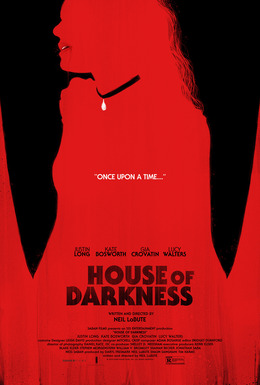
House of Darkness is one of those horror movies that doesn’t seem like horror until a good way in.  I knew nothing about it, other than it had to do with vampires, when I watched it.  A guy named Hap, a bit drunk, is trying to score with a woman, Mina, who he’d just met in a bar.  They don’t know each other’s names yet but she lives in a castle far from town.  Just as things begin to get intimate, another woman, Lucy walks in.  At this point Bram Stoker comes to mind.  The two main female characters in the novel are Mina Harker and Lucy Westenra, so naming the sisters (for so the two are) after them lets you know you’re in vampire land.  As Mina is off fixing a drink, Lucy takes Hap on a tour.  He begins to suggest a threesome, but the women want to tell ghost stories instead.

In the guise of fiction, Lucy narrates their past as sisters who rescued an abused girl and who moved from town to town to wipe out the men.  Hap is then startled by a third sister, Nora.  He is now growing quite annoyed by their game and when he tries to leave, they attack him.  Now, I was watching this on a Sunday afternoon after having been up late the night before.  My motive in watching movies at such times is to help keep awake (as well as to have something to blog about).  The pacing of House of Darkness was so slow that it struggled to meet my expectations in that regard.  Still, it isn’t a bad movie.  It has a feminist message, and as I read about it later I learned that it was intended to be a modern retelling of Jonathan Harker and the three women in Dracula’s castle.

Then I learned the film was written and directed by Neil LaBute.  That name is seared forever in my mind as the man who tried to remake The Wicker Man.  Suddenly things began to fall into place.  Many stories—some would argue all—are retellings of classic tales.  LaBute seems to enjoy trying to make them into something slightly different.  His directorial vision, however, doesn’t seem cutting edge.  House of Darkness is mostly banter, some of it clever, between Hap and the women he wants to seduce.  I kept thinking, “It’s a work night for him,” and wondering how he’d manage to function the next day.  Of course, I was probably projecting since I knew that, if I made it through this soporific afternoon, I would be at my desk bright and early the next day. 


Bloody Lips

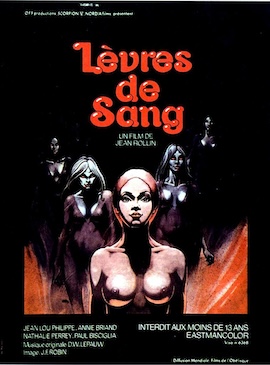
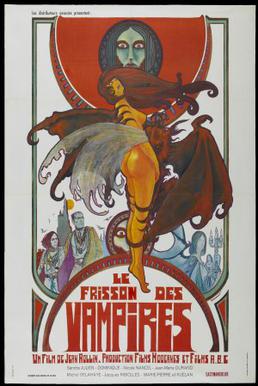
Jean Rollin’s vision of vampires was a strange blend of tradition and art film.  Having seen his Shiver of the Vampires, I was curious to see what other vampire films he’d done.  Lips of Blood is the one I happened upon. (I didn’t see the poster until after watching; hopefully it won’t offend.)  In French, it is a Euro-horror from the seventies and it has female vampires who tend to seduce rather than frighten.  The unwilling victims, however, do show fear when they realize what is happening.  So, a perfumer (I said it was French) is taken by an advertising poster for a new scent at a launch party.  He thinks he recognizes the castle in the photograph, but many of his childhood memories have vanished.  His mother intends to keep it that way.  The powerful impression of the photograph, however, leads him to find the place.  He recalls meeting a young woman there who comforted him when he was lost as a boy.

Despite his mother’s efforts, and with some support from the mysterious lady herself, he persists.  He finds the name of the chateau on a postcard and immediately heads for it.  The woman is still there, but in a coffin.  His mother shows up and warns him that she suppressed the memory because the young lady was a vampire.  She had killed the boy’s father.  His mother and her hirelings failed to kill them and she now asks her son to help.  In love with this mystery women, despite her vampire problem, he secretly spares her.  The two decide to aim for a deserted island in their coffin, where they can prey on the seamen who will inevitably come ashore in their island paradise.  Plenty of lingering shots and images that must be symbolic also appear.  When the man visits a cinema, Shiver of the Vampires is playing on the screen.

I’ve been pondering how differently vampires are portrayed in media.  I told my wife long ago that vampires and pirates tend to make the best movies.  That was a throwaway comment from an otherwise forgotten conversation, but I do think that vampires were made for cinema.  If you haven’t explored you might be surprised just how many vampire films there are.  They stretch from art house films such as this, where they are beautiful women, to loathsome, pasty creatures that you can barely stand to watch.  The middle ground, the aristocratic vampire modeled on Lord Byron, seems to have retained the largest market share.  That didn’t stop the renegade director Jean Rollin from suggesting that vampires—fearing dawn, and crosses—might be women forever young, and which, for a French perfumer, might be preferable to the living.


Shivering Vampires

When casting about on free movie streaming services, you occasionally stumble across something odd.  It doesn’t take a rocket scientist to figure out that I’ve been favoriting vampire movies the last few months.  I’d not really heard about The Shiver of the Vampires, perhaps because it was a French movie, or perhaps because there are just so many vampire films out there.  Well, it had the desired monster in the title, and it was free (costing only a few commercials).  As might be expected for a European movie, there’s a bit of nudity involved.  A fair amount of that is appropriate for vampire films, it seems.  This one involves a newly married couple going to visit her cousins who live in a castle in the country.  These cousins are groovy vampire hunters, but unbeknownst to her, have become vampires themselves.

The young couple arrives to be told that the cousins have died, but they are welcome to stay.  Soon, the vampire that turned them shows up and begins visiting the bride.  The groom is slow to catch on that there are vampires involved, although he fairly quickly finds out that something’s the matter with his wife.  Then the cousins show up alive.  Well, technically, undead.  They don’t reveal themselves as vampires, but their cousin, the bride, is being turned as well.  The poor groom sees odd rituals being enacted, and a couple of familiars decide to help him destroy the vampires in the hopes of rescuing his wife.  Stakes, crucifixes, and sunlight are all effective against these vampires, but they don’t seem especially evil.  In fact, there’s a kind of self-loathing among them.  The ending isn’t exactly cheering.  

A little shy on depth of story, the film does feature an impressive castle and some strong seventies vibes.  Interestingly, the Wikipedia article on the movie refers to the familiars as “renfields.”  This term, derived from Bram Stoker’s Dracula, was one I’d never come across before.  Renfield’s Syndrome now seems to be preferred to Clinical Vampirism, although neither has much scientific standing.  “Familiar” is, of course, a term adapted from the witch craze of Early Modern Europe.  Vampires need a living helper since they are vulnerable in the daytime.  The director of Shiver, Jean Rollin, was known mostly for his vampire movies.  They’re not easily found, at least at this point, on streaming services.  Shiver has an arthouse film feel to it and it makes me curious about how vampires cross cultures, even if the results are a little odd.  


To Dracula, a Daughter

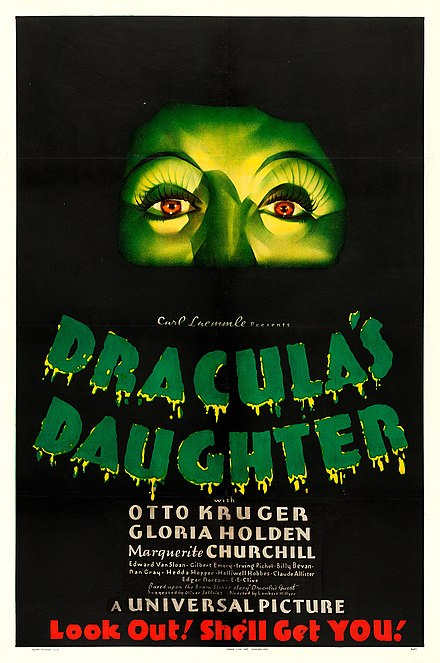
Nosferatu, by F. W. Murnau, was deemed in copyright violation of Bram Stoker’s Dracula, and ordered destroyed.  Rights to the novel were properly purchased by Universal and the horror film proper was born.  Other studios wanted to get in on the action, so the rights to the story of the Count’s daughter were bought by MGM.  They then sold the rights to Universal so that the latter could produce a sequel to their earlier hit.  Dracula’s Daughter didn’t do as well as the original, but it kept the vampires coming.  Some years later, Son of Dracula came out, keeping it in the family.  Having watched Abigail, I had to go back to Dracula’s Daughter to remind myself of how the story went.  I recalled, from my previous watching, that it wasn’t exactly action-packed, but beyond that thoughts were hazy.

Picking up where Dracula left off, von Helsing (that’s not a typo) is arrested for staking a man.  Then a mysterious woman arrives and steals the body to destroy it in an attempt to rid herself of vampirism.  We see that just five years after Dracula the reluctant vampire was born.  Creating a scandal at the time, Dracula’s daughter also seemed to prefer females.  Apparently the script was rewritten several times to meet the approval of censors during the Code era.  The modern assessment is that this is based more on Sheridan Le Fanu’s Camilla rather than an excised chapter of Bram Stoker’s novel.  Since the world wasn’t ready for lesbian vampires in the thirties, she falls for Dr. Garth, a psychologist that she wants to live with her forever.  Kidnapping his secretary to Transylvania, she draws him to Castle Dracula.  Her jealous servant Sandor, however, shoots her with an arrow.  Von Helsing explains that any wooden shaft through the heart will do.

Already as early as Stoker, at least, Dracula had brides who were vampires.  It makes sense that there might be daughters and sons.  And studios, learning that people would pay to watch vampires on the silver screen, were glad to keep the family dynamics rolling.  Vampires proved extremely popular with viewers—a fascination that has hardly slowed down since the horror genre first began.  Some of the more recent productions explore themes and approaches that simply wouldn’t have been possible in the early days of cinema.  We don’t see Dracula’s daughter actually biting victims—one of the many things the Production Code wouldn’t allow—and there’s no blood.  Nevertheless, the story itself went on to have children and they are still among us.


Stop for a Bite

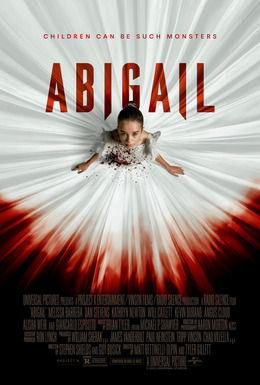
Universal does monsters right.  I’m no movie maven but I don’t know why the whole Dark Universe thing didn’t work out.  These movies are good!  Abigail recently came to one of the streaming services I use and I watched it right away.  (There’s sometimes a delay between when I write about a movie and when it appears on this blog.)  There will necessarily be spoilers here.  I write this as someone who doesn’t watch trailers if I can help it, and who tries not to read about movies before watching them.  So be forewarned, if you are, by any chance, like me.  In case you’re bowing out now, this is a very good flick.

So, this is one of those spates of recent vampire movies where you go for quite a while before realizing it is a vampire film.  Set as a taut thriller, a group of six criminals who don’t know each other kidnap a twelve-year old ballerina.  She’s being held for ransom and the kidnappers have to keep her in the mansion for 24 hours, after which they each will receive their share of $50 million.  What they don’t know is that Abigail is a centuries-old vampire who likes to play with her food.  Suspecting they’ve been set up, the criminals speculate that the girl’s father has set his most vicious killer on them.  Modern, educated people, they don’t believe in vampires (there’s quite a bit of shading from Dusk Till Dawn in here) but they have to figure out how to defeat one.  Like Dusk Till Dawn, they ask themselves what they know about vampires, trying to come up with a plan to survive the night.  As you might expect, a bloodbath ensues.

If you’re the kind of person who reads about movies first, you’ll know, as I didn’t, that this was planned as a remake of Dracula’s Daughter.  It’s been so many years since I saw “the original” that I scarcely remember it.  (So you know what’s coming, eventually.)  I’ve watched many monster movies—like the books I’ve read, it’s so many that I lost count long ago.  Many of these films are pretty good.  And, of course, there are many I haven’t seen—that depends on money, time, and circumstance.  I do have to note, however, that coming up on the centenary of Universal monster movies, they haven’t lost their touch.  I have no idea what happened to their Dark Universe, but I do get the feeling they maybe gave up on the idea a little too soon.


Undead Again

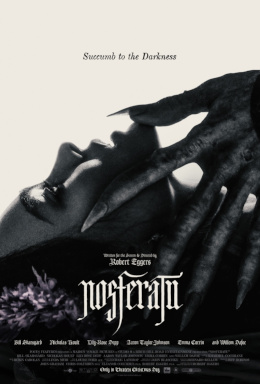
I had intended to see it in the theater, but holidays are family time.  And not everyone is a fan of horror.  Last night I finally did get to see Robert Eggers’ Nosferatu.  Eggers is a director I’ve been following from the beginning.  Here’s a guy who pays very close attention to historical detail.  No slips in letting modern language expressions creep in.  Costume and setting designs immaculate—nothing incongruous here.  I was surprised that he was taking an established tale that’s based on a technically illegal film from Bram Stoker’s Dracula as his starting point.  Still, I’m looking forward to Werwulf, probably about two years from now.  (And speaking personally, I’d love to see his take on Rasputin.)  In any case, Nosferatu.  I avoided trailers and online discussions because I wanted to come to it fresh.  He’s managed to make a disturbing story even more disturbing.

If you’re reading this you probably know the basic story.  F. W. Murnau’s 1922 Nosferatu was in violation of copyright of Dracula, and so the basic story is similar.  Eggers manages to bring to the fore the vampire as sexual predator angle.  He prefers to bite chests and take long, slurping drinks.  I said it was disturbing.  And Orlok really looks the translation of the title, “undead.”   Even at over two hours Eggers has difficulty fitting in all the elements of the story.  And there are some unexpected aspects thrown in as well.  In my mind, I couldn’t help compare it to Werner Herzog’s remake.  Both are art-house treatments of Murnau’s work, which was itself German expressionism.  All three are memorable in their own way.

The one character I didn’t fully buy was Willem Dafoe’s von Franz (the van Helsing character).  This often seems a difficult one to cast.  In Bram Stoker’s Dracula Anthony Hopkins just doesn’t do it for me either.  It must be difficult to pull off eccentric but deadly serious.  The unsmiling obsessive.  That, to me, would be even more disturbing.  Ellen Hutter’s fits are amazingly done and there’s a menace to her melancholy that really works.  I’ve never seen Lily-Rose Depp in a film before, but she seems poised to become a believable scream queen.  I was exhausted after watching the movie after a long day at work (there’s a reason to see things in a theater over the holidays, I guess), but after a night of strange dreams, I awoke to find myself wanting to watch it again.  That’s the way Eggers has with films.  They reward multiple viewings.  And although this story’s familiar from the many versions of Dracula out there, it emphasizes some elements that have, up until now, often only lurked in the shadows.


Sounds Funny

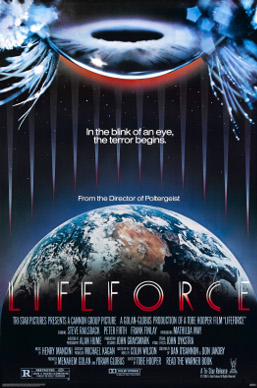
It may be the strangest vampire film ever.  Lifeforce not only postulates the origins of vampires as beings from space who come to suck humans dry of their souls, it also plays off of Invasion of the Body Snatchers, any number of zombie films, and Alien, all with a score by Henry Mancini.  Patrick Stewart is in it, but the plot makes very little sense.  Although it didn’t perform at the box office, it has become a cult film, and some parts of it are actually pretty good.  Directed by Tobe Hooper and partially written by Dan O’Bannon, there was some real talent involved.  Too bad it just can’t seem to hang together.  The main reason seems to be the story-line.  It’s based on a novel, but not all novels translate to film so well.

What’s interesting is that it attempts to provide an origin story for vampires.  When the crew of the Churchill initially discovers the alien ship, the creatures are bat-like.  This intends to explain why vampires are associated with bats.  Since these beings had come to earth long ago, their association with sucking people dry, and bats, led to the belief in vampires.  Of course, following the logic of the story, vampires should’ve nearly taken over the earth before since victims revive after two hours and victimize those nearest them.  Only one scientist in this future London can uncover a specific combination of metals that have to be used to stab a vampire in precisely the right location in order to kill it.  Meanwhile the souls of thousands of residents of London are being sucked up to the alien ship.

The score for the movie also rings a bit oddly.  Henry Mancini isn’t the first name to come to mind as a composer associated with horror movies.  Or science fiction.  Even G-rated 2001: A Space Odyssey knew that.  Perhaps we’re lulled into thinking nothing of it by big studio productions that make the soundtrack sound natural to the movie.  Like all of the elements of a film, however, they really have to work with all the other elements to make something spectacular.  Lifeforce had a large budget and nevertheless struggles.  Tobe Hooper had just come off of directing Poltergeist, which, although never one of my favorites, was a stronger and more lasting entry into the horror canon.  Maybe it’s that vampires and space just don’t mix.  Vampires are gothic monsters and that’s difficult to transfer to outer space with all its gadgetry.  That, and a score that’s difficult to take seriously.


Old Vampyr

Early movies are fascinating.  I learned of Vampyr, a 1932 production by Carl Theodor Dreyer, from Raymond T. McNally and Radu Florescu’s In Search of Dracula, where they praise it.  I’d never heard of it before.  There are probably a few reasons for that.  One is the movie was considered not very good when it was released, and it never garnered much of a reputation.  Another is that the original prints, including the soundtrack, had been lost.  Three language versions had been shot—German, French, and English.  Since this would obviously lead to lip-syncing problems, there is very little dialogue.  The movie as it exists today is accessible in the German version, and it tends to fall into that category that includes work by directors such as Ingmar Bergman and Stanley Kubrick.  It has art house elements and the story requires some pondering.  It isn’t bad, although in today’s viewing culture, it might seem dull.

It is a vampire story based on the works of Sheridan La Fanu.  The star, and also financier of the movie, was an actual Baron from France (in real life), Baron Nicolas de Gunzburg.  He plays a student of the occult who happens upon a gentry-class family plagued by a vampire.  Interestingly enough, this kind of character is distinctly Lovecraftian, and there is a passing resemblance between de Gunzburg and H. P.  The acting isn’t great, but the story is good.  It includes shadow people who assist the vampire—a female, in this case—and a kind of mad doctor who helps her reach her victims.  The occultist and the household servant of the gentry family locate the vampire’s grave and stake her.  And in a scene that may have inspired Witness, they suffocate the mad doctor in the bin of a flour mill.

Like many vintage movies, Vampyr has received a more positive reevaluation over time.  While some consider it great, the consensus seems to be more at the “very good” level.  It is an early vampire movie, apparently filmed before Tod Browning’s Dracula.  While not scary by today’s standards, there are some definitely creepy scenes.  Particularly when the elder daughter of the gentry family begins to become a vampire, leading to some quite effective facial expressions.  McNally and Florescu weren’t film critics by any stretch but they felt that, up to the early seventies, this was the best vampire movie made.  I might not go all the way with them, but I would suggest it is certainly worth viewing by those who like old cinema, and who appreciate vampire stories.


Black History

The first of the “blaxploitation” movies, Blacula is a period piece.  In 1972 vampires were still all the rage, following from Dark Shadows and the continuing Hammer hammering of the monster.  They even produced Dracula AD 1972, not to put too fine a point on it.  American International Pictures wanted in on the action and produced the first Black vampire in cinematic history.  Rather than a remake of Bram Stoker’s novel with a Black cast, the story begins with Mamuwalde, an African prince, entreating Dracula (whom he doesn’t know is a vampire) for help ending slavery.  Instead, Dracula turns Mamuwalde into a vampire that he names “Blacula,” and places him under a curse.  In the seventies, a homosexual couple purchases Dracula’s castle, intending to sell the contents on the antique market.  One of those antiques is a locked coffin.

Once he’s freed in America, Blacula quickly runs into Tina Williams, the spitting image of his long-deceased wife.  Meanwhile Tina’s friend Dr. Gordon Thomas, suspects that there is a vampire on the loose in LA.  Although the opportunity for camp is clearly present, this movie is played straight.  Mamuwalde is a monster—he kills several people—but his real motivation is to regain his dead wife, whom, he is convinced, is Tina.  When Tina is shot by a trigger-happy cop in the tunnels below a chemical plant, Blacula turns her into a vampire.  When she is staked, Mamuwalde tells the doctor that he need no longer pursue him.  He voluntarily climbs into the sunlight and dies.

Now, this wasn’t a great movie but it does seem to have a reasonable bit of social commentary.  It was the seventies, but racial and orientation slurs were still widely accepted.  And people dressed like, well, it was the seventies.  The Black characters, however, are portrayed with dignity, and Mamuwalde is presented as nobility.  Perhaps more importantly, this movie opened the doors for further horror films featuring African-American lead characters and plots.  A few decades later Blade, based on a comic book hero, would once again foreground a Black vampire who’s on the side of good.  It’s still some distance from Black Panther, but the process had to begin somewhere.  Watching Blacula was like watching history, and I suppose viewing movies is like a selective piece of history.  By this point AIP was well established, and influential in its own way.  I’d heard about Blacula since childhood, but until streaming it never really came across my screen.  Nevertheless it remains an important piece in this country’s ongoing vampire mania.