
The rain felt like relief after the most recent heat wave. We’d long planned to attend the Easton VegFest regardless. Summer is the season for street festivals and it’s always a strange kind of affirmation to find one dedicated to vegans. And to see so many people at it. The cities of the Lehigh Valley have quite a few animal-friendly options for eating, and although the VegFest isn’t huge it’s a good place to find others who realize that our food choices matter. So it was that we came upon the booth for NoPigNeva. Now, if you’ve ever tried to shop for vegan food—I know there must be a few of you out there—you know how catch-as-catch-can it is. Around here lots of grocery stores carry vegan items, but what you’re looking for may not be there. Even WholeFoods in Allentown has a limited selection.
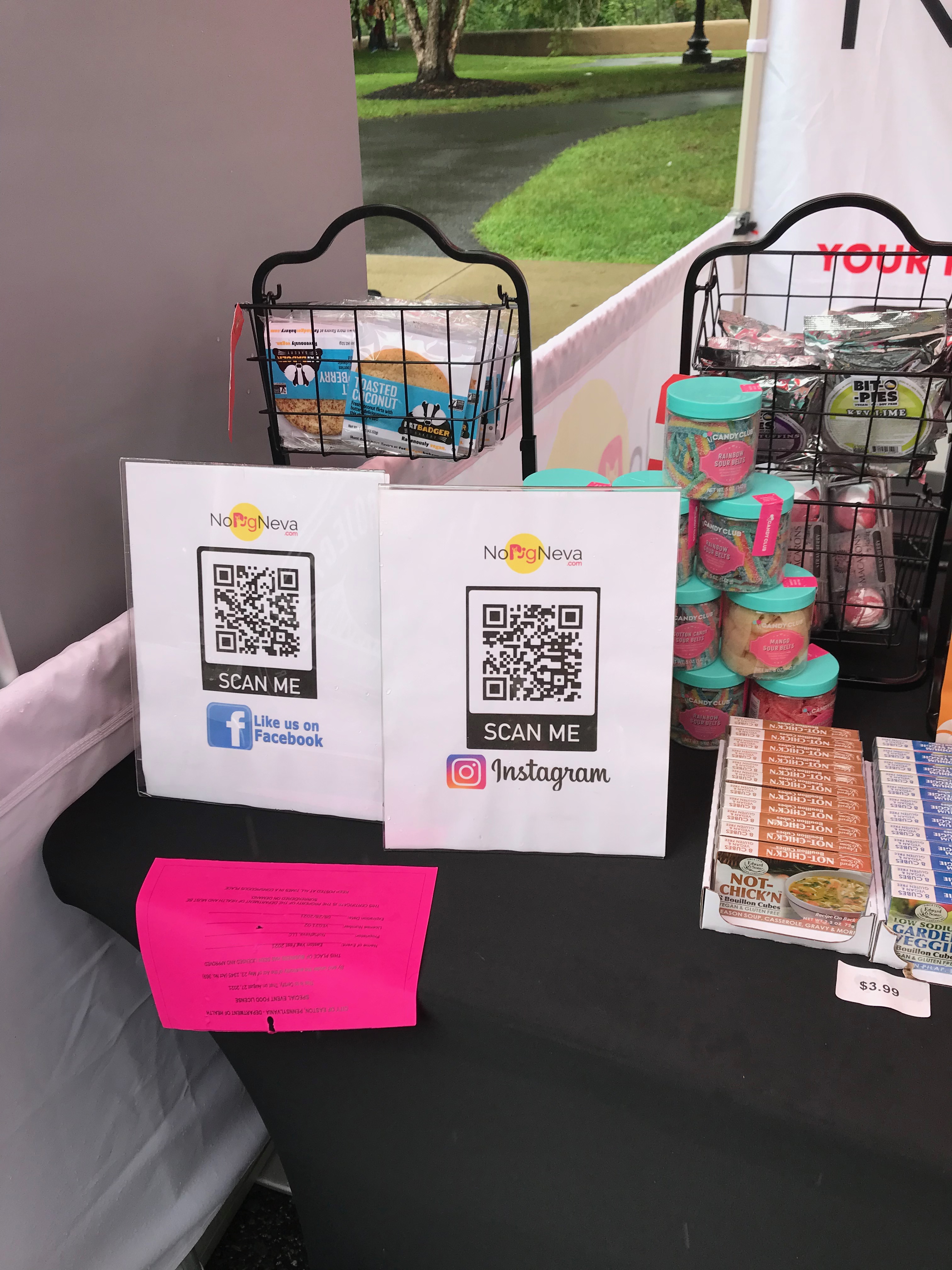
NoPigNeva is a supply company run by black women. It supports worthy causes. And it makes finding what you’re looking for essentially one-stop. I’m no businessman, but I do wonder why, when they keep selling out of vegan stock, stores don’t get their orders refilled right away. It’s almost as if we don’t want to believe people will buy it. Vegan food has come a long way even in just the last five years. I know that when I became a vegetarian almost two decades ago now I felt there was no way to get enough to eat as a vegan. Options seemed so limited. That’s no longer the case. I’m guessing the success of the Impossible Whopper caught everyone (except consumers) by surprise. Even now, if you order one (hold the mayo, please) you’re pretty much guaranteed it won’t have been sitting on the warming shelf.
There’s big money in the food industry. I’m not a foodie, although it’s become fashionable to be one. I do, however, think about whether my food is causing harm. There is, I realize, no way not to impact the environment or other living creatures when eating. Lessening that impact, however, and supporting historically oppressed groups feels good. There is a morality to mastication. Most animals, it seems, have evolved a fear of being eaten. Perhaps we’re only starting to understand that breaking chains might have to begin with us. Any industry (big agriculture) that tries to make it illegal to see where your food comes from is hardly to be trusted. I trust more those willing to come to a street fair on a rainy Saturday afternoon to show that there is a better way.
 Steve A. Wiggins