Eating Conscience

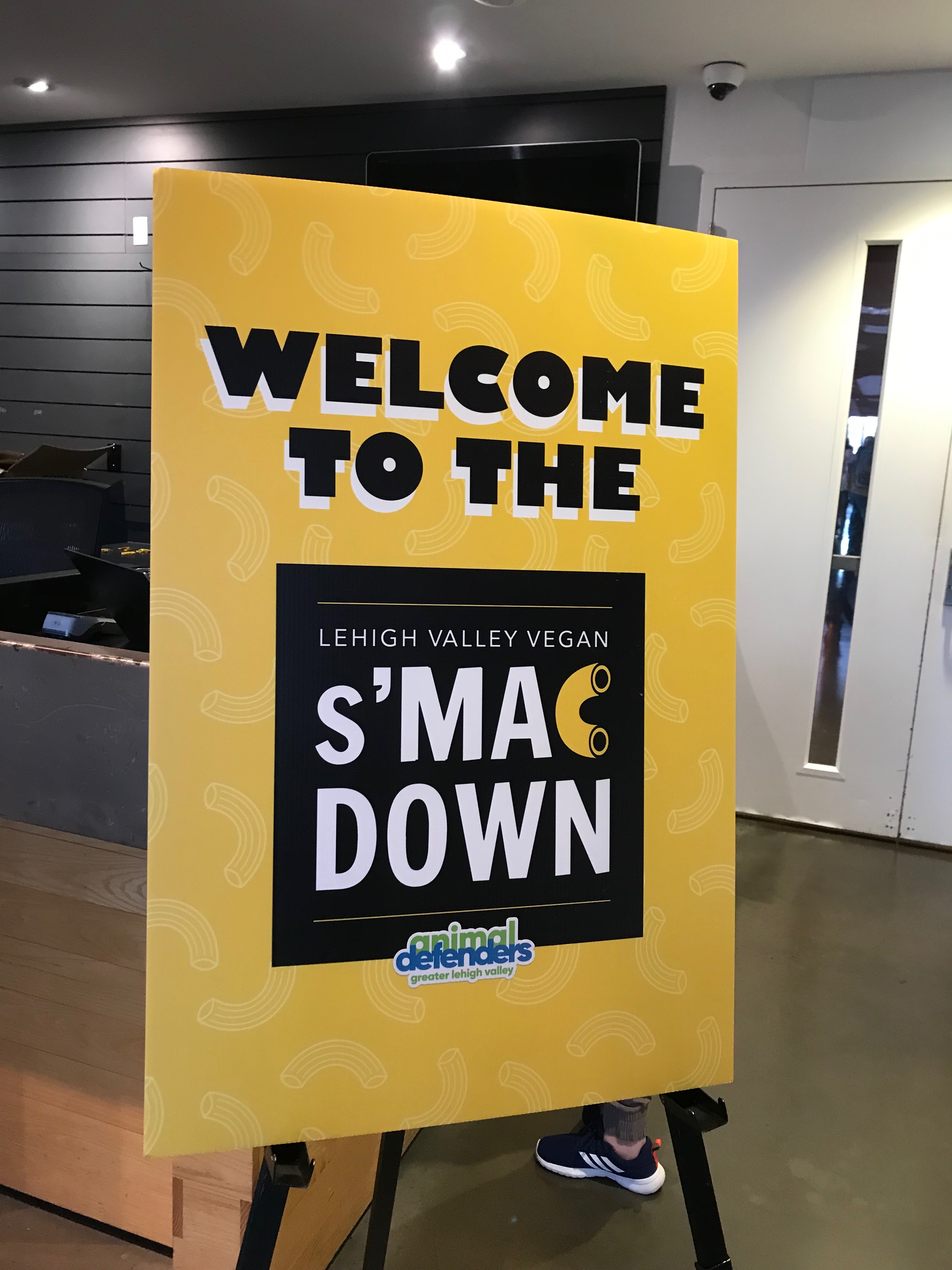
Elections notwithstanding, people—at least many of them—are becoming more accepting of those of us who are different.  Or so it seems on the ground, in some places.  A couple of weekends ago we attended the s’MAC DOWN in Bethlehem.  In case you’re not from the Valley, s’MAC DOWN is an event where hundreds gather to compare vegan macaroni and cheese prepared by area restaurants.  I don’t think that when I was younger—and vegan could’ve been considered a protected category—that there would’ve been a healthy line to get into such an event.  But there was just a couple weeks back.  Even after those who paid extra had been already allowed in and had been given a complementary glass of wine.  It helps, as my family reminded me, that mac and cheese is something people tend to like in general.  Being a vegan myself, I do miss cheese the most but vegan alternatives are getting better all the time.
People are slowly becoming aware that industrial farming of animals simply isn’t sustainable for our environment.  It’s one of the largest pollution-generating capitalistic practices.  It contributes to global warming as well as deforestation.  And how many e coli outbreaks and animal diseases leaping to humans will it take until we realize we’re going about this all wrong?  I became a vegan because it’s very clear that animals suffer as they’re being “processed.”  I don’t want to be part of that.  I understand that others differ in their opinions, which is one of the reasons I don’t write about this often.  But attending events like this can be an eye-opening experience.

It’s safe to say that if eaters didn’t know, they wouldn’t be able to tell that this food was vegan.  Things have come a long way on that front.  Cheese and milk are fairly easy to substitute.  (As is meat, it turns out.)  Butter goes without saying because people warmed up to margarine decades ago and some margarine makers are now putting “vegan” on their packaging.  I’ve been vegan going on a decade now.  There are still places you can’t eat without violating your principles, but events like the s’MAC DOWN show that even non-vegan restaurants are willing to give it a try.  And by and large they do it well.  Of the nine samples we had (in compostable cups with compostable “plastic ware”) there was only one I really didn’t care for.  A couple would’ve been very difficult to pin down as vegan at all.  And then there was the fact that hundreds of people had paid to give this a try, and not all of them were young folks.  It’s good to feel accepted, even when eating by my conscience.

Sun Day

Two holidays in a row!  Although today nobody gets off work because, well, two holidays in a row is too much.  People might come to expect a little more time off.  If you’re like most people, the summer solstice creeps up on you.  Its more somber sibling, six months from now, is more anticipated.  In December we’re light deprived (here in the northern hemisphere) but we’ve been soaking in the sun for some time already now.  Besides, nobody gets the four turns of the year off work.  Christmas is a gimme, but it comes three or four days after the solstice.  We figure Labor Day is close enough the the autumnal equinox, and thank God Easter is a Sunday, at least in the years when it’s near the vernal equinox, so nobody complains.  I feel at my most pagan these days.  Why not celebrate the turning of the wheel?

The other day I was catching up on the Vlog Brothers—John and Hank Green.  Last week they were talking about “Beef Days,” or how to reduce the amount of red meat they eat.  They proposed doing it by setting aside a few holidays a year where they would have it.  Their reason?  The biggest environmental threat to our planet is our dependence on beef.  It’s the reason rainforests are being clear cut.  It is a huge source of greenhouse gasses.  The one thing they didn’t mention, however, is the suffering of the animals themselves.  Industrial farming leads to horrible lives being raised to be consumed.  The conditions in which animals are kept is so bad that it is illegal in some states to reveal the conditions to the public.  You hide things that you’re ashamed of.  I became a vegetarian a quarter century ago, and a vegan coming up on a decade now.   I can’t live being the cause of the suffering of others.

Why not use the ancient holidays as days of some kind of indulgence?  I don’t recommend eating red meat—in fact, I agree with my Edinburgh friend that if you want to eat meat you should be required to kill it yourself.  (He’s not a vegetarian, note, but a wise man.)  In any case, although you may be stuck behind a desk at work, take a moment to ponder that light will be slowly fading from this day on until we reach that other pole that turns another year.  And we can dream of shortened work weeks, although that’s about as likely as being given the summer solstice off as a matter of course.  Speaking of which, work calls.


Middle Ground

It’s the real poison Trump baptized.  Polarization.  The idea that there is no middle ground.  It’s a shame since the middle ground has been what’s kept America stable over the years.  Now it seems to be eroding rapidly.  While my sympathies have always been on the left, I realize that radical change tends to dirempt societies.  As much as I deeply desire justice and fairness for all, I know it will take time.  In my way of thinking that “all” includes animals.  That’s why I’m vegan.  Now, I know being completely vegan is likely not possible since who knows what everything is made of, and who has the time to find out?  I do the best I can and I don’t eat animal products and I try not to wear them either.  I know there are those who don’t share my outlook and they’re entitled to their point of view.

For nostalgia’s sake, and to get out of the house, we attended a 4-H county fair.  An annual event when we lived in New Jersey, it’s now a rarer treat.  So I put on that scarce recording of Bruce Springsteen’s song “County Fair,” not on any of his studio albums, and headed for New Jersey.  This county fair is the kind with animals rather than rides, and we stopped in to see the sheep, goats, cows, and alpacas.  It was in the cattle tent that I saw the following poster, claiming “There’s no such thing as vegan.”  Well, I don’t go around saying there’s no such thing as omnivores (thus the polarization) but this poster convinced me that we need to try even harder to stop raising animals to exploit. I understand, I think, the intent of the poster—cattle aren’t just meat.  The thing is, I think of them as conscious beings.

I miss the middle ground.  People no longer want to compromise or negotiate.  Since Trump it’s become “my way or the highway.”  I think I prefer the highway.  That highway takes me far from industrial feedlots where it’s illegal to document the cruelty that these animals undergo daily.  It’s quite a different thing for Bessie to lay down with a fan blowing on her under a tent with a small farmer caring for her, but that won’t feed a nation.  Small farms aren’t the problem. I don’t insist everyone be vegan.  I would like it if we could sit down and talk about it, however.  Cattle raising is the industry that generates the greatest amount of greenhouse gases that are causing global warming.  If we keep dividing ourselves and refusing to change we’ll be having this polarizing argument under water before too many years have gone by.  My highway is middle of the road.  Even slow change can benefit many.  The goal is to get “many” to “all.”


Iron Man?

As a vegan, I sometimes end up thinking more about nutrition than I used to.  Back when I first became a vegetarian colleagues wondered how I got my iron.  I’m one of those apparently rare individuals who really likes broccoli.  I could eat it nearly every day of the week without tiring of it.  In any case, iron is important for health.  I’ve known people with iron deficiencies and it can be a real problem.  Doctors recommend ferrous gluconate as a dietary supplement since the body absorbs iron better from it.  (It’s best on an empty stomach, I’m told, followed by orange juice.)  But I’m no physician.  In fact, I’m quite squeamish, which may seem strange for someone who watches horror.  Still, thinking about iron took me back to my childhood.

I was a sickly child.  Couple this with a tendency to think too much and I must’ve been a handful for my mother.  I remember trying to explain to her once that I didn’t believe reality was real.  I was maybe twelve at the time.  She prescribed ironized yeast.  Now, Mom’s no doctor.  She didn’t even finish high school.  So thinking about broccoli made me wonder about ironized yeast.  First a web search revealed it’s not sold any more.  Further, it was a health food fad beginning in the 1930s.  Although I remember the taste and scent distinctly, I couldn’t find a website saying what it was or how it was made.  More to the point, why did my poor, frustrated mother think that it would help me couple reality with what was happening around me again?  (And was that even such a good idea?)

Questioning perceptions seems to run in my family.  I’ve long known that my thought process is very different from that of other people.  My saintly wife still says the reason she was attracted to me is that she’d never met anyone who thinks the way I do.  My thought process has had plenty of opportunities to drive her crazy since those early days, I suspect.  My brother and I sometimes talk about what it’s like being, I suspect, were we diagnosed, neurodiverse.  It’s easy to fall into the perception that others think like we do.  I suspect all people do that.  Few, at least among those I’ve met, question the reality that their senses tell them really exists.  Physics tells us it’s mostly empty space.  And yet although I still don’t know what it is, maybe I’d better find someone with an old stockpile of ironized yeast to get back to business. It is, after all, a work day.

Who knows what goes on in the mind of others?

Planting Knowledge

In an effort not to harm other living creatures, I became a vegan about seven years ago.  Generally it’s not too difficult, although many eateries still think you have to exploit animals to eat anything.  Vegan fare is quite good, and some of it is remarkable.  Then I saw the article in Popular Mechanics, “So It Turns Out Plants Have Had Voices This Whole Time” by Jackie Appel.  Well, “voices” may be stretching it a bit, but they do make sounds.  According to the article, plants “talk” at the same volume as humans tend to, only it’s in a range that we can’t perceive.  Other animals, however, may.  That’s right, your dog may be able to hear the noise plants make.  This is one of the reasons I marvel at scientific arrogance.  Human senses simply can’t perceive all stimuli—how can we claim that what we term “supernatural” doesn’t exist?  We don’t have nearly all the data.

Meanwhile, we live with animals whose sense of smell would send us running even more frequently to the showers.  Animals who can hear plants “talking.”  Animals who can perceive magnetic fields.  We’ve evolved knowing what we need to know.  (At least in part.)  What then do plants communicate?  Can they hear one another?  The sounds plants make, if “translated” to human perception, seem to be “I’m thirsty,” “I’ve been hurt,” or “I’m fine.”  The terminology here is Appel’s but you get the idea—plants broadcast their status.  Can plants scream?  One of my students reminded me a few years back that I once wondered to her what a tomato felt when it was being sliced.  I responded, “That sounds like something I would’ve said.”

They know.

So now I’m a vegan and plants are joining the conversation.  My hope is that they don’t feel pain.  As far as we know, plants don’t have brains.  Even so, heliotropes are smart enough to follow the sun across the sky.  And even fully grown trees move—very, very slowly—to optimize the light they require.  Such intelligence in nature always leaves me in a state of wonder.  We’ve been told for centuries of human exceptionalism.  Sure, we have opposable thumbs and have figured out how to communicate intricate things vocally.  So much so that we can represent them in written form (such as you’re reading right now) and can know what someone’s saying even at great distances.  That doesn’t mean we’re the only remarkable creatures.  But it does leave me with the dilemma of what to eat.


Normal Paranormal

One of my favorite televisions shows of all time is The X-Files.  I didn’t watch it when it originally aired, but eventually got a hankering to see it on DVD.  There are many reasons to like it, including its originality and the dynamics between Mulder and Scully and the sense that governments really do hide things.  As I rewatch episodes I see how much religion plays into it as well.  This post is actually not about the X-Files proper, but about a place in Bethlehem I recently discovered.  I’m not a preachy vegan, but I do like to support the establishments who make such lifestyles as mine much easier.  It was thus that I discovered Paranormal Pizza in Bethlehem.  I wondered about the name, figuring that it was paranormal that you could have non-dairy, non-meat pizza at all.

To celebrate Earth Day we decided to check it out.  The menu has a set of fixed items, each named after an X-Files character.  I was glad to see that I’m not alone in my appreciation of the show.  The pizza’s very good, and I’m sure the college-age crowd that was there would agree with me.  I did wonder how many of them knew the X-Files.  Is it still a thing?  Maybe recent government disclosures have brought it back into the public eye.  Hey, I’m a Bible editor, about as far from the public eye as you can possibly get.  Vegan pizza on Earth Day, however, just felt right.

Foodiness seems to be trending.  A great many options are available in the land of plenty.  Still, I know that vegetarians and vegans in developing countries exist, and many of them for similar reasons to me.  They know animals think and feel.  We promote the myth that they don’t so that we don’t have to feel guilty about exploiting them.  It seems to me that many of our world-wide problems would start to vanish if we realized we can evolve out of being predators.  Cashews and almonds can become cheese.  Soy beans and wheat can become meat.  And peanuts are about the best food ever, in any form.  Then there’s the natural fruits and veg.  Industrial animal farming is perhaps the largest polluter of our planet.  Yesterday was Earth Day.  I was eating a pizza made from wheat, tomatoes, and cashews.  These ingredients might seem a bit unusual.  Paranormal, even.  But that’s precisely the point.  I won’t be waiting until the next Earth Day to go back for more.


Leathers

It’s an occupational hazard for the vegan Bible editor.  Leather.  Leather Bibles, although expensive, are popular.  If you want free fetishistic deliveries of colored leather to arrive at your door, well, it’s part of a Bible editor’s life.  Morally I’m opposed to leather and I eagerly await the day when cactus leather is considered a suitable alternative.  Leather began being used in bookbinding early on, when books were treasured possessions.  It was readily available because animal slaughter was a part of everyday life.  It’s also extremely durable.  These days it’s just a status symbol.  When Bibles are produced there’s generally a market for whatever translation in leather.  In my time I’ve seen some well enough used to perhaps justify such extravagance, but not very often.  Usually it’s merely for show.

There’s an entire vocabulary associated with leather bookbinding.  Tooling, or engraving the smooth leather to look like something else, embossing, or pressing a design in the leather, gilding, or the use of gold paint on leather, and dentelle, or having a border run around the outside edge.  All of these were (and still are) signs of the artistry of the binder.  The practice dates back to before the nineteenth century when books were bound by booksellers, not publishers.  Perhaps this is why we shouldn’t judge a book by its cover.  In any case, apart from tradition there’s no need to kill animals to bind books any more.  Law books and Bibles are the major purveyors of leather binding.  It continues simply because it continues.

One term used for traditions unwilling to change is “hidebound.”  While this seems originally to have referred to emaciated cattle, it has come to be associated with codified, as in leather books.  Pigskin, or other cheaper hides, are often used.  Or “bonded leather,” which is as much plastic (if not more) than actual leather.  The Bible isn’t a terribly animal-friendly book.  Dogs are unclean and cats aren’t mentioned at all (except the large, wild kinds).  Yes, there are shepherds—both good and bad—but sheep were kept to be exploited.  And perhaps turned into leather.  There’s something strangely symbolic about this.  And not in a propitious way.  Where does obeying the rules get you?  Sheep are praised for their docility, their willingness to be thoughtlessly exploited, slaughtered, skinned, and eaten.  To do the job, a Bible editor must learn about leather.  Perhaps its a profession best left to carnivores.


Carton Thoughts

Did you know they’re recyclable?  Milk cartons, that is.  In our vegan efforts we switched to non-dairy milk years ago.  Unfortunately the plant-based milk industry doesn’t use gallon containers, so we buy the 2 quart (sometimes smaller) paper cartons.  Our community has a pretty good recycling program, but it doesn’t include cartons.  They are perfectly recyclable, however.  I’m saving them up to mail to the places Carton Council lists.  We can reduce waste, if we have a will to do so.  I know people who live in states with no recycling programs.  These states tend to lean red.  The world, however, doesn’t belong to anyone.  We need to learn to pick up after ourselves.  Take a look at the Carton Council webpage.  Sign their petition.

A large part of the problem is that we’ve allowed ourselves to be convinced that happiness involves consuming.  Our entire capitalist system is based on consumption.  We over-package what we consume, comestible or not.  There’s the ubiquitous plastic wrap, the box, the inner lining.  Often you can’t find the item you need in a local store so it has to be shipped.  All that wrapping.  All that waste.  One of the things environmentalists know well is that people quickly lose enthusiasm for saving their only planet.  The topic is depressing and overwhelming.  We’ve been living like there’s no tomorrow for at least half a century now.  Small steps can help, however.  Paying to ship recyclables afield isn’t the perfect solution, but it feels better to be doing something.

Economics is called the dismal science for a reason.  At the root of it, it seems, is that we’ve valued money above humanity.  And our environment.  One thing that Christianity got right, before it was sold, is that we should think of others.  Capitalism sees others in terms of assets or liabilities.  If our actions harm others—including the unborn that evangelicals are so concerned for—shouldn’t we be doing something about it instead of sitting around waiting for a miracle?  Some containers simply can’t be recycled.  Some devices can’t be made without rare earth metals.  Some jobs requite on-site workers and the travel they expend.  Not all goods are found where they’re needed.  But we can stop wasting perfectly good recyclable materials.  Clothes returned to online retailers often end up in the trash.  Why can’t what is sold also be given away if returned?  At least the needy could keep warm.  Maybe it’s possible to make that dismal old science smile by taking care of the resources we have.


Friendly Food

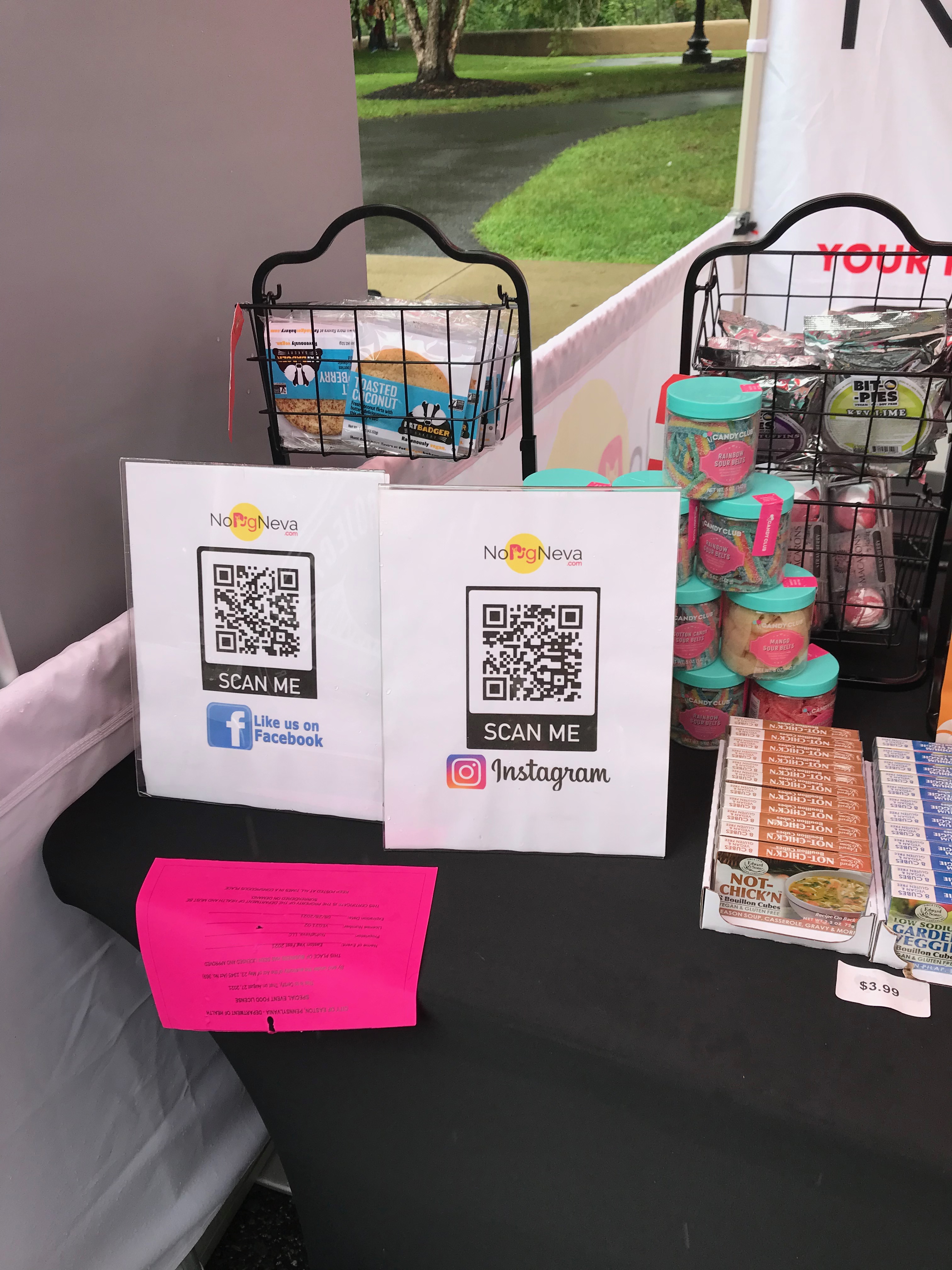
The rain felt like relief after the most recent heat wave.  We’d long planned to attend the Easton VegFest regardless.  Summer is the season for street festivals and it’s always a strange kind of affirmation to find one dedicated to vegans.  And to see so many people at it.  The cities of the Lehigh Valley have quite a few animal-friendly options for eating, and although the VegFest isn’t huge it’s a good place to find others who realize that our food choices matter.  So it was that we came upon the booth for NoPigNeva.  Now, if you’ve ever tried to shop for vegan food—I know there must be a few of you out there—you know how catch-as-catch-can it is.  Around here lots of grocery stores carry vegan items, but what you’re looking for may not be there.  Even WholeFoods in Allentown has a limited selection.

NoPigNeva is a supply company run by black women.  It supports worthy causes.  And it makes finding what you’re looking for essentially one-stop.  I’m no businessman, but I do wonder why, when they keep selling out of vegan stock, stores don’t get their orders refilled right away.  It’s almost as if we don’t want to believe people will buy it.  Vegan food has come a long way even in just the last five years.  I know that when I became a vegetarian almost two decades ago now I felt there was no way to get enough to eat as a vegan.  Options seemed so limited.  That’s no longer the case.  I’m guessing the success of the Impossible Whopper caught everyone (except consumers) by surprise.  Even now, if you order one (hold the mayo, please) you’re pretty much guaranteed it won’t have been sitting on the warming shelf.

There’s big money in the food industry.  I’m not a foodie, although it’s become fashionable to be one.  I do, however, think about whether my food is causing harm.  There is, I realize, no way not to impact the environment or other living creatures when eating.  Lessening that impact, however, and supporting historically oppressed groups feels good.  There is a morality to mastication.  Most animals, it seems, have evolved a fear of being eaten.  Perhaps we’re only starting to understand that breaking chains might have to begin with us.  Any industry (big agriculture) that tries to make it illegal to see where your food comes from is hardly to be trusted.  I trust more those willing to come to a street fair on a rainy Saturday afternoon to show that there is a better way.


Not the Band

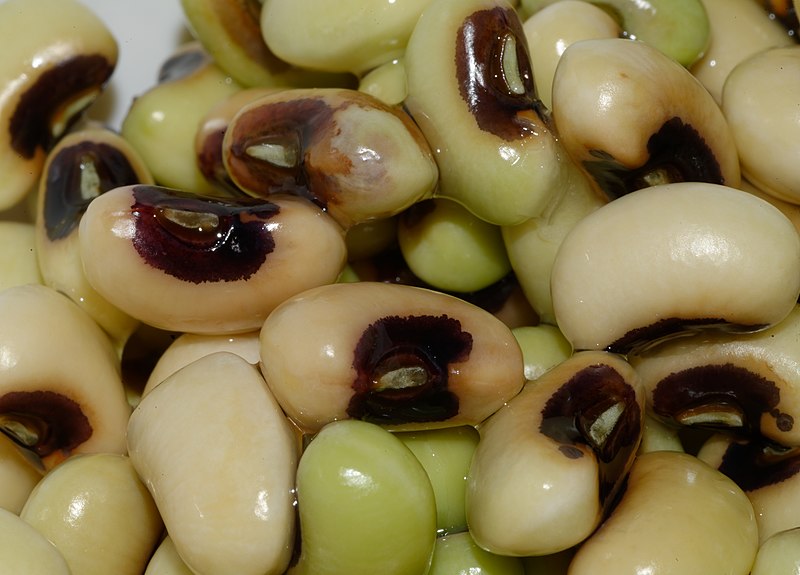
One of my favorite weekend treats involves black-eyed peas.  With a father from South Carolina, some of my earliest memories involve soul food.  As a present-day vegan, I eat a lot of beans.  That’s why I was disappointed to learn that Goya’s CEO, Robert Unanue, continues to be a big Trump supporter.  Shame on you, Goya!  Lest you get the wrong idea, we generally buy the store brand beans.  Of all the legumes, however, it seems the humble black-eyed pea is difficult to get right.  The generic brands always end up with the bottom part of the can being a kind of beige sludge where the beans have broken down and lost, as it were, their individuality.  The dish I make (one of my own invention, also featuring grits and hot sauce) requires that the beans maintain their integrity—take note, Goya!  Said brand seems to be the one that understands this aspect of canning beans.

For many years I avoided Bush beans for fear that they might be enriching the other *ahem* Bushes.  Right now, however, I’d rather have W run for a third term than the specter of Goya-supported Trump.  When did legumes become politicized?  Why can’t I sit down to a peaceful Saturday morning breakfast without a hideous four-year nightmare coming to mind?  The perils of being vegan!  In any case, I recently tried Bush black-eyed peas.  They weren’t as good as Goya, but I think I need to make the switch.  I’ve never had my somewhat simple culinary tastes disrupted by a president before.  Generic would be fine, but why, o why can’t they get the black-eyed pea right?

Image credit: Jud McCranie, via Wikimedia Commons

Perhaps somewhat oddly, I really like beans.  There are about 400 varieties and each has its own personality from sassy edamame to staid kidney beans.  I’ve even reconciled myself to the childhood nightmare of the lima bean (alien, without a hint of lime).  Now, I’m no foodie.  I eat to live rather than the other way around.  Whatever I do, however, I search my conscience.  Raised evangelical I know no way around it.  My conscience is the main reason for becoming vegan—I can’t support animal cruelty, especially for an industry that is the largest environmental polluter in the world.  So when I’m standing in front of the bean shelf, thinking ahead to Saturday’s breakfast, I’m struck with qualms.  I stare at the black-eyed peas and they stare back at me.  It’s a kind of test of the wills.  I see the Goya and decide to try something better for the world.  


Plants Will Lead

The world just keeps getting weirder.  Although I very much appreciate—“believe in,” if you will—science, sometimes the technology aspect of STEM leaves me scratching my primate cranium.  What’s got the fingers going this morning is spinach.  Not just any spinach.  According to a story on Euronews, “Scientists Have Taught Spinach to Send Emails.”  There are not a few Homo sapiens, it seems, who might learn something from our leafy greens.  The tech comes, not surprisingly, from MIT.   When spinach roots detect certain compounds left by landmines in the soil, it triggers sensors that send an email alert to a human being who’s probably eaten some of their (the spinach’s) very family members.  I’m not denying that this is very impressive, but it raises once again that troubling question of consciousness and our botanical cousins.

Some people live to eat.  I’m one of those who falls into the other category—those who eat to live.  In my life I’ve gone from being a picky omnivore to being a somewhat adventurous omnivore to vegetarian to vegan.  I’m not sure how much more restricted I can make my diet if I leave out plants.  I’ve watched those time-lapse videos of trees moving.  They move even more slowly than I do when my back’s acting up, but they really do move.  If they had legs and speeded up a bit we’d call it walking.  Studies into plant consciousness are finding new evidence that our brainless greens are remarkably intelligent.  Perhaps some could have made a better president than 45.  I wonder if spinach can tweet?

People can be endlessly inventive.  Our thirst for information is never quenched.  Universities are among those rare places where ideas can be pursued and it can be considered work.  While I don’t think everyone necessarily needs to go on to higher education, I can see the benefits it would have for a culture.  Indeed, would we have armed mobs trying to take over because of a fact-based election loss?  I wonder if the spinach would take place in “stopping the steal.”  Hopefully it would fact-check more than those who simply follow the leader.  Consciousness and education can work together for a powerful good.  I’m not sure why Popeye’s favorite was chosen for this experiment, but it does seem to show that we can all get along if we really want to.  Maybe then we could meet in the salad aisle rather than out in the field looking for explosives.


Wild Oats

The day after Thanksgiving, although it’s too late for millions of industrially slaughtered animals, is a good time to think about plant-based diets.  I’ve been a vegan for three years now, and it has led me to some interesting places.  One of them is oat milk.  Like most Americans, I eat cereal for breakfast most days.  (When I volunteered for the dig at Tel Dor in 1987, however, olives, Nutella, and bagels made quite a passable morning meal.)  Apart from cereal breakfasts being a religiously motivated practice, they’re easy to prepare but difficult to do without milk.  You can (and many sometimes do) eat dry cereal, but we’ve been conditioned to pour milk on it to make a kind of soupy, grainy start to our day.  It feels familiar.

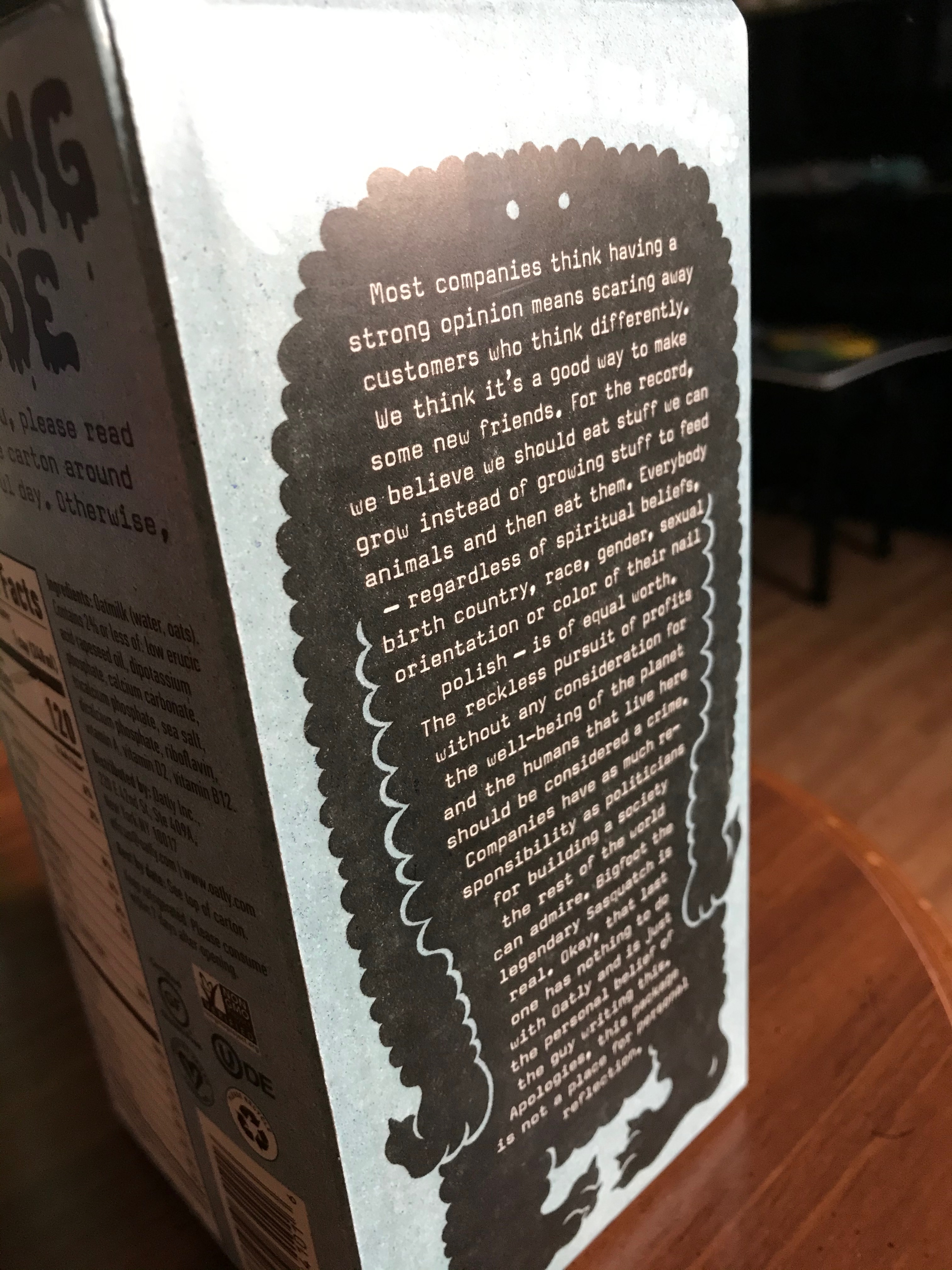
We started out, after much research, using soy milk.  It has to be a particular brand, though, because it can have an oily taste.  We eventually switched to oat milk.  Unlike soy, I can actually drink it like regular milk.  We’ve been buying Planet Oat, but recently we tried Oatly.  Now, I’m one for a working breakfast.  Time is precious and work begins uncompromisingly early.  That means I don’t read cereal boxes or milk cartons any more.  That changed with Oatly.  I found an entertaining and eloquently stated kind of creed on the back of the carton.  When’s the last time someone brought spirituality to the breakfast table (apart from introducing the eating breakfast cereal craze)?  It makes me feel more grounded.

The intricately interconnected web of life makes me think that we should be cognizant of our food.  What we eat should be approached reflectively.  If we had government subsidies for fields of oats rather than industrial farms for the inhumane treatment of “food animals” it seems to me the world would be in a better place, spiritually.  There’s been some comeback of wildlife since Covid-19 forced us all indoors.  I am glad to see it.  These creatures are our siblings.  Even if that seems to be going too far, it’s becoming increasingly difficult to deny that animals have emotions and minds, particularly those that humans eat.  Given the foodieness of contemporary society (everyone’s talking about food rather worshipfully these days) it would seem that pondering at least how we treat animals before we eat them should be a matter of common courtesy.  Being so far removed from our sources of sustenance has done something to us, I fear.  There are great alternatives out there, and some even make you smile while munching your cereal.


Yellow Jackets

Deeply conflicted.  That’s how I feel about calling the exterminator.  The longer I’m alive the more eastern my thinking becomes.  What right do I have to kill other animals for doing just what they’ve evolved to do?  The yellow jackets who made a nest in our siding were doing just what nature directed them to do.  In what sense is our house natural?  When they started getting inside, though, memories of having been traumatized by stepping on a yellow jacket nest when I was younger came to too sharp a focus.  Terror is probably the right word.  We were catching and releasing five or six a day and summer doesn’t look to be about to give way to autumn very soon.  There’s nothing like being startled by an angry bee when you walk into a room in summer-weight clothes.  So the exterminator came.

As the yellow jackets fled into the house to escape the poison I pondered what right I had to deprive them of their lives (here’s the eastern thinking part).  How was my comfort, or my lack of terror, more important than their need for a home?  Couldn’t we peacefully coexist?  You see, I’m no fan of violence of any sort.  In my ideal world there would be no war and no meanness.  You might not be able to call yellow jackets cuddly, but they don’t seem the happiest of creatures with whom to interact.  They’re industrious, like business owners want their drones to be, but their people skills aren’t too good.  Maybe it’s just projecting, but when they swarm the only word that comes to mind is anger.  Even their evolved body armor reflects that.  Still, I didn’t want them killed.  I just wanted them not to misunderstand our human interactions while shut in during a pandemic.

Life is a gift to all creatures.  I became a vegan years ago because of humanitarian concern for our fellow creatures.  The mess our world’s in now because of our lack of care for anything but money plainly shows.  Bees, it could be argued, make more of a contribution to the well-being of the planet than I do.  Who am I to make any claim of superiority?  Still, I’m responsible to pay half my salary on a mortgage that will keep me in one location until the situation betters.  When I see that silhouette in the window a sting of terror from my childhood comes back as I grab an empty peanutbutter jar to catch and release, only to have another bee replace the first.  Childhood traumas are like that, of course.  But now I apologize for bringing on the death of fellow creatures and I walk through the rooms through which they had freely flown.


Veg Out

It came to me vividly when I heard a speaker self-deferentially say he was crazy.  This was, I suspect, a way of defusing the fact that when vegans speak others often think they’re being judgmental or preachy.  I’m pretty sure this speaker wasn’t, and I try my best not to be.  It can be difficult when you’re passionate about something.  At the event, which included several people in age brackets more advanced than even mine, the question of “why” was predictably raised.  Apart from the rampant cruelty of industrial farming—some states even have laws preventing people from knowing what actually goes on in such places—there are other considerations.  One of them involves Greta Thunberg, Time magazine’s person of the year.

Global warming is no joke, no matter how much the Republican Church laughs it off.  Greta Thunberg has become the face of a generation with a conscience, but one fact few wish to know is that industrial farming is by far the largest environmental threat to our planet.  The amount of pollution it causes is staggering.  The rain forests are being cleared for grazing land because people will buy beef.  The largest methane emissions come from farms, not factories.  Our lifestyle of eating animals on an industrial scale is one of the many hidden costs to the modern way of living.  Or of dying.   There are doubters, to be sure.  It’s pretty clear, however, that the agriculture business is massive and it is just as powerful as the other great offender—the petroleum industry.

Making facts known isn’t being judgmental.  People’s eating choices are up to them.  I’ve only been a vegan for about two years now and I sometimes can’t comply with my own ethical standards when I go out to eat.  Or when other people give food.  Many places have no concept of dining without animal products.  I’m not trying to make everyone else accept my standards; I have beliefs about animals that are based both on personal experience and lots of reading about faunal consciousness.  I fully accept that many others don’t agree.  What I do hope, however, is that people like the speaker I recently heard will not have to jokingly call themselves crazy because they’re vegan.  The narrative must change.  We must be willing to look at the way we live on this planet, and accept the fact that just because major polluting industries hide behind large, brown cow eyes doesn’t mean we shouldn’t question what they feed us.  We need to look at our plates and count the cost.


Why not try Veg Out, Bethlehem’s new vegan restaurant, if you’re in the Valley?


Meatings

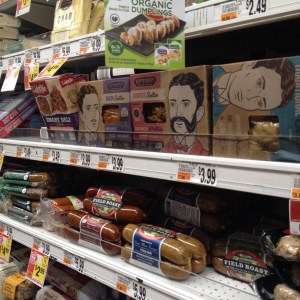
It was almost a little too real.  As I looked at the fake blood—this wasn’t a horror movie—I had a hard time accepting this wasn’t the real thing.  I mean Beyond Meat’s vegetable-based sausage.  My daughter recently sent me a captivating article about artificial meat.  Unlike many paeans to its virtues by fellow vegetarians and vegans, this was written by an omnivore who unabashedly stated that we’ve reached the point where synthetic meat has surpassed the real thing in flavor and the eating experience.  The piece on Outside made me glad.  Feedlots, apart from being the largest industrial polluters in this country, are a horror film based on a true story.  The way we treat “food animals” violates just about every ethical stance in the book, and it’s a big book.  We do it for profit, of course.  Now that artificial meat is turning a substantial profit, those who slaughter are starting to pay attention.

I recently ate at a local restaurant where our waiter recommended the cauliflower burger.  The thought wasn’t appealing.  Don’t get me wrong, I do like cauliflower.  I prefer it raw, however, since cooking brings out its more cruciferous qualities.  In any case, our server said, “It’s new on the menu.  We offered it once before and so many people requested it that we’ve made it a regular item.”  Now we don’t exactly live in a hippie haven here.  Still, enough people are asking for alternatives that we’re discovering it pretty easy to find plant-based protein in some pretty remarkable places.  It put me in mind of my most challenging course in college: biomedical ethics.

A class that asked, and then pressed on very sensitive questions, biomedical ethics required a term paper.  I wrote mine on animal testing.  This was back in the 1980s, and technology has moved on since then.  Even back in those dark ages of Reaganomics, artificial tissue was being lab grown, eliminating the need for animal testing on many products.  Now we’re reaching the point where the same may apply to comestibles.  I’ve long used vegetarian alternatives (now vegan ones) and they’ve increasingly improved.  When I had the most recent alternative, however, I couldn’t believe it wasn’t meat.  It was too real.  I’m not morally opposed to verisimilitude, I assure you.  The closer they get to the real thing, the better it is for the animals who’ll never need to be born to be killed by us.  It’s just I find the fake blood upsetting, and I’m happy to be reminded that this is only a simulacrum after all.