Which Window?

October slipped in this year, and now I find myself unexpectedly in the season of ghosts, monsters, and witches. Given the number of posts on this blog about horror movies, it stands to reason that these are a few of my favorite things. The nights are longer now and since I work in a cubicle all year round, I miss the daylight from 8 to 4 on most days. Judging by the billboards along highway 22, others have noticed that Halloween’s approaching as well. One of the odd things about being on the internet myself is that I don’t spend much time web browsing. Who has time? But when a friend sent me a story on witch windows, I had to take a look.

I’ve only been to Vermont twice. Of all the New England states, it, along with Rhode Island, are kind of out of the way for the areas I tend to visit. I’ve enjoyed my time in Vermont (and Rhode Island), but there just hasn’t been much of it. The article “Witch Windows Are Still A Thing And Here’s Why They Actually Exist” by R. J. Wilson points out an architectural feature I didn’t notice during my brief Vermont visits. Confined to the Green Mountain State, for the most part, are slanted windows in line with the slope of the roof. When I saw the photos in the article my first thought was that they were for admitting more light. Vermont is a northern state and already in September days are getting a little lean on light. These windows, however, are commonly called “witch windows.” Nobody really knows why they’re called that. As the Urbo article points out, nobody really believed that witches couldn’t enter through crooked windows.
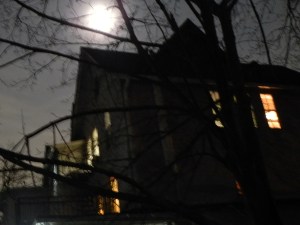
People are quick to posit supernatural explanations for mundane things. It’s one of the more charming things about the witching season. We need not believe the explanations for them to convey some kind of meaning. Ghosts, monsters, and witches survive because they provide such meaning for us. They symbolize the things against which we have to struggle. Looking for light as the nights lengthen is a very human thing to do. We often house our monsters in the dark. There is utility in taking them out in the daytime to give them a closer look. Now that October’s here, of course, there’s less daylight in which we might easily see. If I were in Vermont I think I’d want a witch window too.

High Aspirations

I’m not a fan of the Olympic Games. It’s not that I have a problem with the passion and dedication of these (mostly) young people who’ve trained themselves to perfection in various physical skills, but the Games have tended toward jingoism a little too often. They may be intended to bring the world together, but often they become the focus of international tension. And, of course, television shows us only where our own nation makes a good showing. In my more somber moments I wonder if there isn’t someone even better at this or that sport/event whose circumstances make it impossible for her or him to make an international showing. Olympic Games are for those who can afford personal trainers and who can manage to make it to tryouts on schedule. Again, I don’t demean the ability of the competitors; when I find myself in front of a television I often stare in awe at what they accomplish.

A certain disconnect always attends the opening ceremonies. I have to confess to having glanced at the screen in our hotel room once or twice during the London extravaganza, but what became clear is that culture is what’s celebrated here. Athletics are the same internationally, if we take the Olympics at their word, but culture in region specific. Figures from Harry Potter and Mary Poppins, and other British contributions to the world of art and literature, filled the arena with a sense of national pride. Even the queen deigned to parachute down to the level of the commoner, in the company of James Bond of course (Sean Connery, why did you have to age?). This is what the commentators called the “rebranding of the royals.” What is it that we really value about ourselves? Can we not truly overcome xenophobia?

Xenophobia has a reach far beyond nationalities. It is rampant between social classes, political parties, and language groups. We distrust the other, for those like us are the best. The best swimmers, the best gymnasts, and the best shooters.

To look down on the world.

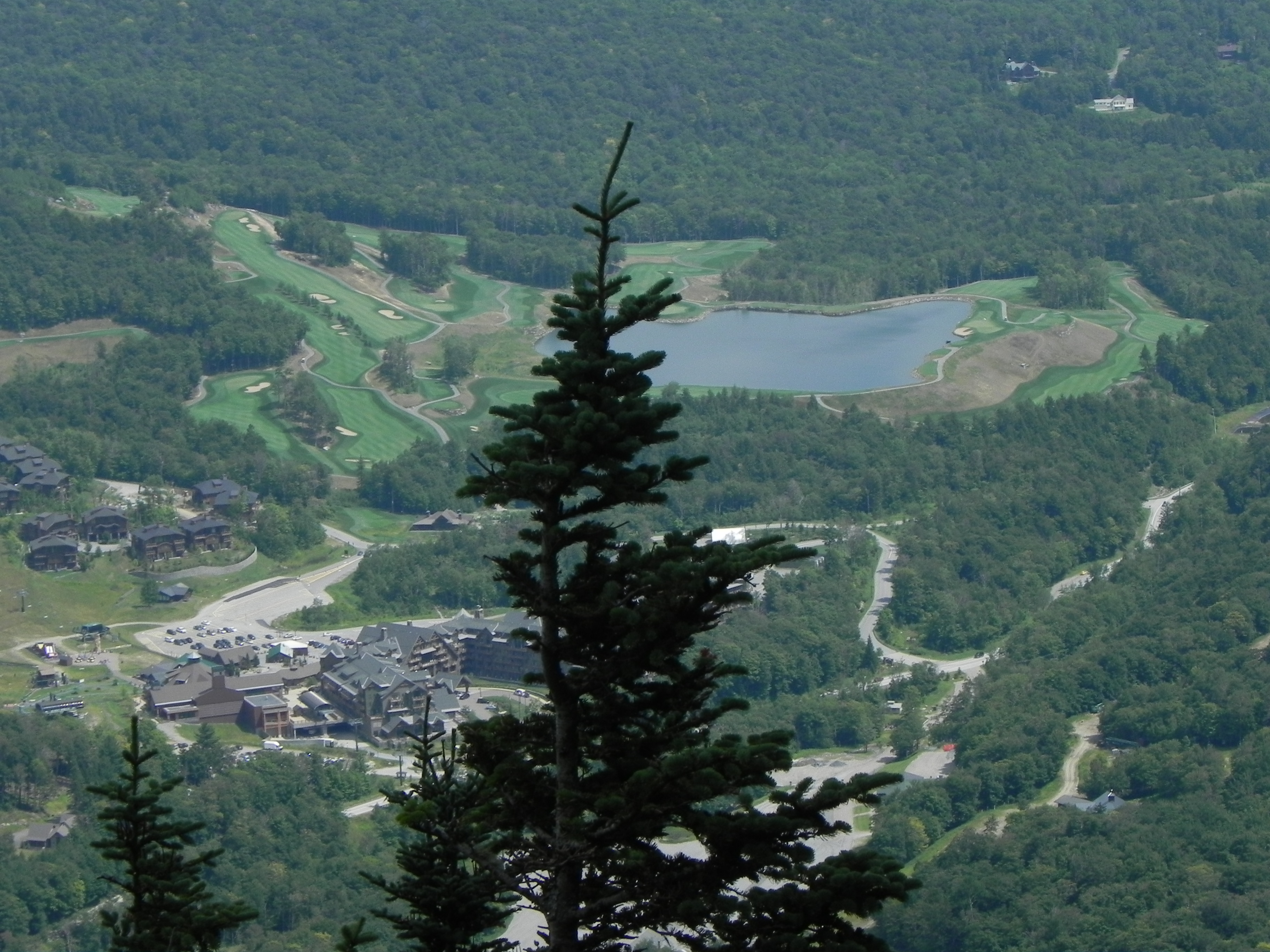
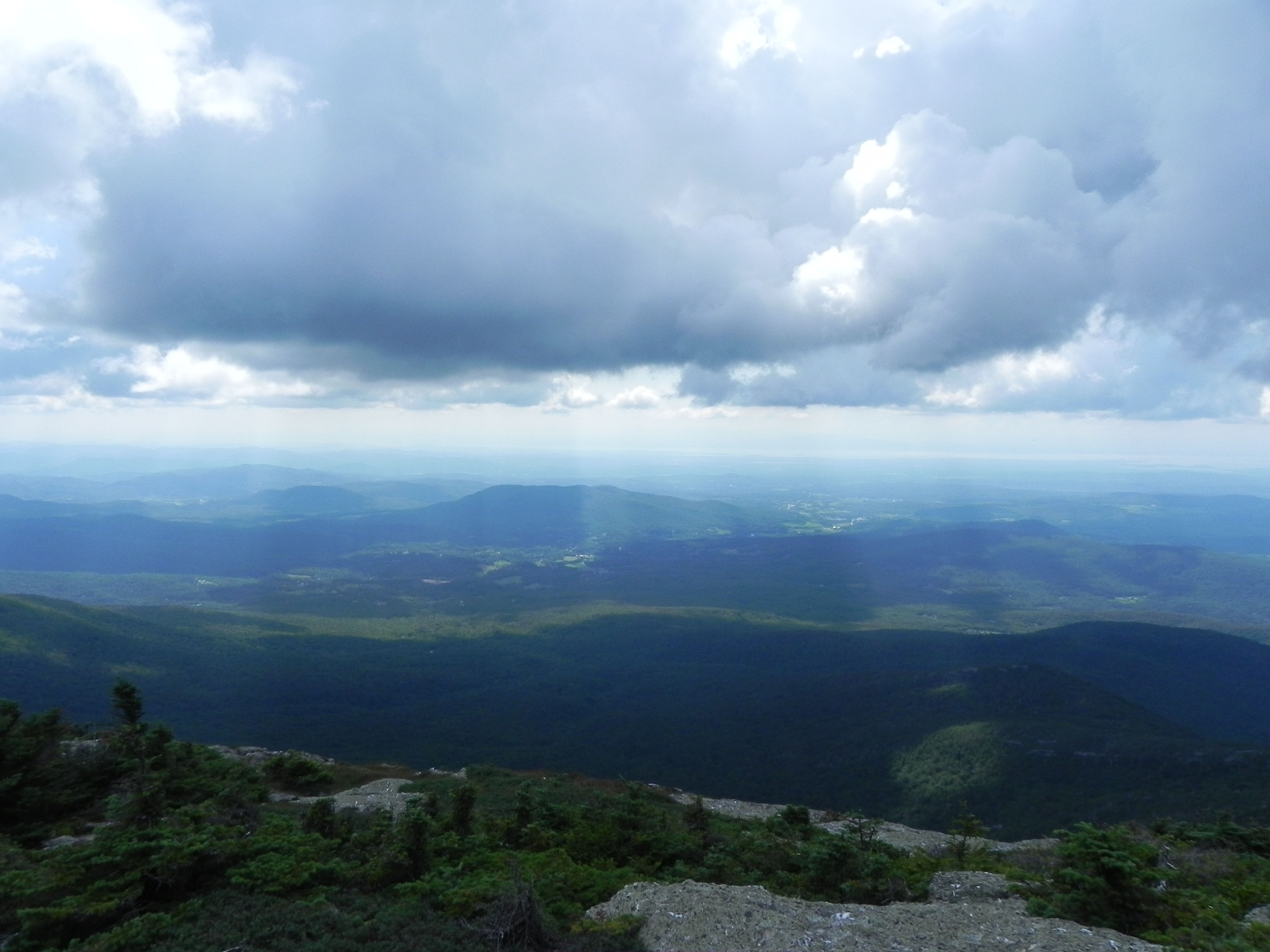
Just days ago I stood atop one of the peaks of Mount Mansfield, the highest mountain in Vermont, with my daughter. As we looked out over the panorama that included New Hampshire and New York, and maybe even Quebec, it seemed as if the world could be one. Maybe the things we value could lead us to share instead of selfishly claim everything for ourselves. I think of Mount Nebo and I shudder. And I think if I knew how to ski and if it was winter, maybe I could be the best.


Trapped

Music has always meant a lot to me. I am, however, not musically talented. As I child I never saw The Sound of Music (or Mary Poppins, for that matter). College finally introduced me to Julie Andrews when friends were aghast at how deprived my childhood had been. Sound of Music was cute, but I didn’t really “get it” until someone explained that it is largely a true story. There really was a Maria von Trapp and Captain. Much of the story, of course, my colleagues (not really knowing) told me was fabricated. My daughter has recently returned from a musical tour of part of southern Europe, centering mostly on Austria. The tour group visited Salzburg and saw where part of The Sound of Music was filmed. When she returned home we decided to visit Stowe, Vermont. This mountain community, known for its skiing, is where some of the von Trapp family still live. Not sure what to expect, we signed on for a tour of the Trapp Family Lodge (a little beyond the comfort range of someone unemployed until recently).

The first surprise came when Sam von Trapp, the grandson of Maria, introduced himself as the tour guide. Many of the mysteries of fact versus fiction were cleared up—I can’t reveal it all here, otherwise you might not visit Stowe for yourself—and the person of Maria von Trapp became much more like the rest of us. During an interview taped four years before she died in 1987, Maria explained how the course of her life was changed by the mountains around Salzburg. Feeling the presence of God there, she joined the convent that sent her to tutor one of Baron von Trapp’s daughters and that eventually led to her marriage and the formation of the Trapp family singers. She was urged on in her marriage, as the movie indicates, by the sisters of the convent.

A second surprise emerged as the narrative turned to how the von Trapp family tried to help out others in times of difficulties. Not content to count themselves uniquely blessed by having escaped Austria the day before the Nazis closed the borders of the country, they sent supplies to those who were still under threat of Hitler’s regime after the Anschluss. The home made famous by the movie became Nazi headquarters in Austria. It seems that in this case religion led to a favorable result. Some critics argue that religion brings no good. I have to admit that often I feel as though attempting to justify it at all is a fool’s errand. It is good to be reminded once in a while that lives are sometimes changed for the better by what they believe to be the divine voice. Even in my horror film world, The Sound of Music still has its place.


Sweet Heaven

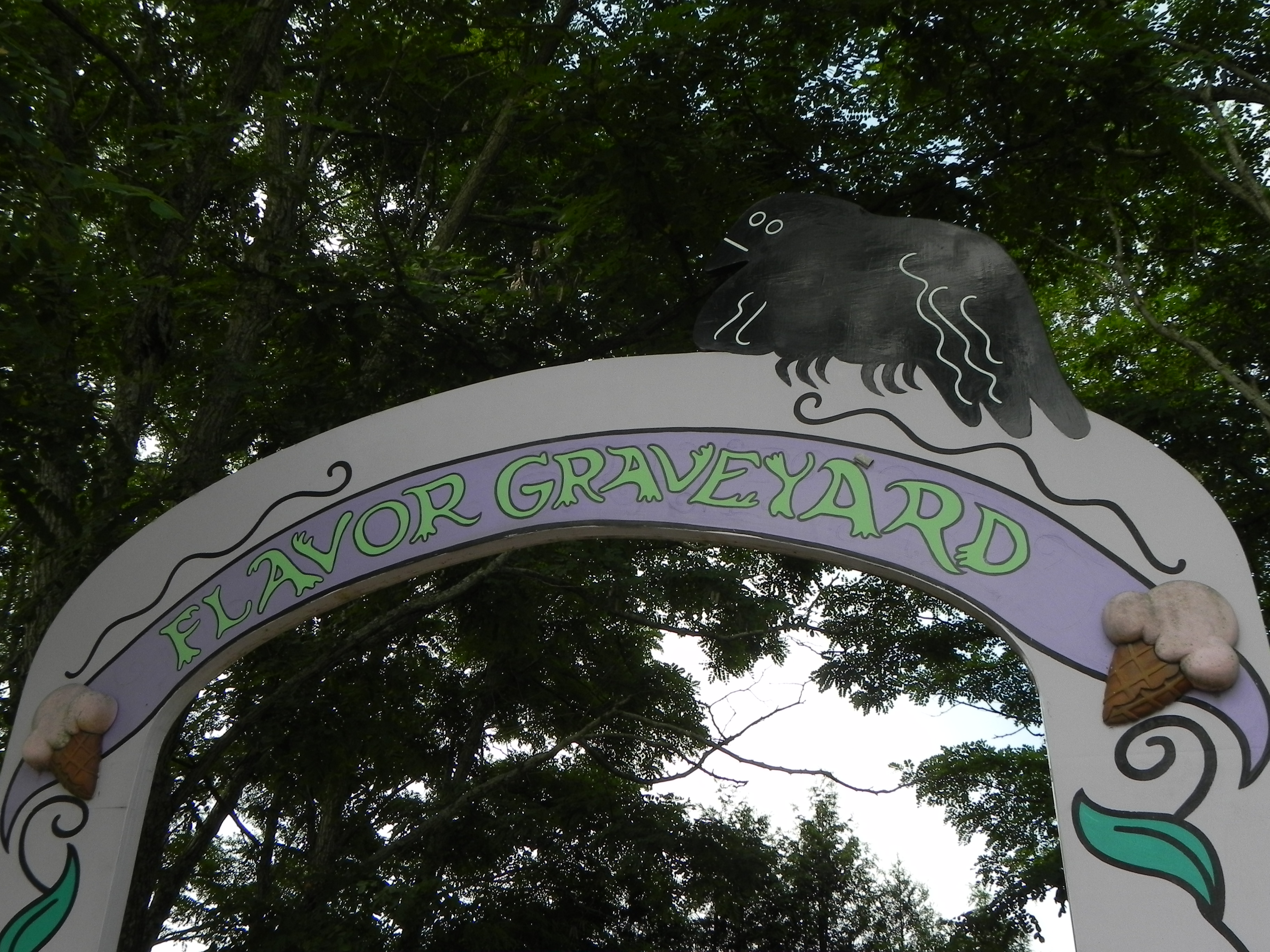
On a weekend trip to Waterbury, Vermont, I found the sweetest cemetery ever. Ben and Jerry’s ice cream factory features a Flavor Graveyard where tombstones to deceased flavors stand. The epitaphs are frequently witty and the experience is lighthearted for kids and adults alike. I wondered, as I stood there looking at the monument to Bovinity Divinity, at the persistence of the belief in an aftertaste—what I presume is a flavor’s version of an afterlife. We like to believe in something more, sometimes at the expense of the here and now. Nevertheless, Ben and Jerry stand for something more than quality ice cream. Theirs is a company with social consciousness, started by two young idealists who have managed to keep their integrity in spite of success. I couldn’t help but to feel impressed by the entire operation. Frozen dairy with a conscience.

The larger question, I suppose, is why success so frequently leads to a loss of concern for others. People possess differing levels of empathy, just as animals do, but it appears so starkly in the case of those who prefer their profit at the expense of others, sometimes even the entire remainder of the world. In a universe of one, no one is rich. And seeing a successful company that has managed to pull off relative equity in the world of business has proven that it is possible. Too many idealists let go too soon.

Perhaps it is the rarified air at higher elevation, or perhaps I’m being brushed with the wings of angels at this altitude closer to the celestial sphere, but this giddiness that I’m feeling is likely born of bonhomie. There is no necessary correlation between success and lack of concern for others. I am reminded of this as I walk to work in far away Manhattan. The sidewalks, even in posh business areas, host ambiguous stains and crushed cockroaches. Even the wealthy must step out of their limos sometimes. When they do, they will plant their feet on the same dirty sidewalks as the rest of us do. Their elevators may lift them to pristine heights, but the bottoms of their shoes are just as full of the remains of everyday lives as are mine. From now on, however, when I see Ben and Jerry wrappers among the detritus on the streets, I will be smiling, thinking about the aftertaste.