Ivory Towers

IMG_0481

I sometimes confuse “ivory tower” and “ivy tower.” It’s only a matter of or. In my mind the halls of academe are frequently covered with ivy, but the usual term for a rarified higher education is actually “ivory tower.” A pristine, white edifice unstained by the concerns of day-to-day life. It never occurred to me that the phrase might be biblical. According to tradition, King Solomon quoth, “Thy neck is as a tower of ivory” to his beloved (Song of Songs 7.4a). How the term moved from an obscure reference in a love poem to higher education involves the nature of the latter. Higher education was an enterprise of the church. These days we tend to think of religion as opposed to learning, but in fact, universities were natural outgrowths of cathedral schools where future clergy were trained. There was also a guild-consciousness about the Middle Ages that also played into this, but primarily what we think of as universities today were developed to educate clergy. Many of the Ivy League (again with the ivy!) had their origins as seminaries.

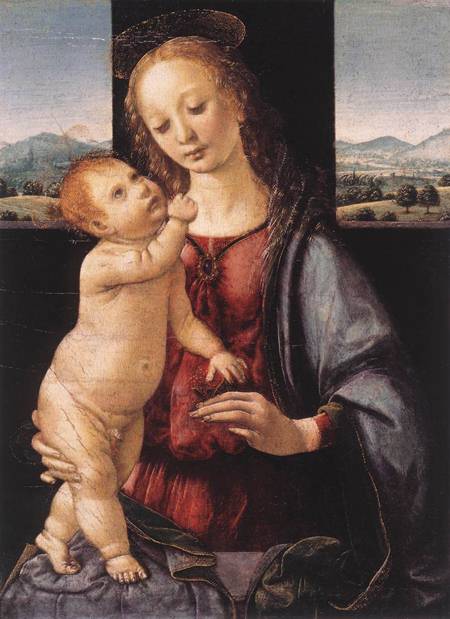
Ivory towers, however, are still remote from this. Eventually, probably due to the difficulty of interpreting the Song of Songs, ivory tower came to be an epithet of the Virgin Mary. Indeed, some interpreted Song as the love between Mary and the church. Rather than the erotic intent of Song, which quickly became an embarrassment to the chaste church, the ivory tower came to symbolize the purity of the Virgin. Untouchable, sparkling white. From the pre-Reformation church, universities sprang. Devotion to Mary ran high.

Although the origin of ivory towers as a metonym for universities is uncertain, it appears in literature by the nineteenth century. Possibly it reflects nothing more than the dignified life of the mind as opposed to the sullying of hands. Or perhaps it reflects a deeply buried knowledge that the university, as secular as it has grown, is a scion of the church with its devotion to a virgin who somehow commandeered the language of a love poem from antiquity. Today ivy is less common on campuses than it used to be. Our higher education is much too modern and chaste for that. The towers of ivory, however, remain. Now they refer almost exclusively to dreamers who’ve lost touch with the everyday world. And, as often as not, with the Bible that gave them their start.
Holy Seer

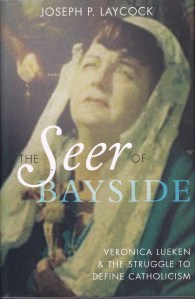
SeerOfBaysideHands up, all who’ve heard of Veronica Lueken. Maybe one of you in the back? I have to confess to having been in the “Veronica who?” crowd until reading Joseph P. Laycock’s The Seer of Bayside. The subtitle would have made the difference: Veronica Lueken and the Struggle to Define Catholicism. It’s a fascinating story. Lueken, a Catholic laywoman in Bayside, Queens, began to have visions of the Virgin Mary. This was in the days of Vatican II. Lueken was a traditionalist who felt the reforms were misguided, and found Mary to be on her side. She grew a large following during her outdoor vigils, eventually becoming so popular that people bussed down from Canada and in from other states to join her. The neighborhood association complained, and, some say, planned to assassinate the seer. The movement, known as Baysiders, eventually moved their vigils to Flushing Meadows Corona Park, where it—or they—continue to meet.

Critics of religion tend to claim believers credulous. The Catholic Church, however, has been notably reluctant to approve of Marian apparitions. Lueken’s visions and her movement were condemned by the authorities, but now, even two decades after her death, two groups of her followers continue to meet. I’ve read quite a bit about Marian apparitions over the past couple of years. As Laycock points out, Marian apparitions are frequently classed with the paranormal since anomalous events often accompany them. It is no different with Baysiders. They claim healings and other unexplained events associated with their devotions, including mysterious lights on Polaroid photographs taken during services.

How are rational people, especially non-Catholics to make sense of this? Obviously one can say that the thousands who’ve claimed to witness such miracles throughout history were simply mistaken. Or deceived. Or one could suggest that there may be more to this old world than we’re generally willing to admit. Laycock takes his book in a different direction by asking the salient question of who gets to decide who Catholicism is. Protestants have no single center like the Holy See, and fractions do what fractions do. They divide. Hierarchy hath its privileges, of course. Rome declares the Baysiders in error. Each side, as is to be expected with religions, claims that it is correct. It seems that only Mary knows the real answer.


Let It Be

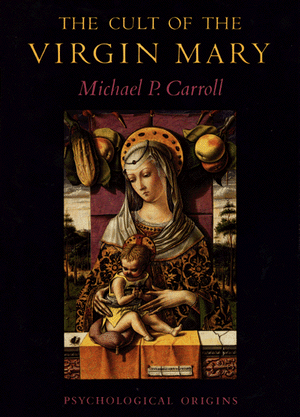
CultOfTheVirginMaryWhy do people pray to Mary? The question is a complex one and answers range from a desire to find some feminine compassion in an angry masculine god to the distinctly Freudian. Michael P. Carroll, in The Cult of the Virgin Mary: Psychological Origins, falls into the latter category. Yes, the book was written in the 1980s, but even then Oedipal complexes and penis envy were deeply suspect. Still, at various points along the way Carroll had me scratching my head and muttering “there may be something to this.” For a few pages, anyway. The problem begins much further back than Mary. To start with, we can’t all agree on what religion is. From there we move to the stage where ancient religions had as many goddesses as gods—even the divine don’t like to be lonely. The heads of most pantheons were male, which likely matched most earthly political systems. Powerful females still existed, at least in mythical realms. Monotheism effectively put an end to that, but before too terribly long, Mary emerged and eventually became almost a goddess.

Indeed, early on in his book Carroll discusses how Mary differs from the goddesses of antiquity, drawing parallels with only Cybele. Mary is the virgin mother completely dissociated from sexuality. Deeper study would reveal some mistakes in Carroll’s reasoning—there were virgin mother goddesses, such as Anat, who might in some ways fill in the gaps. Indeed, arguing for the uniqueness of Mary is kind of a goddesses-of-the-gaps theology. The more we learn the less unique any deity becomes. Still, looking to the psyche to explain Mary is a logical step. Tracing Marian devotion to the ineffective-father family, where a machoism hides a longing for the protective mother, Carroll offers us a Freudian feast of options here. Still, in the light of developments in psychology over the past quarter century, his premise is a bit dated.

We simply don’t know why Mary became such a strong devotional interest in a religion with a masculine Trinity. It would seem that women might be the motive force behind it. Given that half of Christendom was displaced, by default, from the male savior, why would Mary not emerge as the mother all people crave and whom, women know, often soften the harsh decrees of martial law? Delving into the apparitions of Mary from Our Lady of Guadalupe to Fatima and Medjugorje, Carroll finds illusions and hallucinations based on strong females behind each one. Rational inquiry into the deeply spiritual. This, however, remains the proximate cause only. What is really seen can’t be known, except to the seer. And it seems that seers tend to find, amid a religion with an omnipotent man at the top, that it is the mother who appears in times of need. Unless, of course, it is a matter of healthcare where, as government shows, father knows best.


Like Virgins

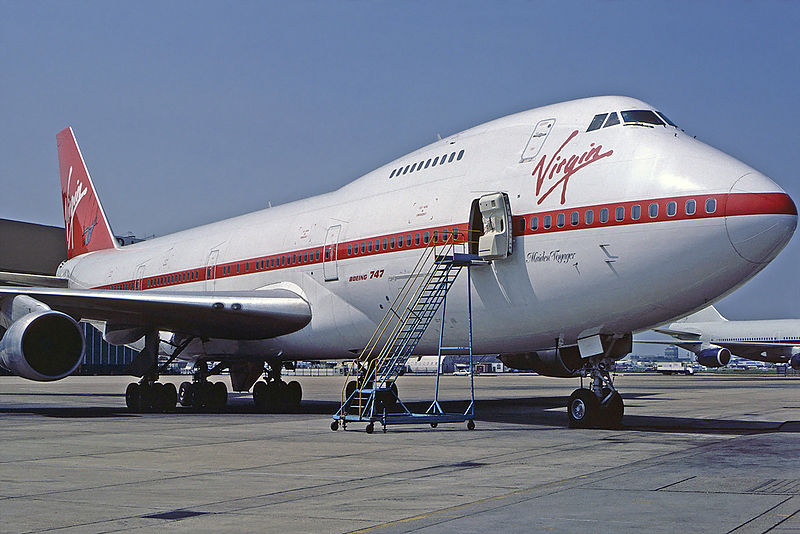
If you are reading this, I have safely arrived in the United Kingdom, courtesy of Virgin Atlantic. Given the lens through which I view everything, I somehow supposed that Virgin Atlantic was named after one of history’s two most famous Madonnas—the Blessed Virgin Mary, or just plain Madonna. It turns out that I was wrong on both counts. Virgin Atlantic, famously under the leadership of Richard Branson, borrowed its name from its older sister company, Virgin Records, also founded by Sir Branson. Virgin Records, I had supposed, was named after the only musical Madonna, but again, not so. The record company, new to an inexperienced Branson, was named by a colleague who noted that they were business neophytes, like virgins. The original logo showed an Eve-like virgin with a snake and everything.

Steve Fitzgerald's pic from WikiCommons

Steve Fitzgerald’s pic from WikiCommons

While in the UK I always call on Nick Wyatt, one of my doctoral advisors and now a good friend. As my mentor in Ugaritic, we always joke that I fly Virgin Atlantic because of the Virgin Anat, Baal’s famous warrior sister and sometimes lover. Anat was, of course, not the first perpetual virgin. The Mesopotamians had the idea that a goddess could be a perpetual virgin and still have kids, and what led up to said motherhood. Virginity is a status marker, still unfairly applied to women. I suspect a good part of it is biology (and if this seems weird, blame it on the jet lag), because the essential male reproductive function occurs whether or not a female is present, and even the most saintly men can not, from time-to-time, barring very extreme measures, avoid it. It is difficult to measure virginity in men, so why the double standard?

In this early morning haze (or is it really afternoon?), I suppose it comes down to not wanting to support somebody else’s child. Looks are at best a lackluster proof of paternity, and in the days before effective birth control, the only way you could be absolutely sure was to make sure your spouse was a virgin. Goddesses could get away with sex and still retain their purity. It was less sanguine for the human woman. Thus the Virgin Mary is accorded a special, but not unique status. But it turns out that none of this really matters because the Virgin I fly is merely a business virgin. And with a bit of experience, provides some of the best care in the air.


Miracle of the Sun

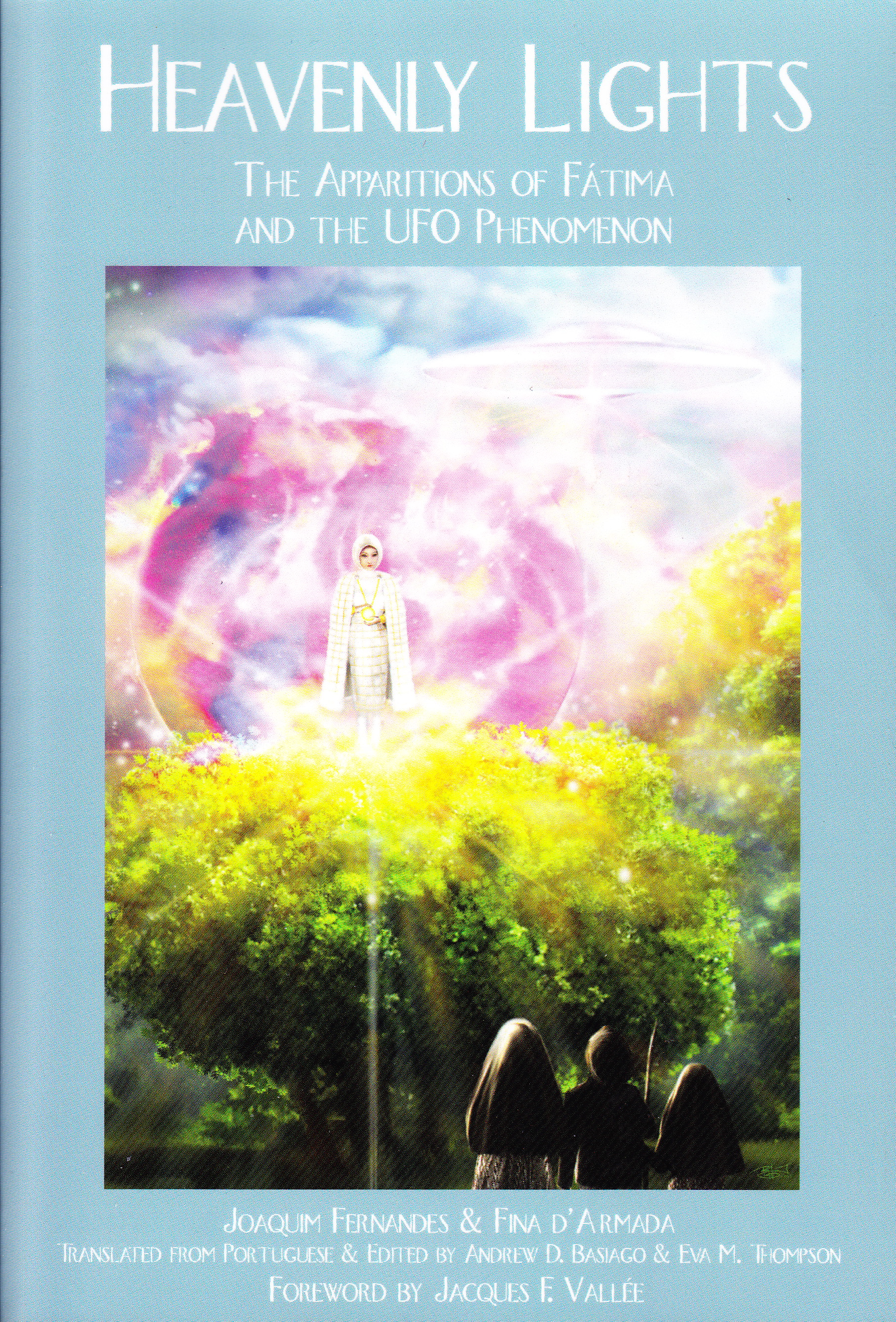
HeavenlyLights The events at Fatima in 1917 have occupied me on this blog before. Perhaps it is because of the haunting quality of the whole thing. Children, two of whom died young, saw a vision and the apparition made a prediction that was held in secret for decades. I’m not sure about you, but these days remembering most things for more than a few nanoseconds is a challenge. What was I saying? Oh yes, the Fatima incident. I recently read a book on Fatima, an unconventional book, but one which makes an intriguing case and raises a valid point. Heavenly Lights: The Apparitions of Fatima and the UFO Phenomenon by Joaquim Fernandes and Fina d’Armada draws compelling parallels between the many UFO reports that are in the public record and the strange events at Fatima, Portugal in the latter days of World War I. Immediately some people will be put off, since we have all been conditioned to ridicule the idea that, although there is almost certainly life in space, it would take the trouble to visit our neck of the universe. In the mantra of conventional thinking: it can’t be done. (Sounds rather like my career. What was I writing about, again?)

The valid point raised by the book is that many people are skeptical of the supernatural. That rules out a miracle for Fatima, since in a materialistic universe, miracles aren’t sanctioned. That leaves us with a crowd of at least 50,000 people, perhaps as many as 70,000, hallucinating at the same time. I mentioned this to a very bright college-aged student recently who responded, “Really? Who would believe that so many people saw the same hallucination at the same time?” That’s the official story, however, in the materialist camp. Just outside the tent are those who believe UFOs are material objects. They are in no way supernatural, just impossible (because nobody can fly fast enough to get here, what with light being so sluggish and all—and even if they could, why would they come here where we’re still pretty much all stuck to the surface of the globe?) I’m afraid I suffer from a surfeit of imagination. I like to wonder what might be possible.

The point Fernandes and d’Armada are making is that rural folk in 1917 had no language to describe what they saw apart from religious language. Interestingly enough, the children were always a bit cagey when saying the woman they saw was the Virgin Mary. They recognized that others said she was, but then, the others didn’t see her. The book does not explore the fact that UFOs and religion have a somewhat long association. That doesn’t make interstellar travelers supernatural, though, just out for cheap thrills. Buzz earth a few times and a century later people will still be talking about it. Some will call it a miracle. Others will say it was a mass delusion. And the rest of us will scratch our heads.


Fecit potentiam

Yesterday at Princeton’s annual seasonal choral concert, the program consisted of Bach. The first piece was a Magnificat, a piece that, in prose form, I quickly memorized at Nashotah House. With our daily double dose of chapel services, liturgical standbys such as the Magnificat quickly became reflex recitations, made with little thought beyond getting on to the next piece. It occurred to me as I listened to it at leisure, the hopes of poor Mary haven’t really materialized after these 2000 plus years. After a couple of millennia, perhaps it is time for a state of the theology assessment.

Despite the veneration of Mary in the liturgical branches of Christianity, the collective handmaids of the Lord have made slow progress in being integrated fully into church leadership. Only with the last century, and fairly late therein, did many Protestant denominations finally recognize that Mary’s gender might have something to teach the men. Paul, for one, would have had none of it. Even today the Roman Catholic Church stalwartly refuses to consider female priesthood. Perhaps Mary’s prayer should be uttered yet again within its walls?

At the section labeled “fecit potentiam,” however, I noticed further lack of fulfillment. “God has shown strength with God’s arm,” the program translates, “God has scattered the proud.” The hopes expressed in the next several verses have been silenced beneath the greed of an economic system with no responsibility. “God has deposed the mighty from their seats.” When did that happen? Those of the Occupy movement who’ve received a face of pepper spray might beg to differ. “God has filled the hungry with good things, and the rich God has sent away empty.” Sent away to their summerhouses, their mansions, and their penthouse apartments? Away from the working class who oil the gears of their massive machines. No, it seems that the Magnificat has not fared so well at predicting the new era to be brought in by a special child.

Of course, Luke’s song of Mary is based on Hannah’s song at becoming the mother of Samuel from the Hebrew Bible. Samuel was the great judge and prophet who saw to the law and order in the land. Strangely, however, the Bible manages to confuse Samuel with his erstwhile enemy Saul, conflating their birth accounts. Isn’t it just like the Bible to confuse the oppressed with the oppressor? The strength shown with the divine arm, the wealthy inform us, is the strength they wield. After all, god and gold differ by only one letter.


Jesus? No News

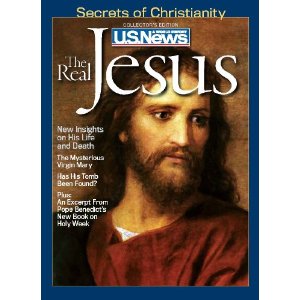
Stepping into the Port Authority Terminal in New York City may be the last place I expected to see Jesus. But there he was, at Hudson News, his beneficent face forming a repeating mosaic before the hurried and harried commuters rushing to get to work. U.S. New & World Report’s special issue features Jesus. Obviously. Racking my half-asleep brain, I couldn’t think of any reason for this sudden popular epiphany; it seems out of sync for Christmas and Easter, and no big news discoveries in the archaeological world had been recently announced. Perhaps the editors know the American Academy of Religion and Society of Biblical Literature annual meeting is coming up next week. Getting 10,000 scholars of religion together in one location is enough to make even the most hardened skeptic pray for a miracle. So, what are these “Secrets of Christianity” that call for a special edition?

The sidebar taunts: “New Insights on His Life and Death,” “The Mysterious Virgin Mary” and “Has His Tomb Been Found?” I am curious about what makes Mary mysterious; she is a minor character in the Gospels who rose to a mysterious prominence only with Catholic hagiography. Well, the sidebar does also state that the special edition has “An Excerpt From Pope Benedict’s New Book on Holy Week.” Spoiler alert! Please keep in mind that Holy Week is months away yet. Perhaps it is in response to the overly religious tussle that is going on with Republican presidential candidates. What was once a forbidden topic of discussion is now headline news, and the average person might feel the need to brush up on Christianity 101. Problem is, apart from the Gospels—and their brief is not always historical—we have very little in the way of evidence about Jesus. In the first century he was just another radical rabbi, not likely to have garnered much public notice until after his martyrdom. That means that the smallest nuggets become huge in a world where we simply don’t know.

The cycling and recycling of Jesus into the public consciousness is big business in America. With the frenetic faith claims of political candidates lacing the headlines, it is almost like a high school locker room with each contender claiming to have the bigger God. Cracking open the magazine on my lunch hour confirmed my suspicions—there’s nothing here that scholars haven’t known for years. Problem is, scholars don’t speak on a level that most people can hear. I don’t recall the last time I saw a professor taking a bus or hanging out in a bus terminal. That’s the thing about Jesus, you can always find him hanging out with the common folk. If religious specialists would learn to speak in plain language there wouldn’t be so many “Secrets of Christianity.”


Mary in the Sky with Sequins?

Shortly before Easter in the district of Yopougon in the Ivory Coast, a large group of Christians saw the Virgin Mary against the sun. UFO enthusiasts saw an alien in the same event. Several eyewitnesses ended up blind after staring into the sun. The video of this purported miracle is available on YouTube,

but even watching the “miracle” on a dim computer monitor hurt my eyes. If you want to see Mary, I suggest a good pair of Ray-Bans. The alleged vision occurs a couple of minutes into the video – let the audience reaction be your guide if you decide to watch. All that I saw was what may be categorized as an optical illusion or pareidolia, although it does look a bit like a walking person. Objective information on this miracle is decidedly lacking on the web.

I never pretend to have the answers on unexplained phenomena. I find human arrogance amazingly resilient despite all that we still don’t comprehend. In the midst of all that might exist out there in the 99.99 percent of the universe we haven’t explored, I remain skeptical that we know all there is to know. One thing is certain, however; if something unknown appears in the skies some will call it Mary, others Jesus, and yet others an angel. (Conspiracy theorists claim it is Project Bluebeam.) Religious belief and paranormal belief are close cousins. Both involve explaining something that science cannot yet comprehend. If the figure were moving any faster, I might be inclined to accept that it is Carl Lewis.

In an unrelated story, it seems that the Allen Telescope Array of the Search for Extraterrestrial Intelligence (SETI), Frank Drake and Paul Allen’s baby (anticipated by Carl Sagan), is being shut down. Earth-based governments are reassessing spending priorities and finding a cosmic big sibling who might help us out of our mess down here has become a luxury we can’t afford. ET may phone from home, but on this end the receiver will be off the hook.

Religions tend to bolster the self-importance of human beings. While I believe we are ethically and morally bound to help one another, I find it difficult to believe, when looking at the way governors are operating today (Christie one of Time’s 100 most important people? Christie eleison!) that Homo sapiens are anywhere near the top of the cosmic intelligence scale. I just hope that if it is Mary in the sky with sequins that she remembered to bring her SPF 2012 sunscreen along.


Blessed Virgin (Not)

What’s not to like about Aphrodite? Hesiod’s first Olympian, she represents the exuberance of life itself in the pursuit of love. In our patriarchal world her erstwhile consort Cupid has come to represent that strange and compelling force that drives so much of what mere mortals spend their time on. A colleague has pointed me to a new documentary that is being produced on Aphrodite (trailer available on YouTube). In addition to fascinating footage illustrating modern Cypriot rituals to the goddess, the film contains what many would consider a sacrilege: on Cyprus the virgin Mary and Aphrodite are viewed by many as two forms of the same entity.

While the modern, monotheistic sensibility bristles at any notion of shared divinity, it seems perfectly natural that when the “mother of God” was introduced to the island that gave the world its Venus, “its desire,” a mental connection became inevitable. Unlike many “virgin goddesses” of the ancient world, Aphrodite had no false modesty regarding matters of love. Even the mighty Zeus, so powerful that he might be called simply “God,” was unable to resist her draw. Ancient peoples often celebrated the gift of love without the embarrassment that the Victorian Age has so generously bestowed on much of the western hemisphere.

Pressing the point even further, when monotheism emerged the equality of genders became an impossibility. The one god must, by the standards of all human imagination, possess a gender. And since men dominated the societies that embraced monotheism the divine feminine was lost. Orthodoxy replaced humanity, and thus it remained until only recent years when women finally managed to make their voices heard. Aphrodite, unlike Hera, is not under the control of a lordly king. The film by Stavros Papageorghiou offers viewers a chance to see what has been lost by the western world keeping half of the human race silent.


Expect a Miracle

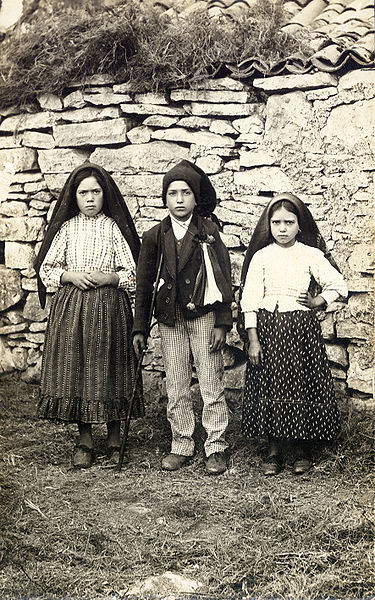
The Pope has been in Portugal. No visit to Portugal would be complete without a stop at the shrine of Fatima. Named for one of the most fascinating characters in Muslim history, Mohammed’s strong daughter Fatima, this small, centrally located town had no claims to fame until 1917. Suddenly three children declared that the Virgin Mary had appeared to them while tending their sheep. The story is about as eerie as the canonical photograph of the unsmiling youngsters. Their sincere proclamations were met with acceptance by many war-weary Europeans and predictions began to emerge from these visions. On October 13 that year some 70,000 pilgrims alleged that the sun itself danced, twirled, and took on new colors. Astronomers reported no solar anomalies at the time.

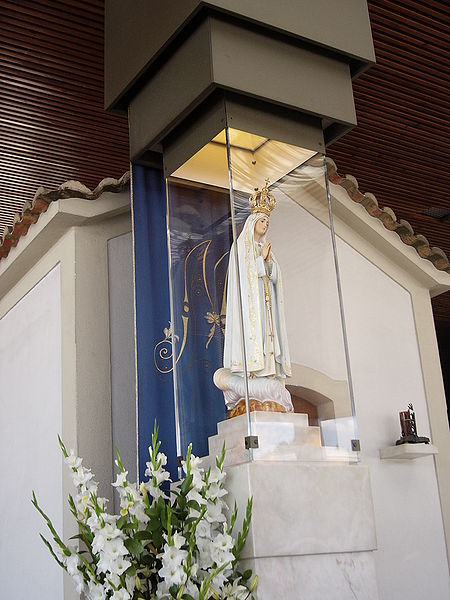
The events at Fatima have fascinated both religious and secular explorers of the supernatural. The religiously devout claim nothing shy of a miracle while those seeking more dramatic non-theistic explanations claim that aliens were behind the show. Whether or not a physical event transpired, something out of the ordinary occurred in Fatima that day. Now a permanent shrine graces the location. If the apparition appears again, she will be comfortably housed in doors, out of the elements. She might even see one of the bullets fired at Pope John Paul II during the famous assassination attempt. Many believe the Pope’s survival was itself a miracle.

Gnu version of Virgin under Glass

Now Pope Benedict XVI has visited the shrine where heaven once touched earth. Afterwards he climbed into the Popemobile, the motorized bullet-proof reliquary that allows papal viewing by the faithful while protecting Rome’s most valued asset. The message is clear: it is wonderful to believe in miracles, but it is prudent never to trust in them. Two of the three children (Jacinta and Francisco) died before they reached twelve, felled by the famed Spanish Influenza. The miracle that could have preserved their young lives never occurred. Lucia alone survived to 97. Expect a miracle? The odds are hard to predict on that one.


Virgin Goddesses and Human Fathers

Several years ago today I became a father. I try not to say much about my family online because I am old enough to be cautious about this brave, new, virtual world I post in just about every day; yet being a father is a life-changing experience like no other. The absentee father – something I personally experienced – sacrifices one of the most fulfilling aspects of life. Unless you’ve been there, you can’t understand it.

Today’s paper raises the question of whether celibacy is related to the continuing scandal of sexually transgressing priests that continue to come to light. Men who are not fathers but are called “Father.” Men, sworn by duty never to give in to human nature, appointed as spiritual guides to the masses who have succumbed to the dictates of biology and society. The church denies any connection. Could it do any differently? Two thousand years of frustrated men might storm heaven itself!

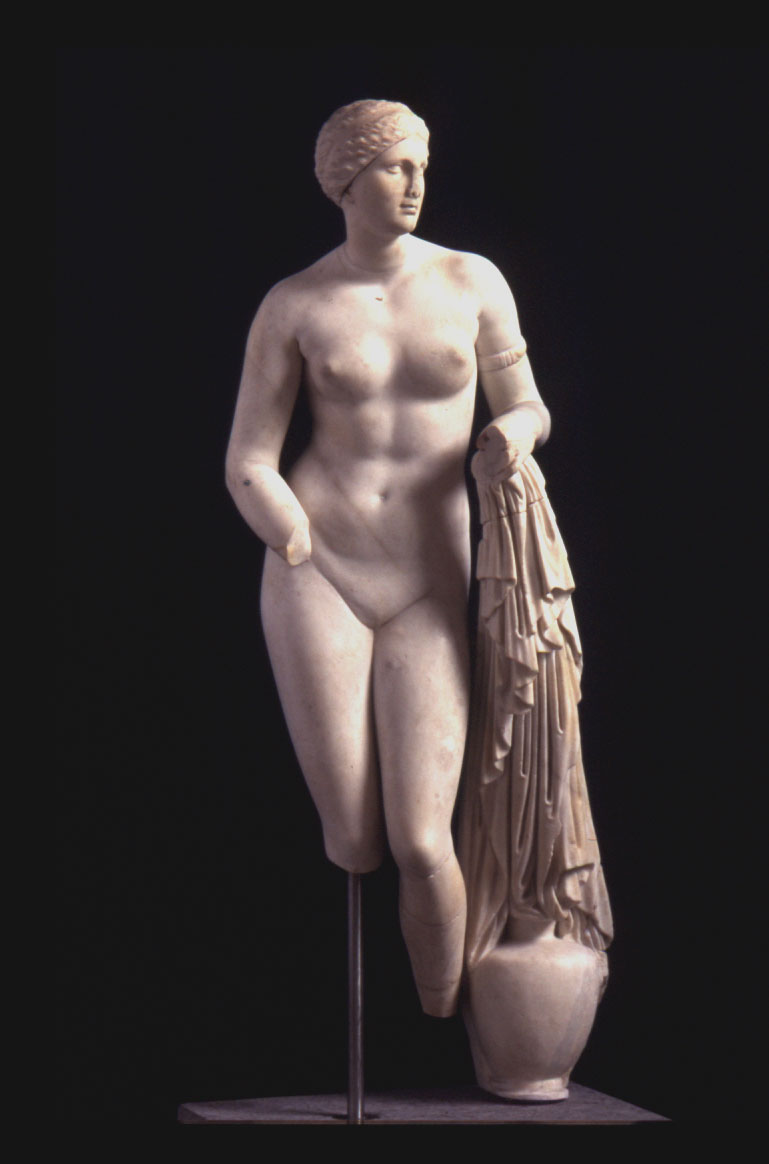
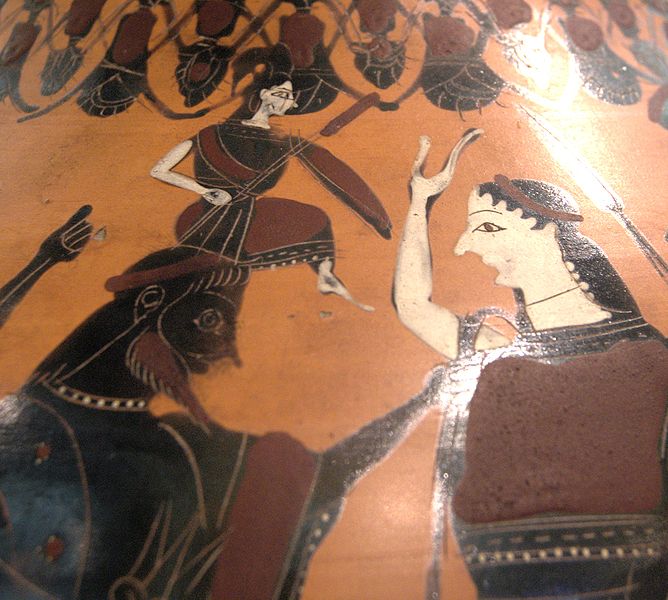
Among the most admired deities of the ancient Greeks were the virgin goddesses Hestia, Athena, and Artemis. Their divinity radiated through their self-sufficiency and self-determination; no god needed complete them. Goddesses had an integrity that few gods ever attained. We don’t read of virgin gods; Zeus was famous for his affairs, as were most masculine divinities. Many gods kidnapped or deceived women to slake their lust. Yet the virgin goddesses were formidable and truly worshipped. By restoring the virginity of Mary, the church constructed its own virgin goddess as a paragon for all to emulate. Priests were to be like the mythically chaste Joseph, longsuffering and self-abnegating. But they are mere mortals. Why not let religious leaders truly become fathers? It has forever changed my life for the better. Perhaps it would be healthier than chasing mythical virgin goddesses?

Athena, most chaste