Keys

Do you know the difference between “Voodoo” and “hoodoo”?  Well, The Skeleton Key does.  This is a movie I watched at the recommendation of a friend.  I get a sense—perhaps based on stats, or maybe lack of engagement—that you folks that kindly read this blog generally don’t watch the same movies that I do.  Nevertheless, I hesitate to give away spoilers for films I think more people should see.  So we’ll explore hoodoo instead.  But first, I can give you the basic idea of the film, in case you’re one of the few who takes recommendations from this blog.  Caroline is a young hospice nurse who feels guilty about not being present when her father died.  She gets a job with a couple in a decrepit southern Louisiana mansion where he’s dying and she’s doing fine.  
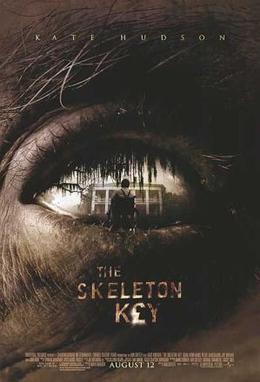
Caroline isn’t from the south, however, and she senses that something’s not right.  A modern girl, she doesn’t believe in the supernatural, but she slowly becomes convinced that something strange is happening in the house.  That something turns out to be hoodoo.  Critics weren’t particularly kind to the film when it came out in 2005, but I found it moody and engaging.  There were some exciting scenes and I enjoy haunted house movies generally.  And this one uses a lot of religious imagery, even though hoodoo is better thought of a form of spirituality than a formal religion, like Vodou is.  The movie defines the difference as one between religion (Vodou) and magic (hoodoo).  There’s some truth in that, but scholars are inclined to class magic and religion together.

Hoodoo consists mainly of folk spirituality that involves some magical beliefs.  Like Vodou it’s of African origin, mixed with the cultures experienced by slaves in the new world.  Unlike Vodou, it doesn’t have any kind of formal structure.  The reason it’s treated with suspicion, in general, is because it’s of African origin and doesn’t fit well with northern European ideas of the way the world works.  Skeleton Key makes pretty heavy use of hoodoo as a plot point and it isn’t alone in using African traditions to inculcate horror.  The Believers, many years back, did a similar thing with brujería.  Although these folk traditions are generally kept separate from “religion,” they tread similar ground with similar aims.  And since they’re “foreign”—at least to button-down white Christianity—they’re treated with utmost suspicion.  I think Skeleton Key handles this well, and if you’re one of the few who takes recommendations on movies, I’d suggest it’s worth seeing.
Scary Pictures

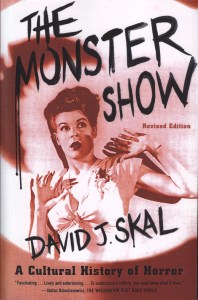
monstershowThroughout its history, until quite recently, one of the most serious natural enemies to the horror movie was the religious establishment. At times this antagonism seems well placed as horror films often take theological concepts and stand them on their heads. Within the last few years, however, thinkers of religious thoughts have come to an uneasy accord with some horror movies as vehicles for the kind of thinking promoted by traditional religions. The first half of this dynamic appears clearly in David J. Skal’s The Monster Show. Written before any kind of detente had been reached, his book chronicles skirmishes between the Production Code, religious groups, and even women’s collectives, against what was considered indecent and degrading. We have come to realize, however, that we are the monsters. We are the degraded. And seeing these films can lead to a strange sort of solidarity.

Most classic monsters, after all, have their origins in religions. Even the most recent of the lasting undead—Frankenstein’s monster and zombies—have origins in religious thought. Mary Shelley’s novel was subtitled The New Prometheus, a reference that anyone in the early nineteenth century would have understood. Zombies, on the other hand, are a product of vodou. Religion can’t get along very well without its monsters, and despite their less-than-stellar looks, their screen appeal is undeniable. Maybe it’s just we don’t like our dirty liturgical laundry being hung out where anyone might see it.

Skal’s treatment doesn’t stop at the cinema. He has a chapter on modern vampires, and Stephen King has earned his own chapter (or at least most of one) as the poet laureate of the novelistic form of the genre. More often than religion, Skal traces what’s happening in the monster world to the larger social issues of the day. Quite rightly so, as scary movies go nowhere without a receptive viewership. Looking around these days it’s easy to be scared. Even what was once a grand occasion of debate over higher principles as we ponder our next leader has become a farce in one of the parties that could make its own horror movie. Hitler, it is said, was a huge fan of King Kong. Large apes manhandling women never seem to go out of style. Some call it horror. Others try to get away with saying it’s politics. While the daily commute grows more and more dangerous, and the rhetoric grows even worse, is it any wonder we like to dim down the lights and watch monsters that we know really can’t get us at all?


Singing the Truth

Attending a local high school choral concert recently, I arrived late. That’s fairly common since the bus from New York is often quite tardy—arriving forty minutes after the scheduled time is pretty standard. In any case, I joined the concert already in progress. One of the first pieces I heard was “Operator,” a number based on an old Manhattan Transfer song. Since my wife grew up liking the group, I recognized the song and yet it felt strange to have Jesus mentioned repeatedly in a public school setting. Music, by its very nature, however, often contains religious sentiments. The Doobie Brothers had, in the early 1970s—the height of a hedonistic age—done very well with a cover of “Jesus is Just Alright.” Jesus, after all, had been declared a superstar a couple of years before. I used to tell my students that the musical impulse is linked with the appearance of religion in very early human culture. Still, disestablishment reigns.

I know that a large Jewish population makes up a significant demographic at the school, and I often think about how the cultural supersessionism of Christianity must feel. Much of what became Christianity has deep roots in Judaism, and even Jesus was Jewish. Can a song be just a song? After a while Randall Thompson’s “The Last Words of David” was performed. No offense there, since the Hebrew Bible is recognized by both Jews and Christians. But what of those of other faiths? Don’t get me wrong—our high school has an excellent music program. I was just wondering how the music might be perceived in a multicultural world. We have Muslim and Hindu students, as well as secular. Is this just counted as mythology to them? The selection of music teachers would be far more restricted if all music associated with religious words or themes were jettisoned.

Affaire_de_Bizoton_1864

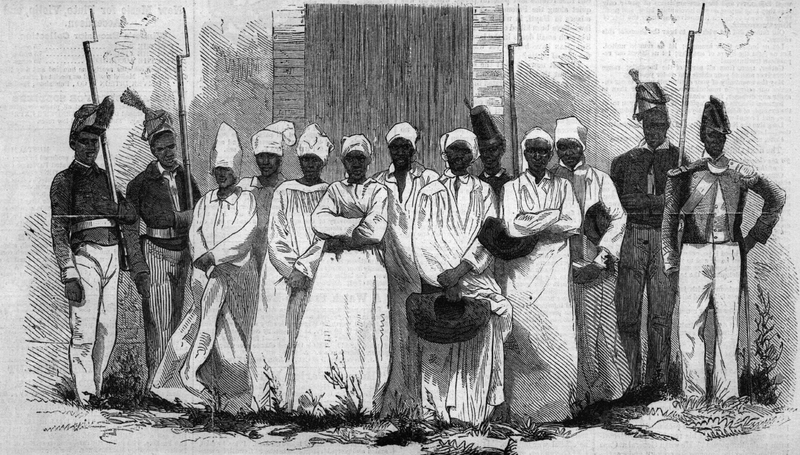
These were the kinds of thoughts milling about my head when the last song from a religious tradition came up: “Wangol.” This is a Vodou song. I was pleased and amazed that the “last word” went to an underrepresented religious group. True enough, Vodou grew out of Christianity’s interaction with traditional African religions, but it demonstrates just how eclectic both American religious culture and high school music concerts can be. Choosing the music for a secular choral concert in a multicultural setting must be a trying experience every single time. When we lived in Wisconsin, most concerts were unabashedly Christian in orientation. This is hardly surprising, I suppose, since choral music itself is often composed to express religious sentiments. New Jersey is a different world. I left the auditorium musing that Vodou is just alright with me, and just as plausible as calling Jesus on the telephone.


Underwater Zombies

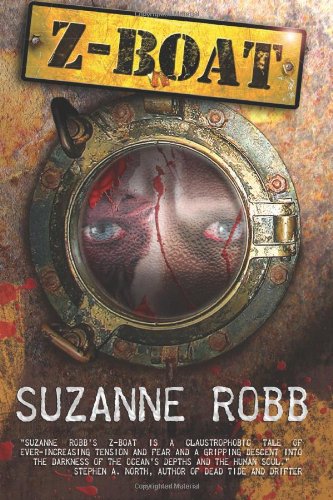
Z-BoatOne of the (many) benefits of blogging about zombies from time to time, is being sent books to read on the subject. Just as I cracked open The Zombie Bible volume What Our Eyes Have Witnessed, Permuted Press sent me an ebook of Suzanne Robb’s Z-Boat for comment. Z-Boat is an action novel with a strong female protagonist, that sets two naturally phobia-ridden subjects together: submarines and zombies. Since zombies, whether they acquire their undead status by vodou or by infection, are inherently a religious creation, they find their way onto this blog often. Unlike Stant Litore’s zombie universe, Robb’s is solidly secular, no mention of deities or demons anywhere. Set in a post-apocalyptic future (aren’t they all post-apocalyptic these days? We have difficulty envisioning anything much better), the crew of the submarine Betty Loo has to fight off a host of zombies intent on eating, and yes, converting, the living.

Zombies, whether conjured by spells and concoctions or by a contagious organism, while unthinking, always appreciate converts. The age-old human fear of being overwhelmed by swarms pertains just as well to the undead. We tend to avoid cemeteries at night, but death has a way of seeking us out in any case. I knew when my wife received a rather unsubtle flier in the mail advertising a local mausoleum that I too was likely on the list. Isn’t being a zombie all about the desire to survive, no matter what the cost? Still, it’s nice to know your custom is valued, right down to the end.

As I’ve mentioned before, zombie stories are difficult to take seriously in any rational world. Why a corpse with no stomach and no tongue would want to eat baffles the quasi-scientific mind I’ve installed. The Zombie Bible suggests that it’s hunger, and a metaphor is always appreciated in a room full of zombies. In Z-Boat the drive is more along the lines of the plot. You wouldn’t have a story without the undead. A potboiler, this is a page-turner, or, if you’re reading an ebook, a page-swiper. And although the function of a submarine is inherently like an ark—the preservation of breathing animals when overwhelmed by water—when the zombie organism eats its way into the crew, the only safety is found in escaping that ark. Robb’s tale is rollicking and rough, but her female Noah gives us all ground for hope.


Loving Haiti

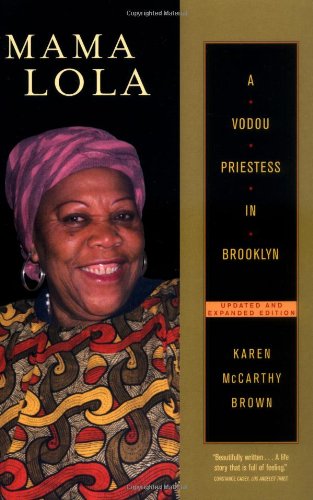
MomaLola Few religions are as routinely maligned as Vodou. I have to admit that my own interest was originally spurred in an uncouth manner—a combination of Live and Let Die and a sleepless night after watching The Believers. (I know, I know, The Believers was about Santeria, and not Vodou proper.) These sensationalist treatments nevertheless incubated a curiosity that broke the surface when I started to notice a book entitled, Moma Lola, a Vodou Priestess in Brooklyn in university bookstores. The author, Karen McCarthy Brown, took Moma Lola on as an anthropology research project and ultimately became friends with her subject. I was immediately chagrined to learn that much of the distaste towards Vodou (this is my own observation, not Brown’s) seems laced with, if not based upon, overt racism. Vodou is the faith of the descendants of African slaves living in the poorest nation in the western hemisphere. Those who adhere to it often live an existence that few would accept in a world awash in riches. The people in Moma Lola’s story are poor and deprived, and their nation is kept that way by complications of a past tied too intimately with slavery.

Although Brown is not a scholar of religion, her account is a very accessible introduction to the belief system of Vodou. Most adherents, it becomes clear, think of themselves as Catholic. They see no contradiction between the teachings of Rome and the activities of spirits (the “gods” of Vodou are in reality spirits that operate in a world where God is too busy to pay attention to everyone) who must be propitiated. The rituals associated with Vodou are common among peoples who believe in connections between things as they seem and things as they are. In fact, reading the accounts of possession that Brown provides, I was reminded very much of charismatic Protestant experiences of being “slain in the spirit.” Ironically, both traditions believe in the same god. Why anyone should fear Vodou, unless it is because they secretly harbor a deep-seated fear in the efficacy of magic, is baffling. Like most religions, it is moral and concerned with upholding good over evil.

Haiti has a unique history that has put it at the creative epicenter of religions forced into collision while being economically exploited by nations that putatively support democracy. Religion, as Karl Marx noted, is for the poor. Brown takes her readers through her own experiences with a religion few outsiders really know, introducing the “gods” of this intricate religion along the way. Moma Lola, a healer, tries to survive in New York City after a difficult life in Haiti, and rather than make her escape, she returns on occasion to help others. Even in the spiritual circus that the Big Apple represents, people are suspicious of Vodou (and Santeria), despite their common cause with other religions of the developed world. You can read the 400 pages of Brown’s Moma Lola with nary a mention of “voodoo dolls” or zombies. Instead you’ll find people—often women—working to survive in a hostile world. Untested attitudes toward other religions often bear their own dark secrets, and Vodou, as lived by Moma Lola, belies and exposes many hidden prejudices on the part of the affluent world.