
 Elijah is a folkloric character. Despite the common misperception, most of us who study religion know the difference between myth and reality. There are, nevertheless, lots of engaging traditions about Elijah. Even in our secular culture we joke about leaving a door open or an empty chair available for the disappearing prophet.
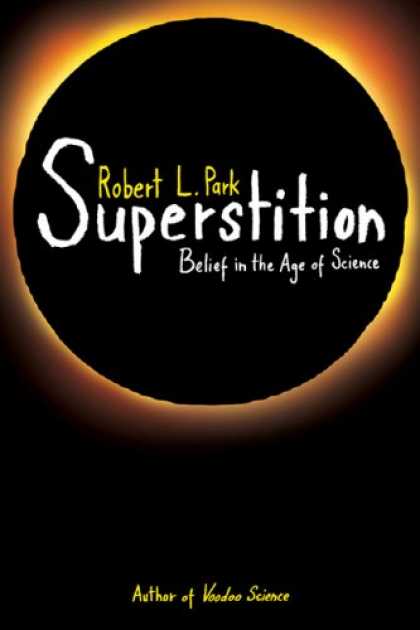
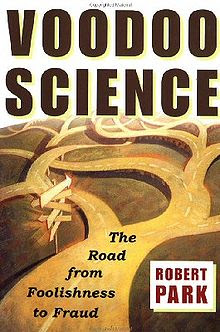
It is difficult not to like Robert L. Park. Reading his Superstition: Belief in the Age of Science was often a pleasure. I read Park’s Voodoo Science a few months back, and I enjoyed his supreme rationality very much. Many of the weird beliefs he decries clearly deserve his denunciatory treatment. Like many among the New Atheist movement, he believes that rationality, scientific thinking, will eventually displace religion completely. The final line of his book, “Science is the only way of knowing—everything else is just superstition,” however, maybe overlooking some vital information. In the first instance, scientists are humans too.
There’s no question that much of what Park writes makes perfectly good sense. The God of the gaps is gasping, indeed, dying. Double-blind prayer experiments just can’t work. Evolution does work. Quantum mechanics are abused by many New Agers. This all makes sense. There are, however, some gaps that rationality misses as well.
It has always bothered me that reality is much more than human senses reveal. Rationality is based on the premise that we have, or can discover, all the facts. There is an unseemly arrogance to it. We know, rationally, that “lower” animals experience sensory input unavailable to us. In many ways, Spot is more intelligent than his human “owner.” We use bloodhounds to find people for precisely that reason. We know that “bird brains” navigate in ways impossible for humans to emulate. Even a bee drunk with nectar can buzz its way home. And these are only the life forms that evolved on earth. Our rational knowledge is only a tiny fraction of all possible knowledge. And I’m not convinced that science is really the only way of knowing it. I just feel it in my gut. It’s a big universe out there, full of possibilities we haven’t yet encountered. Is the evolved human brain, limited as it is, the sole arbiter of reality? Is there some form of thought we have not yet reached? I will continue to enjoy reading books like Superstition. I will also, however, continue to leave the door open just a crack, in case Elijah does show up after all.
 Steve A. Wiggins