Working Dead

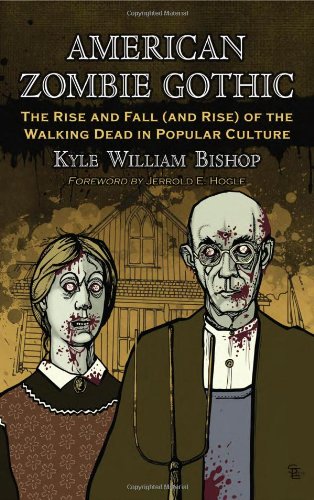
AmericanZombieGothicPerhaps being born into and reared in a working class environment naturally predisposes me to the populist variety of entertainments. Although this may be true, serious scholars have begun to pay attention to the subjects traditionally classified as “lowbrow,” and particularly zombies. I mention zombies not infrequently because they are monsters with religious origins (although not the only ones). Reading Kyle William Bishop’s American Zombie Gothic (and who could resist such a title?) resurrected all of these interests for a few happy days on the bus. Subtitled The Rise and Fall (and Rise) of the Walking Dead in Popular Culture, Bishop’s study goes back to the beginning with zombies and their religious origins. Since the concept of zombie required the blending of Catholicism with its root African indigenous religions, it seems natural that the concept would emerge in Voudon (voodoo) religions of the Caribbean. What Bishop makes clear, however, is that the zombie is a way of coping with slavery, since, as originally conceived, zombies represent the horrors of enslavement. In other words, they represent a social justice issue.

Dismissed as puerile and unsophisticated, zombies had a difficult time catching on in American culture. Once they caught on, however, they didn’t let go. (They are zombies, after all.) As Bishop shows, this appeal has many bases. George Romero’s zombies were always social critique. Exploiting their shock value made a point, but other filmmakers soon followed, enamored of the potential violence, gore, and exploitation the zombies offered. Then, following 9/11, zombie movies proliferated, demonstrating that even the undead might perform some kind of catharsis. As Bishop notes, zombies were primarily a movie phenomenon, slow to catch on in literature.

Having read a few zombie novels in the last few months, I have pondered this last point deeply. What is believable, momentarily, on the big screen is rendered laughable with the ponderation of reading. When your brain has time to process what slick visual editing denies, it is clear that decaying corpses would have a pretty tough time getting around—even living bodies have trouble with it from time to time. Zombies, after all, are not really ever literal. They are signs, or even prophets. They point to a reality beyond themselves. Zombies, in reality, represent enslavement—whether literal or figurative—that holds us back from our true potential. No wonder they’ve become such fixtures in a world where opportunity has become effaced and terror can breach even secure borders. They may be lowbrow, but having lived the working class life, I have always had profound respect for the walking dead.
No Play-Thing

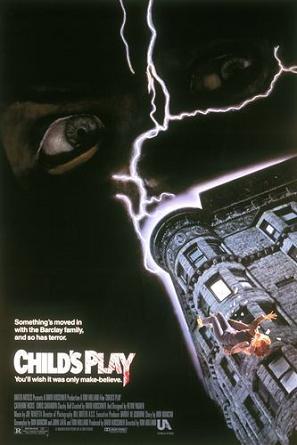
Childs_PlayPossession. It’s one of the scariest concepts in the religious arsenal. The idea that a person could be taken over by a different entity and surrender his or her selfhood to a malevolent saboteur is frightening indeed. Horror films have been deft at exploiting this. As a college student I was slow to watch the latest horror flicks. Some I’m only now beginning to find. Over the weekend I watched Child’s Play for the first time. Like most people who have some sense of popular culture I knew that Chucky was an evil doll, but I never really knew the backstory. Despite the utterly untenable hypothesis of the movie, it still manages to be scary in our CGI world, despite the bogus lightning. The frightening part comes from what is an admittedly creepy doll in the first place becoming possessed by a religious serial killer. Charles Lee Ray, named after three infamous assassins, displays facility with a religion that some identify as voodou, although that association comes primarily from the voodoo doll that Chucky uses to dispatch his mentor.

At least Child’s Play makes the effort to explain what forces exist that might bring plastic and stuffing to life. In true horror fashion, it is not the Christian god, but forces that are somehow more powerful, more malevolent. It would hardly behoove the maker of all the universe to inhabit a Cabbage Patch knockoff. The Lakeshore Strangler has been in training to cheat death and remain alive forever. He takes lessons from a mystical character whose religion is referred to only obliquely, yet whose efficacy is obvious in the malevolent toy. Willful suspension of belief is necessary to make this resurrection story plausible, but that disbelief must include belief in religious powers. The horns of this self-same dilemma hoist all religious believers in a scientific world.

Chucky is participating in one of the oldest of all religious traditions—death avoidance. Some of the earliest evidence that we have showing that hominids were developing religious sensibilities is the burial of the dead. There is really no reason to bury if we are only carrion like every other meat-based product. Whether it is out of fear or reverence, we turn to religion to assure us that there’s something more. It may not be scientific, but that’s largely the point. For many even today, a concluding scientific postscript leaves a body cold. Time for a leap of faith. Horror films are often decried as lowbrow and unsophisticated. Chucky, however, like many mythic monsters, is rapping his inhuman fingers on the door of religion. Specifically resurrection. Although in this case, it might be best to keep that door firmly closed.


Black and White Zombies

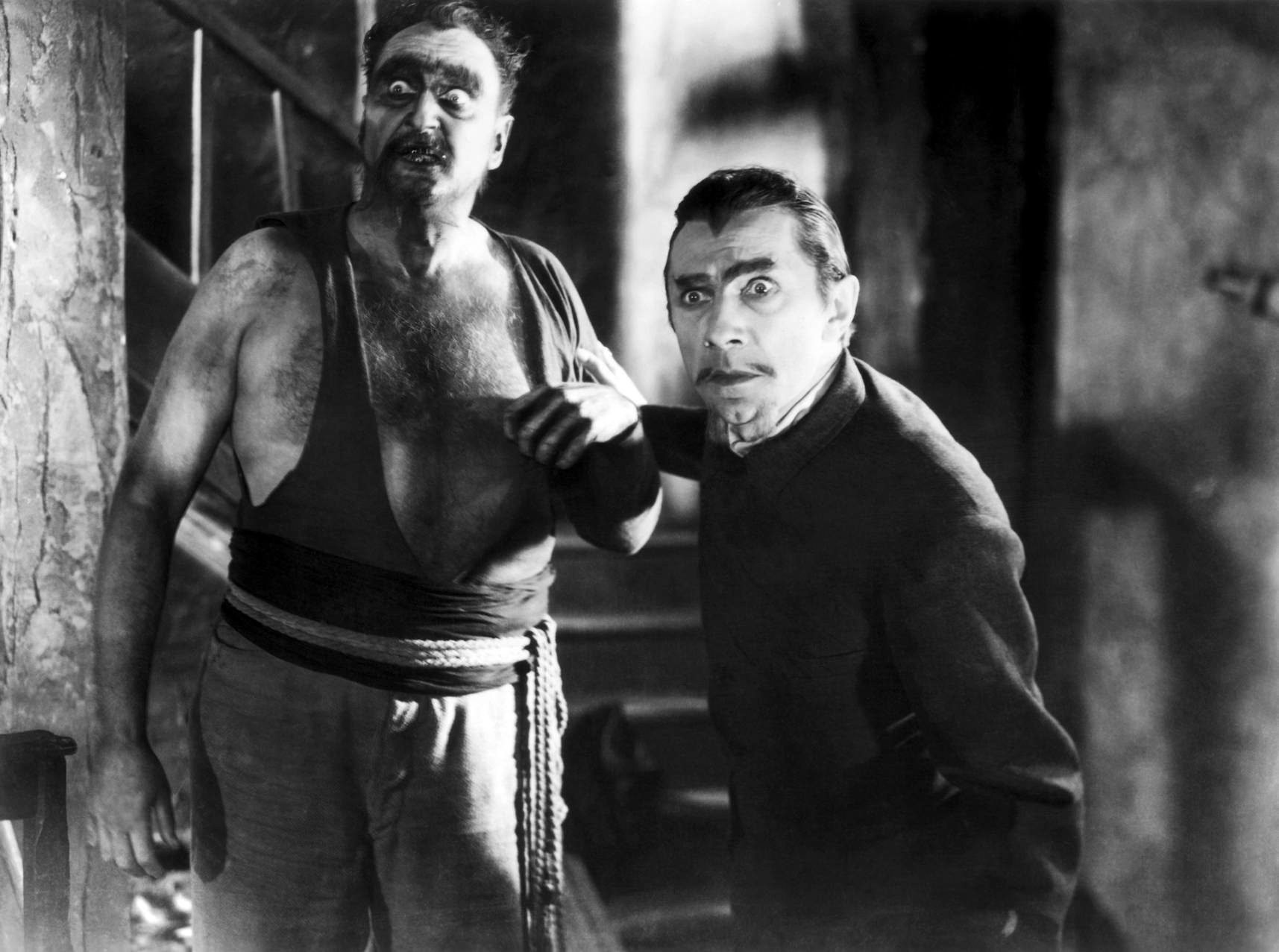
One of the sweetest privileges of a school-year weekend is the Saturday afternoon movie. The advent of relatively cheap, boxed sets of old films has opened the realm of many forgotten classics for me. My wife recently purchased one of those 50-movie boxes of classic horror films for me, and I’ve been making my way through it weekend-by-weekend, and occasionally there is a gem among the tailings. Yesterday I saw White Zombie for the first time. Back in the days when Bela Lugosi claimed a faithful following after his trend-setting interpretation of Dracula, he played a voodoo doctor with the power over zombies in this widely panned movie. In these days of the Walking Dead, it may be hard to appreciate that White Zombie was the first full-length film about our undead friends.

With the exception of the always professional Lugosi, the acting in the film received a well-deserved trouncing. Interestingly, the “van Helsing” of the drama, the doctor who overcame the monster, was a missionary. White Zombie is authentically set in Haiti, and it is never made clear whether the undead are really deceased or simply mindless. But the goofy, pipe-smoking missionary is the one who defeats evil at the end of the day. As noted elsewhere on this blog, monsters frequently emerge from the dark realms of religion, and the zombie especially so. Today, however, the zombie is all the scarier for being secular, unaffected by God or human deterrent. Originally it was a case of voodoo versus Christianity.

In what is perhaps an unintentional irony, the character who comes across the most sympathetically in the film, apart from the fetchingly pouting Madge Bellamy, is Murder Legendre (Lugosi). The missionary wins out by dim-witted happenstance, while the character responsible for the actual death of the zombie master is a partially aware zombie fighting against his fate. It may be assigning far too much credit to assert that the film had intentional social commentary, but White Zombie has had an often unrecognized impact on what has today become the symbol of corporate America: the once humble zombie.

A typical zombie


Exorcists, Serpents, and Rainbows

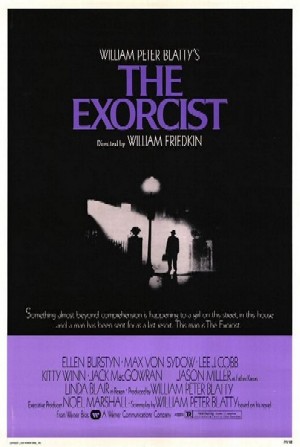
Tuesdays are release days for many new media products. I’m not sure why, but I accept it. This past Sunday’s paper ran a couple of stories by Stephen Whitty concerning the Blu-ray release of The Exorcist, counted by some critics as the scariest movie of all time. The press around the original release of the film in the early 1970s was enough to prevent me from seeing it until I was in my forties. I’m done using the word “release.” In an interview with Linda Blair, the iconic Regan MacNeil of the film, Whitty quotes her as noting that the rumors of “curses” on the filming of the movie were without basis. “But other people seemed to be trying to find something that didn’t exist,” she said. That sage statement could refer to considerable aspects of a society hungry for religious answers, but ill-educated on the religious facts-of-life.

Although sorely critiqued at the time by those whose religious sensibilities had been offended (Blatty is no theologian), Whitty nevertheless notes, “It may be a film full of gross obscenity. But in the end, ‘The Exorcist’ is a recruiting poster for that old-time religion.” He correctly observes that beliefs in possessing demons and that challenged social conventions will lead to evil permeate the movie. Traditional Catholicism wins out over that foreign Pazuzu every time. Even for those with more progressive beliefs, the film is difficult to watch. Religion, in addition to criticizing films, also provides some of the best plots.

Not to be counted among those best, but illustrative of the point, is Wes Craven’s The Serpent and the Rainbow. Ever since my days at the University of Wisconsin Oshkosh students have been after me to watch this film. Confused, dream-like, and at times difficult to follow, the movie opens with a claim to have been based on a true story. It isn’t the typical zombie movie either, although it features zombies. More of an attempted scientific thriller, the film explores the dangers of tetrodotoxin, “the zombie drug” when in the wrong hands. Understated in the movie, however, is the religious nature of Voodou. This is perhaps the most obvious failing point in the story. If the movie were to be really scary, the viewer has to believe that this is possible. The skepticism of science blocks the potential for unbridled religious expression. That is perhaps why The Exorcist has retained its power over all the years. Unlike more rational explorations of the world, it allows the audience to believe in personified evil that only old-time religion can cure.


Burning Crosses and Aftershocks

In a small blurb I would have missed had my wife not pointed it out, today’s paper carried a brief follow-up on the religious implications of the Haiti earthquake. The story (caption) ran: “A Christian mob circles a burning stack of items to be used for a Haitian voodoo ceremony for earthquake victims while singing church hymns in the Ti Ayiti neighborhood in Cité Soleil. The voodooists were run out of the central pavilion under a hail of rocks, and all the ceremonial items they left behind were destroyed and burned.”

My mind, at seeing burning religious symbols in the picture, turned to the infamous burning crosses used by equally intolerant “believers” in the last century in this country. Perhaps the motivation for burning the symbols is different, but the message is the same – a very narrow band of the wide continuum that is Christianity has decided that another variety of human being must be brought under control or destroyed. I don’t seem to recall reading in the Gospels, or even Paul for that matter, that throwing stones at believers in other faiths was a recommended activity. The voodou service, according to the blurb, was intended to help earthquake victims. Instead, the Christian faction forcibly drove them out and violated their religious symbols. Could they not have been spending helping victims instead?

I am not the sort to throw the first stone, knowing my own faults all too well, but the rampant supersessionism of an entitlement generation Christianity is showing its ugly side in such an instance as this. If religions are not here to improve the lives of others, then what is their purpose? To placate mythical gods to ensure one’s own blessed future, no matter who has to be hurt along the way? It seems to me that less time burning religious symbols and more time helping the needy is a platform worthy of any honest religion.


Fear of Voodou

The Associated Press fed a story this morning entitled “How an earthquake shook the Haitian’s faith.” Among the aftershocks of last month’s horrific disaster, many groups have ignored Rush Limbaugh’s charitable advice and have gone to Haiti on humanitarian missions. The story reports how many of these groups, generally Christian, dispense their aid outside churches and that many of the native believers in Voodou are being encouraged to convert to mainstream Christianity. Voodou priests are worried about this since, in the words of one, “by rejecting Voodou these people are rejecting their ancestors and history. Voodou is the soul of the Haitian people. Without it, the people are lost.”

Many of the missionaries bearing gifts, among them Jehovah’s Witnesses, Scientologists, and members of the Church of Jesus Christ of Latter Day Saints, see Voodou as a strange and pagan religion. The fact is that Voodou is a form of Christianity blended with indigenous African religions during the unfortunate days of slavery. Retaining their African spirits in the guise of Roman Catholic saints, the slaves of the Caribbean developed a religion they could truly believe in as they were forced to “believe” in Catholicism. In mainstream Christianity their religion is viewed with fear and distrust primarily because the religion it blends with is non-European in origin. Most Christians are unaware of the blended variety of their own faith. Early Christian missionaries into Europe found it much easier to convert native gods into saints in order to convince local populations that Christianity wasn’t such as radical a switch as it seemed. The old gods could still be worshiped, only as lesser deities.

In the “New World,” Christianities continued to evolve. Today’s Fundamentalism has very little in common with the Christianities of the first century. Jehovah’s Witnesses, Scientology, and the Church of Jesus Christ of Latter Day Saints are all religions that have developed in or since the nineteenth century in America, quite often from blends of traditional Christianity and new religious sensibilities. Religion is not immune to evolution, and the history of religions proves that fact beyond any doubt. And yet to those who do not know the origins of Voodou it appears non-Christian and worthy of conversion. Is it not possible to help those of another variety of religion simply because they are humans in need rather than requiring a baptismal certificate in order to claim your daily bread?

A Voodou service from WikiCommons