
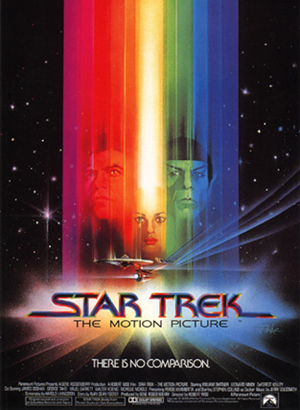
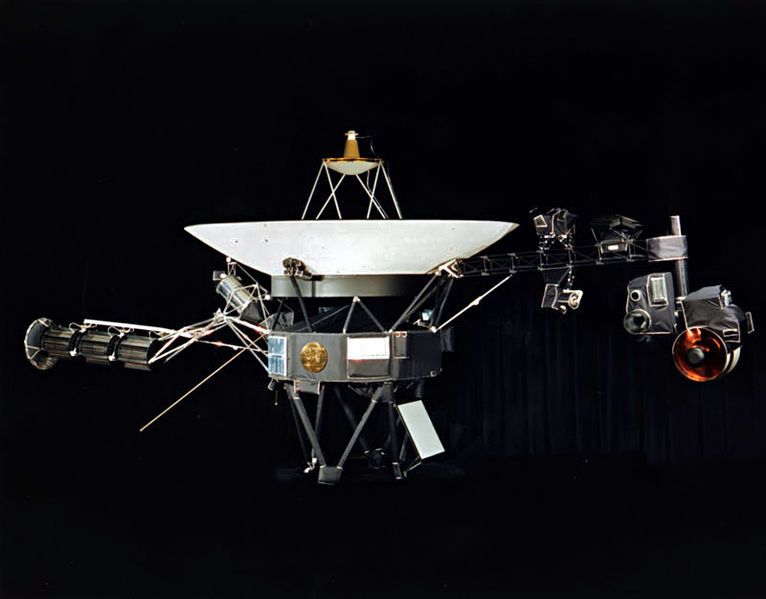
 Long ago in a galaxy far away—1979 in rural western Pennsylvania, to be precise—the local inhabitants were surprised to learn that James T. Kirk was now an admiral. Two years earlier Star Wars had thrilled us with special effects first mastered in 2001: A Space Odyssey but a more accessible plot. Robert Wise, who had not only given the world The Sound of Music, but also The Day the Earth Stood Still, took the helm for the new Star Trek: The Motion Picture. Star Trek geeks, of which crowd I do not count myself, hadn’t really taken their cliched role in the emerging high tech society, and CGI was still a few years off. Nevertheless, rumors in school had it that the movie featured a bald woman and had boldly gone where no man had gone before. The original crew was all there. So on a Friday night I dutifully made my way to the Drake Theater to watch and left saying, “is that all?” Star Wars was action-packed and fun, filled with archetypes and wise-cracking robots. Star Trek had Voyager 6, like E.T., trying to phone home. In a word, the movie was forgettable.
On a tour of the original Star Trek world, I finally sat down to watch The Motion Picture, with its grandly archaic-sounding name, last night. I shuddered to think I’d last seen it 35 years ago—that makes me as old as the crew was starting to look—but this time I was able to see things I hadn’t before. Spoiler alert! Voyager 6 is looking for God. The original Voyager 1 reached the end of our solar system a couple years back, but in 1979 there was no reason to suppose that we wouldn’t try again and again to reach out to parts unknown. We were rapidly become materialistic, and the universe could be a known quantity. Three centuries in the future, Voyager 6 is headed home, having been rebuilt into an unstoppable living machine. When the creator—humanity—doesn’t pick up the phone V’ger poises to wipe out the carbon-based infestation until it learns how to physically, biologically merge with a human being (cue the bald lady and otherwise superfluous Captain Decker). Lots of colorful lights and we can all go home.
Even now I can’t muster the courage to say the movie is profound, but it does touch on an issue that has only grown over time—we have voluntarily left our deities behind. In our rush to reduce the world to the least common denominator, we have pulled the plug on the cosmic phone. The Voyager program ran out of steam as the Cold War was heating up down here on earth and we were being told we were all just a bunch of atoms fooling around anyway. The machines, in the meantime, had come to believe. I probably won’t survive another 35 years to watch Star Trek: The Motion Picture again, but I do hope that in that time we may become more aware of our humanity. And I do hope that if someone divine does happen to call, that we’ll at least pick up the phone.
 Steve A. Wiggins