Bull Shot

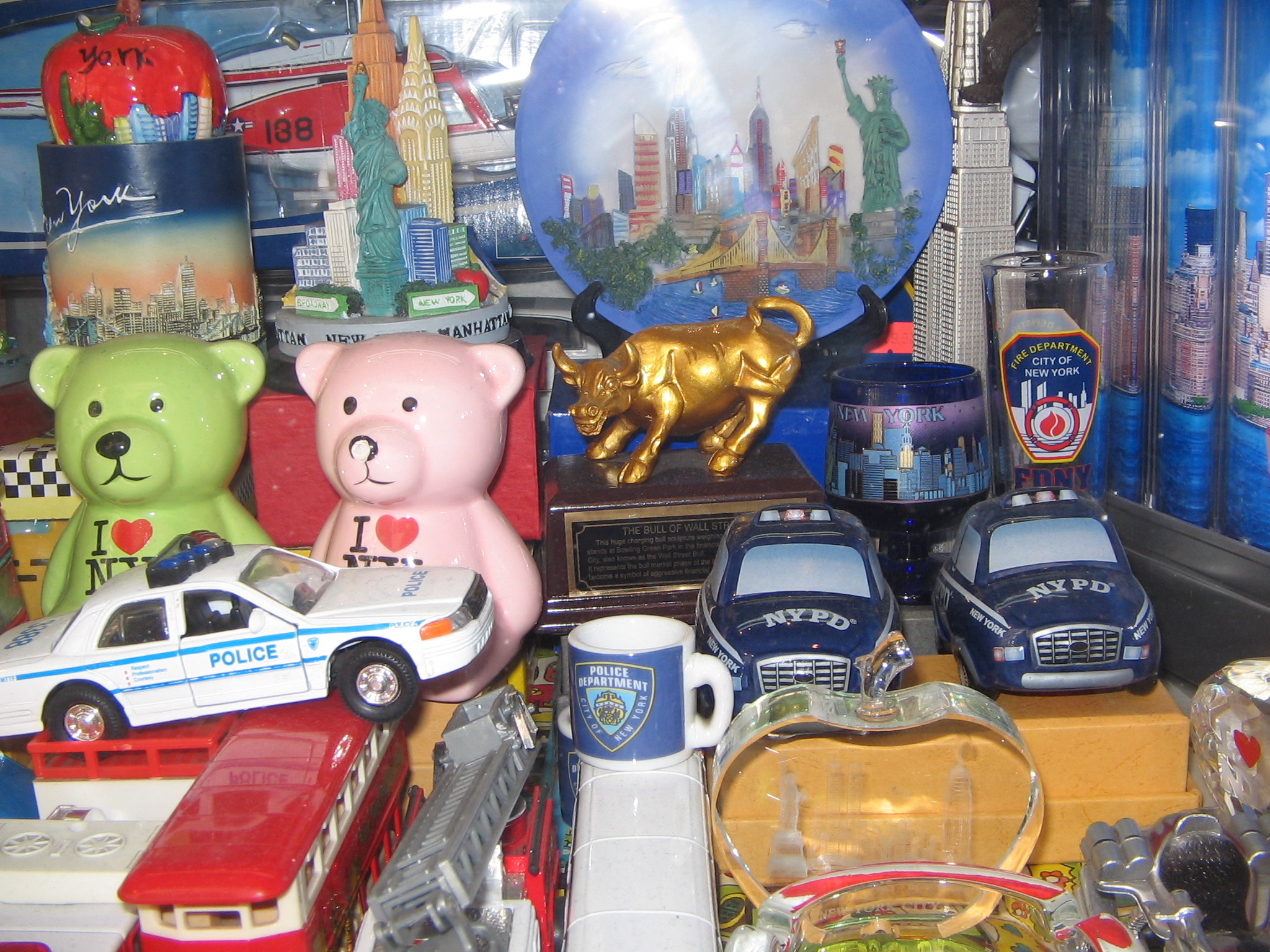
Sitting on an idling bus in the Lincoln Tunnel, I supposed I was too far underground for an epiphany to hit me. Then, on the way to Third Avenue it descended on me. I was passing one of the countless gift shops of Midtown when I saw it—a miniature replica of the Wall Street Charging Bull statue. Golden calves come in all sizes and shapes and when they grow up they may be very aggressive. Deadly even. Movie makers have long recognized the deep symbolism of the golden calf. And not just Cecil B. DeMille. Dogma, perhaps the most notorious of the anti-religion, religious films, centers around Mooby, a cartoon network golden calf, for one of its subplots. Even Bruce Almighty has the eponymous Bruce leaning back against the statue of a golden calf as he enjoys his new success in his new house, empty of all personal satisfaction. The list could go on. And of course, Wall Street.

What is it that makes us believe that gold leads to happiness? We all want it, if we are willing to look into the mirror with any semblance of honesty. Maybe we don’t want to be filthy rich, but who doesn’t really want to just kick up their heels and let their lucre do the work for them? Enter the “Prosperity Gospelers”—God wants it for you. Even if you demure and lower your eyes coyly, wealth will find you. And like that idol on Wall Street, calves grow up to be bulls. The horns of the dilemma are almost too literal. For a fulfilling life, give it all away. Like a misdeed long past, still unatoned, that bull follows you. You can’t escape a charging bull.

The episode of the golden calf in Exodus 32 is one of the more disturbing scenarios in Holy Writ. Moses, alone wreathed in the glory of the Almighty keeps forty days of silence and, tellingly, the clergy construct a golden calf. Probably an image of Yahweh. The next morning, “the people sat down to eat and to drink, and rose up to play.” Until distant Moses returns home. The calf is burned and ground down to dust, the people drink it, and the Levites kill three thousand of their compatriots. Prequel to Jonestown? “For Moses had said, Consecrate yourselves today to the LORD, even every man upon his son, and upon his brother; that he may bestow upon you a blessing this day.” The killing of their neighbors is their ordination. A blessing bestowed upon those who would worship the golden calf. That 7000-pound charging bull will follow you, even into the tunnels and tabernacles. When the golden calf is loose, no one is safe.
Bull comes in all sizes
Extinctions

Gaddafi is dead. Bin Laden is dead. Saddam Hussein is dead. The people of the Middle East have risen up to reclaim their world from the privileged. In Wall Street people are arrested and sequestered lest the discontent should spread. Do those of Libya, Iraq, Egypt, aspire to Wall Street? Are not the oil barons wealthy enough? How easy it is for us to forget that what we call civilization began here. In what we now call Iraq, people first banded together with complex governments, specialization of labor, and the arts. And, naturally, slavery. As civilization grew, priesthoods became strong. Governments could not stand without the support of the gods. Temples could not stay open without government funding. Gods and kings slept together. The Bible would later parody this as the tower of Babel. How we want to live in that penthouse chapel!

We often take from history that which sustains our interest. And when that interest is reinvested and compounds, we lay the foundations for yet another tower. We live in a world of towers, glad to accept their beauty and glory without realizing that no tower stands out without the deep valleys between the artificial peaks. To build high, some must be consigned to live in the subways and cluttered alleys and sleep out on the streets. The oil money in Dubai, not far from the fabled Eden, erects towers that are the wonders of the modern world. Just looking at pictures of the Burj Khalifa can make one shudder. Oil is decayed life.

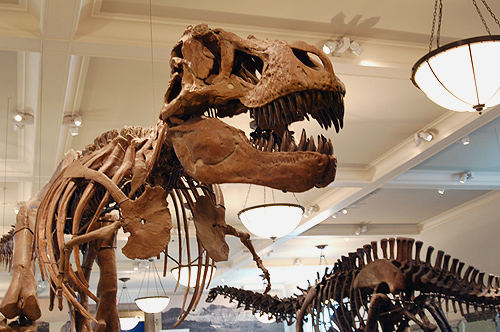
Sometimes I imagine the world of the dinosaurs. Mammals must have seemed an endangered species then, small and insignificant as they were. Our distant, distant ancestors must have gazed up on the towering brachiosauruses and bruhathkayosauruses with awe and fear. When they finally evolved opposable thumbs, they decided to emulate their fears. Now the dinosaurs are all petroleum and birds. And still they rule the earth. Civilization began in the oil fields of the world with little use for petroleum. Instead, kings and priests worked together to construct towers that would ultimately fall. Oil makes some very wealthy, but it is only possible because of the extinction of the largest living animals that ever walked the earth.


Step in Time

Magical blingdom

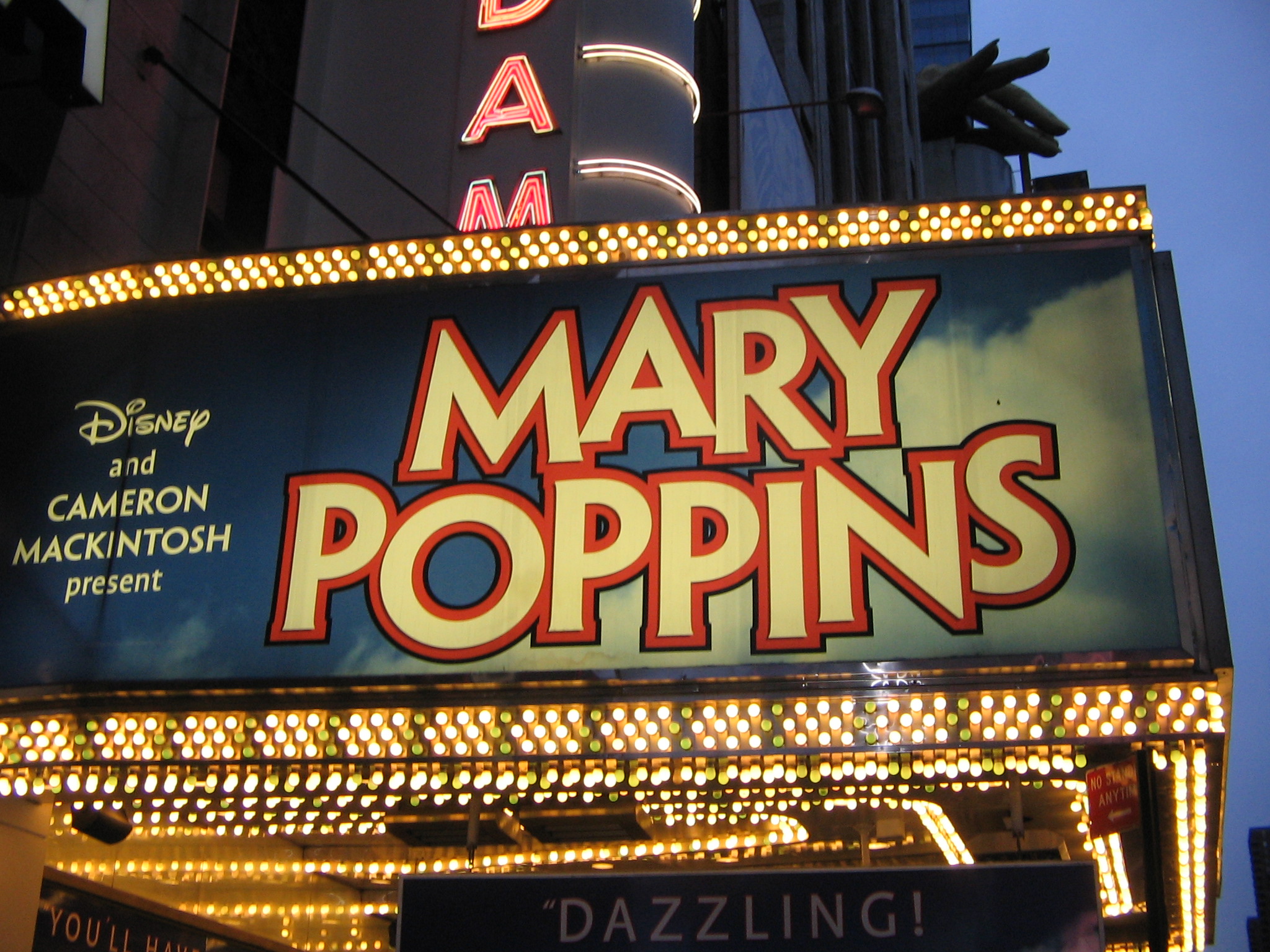
Mary Poppins is one of my wife’s favorite childhood movies. I first saw it in college and, being a parent, have seen it many times since then. Now when I walk through Times Square I see it is playing at the New Amsterdam Theater, and if I time it right I can hear bits of the musical on my way to the Port Authority after work. As is normal in the universe according to Disney, nothing is really ever seriously wrong in the London of 1910. Troublesome children are doing nothing more than chasing a kite and attempting to connect with an emotionally distant father. Even when he loses his job, Banks merely suffers an inverted umbrella and a punched hat. Joblessness lasts for only a day. Everybody sings. When we watched the movie again recently I considered how such an escape is healthy for those of us accustomed to a somewhat harsher adult existence. Joblessness is often long-term and desperation reeks as we find ourselves distanced from that which defines our existence.

Mary Poppins represents a divine figure in the Disney universe. She comes down from the heavens during a troubled period of history, judiciously utilizes a bit of magic, and heals the broken-hearted. When things go bad, Mary Poppins is there to make them right again, even on her day off. She shows the cold-hearted world of business that there is a better way. Who would you rather be—George Banks or the Bird Lady? Who is happier?

“All around the cathedral, the saints and apostles,” saintly Mary sings, “look down as she sells her wares. And although you can’t see it, you know they are smiling each time someone shows that he cares.” Where are the saints and apostles of Wall Street? Instead the optimistic view of humanity plays itself out on Broadway where the intensity of humankind spans from homeless beggar to movie star. Fantasy is underrated. Our minds have evolved the capacity to allow us to escape the realities of suffering, disappointment, and angst. When a week of trouble and turmoil has held us in its grip, we may still escape to the magical kingdom of our choice to find bread and circuses. Mary Poppins does not condemn the greed of Mr. Dawes and the rich die laughing. It is difficult not to like Mary Poppins, the angelic symbol of care that doesn’t disrupt the system. And Disney will see no end to its place among the wealthiest families on earth. It is a small world, after all.


Preoccupied

I wonder if I’m the only one who feels uncomfortable with the proliferation of armed military guards in public places. I know the rhetoric that “freedom is not free” (what is it then?), but when the coffee hasn’t really kicked in yet and I walk by guys young enough to be my kids holding machine guns in the bus terminals and train stations of New York, I really don’t feel safer. Sometimes I might look like a radical. Sometimes I don’t get my hair cut as often as convention dictates I should. Sometimes I forget to trim my beard. Some days I throw on my denim jacket as I head out the door in the predawn hours. Some days no one sits next to me on the bus. Am I the enemy here? I don’t like the idea of strangers seeing me naked in airports—even if only electronically. I do like the freedom of expression, but it is no longer really free.

I suppose that’s why I’ve noticed the other peacetime occupation going on in New York: Occupy Wall Street. It is time that people say “enough!” The religious leaders with the loudest voices declare this a dangerous thing, “class warfare” they say. The wealth that lines the very upper crust, however, is simply obscene. Was a day when wealth came with a healthy dose of social responsibility. They just don’t make Andrew Carnegies any more. A few Octobers ago my family visited Sleepy Hollow, New York. The cemetery made famous by Washington Irving (who is buried there) also houses William Rockefeller and Andrew Carnegie. On the top of the most prominent hill is a classical style, opulent mausoleum for the Rockefellers, overlooking all others. Down at the base of the hill, hidden away in a humble, quiet corner is the modest tombstone of Andrew Carnegie. I am certain that Carnegie was no saint, but he did not let his wealth go without doing some good for his fellow citizens.

Freedom is not free, but excessive wealth is tax-free. And Jesus was a venture capitalist, I’m told. We are a nation occupied in peacetime. We are occupied by our own military and their commanding officers in the towers of Wall Street. The GOP can’t support Occupy Wall Street, for it will alienate the moneyed vote it so craves. Call it “class warfare” instead. Those uppity middle and lower class bums! When the select few human beings climb too high in their towers to see the suffering of those down below, images of Babel come to mind. Babel is code for Babylonia in the Bible—the wealthy, powerful oppressor of the poor and displaced. If wealth breeds superiority, we are all in very deep trouble; the battle is already lost. In the meanwhile, I suspect Jesus might secretly be on the side of those camped out in sleeping bags, waiting for the sign of Jonah. And it has nothing to do with being swallowed by a whale.

Or maybe it does.


Eat, Love, Eat

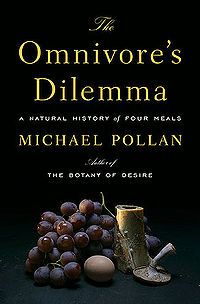
Michael Pollan’s The Omnivore’s Dilemma has been on my “to read” pile for some time. I finally finished with it this week. As a vegetarian, I really didn’t need convincing that raising other beings with feelings and some intelligence for the purpose of eating them involves dilemmas. Pollan is not a vegetarian and makes the best case I’ve ever read for justifying his position. Still, I personally can’t face being the reason animals must die for my own gain. I know this is a stance fraught with difficulties. I’ve often mused that if I could get by without even eating plants, I would. I just hate to inconvenience anyone, or anything, else. But that’s not what I want to discuss. Pollan spends the first part of his book discussing corn, or maize. I hadn’t realized what a versatile crop it is, nor how prolific. The difficulty is that it is so good at what it does that it is bankrupting the farming industry. Government subsidies make corn growing the only way that big farmers can get ahead while nearly driving them broke at the same time. (It takes Pollan chapters to explain this, so I’ll need to refer you to the source on this one.) His conclusion: the free market simply does not work for food production.

I’ve long believed that the problems with our economy come from a decidedly “one size fits all” mentality. The free market rewards those who climb over others without that gnawing sense of guilt that prevents me from eating meat. Once you have lots, you only want more. No one ends up satisfied. Okay, so we’ll let Wall Street play its game. Higher education is in crisis because, like farming, the free market model simply does not apply. Guys like me (and plenty of gals too) do not spend years of our lives earning doctorates under the delusion that we’ll get rich. Many of us are idealists who just won’t grow up. All we want is to contribute to the collective knowledge of the human race and make a reasonable living doing it. Then the free market comes and whispers into university presidents’ ears that they should be making six or seven figure salaries. They should have limitless expense accounts. Universities should be all about “branding” with corporate style logos and money-sieves called sports teams. Somewhere along the way they forgot that they need teachers too. Some very prominent universities in the United States now have 70 percent of their classes taught by adjuncts. The system is simply not working.

One of the strangest anomalies out of all of this is that Christianity, the religion started by a guy who said the rich could not enter heaven unless they gave everything away, has crawled into bed with the free market. Enthusiastically. For many people to vote with conscience is to vote for an inherently unfair system that must, by its very design, consume all others. Survival of the fattest. I’m no economist, but I am certain that many other industries have gone the way of the T-rex because they simply didn’t fit the model of unbridled gain. Education is one, and the asteroid is already about to hit. What bothers me the most is that agriculture is another. Pollan ended up scaring me more than any horror flick. Our farming industry, right here in the best fed country on earth, is very, very frail. As long as we’re converting everything to the greed-based system, we should make money edible. After the asteroid strikes, during that long, dim winter, it will be the only thing left on the planet in abundance.