Feeling Disney

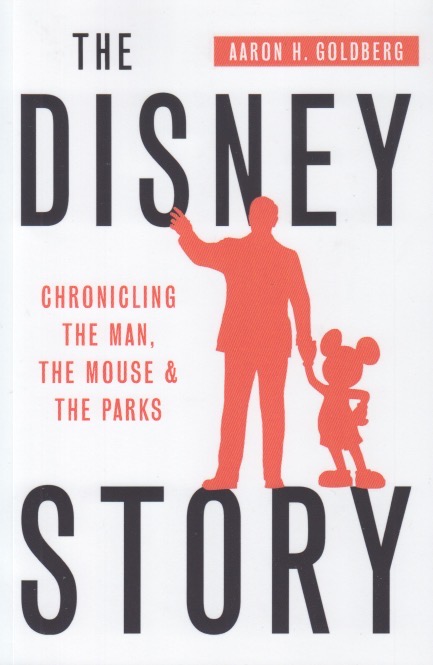
What’s the earliest Disney movie you remember seeing?  If you’re my generation this will’ve likely been in a theater since home recording wasn’t a thing yet.  I suppose it could’ve been on Disney TV, but if it was a new movie you wanted to see it just after it was out.  Mine was The Jungle Book.  Or, at least that’s how I recollect it.  Reading about Ub Iwerks made me curious about Disney so I decided to read Aaron H. Goldberg’s The Disney Story.  The subtitle, Chronicling the Man, the Mouse and the Parks, gives you an idea of what it covers in more detail.  Goldberg’s upfront in letting the reader know that newspapers and period media are his main sources.  The book is arranged chronologically.  It makes for an interesting story but I personally have never been tempted by a Disney theme park—quite a bit of the book discusses these—although there was that one time…

It was back in 1998—what a different world then!  Pre-9/11, pre-Trump, pre-pandemic.  I was still teaching at Nashotah House.  The American Academy of Religion and Society of Biblical Literature held their annual meeting in Orlando, on the Disney campus.  The experience wasn’t a good mix.  Academics and cartoon characters just don’t—wait, maybe they do.  In any case, you had to eat at the Disney estates, although you could sleep in an off-site hotel, that was a considerable shuttle ride away.  And no bars.  I did meet David Noel Freedman there.  It was in a room painted like the inside of a circus tent.  A strange place for a meeting of such gravitas to a still young scholar.

The point is, Walt Disney affects all of our lives.  He was a self-made man, but he had lots of help.  He didn’t live to see Walt Disney World (that’s the one in Florida) open, but he died knowing just about every child in the country recognized his name.  I never considered myself a Disney fan.  Yes, I watched a few of his movies and watched his Sunday evening television show, but I preferred Bugs Bunny and the Warner Brothers’ crowd.  Growing up with television you had your loyalties.  Still, we were well aware of Disney and especially his movies.  We couldn’t afford to see all of them, not by a long shot.  And those we did see were at the drive-in where kids could hide under a blanket in the back seat to economize a bit.  Still, we were infected.  Everyone was.

Hidden Talent

It’s difficult to imagine any corporation with a more powerful influence on children than Disney.  It catches us early and forms our first impressions on plenty of things.  And, of course, Disney was started by Walt Disney, right?  Well, partially.  I recently became interested in Ub Iwerks (born Ubbe Iwwerks), the man who originally came up with Mickey Mouse.  Ub Iwerks and Walt Disney got their start in animation together.  They both worked for the same Kansas City ad firm as illustrators and then went into business together.  This was in the early days of film—silent and black-and-white—when few took cartoons seriously (they hadn’t made much money yet, and that’s the true mark of seriousness).  The major studios were starting to come together in Hollywood, so eventually Disney moved to California where, with his brother Roy, they began Disney Studios.  Ub came to work with them.

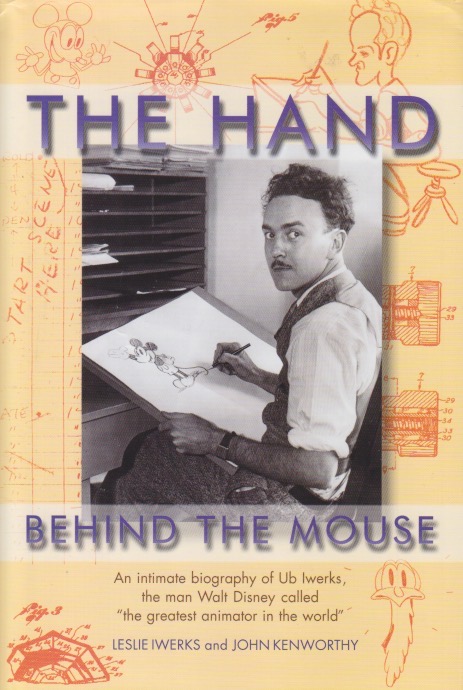
The Hand behind the Mouse, by Leslie Iwerks and John Kenworthy, is a brief account of the life of Ub Iwerks, who was famously quiet but who went on to develop special effects that were far ahead of their time.  Iwerks never really took his deserved credit for Mickey Mouse, noting that what you do with a creation is just as important as coming up with it.  Walt Disney, he opined, was the one who did something with Mickey.  At the same time, Disney claimed that Iwerks was the world’s greatest animator (as the subtitle proclaims).  The two eventually split, with Iwerks forming his own studio and hiring some of the most famous cartoonists of his day.  Hard times came, however, with the Depression and Second World War.  Iwerks closed up shop and went back to work for the by now very powerful Disney.

His move back saw him increasingly in “special processes”—essentially engineering special effects—and he was innovating literally until the day he died.  His imprint on not only Disney, but the film industry (he worked with Alfred Hitchcock on The Birds), was substantial.  He never, however, sought the limelight.  All of this makes him a remarkable individual.  He recognized Disney as the one with a vision and a brand, and also a business-savvy brother (Roy) who could help it all come together.  Walt Disney died at 65, a couple years after I was born.  Ub Iwerks died five years later.  Together they had invented American childhood.  Everyone knows Disney.  It’s the top name in children’s entertainment, a corporate giant.  I’m drawn to those, however, who fall between the cracks of history.  This brief book tells the story of one such individual who should, in all fairness, be better known.