Painting Sleepy Hollow

Not being an art critic, I’m in no place to analyze John Quidor’s The Headless Horseman Pursuing Ichabod Crane.  Having written a book about Sleepy Hollow, however, there are a few things I might point out.  I should begin by noting that this post was spurred by a jigsaw puzzle.  Normally I only work on said puzzles around Christmas time.  Several years ago friends told us about Liberty Puzzles.  They’re made of wood and are heirloom quality.  My wife took the hint and she generally orders one, on behalf of Santa Claus, each year.  We have a few now but since we only do them once a year (and usually only one of them at the time), I had forgotten that we had a Liberty Puzzle of Quidor’s painting.  The original is located in the Smithsonian and I really didn’t discuss it in my book.  The painting is dated 1858, almost forty years after the publication of Irving’s tale, but while Irving was still alive (he died the next year).

John Quidor, The Headless Horseman Pursuing Ichabod Crane, public domain via Wikimedia Commons

The painting is correct in displaying a pumpkin that isn’t a jack-o-lantern and it presents one of the obvious difficulties of painting a nighttime scene.  The painting is fairly dark.  One of the benefits of working on a puzzle like this is you look closely at the scene.  My first thought was that it seems odd that the lightest part of the painting is Gunpowder’s rump. Next is the path.  The path draws the viewer’s eye back to Gunpowder and an understated Ichabod Crane.  I realized that the lighting is meant to reflect the moon’s rays, as the orb is just peeking through the clouds at the upper left.  And, of course, Quidor was not painting from real life.  On the right lie some small buildings, including the Old Dutch Church.  The Headless Horseman blends into the dark, which is exactly how Irving describes him in the story.  There’s no bridge, however, at least not yet.  All of this matches the wording of the legend.

Quidor painted mostly scenes from Washington Irving’s works.  Having been born in Tappan, during Irving’s lifetime, that makes sense.  He was also painting before the Disney cartoon came out.  One of the cases I make in Sleepy Hollow as American Myth is that the image most Americans have of the story comes from Disney.  The painting has no sword, and indeed, neither does Irving.  The one dramatic effect Quidor allows is the raising of the pumpkin before the bridge.  That takes place later in the chase.  In a sense this painting is perhaps the most authentic visual interpretation of Irving’s story before it made the transition to celluloid.  It’s puzzling.

Naming Sleepy Hollow

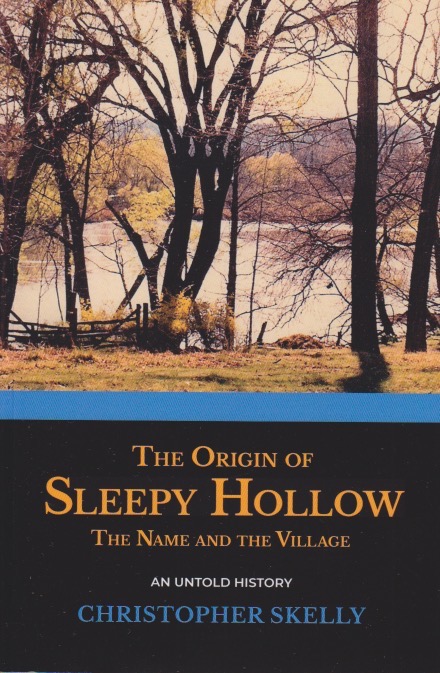
Local history has always been an interest of mine.  Although I’ve never lived in Sleepy Hollow, my book on “The Legend of Sleepy Hollow” is due out this week.  I try to keep an eye out for further information on the region.  Christopher Skelly’s The Origin of Sleepy Hollow: The Name and the Village, an Untold History appeared after I’d submitted my manuscript to McFarland, but I wanted to read it regardless.  A new father living in Wisconsin at the time, I was not aware of the name change in 1996.  I do remember looking at a map after we’d moved to New Jersey and seeing, for the first time, the name Sleepy Hollow along a route we planned to take to a point further up the Hudson.  I remember thinking, “I didn’t know there was an actual place called Sleepy Hollow.”  Well, that may have been because prior to 1996, there wasn’t.

This self-published account of how the name came about is valuable local history.  Not exactly belles-lettres, it nevertheless begins at the earliest Dutch naming of the area as the Dutch version of Sleepy Hollow.  By the time Washington Irving wrote his story around 1819, the area had already gone by several names but the village of Tarrytown was well established.  And, over time what was vaguely called Sleepy Hollow by the Dutch became North Tarrytown.  I learned here that the haven, or harbor on the Tappan Zee that was first called some version of “Sleepy” had been the victim of landfill so that a railroad could be put in.  The author is clear that the “Hollow” is still visible if you know where to stand and look.  He also explains the motivations behind changing the village name that began in 1988. 

One things I learned in my own study of ancient history is that place names tend to be remarkably resilient.  European settlers ignored much of the indigenous nomenclature, but did adapt many examples of it.  Our species needs to reference where things, or other people, are over very large distances.  We know where Edinburgh is, even if we live in Australia.  Names are important.  Personally, I’m glad that some citizens of North Tarrytown decided to change the name of their village to Sleepy Hollow.  And not just because I have a book coming out on the topic.  I’m sure the change has boosted tourism immensely, even if that wasn’t the initial motivation.  It’s nice to know that the change was actually back to the first Dutch ideas about the place.  And that a visit to Sleepy Hollow is possible because of one influential little story.


Museum Life

Allentown is the third largest city in Pennsylvania after Philadelphia and Pittsburgh.  Here in the Lehigh Valley it abuts Bethlehem and is just a few miles from Easton.  Getting an early jump on Memorial Day this year my family visited the Allentown Art Museum.  My daughter had been there before and let us know that it’s not huge, but certainly worth seeing.  They do have a Rembrandt among their collection, and a few Medieval pieces, including a tapestry that I could swear I saw on a book cover once.  In any case, I would recommend it.  We’re still fighting with rain around here, so it was a great Friday diversion.  We’re museum people, and I’ve pursued creative outlets my entire life.  I like to look at those good enough to be on public display.  As I told my family, when I was young I was curious about art and checked out books from the library on the great masters so that I could learn to identify paintings I hoped some day to see.  And as a bonus, the Allentown Art Museum is free.

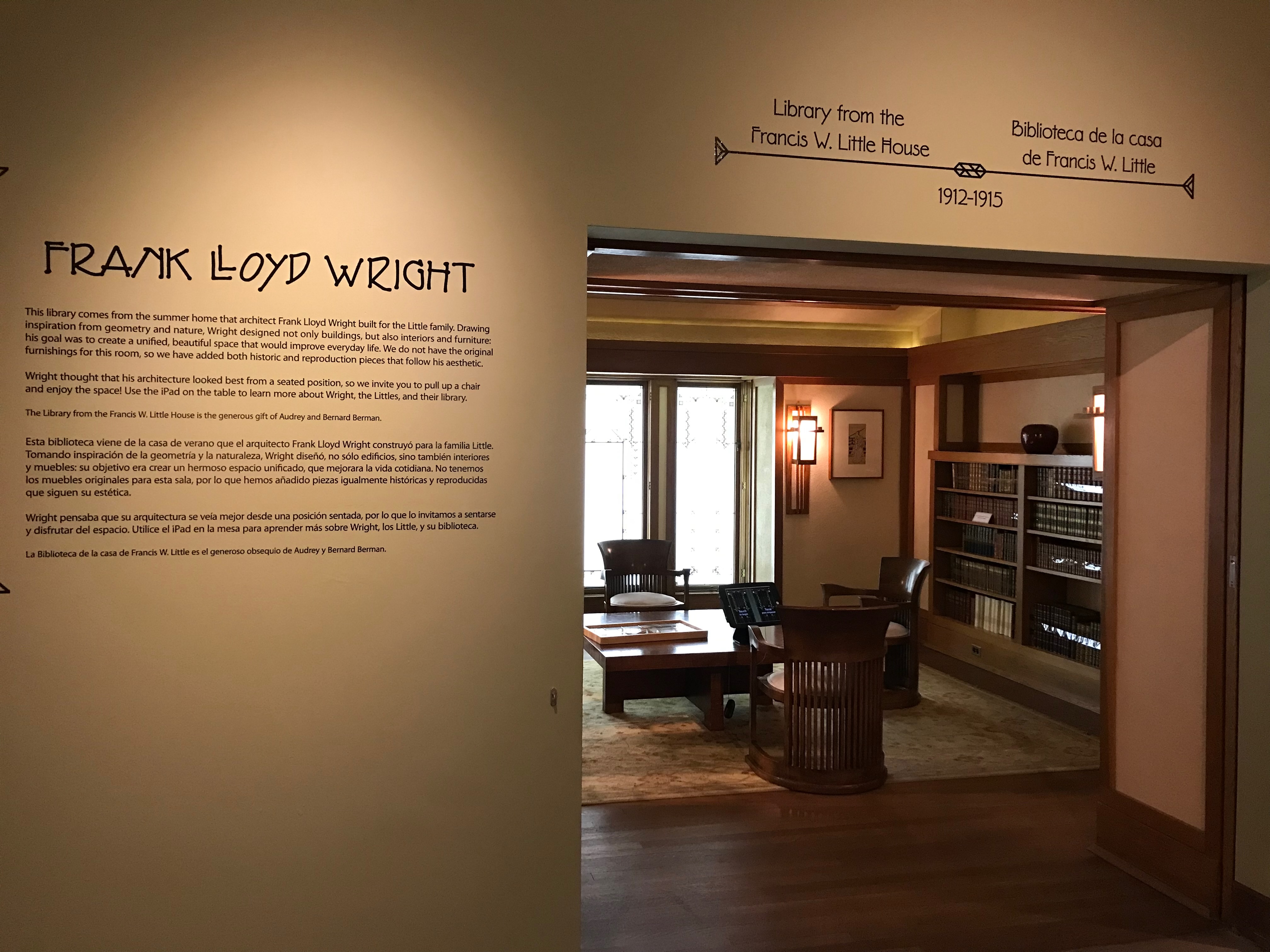
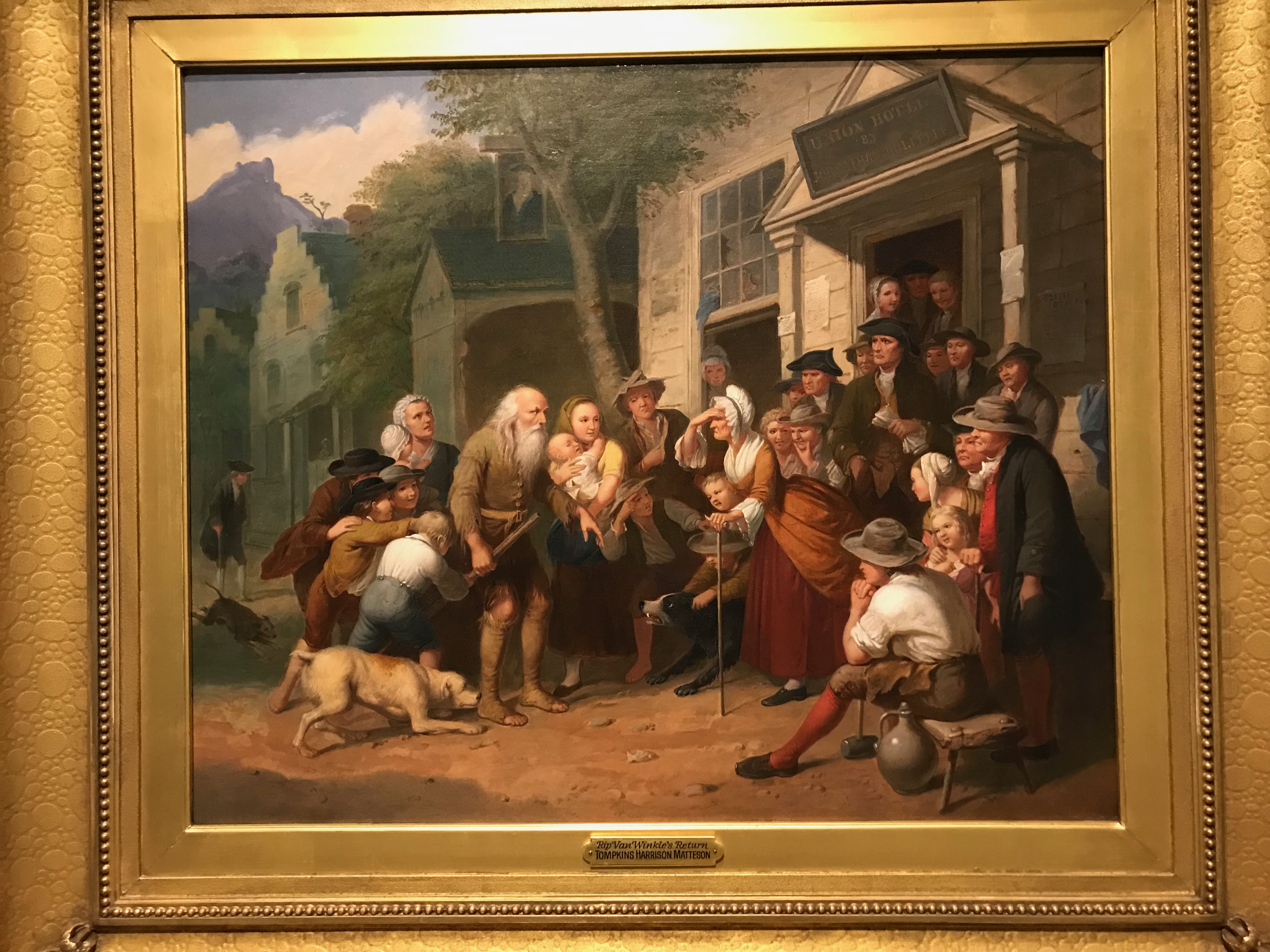
One of the features of the facility is a personal library designed by Frank Lloyd Wright.  The books on display aren’t his actual books (I don’t think), but being a book person I had to look over the titles.  Washington Irving was well represented.  Since Sleepy Hollow as American Myth will be out shortly, I was curious to see if they had The Sketchbook of Geoffrey Crayon, Gent.  This is the book in which “The Legend of Sleepy Hollow” first appeared.  It seems they have all of Irving’s books because I did indeed find the Sketchbook.  Such an unexpected connection was a bonus on what was already an enjoyable visit.  I wandered out into the paintings again and found Tompkins Harrison Matteson’s “The Return of Rip Van Winkle.”  As I discuss in the book, “Rip Van Winkle” is also in the Sketchbook.  Not for the first time, I’d made a personal connection with art.

Visiting art museums always leaves me in a liminal space.  For a while my soul was mingling with those of others driven by creativity.  I’ve made a few art works myself over the years but I’ve really had no training.  I did take a drawing and painting class in college, but I kept none of my output.  I enjoyed making it, however.  My daughter asked why I don’t do more and the issue always comes down to time.  Work takes the lion’s share and now weed control (they love the rain) takes most of the rest.  And writing, of course.  That’s why I need to go to museums.  To become fully human again.


Playing Sleepy Hollow

In my teenage years I wrote a short play or two.  I haven’t done it since.  I’ve read plenty over the years but my fiction takes the form of short stories and novels—narrative fiction.  Playwriting, and scriptwriting, take a special talent.  One time-honored way to doing this is to utilize source material.  One of the points that I make in Sleepy Hollow as American Myth is that movies, in particular Tim Burton’s Sleepy Hollow, inspired a number of other movies and even novels, both narrative and graphic.  Others saw the potential this short story could have.  I spend some time in the book going over the various adaptations and the innovations they make.  The point is that “The Legend of Sleepy Hollow” has become an American myth.  Anyone who examines its long history can see the impact that it has had on the American imagination.  And on Halloween. 

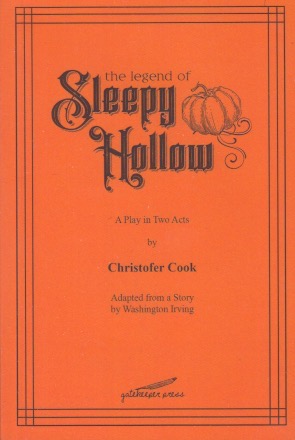
Christofer Cook’s The Legend of Sleepy Hollow is a two-act play, adapted from Washington Irving’s story.  Some of it is taken directly from the story, but as most of those who have adapted the story know, it requires some help to become a performance.  Cook’s play is an interesting take on the story.  I’m not sure what other sources Cook may have seen and/or read, but there are some elements here found elsewhere that have become part of the tale.  For example, a duel between Brom Bones and Ichabod Crane.  I’ve seen that in other treatments, and it seems logical enough, given the circumstances.  Irving, however, it is not.  Perhaps the most surprising shift Cook makes is that the famous horse chase takes place with both Ichabod and the horseman (named Hermann Von Starkenfaust) on foot.

Had I known of Cook’s adaptation before submitting my manuscript, I would’ve been glad to have included it in my book.  Many movies have their own scripts that they use to bring the tale to life on stage and screen.  This only underscores my point—myths are endlessly adaptable and capable of serious transformation.  Some elements of the story we now assume to be part of the original were added many years after the story was written and its author had died.  Yet we all tend to expect these things.  Nobody has the final word when it comes to what happens to Ichabod Crane.  Washington Irving assured that in his story.  Those who come after bend, twist, and stretch the tale in new and fascinating directions.  This little play is one such and would be, I suspect, great fun to see.


Still Sleepy

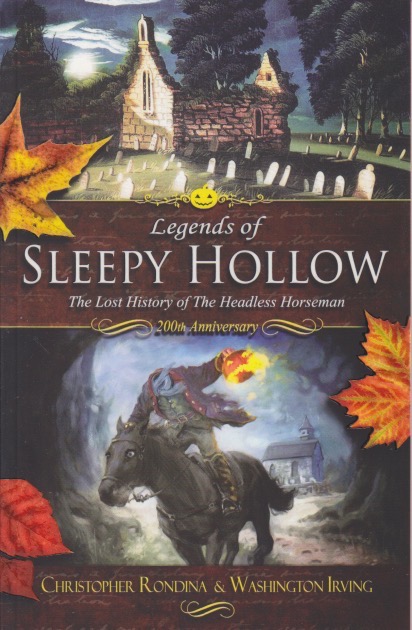
One thing I quickly learned when beginning work on Sleepy Hollow as American Myth was that the story hadn’t really been studied too much by those with academic training.  There are some exceptions, of course.  Another thing I swiftly picked up is that many people who wanted to write on the legend chose the method of publishing the public domain story with a variety of annotations, essays, and other additions, to make a salable book.  Often these are self-published and not always immediately obvious to the researcher as to whether they contain anything important or not.  I had not run across Christopher Rondina’s Legends of Sleepy Hollow: The Lost History of the Headless Horseman until well after my manuscript was submitted.  I found it in the bibliography of a ghost-hunter version of Sleepy Hollow that wasn’t even published by the time I was going into production.  (It doesn’t even have an ISBN.)

I do have to say that Rondina’s variety of this composite genre isn’t bad.  He includes Washington Irving’s story and expands it with an introduction, and brief chapters considering any historical background that there may be.  He also adds a chapter on modern media of the story that includes one television adaption that I failed to find for my book.  Interestingly, after I’d written the manuscript I discovered Joe Nazare’s similarly annotated version, also with a number of the media I’d analyzed in it.  I’d actually corresponded with Nazare earlier, having discovered his website.  Not wanting to discuss what my book was about until after I sent it in (others have more time to write, perhaps, than I do) I didn’t mention our common interest and didn’t discover his annotated version until it was too late to include as a conversation partner.

Self-publication has perhaps become inevitable since standard publishing is difficult to break into.  And the internet gives anyone the ability to self-publish without too much effort.  It does, however, make doing research a bit more difficult.  I determined early on that I could not review every annotated version of Irving’s story.  I selected a few of the most promising and moved on.  Both Rondina and Nazare had interesting things to say about the tale, and it’s a pity that they weren’t discoverable until after the fact, at least to me.  I like to give credit where credit is due, but any ideas that seem similar to these two sources in my book will have to stand as examples of convergent thinking on the part of fans of the “Legend of Sleepy Hollow.”  I know there are many other fans out there and I hope they find the resources they need to understand the story just a bit better.


Short Story

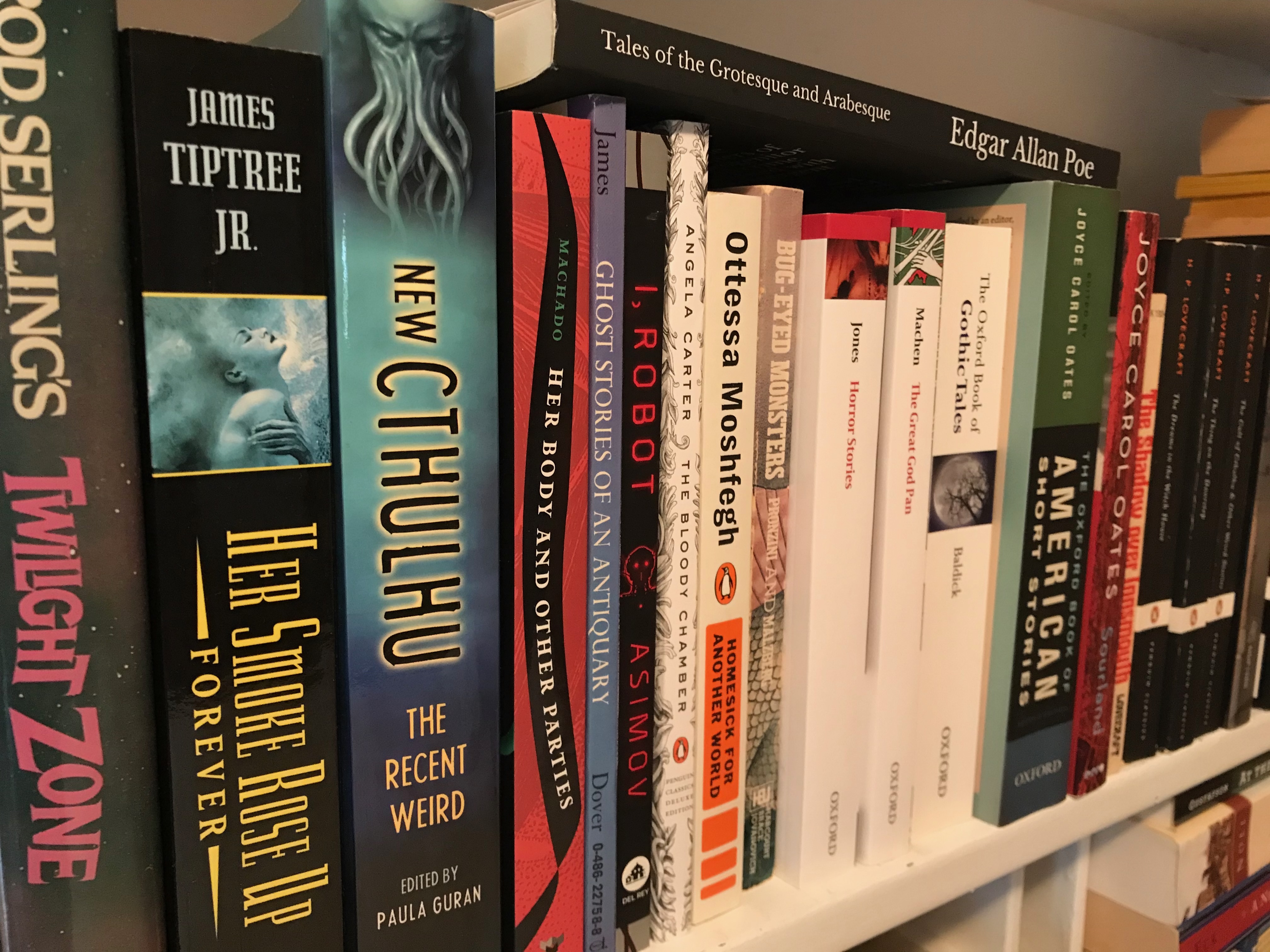
I often reflect on how little I know.  No matter how much I read there is more to be read.  Works worthy of time but sacrificed to circumstance.  I was recently reading a short story by Poe that I’d never read before.  As others have noted, Poe was a prolific author of a great deal of forms—poems, a novel, letters, a scientific treatise, literary criticism, and, of course, his stories.  I came to know his stories through cheap collections available in my small town, mostly not along the lines of those Poe himself selected.  Indeed, editions of his own chosen works, such as Tales of the Grotesque and Arabesque, before the advent of internet-based publishing, were difficult to come by.  Original editions cost many thousands of dollars.  Poe isn’t alone in this category—short stories are an unusual genre.

I know from personal experience that finding a publisher for a collection of such stories is nearly as difficult as finding a publisher for poetry.  Publishers are looking for money, of course, and like Poe, all writers produce stories that interest some but not others.  The novel is safer, and even today’s amazing writers have to find success as novelists before publishers will offer volumes of their short stories.  Tis a pity, really.  I have many volumes of short stories on my shelves, including some of Poe’s, but for some reason publishers tend to cram such volumes so full that they become unwieldy.  Intimidating almost.  It leads to that feeling of existential dread that I felt approaching War and Peace—would I indeed survive to finish it?  (I did, but that is such a Poe-like question I had to employ it.)

The short story is an important literary form that is singularly difficult to publish.  I have managed to find homes for about thirty such pieces, but many more have failed to move even just  the internet critics.  Those that have been published have brought no income at all.  In Poe’s day, an author attempting to make a living could not afford to give away their life’s blood.  Indeed, Poe’s older contemporary Washington Irving struggled with pirated copies of his works being sold overseas (he spent a great deal of time in Europe).  Like Poe, Irving excelled in the short story, or sketch.  We’re often at the mercy of editors who select the stories for us, making them available.  I suspect there’s much that we miss by not stepping outside their personal tastes regarding what to include.  Or, just as importantly, exclude.  Some day, perhaps, I will have read all of Poe’s short stories.  Until then, I’ll find them when necessary.


Ichabod’s Body

Maybe you’ve noticed this.  When Halloween comes around, the Headless Horseman and the Legend of Sleepy Hollow reemerge.  There’s a reason for that, and I discuss it quite a bit in Sleepy Hollow as American Myth.  Right now there seems to be quite an interest, or maybe I’m just noticing it more.  For example, a local theater where we saw a Poe performance last year is offering a Headless Horseman show this year.  Articles have recently been appearing on Tim Burton’s Sleepy Hollow movie, given that it was released 25 years ago—online discussion, however, is often eclipsed by the Fox television show by the same name.  And before it switched over to Christmas decorations, Michaels had its share of Sleepy Hollow merchandise.  Halloween and the Headless Horseman go together.  (Read the book to find out why!)

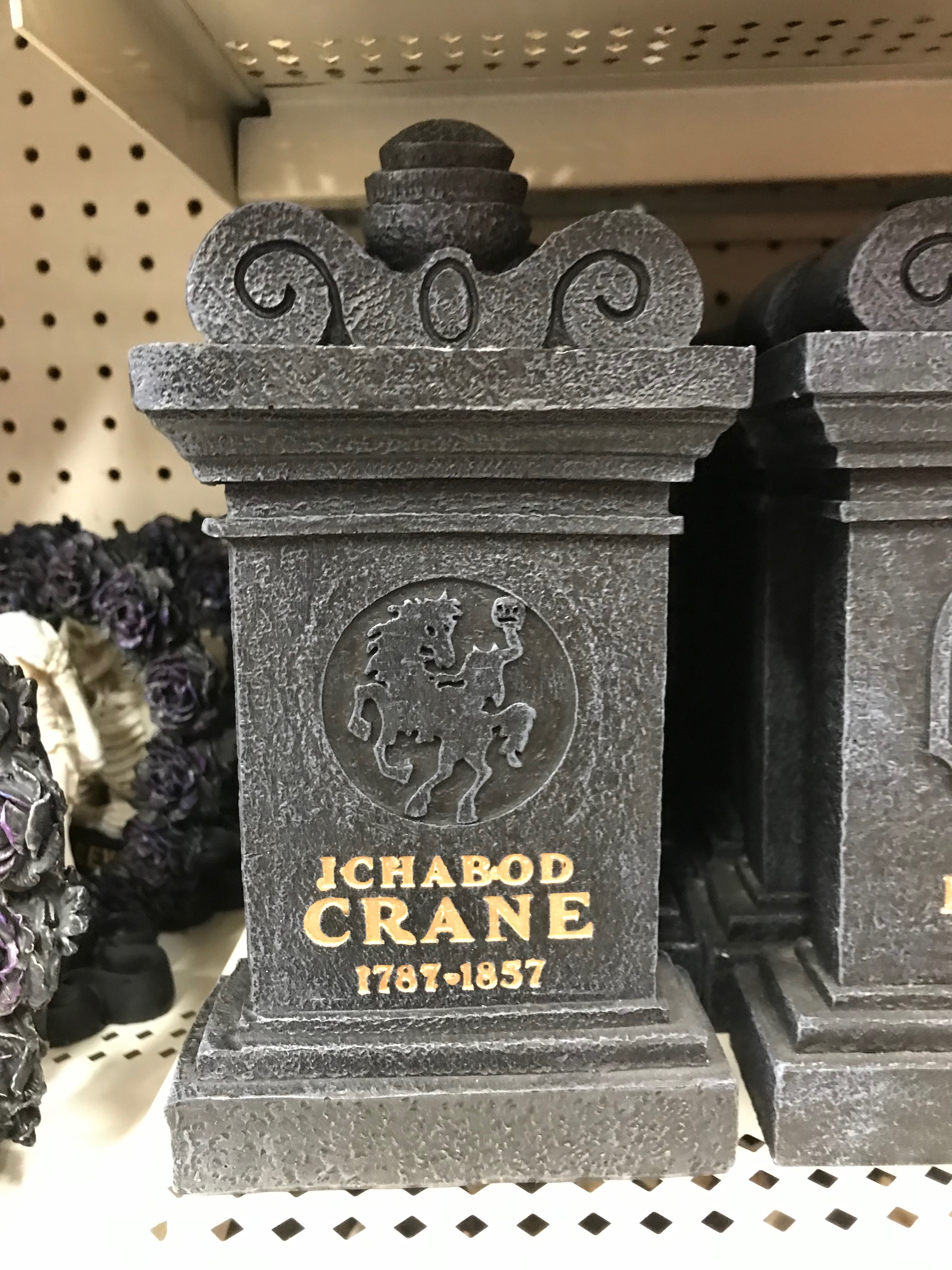
One of the tchotchkes I picked up at Michaels was Ichabod Crane’s tombstone.  In the many renditions of Washington Irving’s legend, Ichabod is treated as the protagonist of the story.  Although Tim Burton’s movie wasn’t the first to have Crane survive, besting the Horseman, the old wives’ tales, according to Irving, had him spirited away by the Horseman.  That’s why I found his gravestone so interesting.  The dates on it (1787–1857) indicate, at least according to this recension, that he died at seventy, surely not the victim of the attack that took place around the turn of the century.  If you’re not familiar with the original story, Irving set it “some thirty years since” the 1820 in which the tale was published, putting the events around 1790.  Burton shifted this to 1799, partially, I suspect, because that was two centuries before the release of his movie.

I do wonder where the maker of the Michaels tombstone got their information.  According to their reckoning, Crane would’ve been but three years old in 1790.  Of course, the story never tells us his age.  Since it is intimated that he relocated and became a judge after dabbling in politics, all of which would seem to indicate that he was a somewhat young man at the time of the tale.  To make Sleepy Hollow scary, though, having Crane cut off in his youth would seem to be more in keeping with the spirit of the season.  Of course, Sleepy Hollow is a legend that has become mythic through its many retellings.  Enough of them that someone could write a book about it all (ahem).  And this is the time of year to ponder it.  


Following Irving

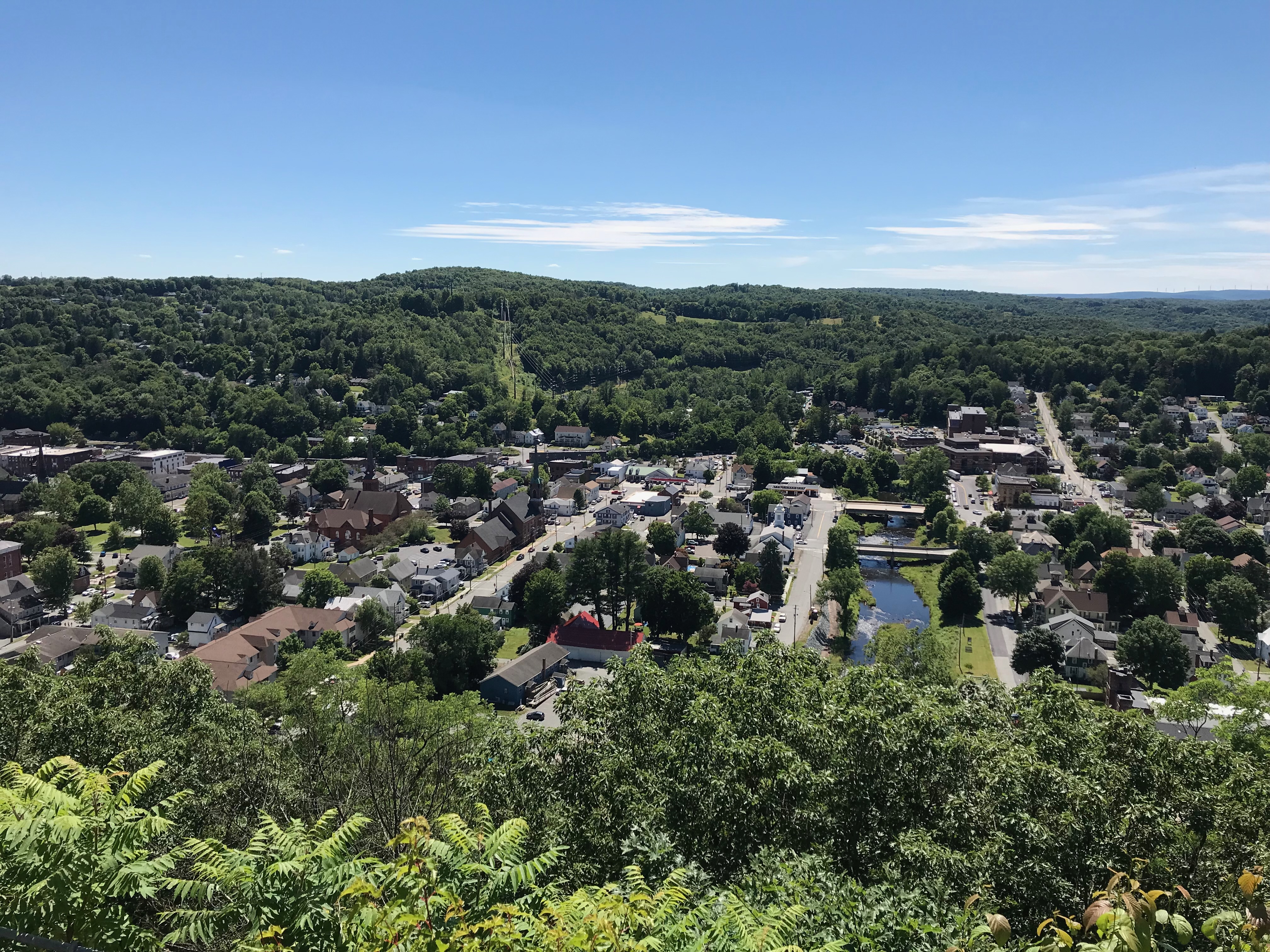
I’m growing fond of staycations.  Maybe it’s because I’ve become such a creature of habit that major disruptions seem daunting, but I still like a change of scenery with my family.  We settled on the Poconos because of, well, a chocolate factory.  More on that anon.  In any case, said location was near Honesdale, Pennsylvania.  Before setting out we learned that Honesdale is one of those quaint downtowns that has made it an island of culture in a sea of red, if you get my drift.  While researching things to do we learned about Irving’s Cliff.  This is an overlook of the town from a bluff atop one of the many hills.  What really caught my attention is that the Irving was none other than Washington Irving, the author of “The Legend of Sleepy Hollow.”  This cliff was a view he enjoyed, so it was named after him.

The view from Irving’s Cliff

Honesdale is a small town.  Less than 5,000 people call it home.  Growing up in western Pennsylvania I heard about more affluent people going to “the Poconos” out east.  It was a “romantic” getaway for some lucky high schoolers while the rest of us had to use our imagination regarding what such a place might be like.  Of course, living just south of the Poconos now we’ve driven through them many times, but we never stopped to linger here.  As I tried to commune with the spirit of Irving on his cliff, it occurred to me that he had been a world traveler.  Nipping across the border from his native New York to Pennsylvania must’ve been no big deal.  Still, he wrote incessantly and the locals obviously appreciated that a famous writer had tarried in their town.  Standing here, I knew the view he took in was quite different.  The hills would’ve been here, but a much smaller town and, above all, no cars.

My forthcoming book on Sleepy Hollow will have a thing or two to say about Washington Irving, of course.  It’d be a fool’s errand to try to follow in his footsteps, just as it would be to try the same for his namesake George Washington.  Besides, I was born in a western Pennsylvania town visited by our first president.  Although we couldn’t afford accommodation in Honesdale itself (it is a quaint town), we checked into our hotel knowing that “Washington Irving slept here.”  And when you’ve spent a few years writing a book about a guy’s work, well, a staycation to a place where he had one is worthy of comment.


Number Six

Signing a book contract always makes me happy.  There’s a validation to it.  Someone thinks my thoughts are worthwhile.  And now I can reveal what it’s about.  Regular readers likely already have some inkling, due to the number of times I referenced Sleepy Hollow over the past couple of years.  I’ll provide more details closer to the time, but it struck me back when working on Holy Horror that few resources exist for “The Legend of Sleepy Hollow,” despite its status as such a well-known story.  An agent or two agreed with me that the topic was good but they really weren’t sure it was a commercial project.  This despite the fact that Lindsey Beer is slated to write and direct a reboot of the famous 1999 movie.  It seemed that a book on the topic available at the time might sell.

John Quidor, The Headless Horseman Pursuing Ichabod Crane, public domain via Wikimedia Commons

I tried a number of independent publishers that don’t require agents.  I learned that most of them won’t even reply to your emails.  It seems that to get published by any trade publisher you have to be already famous.  Or maybe my idea’s just not good.  Weird.  Finally I found a university press that thought it might be a good fit, and it occurred to me that McFarland, who recently dropped the price on Holy Horror, would be a good press for this kind of thing.  McFarland made an offer first, and yesterday they sent a contract.  Hopefully the book will be out next year.

This is quite a personal project.  The story is one of my early memories—most likely due to the Disney version of the story, and most likely as seen on television.  My treatment is, as in all of my books, idiosyncratic.  I look at things differently than other people do.  And I’ve been looking at Sleepy Hollow for half a century or so, and I’ve read quite a lot about Washington Irving and the Hudson Valley.  I don’t want to say too much since others write more swiftly than I do and some presses speed books along.  For the time being I can enjoy that rare feeling of having a book contract and an editor who’s excited about my project.  I do hope that the next book, number seven, might find a trade publisher.  What’s it about?  Well, I’m working on two at the moment, and it depends which reaches book length first.  And I can’t say anything since someone may scoop me.  So I’ll just bask a little bit before starting another work day.


Ninth Day of

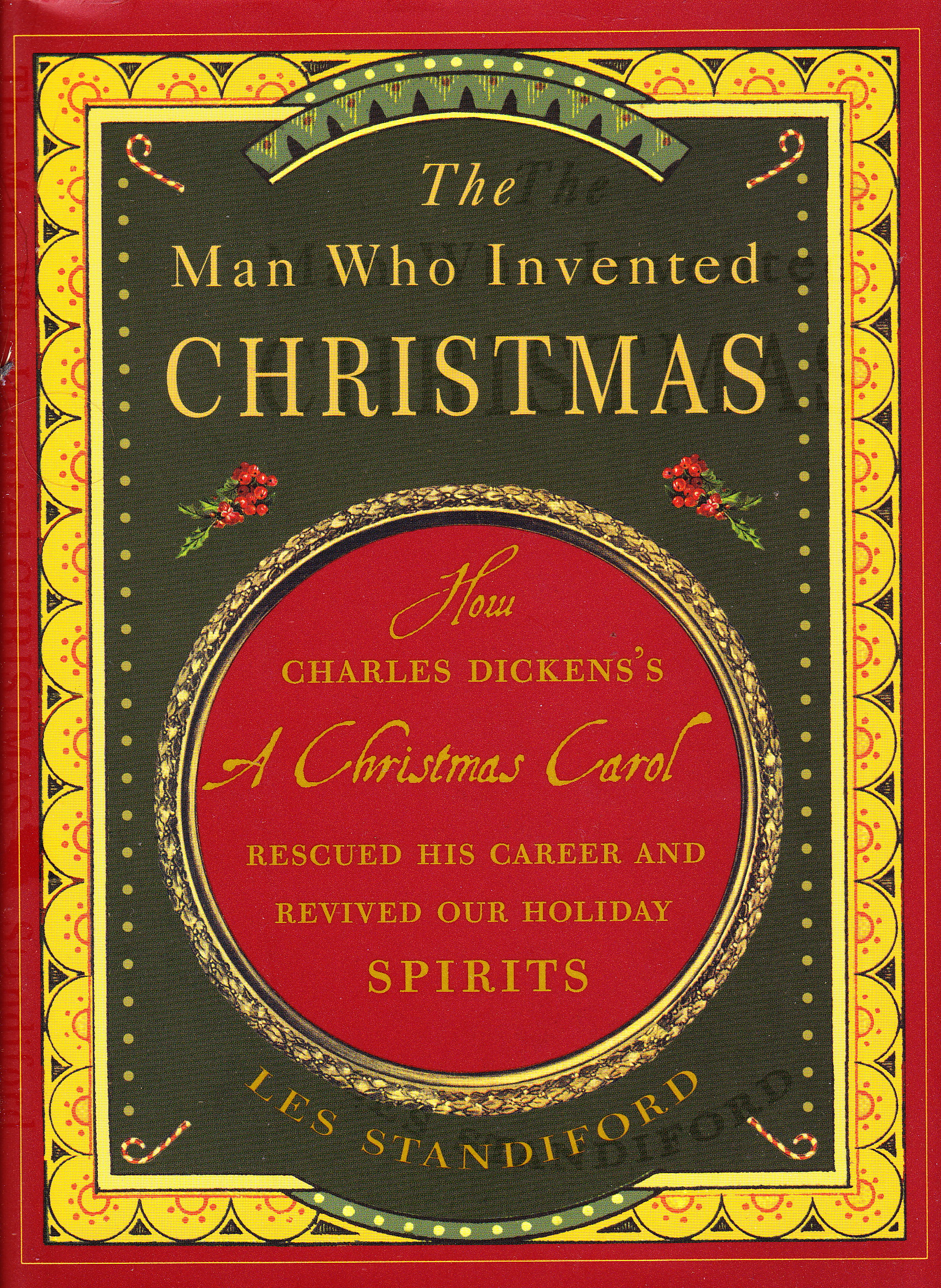
I read Les Standiford’s The Man Who Invented Christmas back in 2017 and learned a lot from it then.  Some of what I read on the bus, however, has faded a bit with time and I was curious to read it again in the light of the reading I’ve done about Washington Irving.  Irving was a bit older than Charles Dickens and had, it seems, given Dickens the idea of writing, first, a sketch book (Sketches by Boz), and second, writing about Christmas.  From what I’ve read about Irving, he had a cautious liking of Dickens but wasn’t terribly impressed.  Standiford does note that it was Irving who suggested an American tour to Dickens (it didn’t turn out well) but he (Standiford) indicates that Irving was a staunch fan of his English colleague.  Were I able to spare the time, I would follow footnotes and read letters to see if I could get to the heart of the matter.  Of course, I’ve become much more interested in the history of modern literature in recent years.

It would be difficult to overestimate the influence of Dickens in English literature.  As Standiford points out, he helped to invent novel publication as we know it.  Although he took up the gauntlet of international copyright (something Irving had earlier understood as important), he became internationally famous partially through pirated works.  We still use the phrase “What the Dickens” to express surprise. (It turns out that the expression predates Charles—now that’s influence!)  As Standiford notes, however, we’ve passed the era when a single author can have such great influence.  Dickens was a singular talent and read by vast numbers of his compatriots and also grew a respectable readership in the United States.  He also had a great deal of influence on how we celebrate Christmas.  I was this time looking for Irving lurking in the shadows.  And I found him.  Dickens was an enthusiastic fan of Irving.

Standiford brings Irving into the discussion often, but also perpetuates the association of “It was a dark and stormy night” with Edward Bulwer-Lytton (who did use it) without mentioning that the phrase originated with Washington Irving.  One gets the sense that Irving was completely eclipsed by the work of his young fan, Charles Dickens.  Standiford mentions Irving quite a lot in this little book, but it’s about Dickens and not his American colleague, of course.  And Standiford also notes that crediting Dickens with the “invention” of Christmas is overstatement.  The story is nevertheless fascinating.  To me this second reading underscored the importance of Irving for the Christmas holidays, and also how terribly difficult it is to make a living as a writer.  I’m glad I came back to it, even when life otherwise threatens to be too busy for re-readings.


Young Fear

The amazing thing about people is that even when you’re aging you remember what it was like to be young.  I used to have to stop and consciously think of that if I wanted to realize it when talking to those older than myself.  Now that I’m no longer young I don’t need to have it explained.  I’m not afraid to read teen literature.  Those who write it well (John Green comes immediately to mind) make you feel like you did when you were a teen.  I read Jessica Verday’s The Hollow because of, well, the Hollow.  Sleepy Hollow, that is.  This is a young adult novel and even before I was half-way through I got the strong impression that to be satisfied with the story I’d need to read the entire trilogy.  This was a relief since I’ve read Sleepy Hollow novel series before where I had no real desire to press on beyond volume one.

The story isn’t a modern-day retelling of Washington Irving’s legend.  It is set pretty much in the present (although, I notice, tech changes so fast that it’s immediately clear that this was set a decade ago.  Has anyone considered how this constant change will affect literature?) where Abbey, the protagonist, is trying to come to terms with her best friend’s death.  Since her best friend was really her only friend (some of us know what that can be like), she finds solace among strangers.  Those strangers, it becomes clear late in the novel, are not what they seem to be.  Throughout the novel both quotes from and discusses Irving’s story—how could any tale set in Sleepy Hollow not do so?

In any case, this is a quick read despite its size.  Verday captures what it’s like to be a teenager.  My experience of teenage girls was always limited, but I have no reason to doubt that she represents that part accurately.  The funny thing about being an adult is that you learn that you don’t really know how to be one.  For me, dips into youth help to center me when this whole adult thing just doesn’t seem to make any sense.  I don’t want to give any spoilers for the story here, but I’ll likely move on to the second novel in the series before too long, and by the time you get to second in the series it’s okay to assume those reading about it won’t mind a bit more information.  At least that’s the way I think about it, having once been young.


Drifting

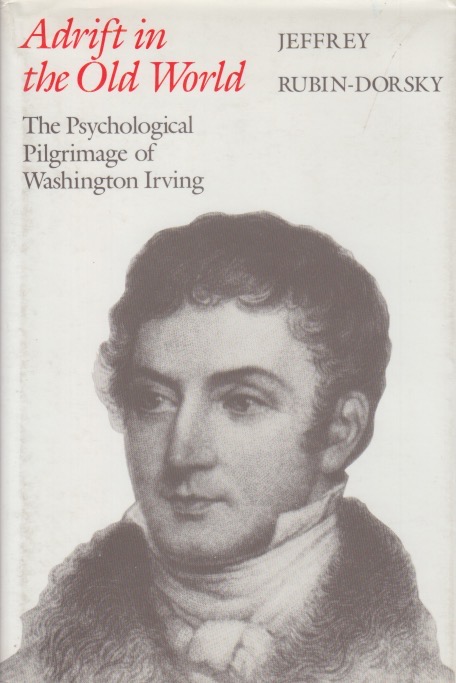
What really goes on in somebody else’s mind?  At best we can guess, and when that person’s been dead for a long time that guessing involves some reasoned speculation.  I enjoyed Jeffrey Rubin-Dorsky’s reasoned speculation in Adrift in the Old World: The Psychological Pilgrimage of Washington Irving.  The book itself is a few decades old now, but it does raise many relevant issues.  For me personally, it was, in parts, like reading my own psychological profile.  Irving is an interesting study.  (Unlike me) he had early success as a writer but he was a continual self-doubter.  He was also a poor investor, making money on his writing only to lose large sums investing in ventures that failed.  He also had a sense of not belonging which would seem strange for a New Yorker today.  Although he finally felt he fit in when he settled, as a famous writer, in Tarrytown, this book really only covers his European years.

While traveling for seventeen years in mainly Britain, France, Germany, and Spain, Irving wrote four very different “Sketch Books.”  These weren’t really short stories as we’ve come to understand them, at least not always, but they affirmed his place in the literary firmament.  Adrift in the Old World covers these four books while bringing incidental mention of several others into the picture.  Irving must be a difficult writer to cover.  He was not only prolific, but he wrote about diverse topics and sometimes at great length.  Of course, he was trying to make a living as a writer and people in those days had more time to read.  Breaking out a set of only four of his books makes this more digestible.

Even though I learned a lot from this book, it wasn’t always easy reading.  It gets a bit academic in parts and the paragraphs are far too long.  Still, there’s good information here.  I’ve been trying to wrap my head around Irving for some time now, as a glance at the books I’ve covered recently ought to suggest.  Although he’s not ignored by literary scholars, there aren’t many general interest books written on him.  There are other writers that more capture the modern imagination.  Still, literary history of the early United States is a fascinating venture in its own right.  For those who like to try to figure out what other people are thinking (and I have to admit to that avocation) this is a good entryway into what may have been the mental world of Washington Irving.


Funny about Irving

The successful writer, John Green, has been on a tuberculosis kick lately.  You see, writers swing that way.  As the writer of books few people read, I’ve had my own little Washington Irving obsession lately.  So it is that I read Martin Roth’s Comedy and America: The Lost World of Washington Irving.  Roth knew a lot about comedy and he framed Irving’s early work as burlesque, rather than the more usual categorization as satire.  In doing this, he groups Irving together with other writers in the genre such as Laurence Sterne (who sounds like a fascinating character) and François Rabelais, among others.  (Jonathan Swift and Oliver Goldsmith also make appearances.)  Irving is analyzed in comparison to these other writers and his comic style is considered as polite satire, political satire, and domestic humor, as well as burlesque.

Insightful while occasionally assuming quite a bit on the part of the reader’s background, Roth provides quite a bit of good chewing here.  Roth was, by reputation, an unorthodox thinker.  He sounds like the kind of professor you would’ve wanted to have had in the classroom.  A book trying to parse comedy is a good sign, I suppose.  I learned a lot from reading it, and was pleased to see that I had independently come to some of the same conclusions he had.  That signals to me, anyway, that I’m not too far off track.  The benefit for those interested Irving is that, while critical, Roth isn’t judgmental.  It has always seemed odd to me that the premier biography of Irving had been written by a scholar who really seemed to hate him.  Roth, on the other hand, likes a good laugh.

As a used book my copy had lots of pencil marks in it.  So many that I had to erase them so that I could spot my own.  When I worked in the theology library at Boston University one summer I was introduced to the electric pencil eraser.  This was a device for heavy-duty removing of the marks of thoughtless patrons.  Before working for the library I stared in wonder when I would see students (perhaps not the brightest) sitting in the library, underlining in books they’d pulled off the shelf.  I think I was always too well aware that library books were not my own.  Because such folks, I’m sure, the electric pencil eraser was invented.  None of this took away from my enjoyment of Roth’s book.  I learned quite a bit about Irving’s context and, as an added bonus, got to remember using an electric eraser.

I would like to have had an image of the book cover, but mine lacks the dust jacket and finding it without violating copyright was difficult. I tried to trace this image to its origin, but I found it on Pinterest and the link didn’t take me back to the original poster. If you see and own this and want me to erase it, just let me know.

What Kind of Night?

“It was a dark and stormy night.”  If you’re like me, this evokes images of Snoopy sitting atop his doghouse, clacking away at his typewriter, trying to write the great American novel.  Many of us have tried a hand at that.  And as a writer, finding that allusive incipit, or opening line, is a major preoccupation.  For many years I believed the sentence “It was a dark and stormy night” originated with Edward Bulwer-Lytton since his 1830 novel Paul Clifford begins with this sentence.  Now considered melodramatic prose of the purplest kind, it may have been serious back then.  1830 was early in the days of novel writing.  Then I found the phrase from an even earlier work, Washington Irving’s A History of New York, from 1809.  Had Bulwer-Lytton read it?  Irving was quite popular in the pre-Dickens days.

This raises a question encapsulated in the other old phrase, “You can lead a horse to water but you can’t make it drink.”  Unless someone tells us explicitly that they read something—journals and footnotes often convey this information—it’s difficult to know.  There’s a whole genre of history books these days that examine the libraries of deceased historical individuals to determine what they read.  I suppose in the days before mass book sales there was a better chance that owning a book meant you’d read it, but not necessarily.  In college I worked as the secretary for the chaplain, Bruce Thielemann.  When he read a book he wrote a category of note in the margin and paid a secretary to go through and write the citation under a heading in a set of looseleaf binders he kept, with several pages dedicated to each category.  For sermon preparation he’d look up his theme and immediately see what he’d read.  I knew he’d read those books.

So, was Washington Irving the origin of the phrase, “It was a dark and stormy night”?  Many websites, many of them authoritatively, insist that the credit goes to Bulwer-Lytton.  I located an edition of A History of New York that replicates, word for word, the 1809 edition.  You see, Irving, like many writers, revised after publication and not all (or even most) modern editions tell you which version they use.  Irving indeed used the phrase in 1809, I confirmed.  The internet is wrongly giving credit to Edward Bulwer-Lytton for a phrase first printed by Washington Irving.  The two were contemporaries and ironically, Wikipedia points out that Irving first used “almighty dollar,” another phrased credited to Bulwer-Lytton.  It doesn’t however, point out that “it was a dark and stormy night” also belongs to Irving.  Something to ponder on a dark and stormy night.


Literary Detective

A writer’s life can take many forms.  Alexandre Dumas, for example, (the father, just to be clear) had tremendous success with his novels The Three Musketeers and The Count of Monte Cristo.  Due to the politics in his lifetime, he was exiled and repatriated.  Of the upper classes, he had many affairs.  And finally, in 2002, was reinterred in the Panthéon in Paris with the president of the nation renouncing past racism.  You see, his father was a creole born in Haiti and apparently for that reason he’d been denied burial with France’s other luminaries.  I’ve been reading early European and American novels lately.   I just finished Dumas’ lesser known The Woman with a Velvet Necklace, which was originally published together with some other “stories” (this one alone is over 200 pages) in French, of course.

The story itself seems to have been based on a short ghost story by Washington Irving titled “The Adventure of the German Student.”  In brief, a student meets his dream girl in Paris during the revolution.  She wears a cloth necklace and when it’s removed her head falls off.  Tracing the origin of Dumas’ version on the internet took considerable detective work.  It involved learning the book in which it was originally published (long out of print), translating the title into French, and reading the French article in French Wikipedia since there’s no English article on it.  The story was originally published in 1850, some quarter-century after Irving’s tale, and logic compels one to conclude that either Dumas knew Irving or that Irving was using an old French ghost story that was in circulation at the time.

Since few internet sources exist on the novel, its origins remain somewhat of a mystery.  The French Wikipedia article doesn’t address them.  We know that Washington Irving was a writer appreciated both in America and Europe, having spent many of his years living in the latter.  We also know that Irving borrowed the basis of the story from materials he picked up while traveling.  There’s more literary detective work to be done here, but we live in an age when literary scholarship is devalued (it doesn’t bring in money) and until someone who’s an academic gets on this trail, Dumas’ use of Irving will always remain speculative.  The novel itself does reveal, after the first forty or so pages, why Dumas was a popular writer.  He has a way of drawing the reader in.  The story itself is odd and sad but has a message.  And, as it turns out, a mystery as well.