The Reign of Rain

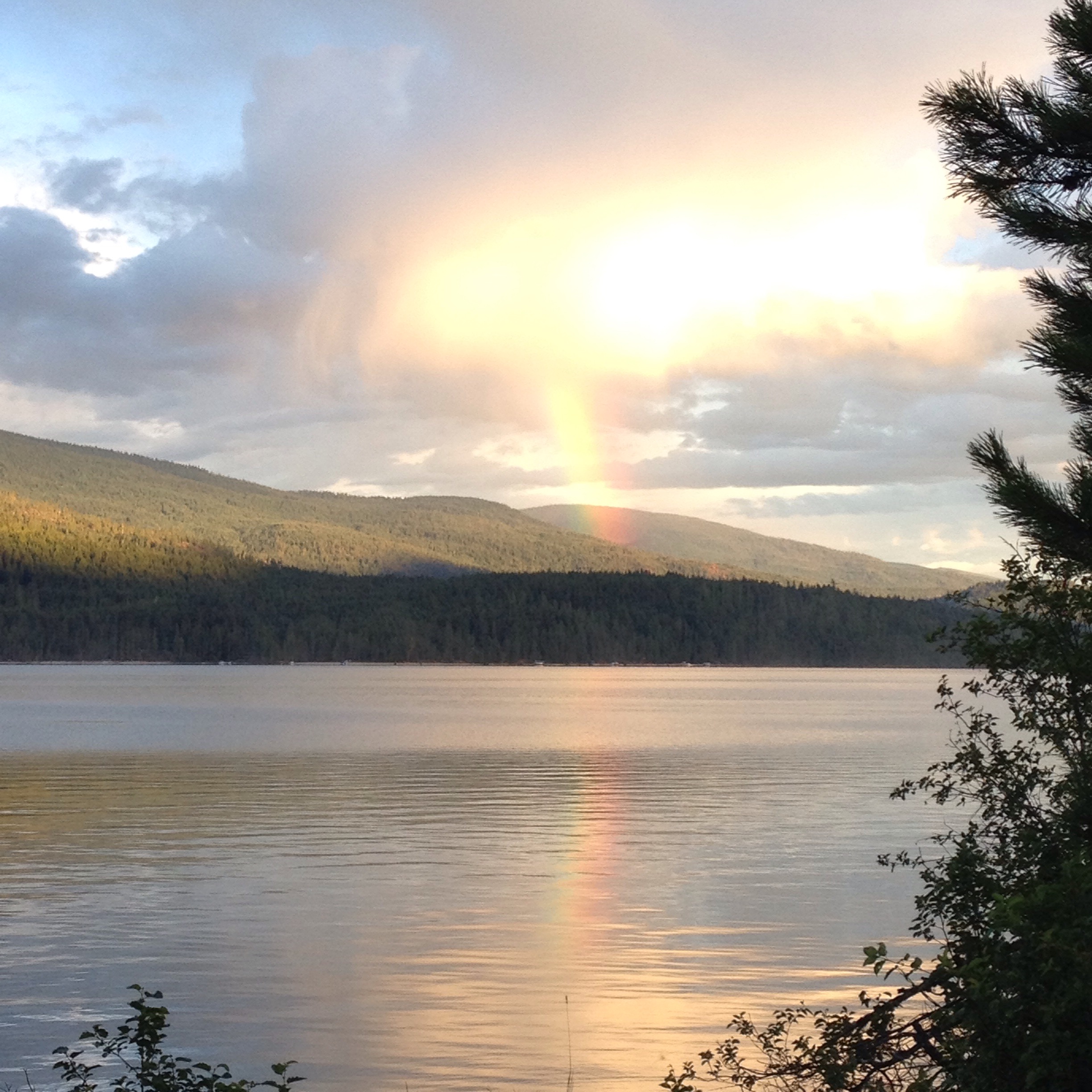
I’m on vacation for a week. My job is such that taking vacation is becoming a rare commodity, what with precious few allotted days and move-in, move-out schedules of a collegiate child, and so on. And also company policy about keeping employees in the office between Christmas and New Year. Anyway, now that I’m here I should be kicking back and enjoying the beautiful lake and getting out to do the things inmates of the city seldom do. It has, however, rained every day that I’ve been here. Not all-day rains, of course, but just enough that plans have to be interrupted or changed at the last minute. I end up sitting in the cabin playing Solitaire when I should be out getting some fresh air. So it goes.
Ironically, I am staying in the drought-stricken west. The western United States, I learned when researching for Weathering the Psalms, has been ensconced in a decades’ long drought. In fact, prior to my family trip here it hadn’t rained in quite a while. Our arrival with the clouds was, after all, mere coincidence. Still, it’s hard not to take the weather personally. I know that the weather is larger than any one person’s needs or desires. I also know that water is a commodity even rarer than vacation days, largely because of our misuse of the limited supply that we have. California’s plight has been in the news. We have large cities in water-challenged environments and people treat water like there’s no end to its abundance while the opposite is the case. Just thinking about it makes me thirsty.
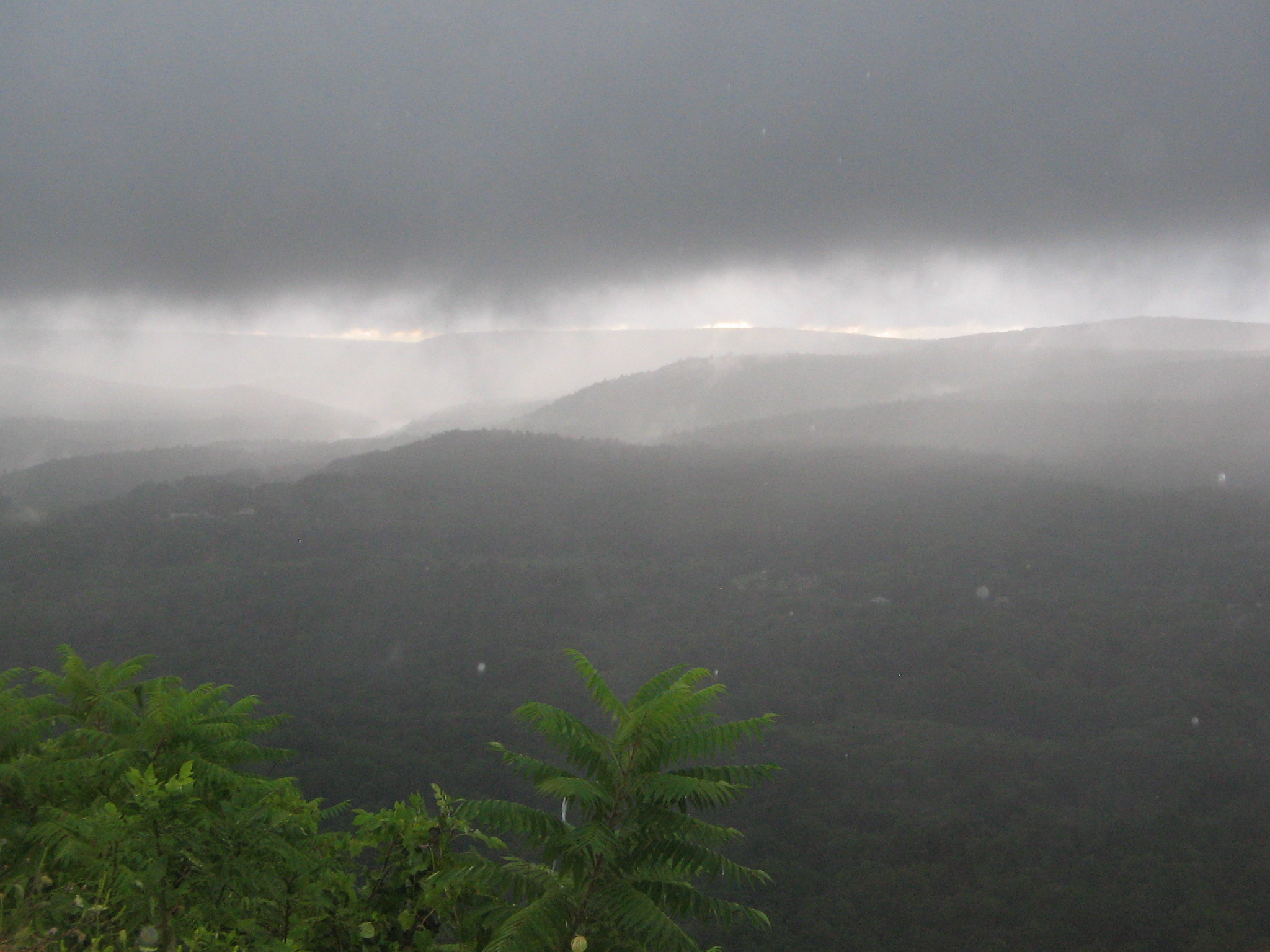
There are many things a person can go without, some of which feel absolutely essential at the time. Many vacations, I know, are extravagant. Fancy hotels, high-priced entertainment, exotic locations. Work can feel so crushing that vacation my become the one island of sanity in the midst of a hostile ocean of obligation. For me, vacation is time with family in a stripped-down, natural setting. Of course, we do indulge in some of the comforts of home, but having nothing in view outside the window beyond that which nature dictates is a transcendent experience. From where I sit, I can see nothing of human artifice. I do see clouds, however. I know that more rain is on the way. And I know that it is a gift, complain as we might, of the highest magnitude.


Weather to Panic

Over the long weekend, our furnace kicked off two days in a row. This January has been chillier than some, and we’ve been sitting around with blankets on our laps waiting for the air temperature to reach a tolerable level. We keep our place cool, in any case, partly from environmental concern, and partly because we can’t afford to do it any other way. So I was interested to see an article from the Guardian that my wife forwarded to me about the weather. I’ve been interested enough in the weather to write a book about it (Weathering the Psalms—available now!) and since I stand outside every morning waiting for a frequently tardy bus, I do tend to notice when it’s cold, raining, or snowing. The article, “I don’t care what the weatherman says when it’s just hysteria,” by Martin Kettle, makes a good point. The weather used to be information on the news, now it is entertainment. We dramatize and give names to storms as if each is a miniature apocalypse. As Kettle notes, most of us have been around long enough to know how to survive a cold snap or two. But an apocalypse?

We’ve become accustomed to the controlled environment. Many of us define our “work” as sitting in front of computers all day, tapping out virtual ideas that other people will see, indoors, and we probably don’t even have to step outside to get the message delivered. The weather might make it difficult to get to work. We might lose a day of productivity. That snow that was fun as a child has become an impairment to those adults driving to work to get inside so we don’t have to be made uncomfortable any longer than is strictly necessary. Snow never makes it into the forecast, but a storm personified with a name and with destructive intent. No wonder the biblical world saw weather as a divine weapon.

That which Kettle terms “[t]he debauching of the weather” is a sign of the times. We seem to be deemed unable to process facts. We must be entertained. How many mornings have I sat worried in the dark, wondering if I’ll make it in to work or if I’ll spend a good portion of the day trapped on a bus frozen on the Parkway? How much energy do I expend trying to decide whether I should spend extra money to take the train, even though I’ve already paid for a month of bus service? Will the weather throw itself on us all and prevent us from another day’s work? In the Psalms, the response was often one of wonder and praise. These were things only the deity could do. Now, however, we are in the realm of the media meteorologist. If they don’t entertain us, we might just turn off the television or computer and go outside to check for ourselves. If only we would we might discover one of the true wonders of nature that doesn’t require comment. It might be the ability to judge for ourselves.

DSCN0099


Weather for the Birds

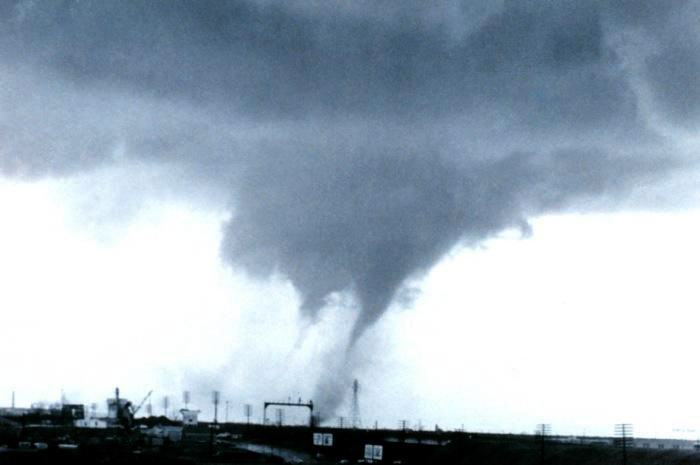
As Christmas nears so does a warm front, dashing hopes of a white Christmas in New Jersey. Well, at least there are no tornadoes coming. The weather, as my readers know, has long been perceived as a divine barometer. In a time when patience is wearing thin with religion, and weary headlines ask if it will ever finally disappear, our animal cousins seem, as usual, to pick up on clues more readily than we. An article on the BBC science page describes how a set of tagged golden-winged warblers vacated their nest a day before a tornado struck. Scientists suspect that the birds—and likely other species of birds as well—picked up the infrasound of the tornadoes that is well below human hearing range. Sensing the danger, they flew nearly a thousand miles, stopping just south of the storm’s track.

1957_Dallas_multi-vortex_1_edited

Of course, tornadoes don’t last an entire day. If the birds fled that long in advance, they couldn’t, I suspect, have heard a tornado that hadn’t formed yet. Since I’m no scientist, I’m not really qualified to offer an explanation, but I do wonder if such behavior isn’t related to consciousness. Several books that I’ve read recently have explored the concept of animal consciousness, and although we are reluctant to admit them to the realm of the self-aware, I wonder how long we can deny it. No doubt, if the birds fled (and returned after the danger had passed) there was an intentionality to their actions. Jealous of our intelligence, we must find a way to explain that animals can predict natural disasters of many kinds long before humans detect their more obvious traits. Our technology gives us seconds, or minutes, of warning. Dogs, cats, and birds know well in advance. But we are the superior beings here.

One of the problems with consciousness is that we can never get outside our own. Other people act in ways similar to us, and describe similar mental states, so we assign them the same kind of consciousness we have. Animals, not using human language, also act in similar ways to us. We call it “instinct” and continue on to the truly important stuff. I have no idea if birds can detect infrasound; I wouldn’t be at all surprised if they could. Without the ability to place it in the context of danger, however, I doubt they would take a thousand mile vacation just after their annual migration. We could learn a lot from our fellow creatures, if only we’d admit them to the conscious club and not the food club. And perhaps they might be able to explain to us why, despite all we know, religion never seems to go away.


Flight of Fantasy

Today marks the end of the AAR/SBL Annual Meeting. As the last attendees who have stayed through to the final half-day make their way through the dreaded Tuesday-slots for papers and wander the exhibit halls in search of last-minute bargains, I wonder what impact we will have made in San Diego. Many of my conversations this year included lamenting over the state of higher education, particularly in the study of religion. Religion, which led to the very concept of higher education, is now perceived mostly as little more than a somewhat unsophisticated intrusion into the cold, hard reality of business. And educating future entrepreneurs is, make no mistake about it, business. Wither the institutions go, publishers will follow. The life of the mind is a perk that we no longer can afford. And yet, as colleague after colleague attests, this is what students really find fascinating. Perhaps even important.

As we get ready to head back to the airport, I reflect how it is so much like being a passenger on a plane. We’ve purchased tickets to get us near where we want to be, but we aren’t directing this jet. The pilot, isolated from us by an unsurpassable barrier, will, we trust, get us to the designated airport. That, however, is not really where we want to go. We won’t happily loiter there. Impatiently we’ll await our baggage at the carousel so that we can wend our way back to our homes. Where is the business end in that? Isn’t it, however, what we live for? And what of the San Diego we’ve left behind? How many people will say that their lives will have been improved by having the lion’s share of religion scholars in their neighborhood for a long weekend? Will the number of homeless have decreased? Will they have found jobs?

While those of us “not from around here” ride elevators more nicely appointed that some people’s houses, the televisions meant to prevent us from growing bored from the twentieth floor to the first, show how the other half lives. It’s sunny and nearing eighty today and Buffalo has snow higher than our heads. Reporters flock to the snow-locked city and wonder at nature’s extremes. It doesn’t seem to play along with our business plans. There must be some way to make some money out of this. But I have an unconventional theory. Maybe I’ve watched Bruce Almighty too many times, but I wonder if all those prayers made by children for a snow day may have been stored up in, what scripture assures us, is a great divine warehouse awaiting release. Perhaps the doors of that storehouse have been thrown open to remind us that sometimes the business of living is simply the wonder of watching it snow. No matter how inconvenient it might be. And lives will have changed for the better.

IMG_1825


Whether the Psalms

How about that weather? Changeable, isn’t it? I have spent a large part of the last few days going over the proofs for Weathering the Psalms, the book I wrote over a decade ago. While I’m excited with having the validation that comes with publication, I worry a bit about the changes that the last decade has brought. Although I live near some impressive libraries, my time is devoted to commuting and working and anyone who has tried to be a serious scholar as a weekend warrior only knows that it is unsustainable. One element that good research absolutely and uncompromisingly demands is time. When I began commuting into New York City three years ago, I taught myself to read on the bus. As someone who easily gets car-sick, this took an enormous effort, but it paid off in the number of books I’ve been able to finish. There are limits, however. Seriously research-oriented academic books do not fare well on a noisy commute or at early hours. As much as we scholars like to think our books are riveting, try reading them at 6 a.m. Perspective makes all the difference. In short, I had to leave the main body of the text of my book as it was a dozen years ago.

There is a lot of good information there. You notice things by laying out all the Psalms that refer to weather side by side. I can’t tell you those things here, since that’s the point of the book, but suffice it to say, I still agree that the material should be published. One of the main reasons is the change in worldview over the last several millennia. Although we like to complain about the weather, for most of us it is merely the inconvenience of being outdoors that brings it to focus. We spend our days behind computer screens, living a virtual reality. But when we have to trespass outdoors—weather awaits us. For those in the world of the Bible the opposite was true. Indoors was shelter, but not insulated like today’s homes. Most of the day would be spent outdoors, weather permitting. They knew a lot more about the practical aspects than we tend to. We, on the other hand, know the science but have tended to forget the experience.

IMG_1520

My book surveys a cross-section of the biblical worldview (the Psalms) for what it tells us about the weather in ancient thought. I suspect others have begun to explore this since I wrote my humble contribution to the discussion. Today I would have done it very differently, but Weathering the Psalms was written by a scholar isolated in a seminary, literally and figuratively in the woods. The fact that other scholars had noticed the weather now and again showed me that the task, though halting, was necessary. Rereading it is like a time-capsule. These were the thoughts of a younger man, employed full-time in a kind of academic setting. Hopeful that the next job would be worthy of tenure. Believing that there was a next job. But the weather is changeable. Indeed, we know it is unpredictable. Despite its archaic cast, I look forward to Weathering the Psalms and hope that it inspires others who are isolated to keep up the effort. Even if it’s raining.


Sowing the Wind

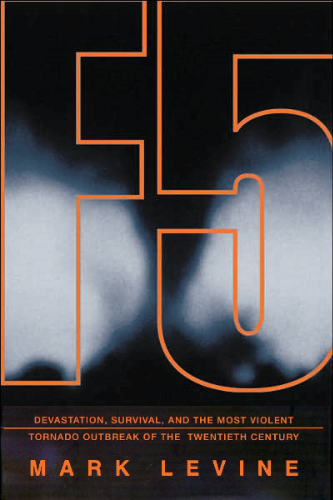
F5On May 31 in 1985, I was working at a church camp outside Uniontown, Pennsylvania when some severe storms rolled through the area. I had trouble sleeping through the thunder and lightning. I awoke the next morning to hear the news, in groggy disbelief, that tornadoes had invaded the county where my family lived. Frantic for their safety I tried to phone, but lines were down. It turned out all right—the nearest twister had been about five miles away from my home. This event was a shock because I grew up believing we never had tornadoes in Pennsylvania. I have always been terrified of them. I suppose that’s why I wrote my little book on weather in the Psalms. I just finished reading Mark Levine’s F5: Devastation, Survival, and the Most Violent Tornado Outbreak of the Twentieth Century. I’m not sure why I’m compelled to read about what scares me so much, but I suspect it’s because tornadoes have a whiff of the divine about them. Indeed, Levine’s book makes several reference to religious imagery when describing the utter destruction of Limestone, Alabama during the Super Outbreak of April 1974. It gives me little comfort that the storms that raked Ohio, Pennsylvania and Ontario eleven years later were the second deadliest outbreak following that of the book’s exploration, up to that time. There’s so much left to chance, with tornadoes.

Despite the complete lack of any intentionality behind the raw forces of nature, the phrase “finger of God” has become a fixture in the tornadic lexicon. Perhaps it is because the human perception of divine intervention has always been sporadically applied. One person’s miracle is another’s nightmare. Obeying only the complex rules of meteorology, the weather has ways of its own that even computer models cannot yet fathom. We still stand helpless in the face of the tornado. I have often thought, without a whole lot of data to back me up, that weather has played a major role in the human understanding of the divine. Quite apart from the obvious celestial orientation, the weather is easily forgotten until it turns bad, and when it does there is nothing humanly possible to do about it.

In April of 2011 a super outbreak of 358 tornadoes swept through the eastern United States and Canada, killing 348 people. In terms of damage, it was one of the costliest natural disasters in US history. And the capriciousness of the tornado stands at the center of it all. F5 is a hard book to read. The story practically turns its own pages, but the loss in human terms in the cold face of a planet that doesn’t exist for us is sobering indeed. Many religious people in the south were asking how God could allow children to be killed and hundreds of people maimed both physically and mentally for the rest of their lives. They prayed for answers that never came. And this may be the cruelest aspect of the apparently random nature of the weather. It maintains the right to kill, and prayers seem to bounce back from that brazen sky that comes just before a tornado strikes, and especially afterwards. Skies are silent. When they are not, it is time to duck and cover.


Backyard Archaeology

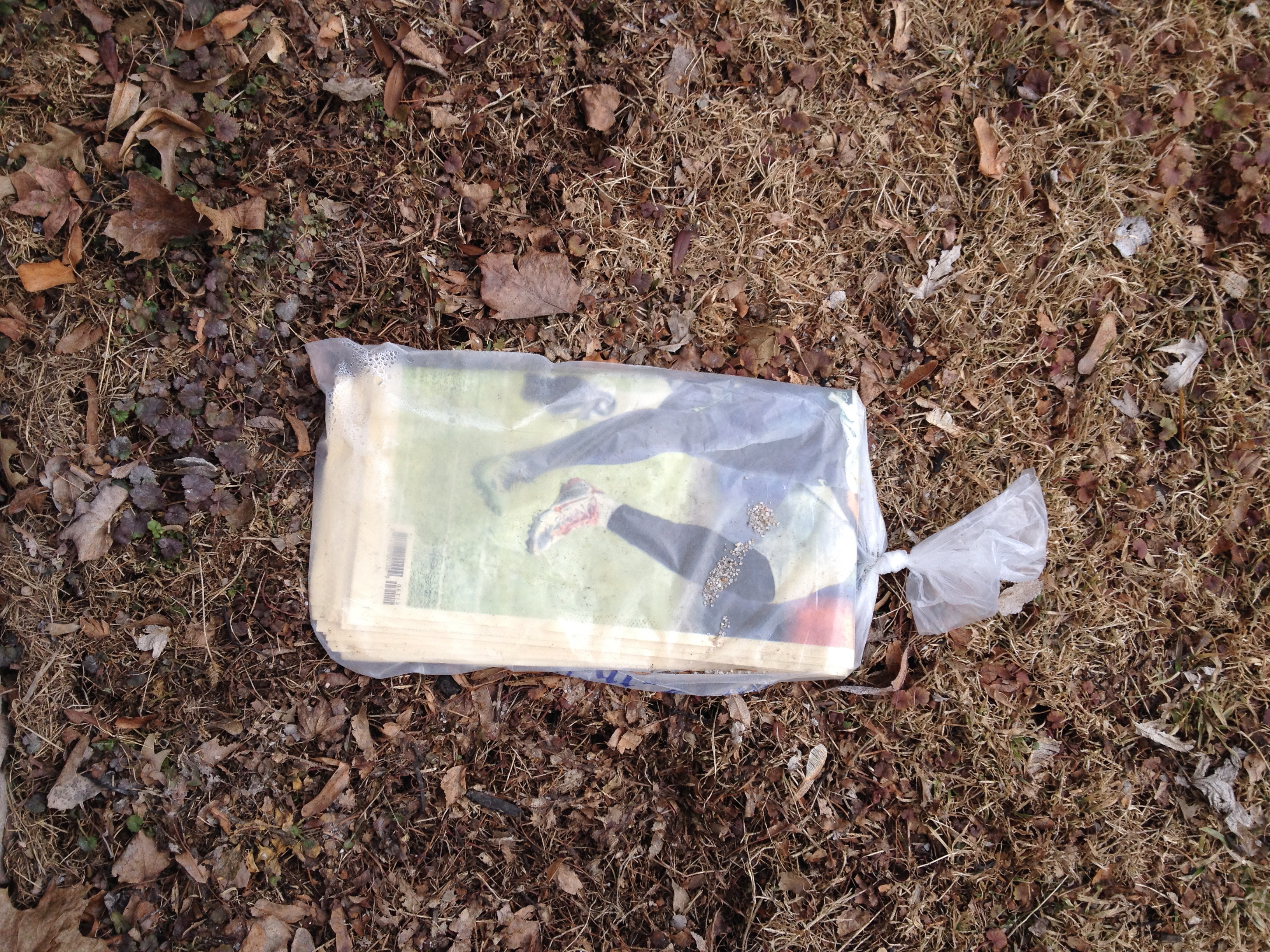
Among safe topics for discussion among strangers and casual acquaintances, the weather tops the list. It affects each and every one of us continually, and there’s nothing we can do about it. The ideal neutral subject. In fact, however, the weather is highly freighted with religious thinking, deeply sublimated. If you listen closely, you will hear it. Well, this year, at least in the northeast of the United States, winter has been the topic. We still have snow on the ground in New Jersey, and it has been here continually since January. The thaw has begun, however, and when I went to fetch the paper I noticed a newly melted item on the lawn—an archaic newspaper. Obviously the paper-deliverer missed the front steps that day, and by the time I stepped outside it had already been buried. Curious, I brought it inside to get a first-hand look at the past. It was the Monday, February 3 paper. The day after the Super Bowl. Apparently nothing much else was happening in the world a month ago. I don’t even know who played in the game.

IMG_1237

Religion and sports have a long pedigree. One of the first books I signed up at Routledge was on religion and sports in American culture. Routledge decided to sack me before the book was published, so I haven’t had the opportunity to see it yet. Nevertheless, it is clear that the meaning once provided by the strong arm of the Lord is now covered by the stronger arm of the athlete. I’ve watched in fascination as reporters question the players after the game, panning for bits of wisdom as if they might actually get us up off the couch and lead us to a few minutes of physical glory. Instead cliches trickle out: “we saw what needed to be done and did it.” “I took it to the next level.” “First of all, I want to thank Jesus.” Each one like a nugget of pure gold. I still don’t even know who was playing.

On my kitchen table, however, sits a soggy newspaper with the answers to that. The news is old news. And damp. We’ve had an entire Olympics since then, and war seems to be breaking out in the Crimea. Wait a minute, what century is this again? It seems that no matter how old the news is, it still isn’t old enough. One of the oldest news flashes received by humankind, if the Mesopotamians are to be believed, is that there is a huge flood coming. I turn on my browser and lo, a flood indeed! Noah will be released later this month. Posters began to appear in Manhattan as soon as the Super Bowl cleared out. Move on to the next big thing. And, unbeknownst to me, a newspaper laid buried beneath the snow, containing all the information I needed to know. I’m still wondering how that flood turned out.


Weathering the Psalms

Book contracts make me happy. In the case of an academic out of water, they are rare. Few people care what a PhD has to say unless s/he has a university appointment to back him or her up. Still, I wrote Weathering the Psalms while I was fully employed at Nashotah House. I carved the time out by waking at 4 a.m. to do my writing (a practice that has stayed with me ever since), and from 1995 to 2000, the bulk of the book slowly emerged. The day I was terminated at Nashotah I was working on a revision of the manuscript, a bit uncertain of what direction to go. After the trauma of that day, I couldn’t face my little project without the anxiety of association tainting the effort. It seemed to represent my failures in finding the job I knew I was meant to do. Such potent reminders soon weary even those of us who awake well before the sun.

Working in isolation, I had noticed that the weather is a very common motif in the Psalms. The problem is, any attempt to fit the evidence into an overarching scheme is artificial. I undertook a survey of all the weather references in the Psalms, and explained them as scientifically as a layman could. The result was not the smoothest reading, nor was it tied together with a strong thesis, but it was important. Although I have not been in a position to keep up with the research such a project requires, I’ve not seen anything similar emerge. The weather, however, still happens. And people still blame it on the divine. In ancient times there was no natural world. What we call nature was actively directed by the divine. The weather is probably only the most obvious example. We all know the phrase “everything happens for a reason.” This encapsulates the biblical view of the weather. This winter with its series of storms has reminded me of this, forcefully.

Photo credit: Don Amaro, wiki commons

Photo credit: Don Amaro, wiki commons

Ironically, editors started to show interest in the project only after I’d abandoned hope of ever getting it published. It was the fruit of my despair. It represented several years of my academic life, but, like its creator, it was growing older. So last week when a contract landed on my desk from Wipf and Stock, a profound happiness settled in. A sense of completion. I am not in a position to update the contents, but at least one academic publishing house sees the worth in the manuscript that came from so much personal experience. A decade is a long gestation period. I suppose if I had to write the book today it would reflect much more the experience of world-weariness that comes from not ever finding the job you know you were meant to do. Nevertheless, it is a small offering to the deity of the weather, and I am glad that, come next year, others will be able to share in my struggles to make sense of that world.


Snow Job

Snow does not get mentioned very often in the Psalms. Sometimes it surprises people unfamiliar with Israel that the Bible mentions snow at all. It does, and snow does fall once in a while on the higher elevations of the hills of the Levant. This year has been a memorable one for snow in the New York City area. Generally speaking, the coastal cities of the northeast are not known for their snow. This year, however, global warming is flexing its muscles as erratic weather brings storm after storm to the region. Interestingly, an internet rumor of a thirty-inch snowstorm (supposed to have come earlier this week) demonstrates just how gullible we’ve become. If it’s on the internet it must be true.

A story in the New Jersey Star-Ledger traces how the rumor began, starting with an experimental weather model by a credentialed meteorologist, which, in the keyboards of novices, grew to biblical proportions. Fact checking is something we just don’t bother with any more. The facile understanding of “global warming” as tropics for everyone shows that. The internet makes information—true or false—available at nearly the speed of light anywhere on the globe. Except where the power is out, perhaps due to weather. Not only does knowledge spread quickly, ignorance is just as fast. People weary of snow are perhaps more open to suggestion than others. We don’t hear our Minnesota or Wisconsin friends complaining (at least not too much).

There was a time when the standard sources of authority determined what we would believe. We didn’t accept just anybody’s word for it just because they had a Facebook account. For all the debunking that we hear about, it is easier to preach than to practice. Don’t get me wrong, sledging to work through piles of snow is not fun and the old circulation isn’t as vital as it used to be, so I have to add more layers than is practical to keep warm. But I’m not expecting palm trees and rain forests in Manhattan any time soon. Nor am I expecting a three-foot dump of snow. I know better than to trust what I read on the internet. After all, they even let me post things on it every day. Talk about your theoretical blizzard…

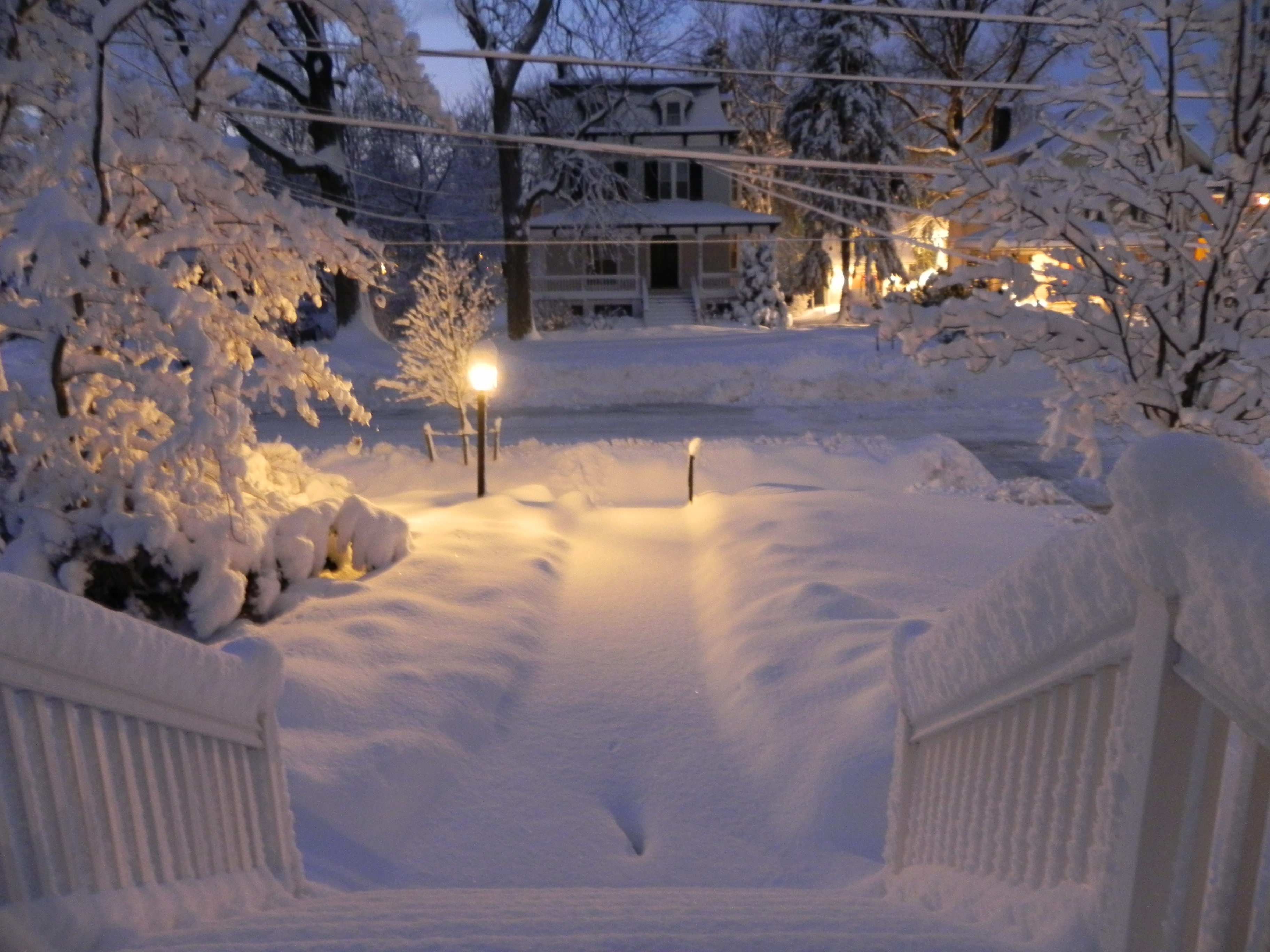
DSCN0099


‘S No Day in New York

“You’re waiting for a train. A train that’ll take you far away. You know where you hope this train will take you. But you can’t know for sure.” Yet you’ve been standing on the windy platform in Newark for twenty minutes and they’ve announced the next train to New York will be an hour late.  A man you don’t know says the PATH train will take you to New York, but New York is a big city, and you only go there to work.  It must be a snow day.  Well, almost.  I work for a company that only closes when New York City Public Schools close for weather.  Today, kids, school’s open; but all is not lost—field trips are cancelled.  And so, the constellation of companies who take their cue from NYPS truck (sometimes literally) their New Jersey-based employees across or under the river, into a city where slush half a foot deep awaits them on every street corner, and that doesn’t slow those muck-flinging cabs down at all. 

With the weather we’ve been experiencing this year, I hear a lot of people saying that Mother Nature is still in charge.  Allow me to differ.  You see, I’ve been researching the weather and the Bible for years now and I’ve come to a slightly different conclusion.  In the Psalms, anyway, it is clear that God is in charge of the weather.  Given that New York is such a sinful place, I guess none of us should be surprised.  Still, I’m not sure the Bible has got this one quite right either.  After all, I’ve walked through ice-crusted snow up to my knees for a good part of my walk to the station, and I have my coat open so the cold breeze will cool me down a little bit before I have to walk into work with crazy hair and a scowl frozen on my face.  Didn’t some great theologian once say “sin boldly?”  No, it is not Mother Nature in charge.  It is not even the deity.  It is something far more powerful than God—money.  Can’t lose a red cent when there are human resources to be utilized.

I’ve never been on a Port Authority Trans-Hudson train before, and I’m not sure where this one stops.  I heard someone say 33rd Street, and that sounds encouraging, so when the train stops I follow him across the platform.  Sheep, as any shepherd knows, will follow a random person who looks confident enough.  I emerge from the dark underground, not quite sure where I am, and I just can’t find a Psalm in my heart at the moment, unless it’s an imprecatory one.  I stepped out of my front door into freezing rain three hours ago.  My trousers are wet to the knees, and I’m a little sick from facing the wrong way on the PATH train for a lengthy ride.  The cars, I notice, are shaped like Krell.  Yes, this is a forbidden planet and I don’t know where I might end up.  Excuse me, Mr. Mayor, but I think you got it wrong.  Field trips are not cancelled after all.  And I’m not sure I’m even worshipping the right god.

Deceptively peaceful

Deceptively peaceful


Weather or Not

The internet’s nothing if not self-referential. A post by Fred Clark over on Patheos, pointed out to me by my brother-in-law, has received 235 comments (at the time of this writing) for a topic I’ve addressed repeatedly, to no avail. I know my place. In any case, the topic which brought such furor was that severe weather is caused by divine displeasure, something I’ve addressed a time or two. In fact, I’ve written a book about it. Never mind, some of us revel in obscurity. Fred is writing about the remarks of former Tory David Silvester that the UK has been suffering unusually severe weather because of homosexual marriage. That’s really old news to those of us over here in the colonies; Pat Robertson told us as much after Katrina (although he didn’t limit the sins to homosexuality). Sex tends to stir up storms of its own, regardless of divine voyeurism, while we ignore the obvious culprit—global warming. (Culprit of unusually severe weather, not of sex.)

Global warming, as a recent conversation with a very smart undergraduate confirmed, is a poor name choice. Those of us on the northeastern coastal corridor have been shivering a lot this winter, and snow has remained on the sidewalks of Manhattan for more than a single day at a time. You call this global warming? Yes. The science behind climatology tells us that warming the overall temperatures of the globe will result in erratic weather, including uncharacteristically cold and freezing in some locations, dampness in others, while yet others experience, yes, warming. We know it is real, we know it is happening. We just don’t know what to call it. Some choose to call it God’s wrath. Others choose to name it more properly human shortsightedness. After we hunted the last mammoth down, we decided to start building bigger fires to warm the ice age up a bit. Those fires have been burning ever since.

IMG_3659

My book on the weather, by the way, suggests that divine control of the elements is an essential part of the biblical mindset. To ancient folk this was a no-brainer. God is in (his) heaven and messing with the HVAC system is one of the ways (he) passes the time. Down here we may shiver, become parched, or get washed away. It’s all a matter of the divine thermostat. As Fred Clark points out, the divine temperament sets the temperature based on human activity. Sin leads to unusual weather. Unwittingly, however, David Silvester may have gotten it right. There is a sin involved, and that sin is called global warming. No deity need be involved. We have shown that humans are quite capable of messing with the thermostat on our own. And the day I get 235 comments on anything it will be a very cold day in a place famed for its heat.


Blown Away

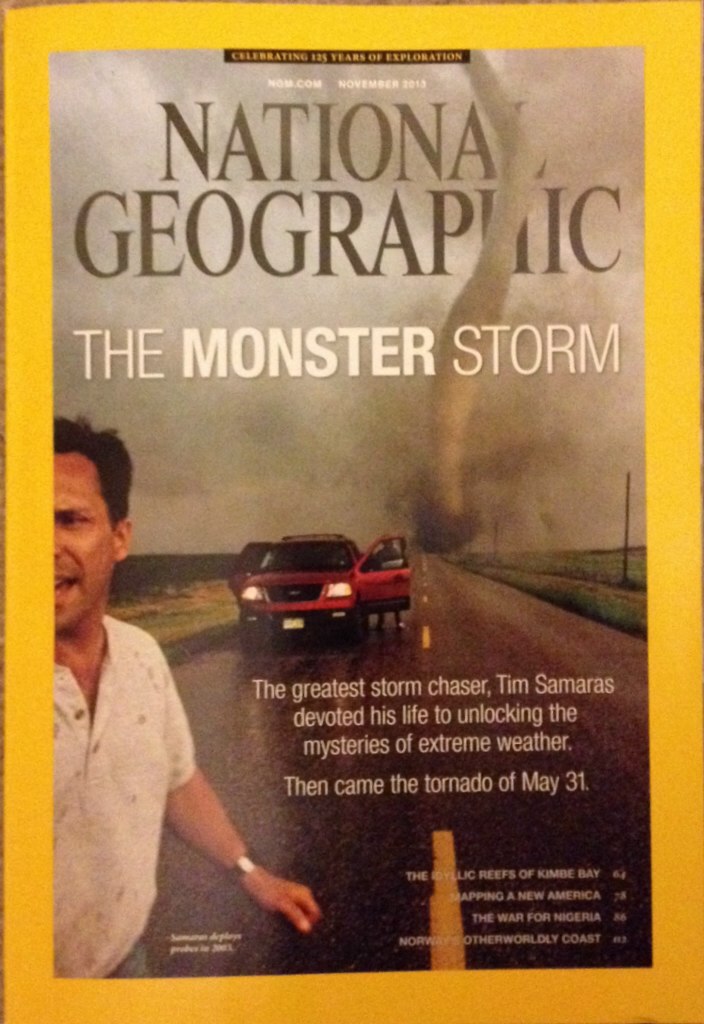
NovNationalGeoWith the weather that has dropped down over much of the US this past week, I can’t help but think of the religious implications of the weather once again. I’ve had a couple of discussions of my weather book, and perhaps it will be worth reviving; meanwhile the meteorological divine is alive and well. I recently had the chance to look through a November edition of National Geographic. We used to subscribe, but with the loss of too many jobs and the attendant moves, they became literally too heavy, and since the magazine is relentlessly prolific we finally had to donate our back issues to a loving home. In any case, this November’s issue proffers a cover story on Tim Samaras, the storm chaser who was killed by a tornado back in May. It was tornados that first led to my interest in the divine implications of the weather since the twister is often described as the symbol of an angry deity. The article on Samaras, however, took a different approach to the tornadic.

Describing the fatal May 31 tornado in El Reno, Oklahoma, Robert Draper, the article’s author, tends more toward language of the diabolical. Defining the terminal whirlwind as a “dense, moist leviathan,” Draper adopts the language of the chaos monster of antiquity. Over time leviathan came to be associated with evil (although originally it was morally neutral), even with the devil. That isn’t a biblical assessment but in a modern world swiftly becoming depleted of superlatives, leviathan has come to stand in for Satan. A few sentences later the trees are shaking “as if possessed by the devil.” Weather is often the provenance of the divine, but it can also be the tool of the devil. And since this was a fatal storm, one must be careful of blasphemy.

I have never witnessed a tornado first-hand, but I have been within a few miles of one or two. The utterly savage and random nature of the destruction translate to one of the most frightening atmospheric conditions imaginable. Reading about the growing storm, knowing that it will eventually murder the protagonist, reminds me of the stresses that led to my line of research at the very beginning. We have overcome so many of our natural predators that being completely vulnerable to the weather bestows a kind of metaphysical cast to it. We can still be frozen, washed or blown away, or overheated by the weather. It can desiccate us and begin wildfires to consume us. Its scale is immense. The origins may seem celestial, but the results infernal. Perhaps I will return to my book on the weather; it is clear that it remains one place where human power must bow before something so immense that it can only be divine or diabolical. Or both.


Bing Spring

Binghamton University is, like most institutions of higher education, home to many rituals. Back around a century ago, anthropologists were convinced that religions began as a set of inchoate rituals that coalesced into primitive belief systems. Although most anthropologists today see this as an overly simplistic analysis, I found a recent story on Binghamton’s website an example of a nascent religion. It has to do with placating, or perhaps defying, the weather gods.

Like most good rituals, Stepping on the Coat has a practical pedigree. According to Bing’s own archives, the ritual began the year that I was born. An undergrad that year, overwhelmed by an April snowstorm, removed his coat and stomped on it. The snow stopped. As befits a scientifically inclined institution, this was initially chalked up as coincidence, but the same result occurred again the next year. Stepping on the Coat seemed to be a cure for late season snowstorms. In this year of lazy, lingering winter, many people—some of them not even students—must be seeking a cure for unseasonable weather. Perhaps Binghamton University students a half-century ago stumbled (stamped?) upon the solution. In the whimsical tributes given on the BU magazine webpage, the sacred and the profane are never very far apart.

Binghamton in spring

Binghamton in spring

I have done considerable research on the weather and its sacral implications. Most of my research has never been published, but the overarching idea, I believe, is sound. Our human perceptions of the divine are focused on the sky. Nietzsche declared that God is dead, but that death only really occurred when we penetrated our atmosphere and landed on the moon. Even then, looking up, we saw only blackness beyond. Infinity hangs, like Damocles’ sword, above our heads. We may pollute our skies, we may shut them out with artificial walls and ceilings. We may even punch through them with rockets. But our gods are up there, somewhere. And they are the ones who dictate our weather. The human response is up to us. Do we sit inside and complain, or do we stomp the coat in defiance of an uncaring deity? Binghamton is a green university, so that even amid the burgeoning religion of coat-stepping, there is a real awareness that when the weather goes awry in this industrial era, we know where the blame truly lies. As humans, however, our religious inclinations will insist that we continue to step upon the coat and claim the whole earth as our prize.


Secret Life of Clouds

As April showers linger into May, I am reminded of April’s issue of Discover magazine. I picked up a copy on my way to Santa Barbara, and although much of it is beyond me, the article about microbes causing rain seems apt on days like today. Although I move in small circles, I hear many people commenting on how weird the weather has been this year. Mornings cold enough as to require a winter jacket, and evenings where a light sweater is almost too much. And the rain. Now, I realize that weather is always a decidedly local phenomenon, but apart from the rare reader in Antarctica or the Atacama Desert, we all know rain. In the biblical world the rain, as with so many inexplicable things before the birth of science, was in the provenance of providence. God sent the rain as a kind of blessing to a parched land. Thunder and hail, however, we sure signs of his displeasure. Discover suggests that maybe the answer lies in some being that is tiny rather than astronomically large.

The question that has frequently eluded answer among meteorologists is why some rain clouds rain while others don’t. No one really knows what the trigger might be—thus cloud seeding has often been a hit-or-miss proposition. Douglas Fox explores the possibility that, in his words, “The Clouds Are Alive.” Scientists can now measure the microbial life that survives in the sub-frigid temperatures high in the atmosphere above us. Amazingly we continue to discover that where we once thought conditions were too hostile, life manages to thrive. When I was a child scientific orthodoxy declared deep ocean trenches near volcanic vents far too acidic for anything to survive. Now we look at the clouds and see life. Not exactly the angels some theologians expected to find hovering above, but life nonetheless. And if the microbes are there, they might survive on a world as chilly as Mars (which, I hear, is even chillier than our apartment in winter).

One of the favorite gaps for the famous God-of-the, is the weather. As a symbol of what is beyond human control, indeed, the largest perceptible environment in inner space, the sky remains aloof from our tampering. Even so we’ve found ways to pollute our firmament. And now we’re discovering we’re not alone up there. The idea that the clouds are full of microbes sounds more like a Stephen King plot than an intelligent design. Actually, it is good old evolution in action. Life is surprising in its ubiquity. We’d once convinced ourselves that it was rare and could only thrive in environments similar to ours. Now we know that even on a terrestrial scale of survival, we are wimps. Every cloud, they say, has a silver lining. Little did they suspect that the light might be shining off of microscopic life.

The life from above


Baal Necessities

Baal has been on my mind lately, despite the limited time I’m able to dedicate to research. You see, Baal and I share a common interest in weather. One of those people whose moods synchronize with the atmosphere, I have always felt what the sky projects. So when a colleague asked me to lecture his class on the Baal Cycle, I felt it was a kind of catharsis after all the gray skies and snow we’ve had this year. Baal, or properly Hadad, was doyen of the skies. In modern perspective it is often difficult to realize that the seasons and climate of ancient Aram were quite distinct from our own. Whatever came from the sky came from Baal.

In the documentation we have on this god, we find him particularly associated with thunder, lightning, and rain. These were more common in the Mediterranean basin than the snows of the higher elevations. It stands to reason, however, that Baal meted out the weather to the denizens of Ugarit, no matter how wet or cold. Even his daughters’ names reflect their meteorological roles. Thunder and lightning may be the most dramatic expressions of divine power, but nothing makes you shiver like a good snow.

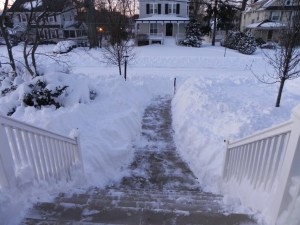
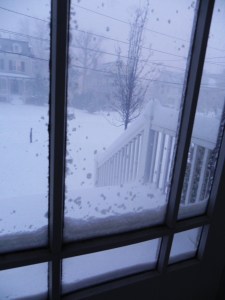
It is difficult not to take the weather personally when my long commute days are permeated with ice and snow. Continuing a pattern initiated last spring semester, my lengthy drive to Montclair has been accompanied by snow each class session I’ve been assigned so far this semester. Even the students have begun to notice. One co-ed asked why it always snows when I’m teaching. Meteorologists may have their naturalistic explanations, but somewhere deep down, I’m afraid that Baal has it in for me. It’s time to go and shovel the front steps again.

A Baal's eye-view