Mad Charles

Moving to New Jersey was made easier by Weird N.J. I found out about the magazine while still domiciled in Wisconsin when the series of books produced a Weird Wisconsin edition. I read it cover-to-cover and learned about the magazine. When weirdness would have it that we’d be moving to that self-same New Jersey, I began reading the magazine religiously. Lately, however, it has become more mainstream and less weird, but still, it is a great source of local information. We landed in Somerville because of its educational reputation and closeness to Piscataway, where I worked. I’ve always had a thing about being able to pronounce the name of the town in which I live (and I’ve even resided in Oconomowoc), so Piscataway was out. In any case, Somerville High School has an engineering program and the expected robotics team that goes along with such pedagogy. When my daughter joined the team, the whole family was drawn into four years of endless fundraising and promotion for an underfinanced club. So it was weird when I saw a story called “Rock em’ [sic] Sock ‘em Robot: Somerville N.J. vs. Mad Charles, the World’s First Singer Songwriter Karate Robot” in the latest Weird N.J. In my four years in the club, I’d never heard of Mad Charles.

Robots and religion are topics I’ve often related on this blog, so I read with amazement that about two decades before FIRST Robotics ever got its start, there was a somewhat famous robot in Somerville. Eugene Viscione was the inventor of Mad Charles, a robot that was built to help improve karate moves. The robot, as often happens in small towns, went on to other things, such as cutting records that, according to the article by J. A. Goins, are quite rare. In the 1970’s, however, Mad Charles was a local sensation, now all but forgotten some four decades later. There were even Mad Charles tee-shirts available. While we sat dreaming up new ways to get money out of the locals, and even set up a booth for the Somerville street fair not far from where Mad Charles at one time could have been found, nobody mentioned the karate robot. I doubt anyone had heard of it.

History is a fickle friend. Of course, being from a small town myself, I know it is very hard to get noticed, and even harder to be remembered. So those sleepy, pre-dawn weekend bus rides to robotics competitions, it was sometimes easy to consider how one gets overlooked. This past November, many hardly noticed as NBC didn’t make a big deal of it, FIRST robots opened the Macy’s Thanksgiving Day Parade. Somerville’s latest robot was not among the horde (we have always had a problem keeping enough charged batteries on hand), but as the robots rolled through Herald Square, I was thinking of Mad Charles and a legacy that has been forgotten. Come to think of it, I guess that is weird after all.
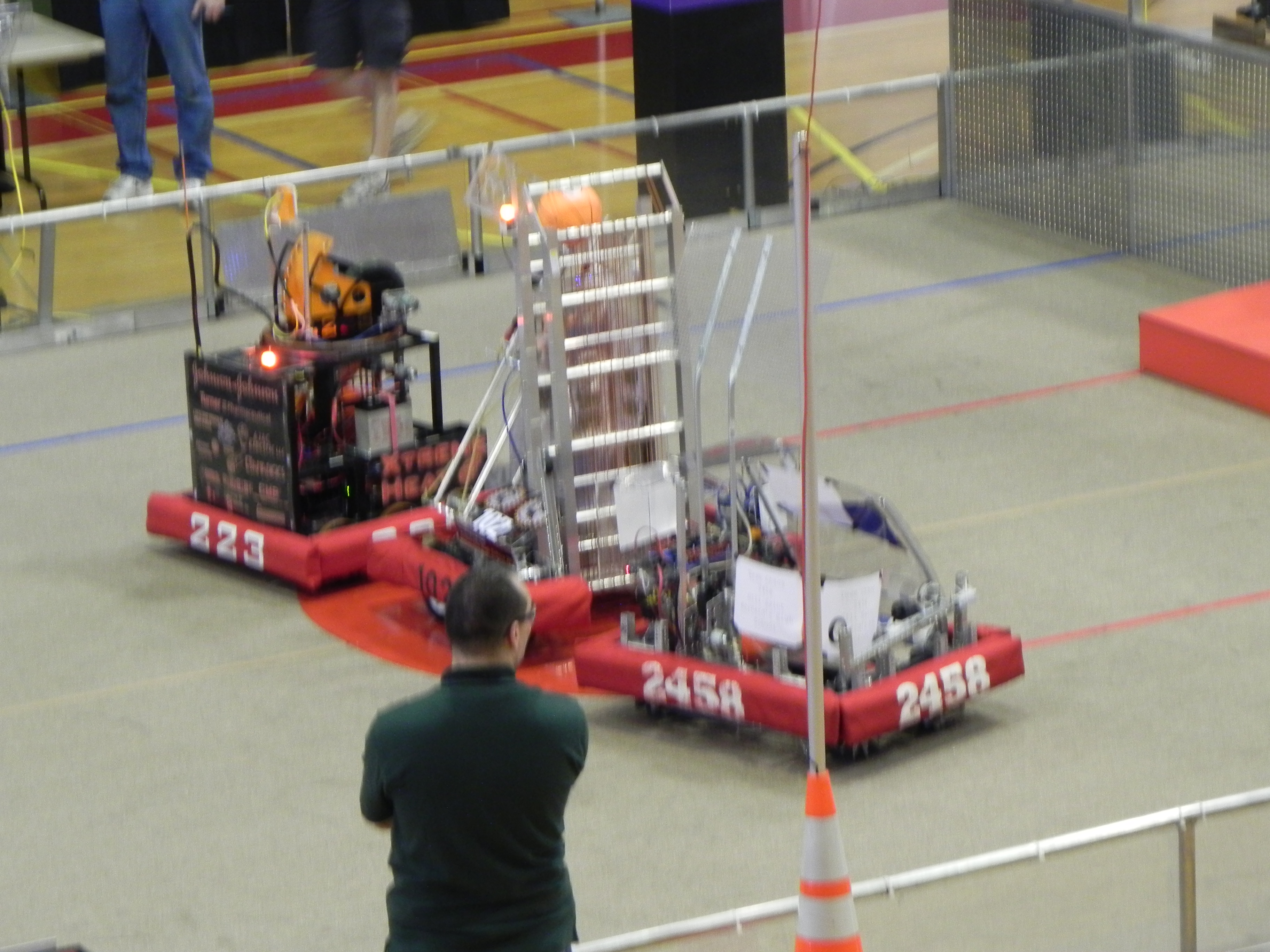
A Somerville robot (center)
A Somerville robot (center)


Skullduggery

Perhaps it’s just what I deserve for reading Stephen King’s Pet Sematary, or maybe it is just one of the perks of living in New Jersey. On the front page of today’s New Jersey Star-Ledger is a story of grave robbery. Two recent graves, one eerily reminiscent of King’s novel, have been plundered for what officials are calling a “non-traditional religious practice.” If the locally popular magazine Weird NJ is to be believed, the state hosts many religious groups that fall into the non-traditional category. This is a predictable by-product of religious freedom; some people find religious fulfillment in idiosyncratic rituals. And all religions are concerned about death.

“Some religious sects use human remains in ceremonies,” the journalists state matter-of-factly. The concept has an ancient pedigree, even in orthodox varieties of religion. The macabre practice of keeping a bone, or occasionally a whole body, of a saint for veneration is cut from the same cloth. In King’s novel, the darker side of resurrection is explored. We miss our dead, but do we really want them back here with us? The use of human bones is disturbing because it suggests the rest and sanctity of the dead has been violated. Perhaps a Halloweenish horde of restless deceased will be unbound among us. We prefer our dead to be left in peace.

Perhaps it is that lives filled with the turmoil of our frenetic scramble to stay ahead of tragedy look forward to death’s eternal slumber. Anything that suggests the dead have been disturbed sends ripples through the psyche of the living. While visiting an ancestral plot some years ago, I discovered that vandals had tipped over the tombstone where my great-grandfather and several great uncles rested. No caretaker was on duty at the remote cemetery, so I found the address and mailed a request to have the stone set back in place. The image of that fallen stone distressed me for several days. Those who rob graves likely do not take the distress of family into account – their religion requires human remains and we attach great significance to the inert matter that used to be one of us. It is an impasse. Religions make demands and those who get in the way, either living or dead, often end up violated.

Even the dead mourn


Devil Went Down to Jersey

I have to confess to being a fan of Weird NJ. For those of you not fortunate enough to live in New Jersey, Weird NJ is an unconventional travel-guide published twice a year, celebrating the strangeness of the state. Ironically, I discovered Weird NJ while living in Wisconsin. I was attending the 150th birthday celebration of a couple of friends (combined ages, not paranormal!) where one of the gifts was the then recently published Weird Wisconsin. After the original magazine had caught on, books about individual states were commissioned and this was the first one I’d encountered. My wife knows that look in my eye, so on my birthday that year I had my own copy. Even though it is written for a decidedly non-academic readership, I learned more from it than most textbooks I’ve read. When New Jersey loomed large in our future, I added the book version of Weird New Jersey to my growing collection and soon came to rely on it as a repository of local folklore and interesting places to visit.

Thanks to Matt for permission to use his art, see Matt Can Draw for more!

(Thanks to Matt for permission to use his art, see Matt Can Draw for more!)
This short flight of fancy relates to religion in a very decided way. Within the pages of these publications many locations (popular with teenagers, I’m guessing) bear the moniker, “Devil’s —“ where the space may be filled by any number of nouns: Footprint, Kitchen, Pit, Pathway, Tree, or even Tea Table. This decided interest in naming places after the dark lord seems whelming, even for New Jersey, home of the infamous Jersey Devil. The need to have an evil entity to explain the darkness in our lives is very powerful. Certainly it is not limited to New Jersey as the well-known examples of Devil’s Tower, Devil’s Lake, and Devil’s Postpile attest (although mistranslation may frequently be responsible). Those cultures bound by a monotheistic outlook mark their fears with the Devil.

A relative latecomer to the Bible, the Devil had not been available for earlier attributions of evil. Thinkers of the pre-diabolical period reached widely varied conclusions as to who or what caused the troubles they experienced. Some blamed God while others simply accepted the vicissitudes of circumstance. (Then again, they didn’t have New Jersey as a frame of reference.) Once the Devil entered the picture, the problem of good and evil took on a sharper focus. That sharp distinction, however, frequently belies human experience where issues and situations are seldom as clean cut as they seem.