Out There

While Amazon Prime includes a few A-list horror movies, those that it does I’ve already watched.  Since I can’t afford to pay for this habit, I watch what’s free.  That brought me to the horror comedy There’s Nothing out There.  Written and directed by a twenty-year-old guy, it’s kind of what you might expect.  Its main claim to fame, apart from being a low-budget monster flick, is that it anticipates Wes Craven’s classic Scream.   The latter is famous for being so self-aware.  One of the characters keeps telling the others what happens in horror films and, of course, those things happen.  Although There’s Nothing out There is silly, one of the characters does exactly that.  In the funniest moment in the movie he looks directly at the camera and says “It’s a distinct possibility” in response to one of the girls asking “So you’re saying we’re in a movie?”  Craven didn’t borrow that, but then, Scream is a landmark.

So what’s it about?  There are seven young people who head to a cabin in the woods.  Actually, it’s a regular house, and quite a nice one at that.  The three couples are there for sex but the single guy (Mike) is the horror expert and gets on everyone’s nerves.  He’s right, of course, that there is a monster on the loose.  A slimy green thing with a huge mouth full of pointy teeth, has fallen from space into the neighborhood and it slimes the guys, digesting them, and tries to mate with thee girls.  And if it shoots lasers into your eyes you become its servant, helping out with its mission.  The kids are picked off, of course, with Mike surviving along with one of the couples.  Before they can stop the monster a plumber also gets eaten.

Horror comedy is a strange genre.  It tends to work because there are elements of humor in much of horror.  It’s not all blood and gore—the best examples use that sparingly, in any case.  And horror comedy doesn’t really frighten since it’s pretty clear that it’s being played for laughs.  Sometimes such movies venture into the bad realm—there’s a reason some movies are free on Amazon Prime—but at times they actually have quite a bit to offer.  There’s nothing scary about There’s Nothing out There.  It’s the kind of movie that tends to grow into a cult classic over the years, however.  And while it’s not A-list material, it’s still worth watching for free.

Say Can You See

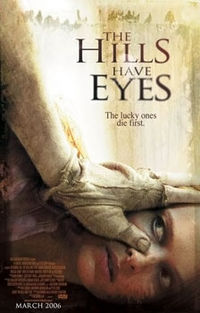
Remakes of classics. It is my sense that a classic has earned its place in its own constellation for a reason. Remakes seldom attain the je ne sais quoi of the original, but sometimes I have trouble telling them apart. I like scary movies—the classics anyway. In recent years various directors think they can improve on the masters and some of us get confused about what’s what. So it was that I came to watch the remake of The Hills Have Eyes without having seen the original Wes Craven version. As is typical for remakes, the writing tends to lack the flare that often characterizes the original vision. The story may be similar (in this case I’m only guessing) but more than the names may have been changed to protect—who? I’m afraid I didn’t care for the film. Graphic violence is seldom as effective as suggested terrors, but it can make you a bit queasy nevertheless.

I decided to stay with the movie to see if my thesis of religious elements and terror would become part of the story. In the remake, in any case, the action is set in a nuclear test zone where people disfigured by the radioactive fallout of American nuclear tests prey upon the victims they can lure into their lair. So an extended family is drawn in and very few of them make it out. The pater familias is a man who trusts his gun and has no fear of walking into the dark desert alone. But before he goes—yes! Religion. The mother of the brood, it turns out, is a devoted Christian and insists on praying before the men-folk set out to try to find help for their stranded vehicle. The eponymous eyes in the hills watch them pray and then begin to prey. The confident father says, “I trust my bullets more than your prayers.” (Or something along those lines.)

Ironically (and I can’t believe it was anything beyond coincidence) both dad and mom end up dead—the father in a crucifixion pose, the mother by being shot. Neither bullets nor begging save them from the mutants who seem to live just to cause others misery. The man who trusts his gun dies in a somewhat religious way, and the woman who trusts prayers is the victim of a gun. Now, in a classic there would be some lingering on the reversal here, but the remake syndrome is eager to add gore and grotesqueness to the screen without pausing for thought. The eerie backdrop of a nuclear testing town with mannequins still intact is effective, but otherwise you know to expect Road Warriors-type action in this small, post-apocalyptic world. The fact that even this wasteland supports a moment of prayer, however, demonstrates that fear and religion are never too far from each other.


Monsters Are Due on Elm Street

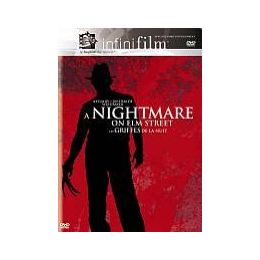
November 1984. George Orwell’s dark vision had not fully emerged, but the veneer had worn off of the fairy-tale world promoted by the evangelical, free-market professors at Grove City College. As a blue-collar kid in a blue-blood institution, I was out of place. The campus was buzzing, however, about a new movie—A Nightmare on Elm Street—for which I finally plucked up the courage to ask a cute coed for a date. I’d never seen a slasher movie before, having sampled mostly traditional monster-flick fare as a child. I felt a sense of accomplishment since some of my college friends had to leave the theater for fear. On the big screen, with no previous knowledge of the plot, the film worked for me on many levels. Last night I decided to watch it again.

My first reaction was a sense of surprise at how much of the movie I still recalled with pristine clarity. For having been nearly thirty years ago, such clarity is a rare phenomenon for many details of life, often reserved for memories of early girlfriends. A second reaction was noticing how religion featured in the film. The girls skipping rope chant, “One, two, Freddy’s coming for you / Three, four, better lock your door / Five, six, grab your crucifix.” Indeed, the crucifix features in several scenes as an ineffectual weapon against Freddie Krueger. The days of defying vampires are over when your own subconscious turns on you. In one of the early chase sequences, Freddie, raising his infamous glove, says, “This is God!” Religion and its overarching concerns with death and suffering come together with horror in that one moment. The traditional power structures of religion have lost their power to defend the troubled teenagers. The only one well adjusted is, ironically, Johnny Depp’s Glen. Even he falls victim to the revenge sought by Krueger.

Surprisingly, the scene I had most trouble recalling was the end. I recollected the bright, hazy sunshine, but couldn’t remember how Wes Craven released his audience from the drama. Of course, there is no end. Freddie came back in countless sequels, none of which I ever watched. Although I wouldn’t know it at the time, Robert Englund based the screen presence of Freddie on Klaus Kinski’s Nosferatu in Werner Herzog’s classic remake of that silent gem. Freddie is the vampire that defies religious cures. Movie villains are among the most adept practitioners of resurrection on the silver screen. The occasional E.T., Neo, or Spock will come back from the dead, but those who repeatedly return are the denizens of our nightmares. As Orwell’s vision continues to unfold in subtle ways, 1984 looks like an age of innocence before the ineffectual god worshipped by the establishment became self-image, writ large, on Elm Street.


Exorcists, Serpents, and Rainbows

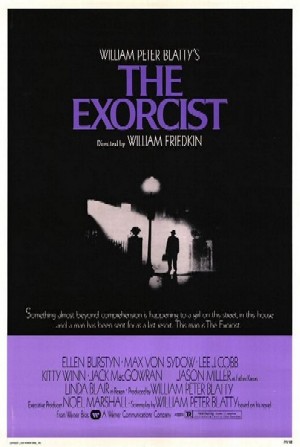
Tuesdays are release days for many new media products. I’m not sure why, but I accept it. This past Sunday’s paper ran a couple of stories by Stephen Whitty concerning the Blu-ray release of The Exorcist, counted by some critics as the scariest movie of all time. The press around the original release of the film in the early 1970s was enough to prevent me from seeing it until I was in my forties. I’m done using the word “release.” In an interview with Linda Blair, the iconic Regan MacNeil of the film, Whitty quotes her as noting that the rumors of “curses” on the filming of the movie were without basis. “But other people seemed to be trying to find something that didn’t exist,” she said. That sage statement could refer to considerable aspects of a society hungry for religious answers, but ill-educated on the religious facts-of-life.

Although sorely critiqued at the time by those whose religious sensibilities had been offended (Blatty is no theologian), Whitty nevertheless notes, “It may be a film full of gross obscenity. But in the end, ‘The Exorcist’ is a recruiting poster for that old-time religion.” He correctly observes that beliefs in possessing demons and that challenged social conventions will lead to evil permeate the movie. Traditional Catholicism wins out over that foreign Pazuzu every time. Even for those with more progressive beliefs, the film is difficult to watch. Religion, in addition to criticizing films, also provides some of the best plots.

Not to be counted among those best, but illustrative of the point, is Wes Craven’s The Serpent and the Rainbow. Ever since my days at the University of Wisconsin Oshkosh students have been after me to watch this film. Confused, dream-like, and at times difficult to follow, the movie opens with a claim to have been based on a true story. It isn’t the typical zombie movie either, although it features zombies. More of an attempted scientific thriller, the film explores the dangers of tetrodotoxin, “the zombie drug” when in the wrong hands. Understated in the movie, however, is the religious nature of Voodou. This is perhaps the most obvious failing point in the story. If the movie were to be really scary, the viewer has to believe that this is possible. The skepticism of science blocks the potential for unbridled religious expression. That is perhaps why The Exorcist has retained its power over all the years. Unlike more rational explorations of the world, it allows the audience to believe in personified evil that only old-time religion can cure.