
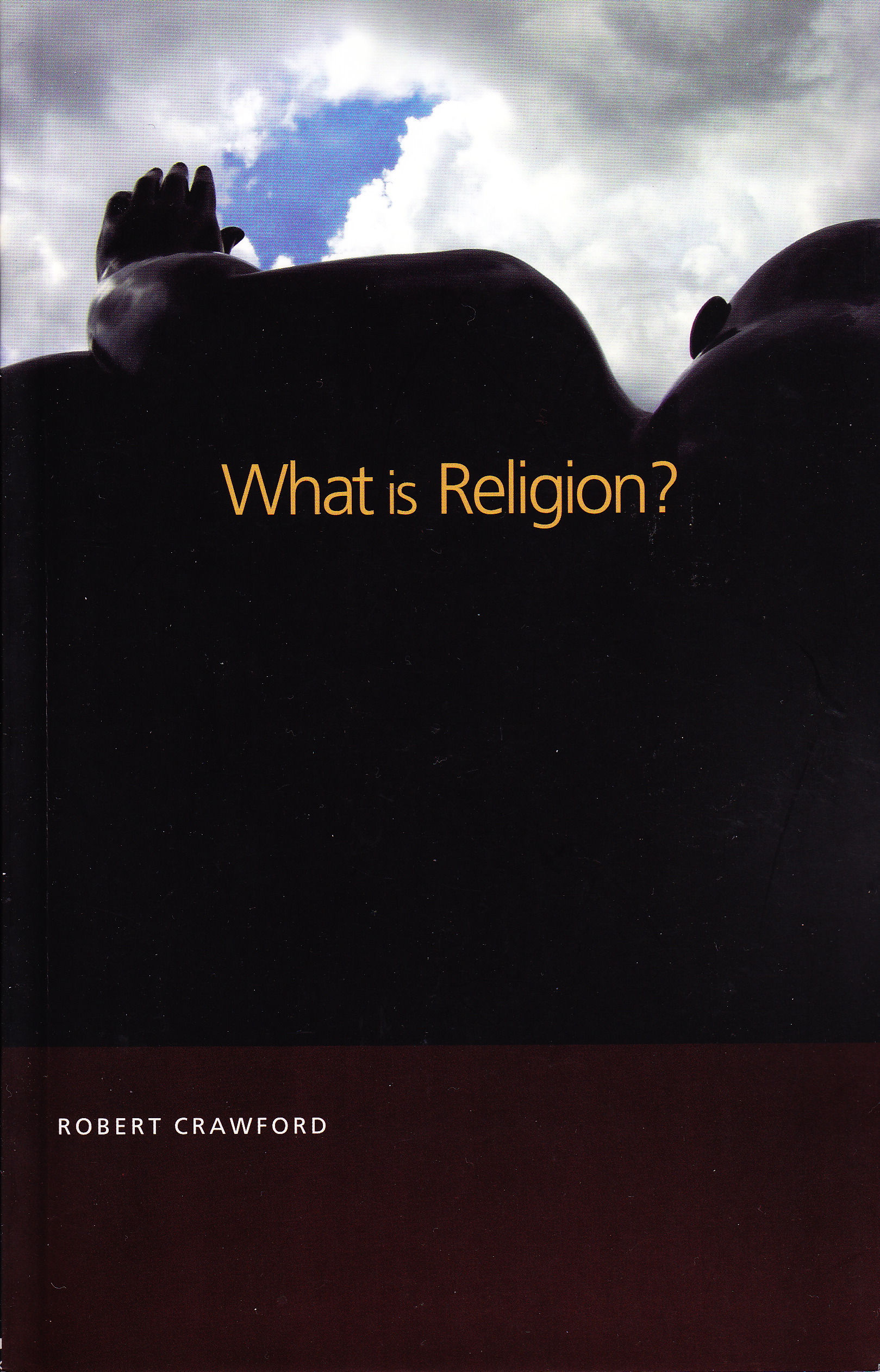
 The fundamental question of what counts as religion remains elusive. I read Robert Crawford’s What is Religion? hoping to find out. Crawford begins with the admirable assertion that in a pluralistic world all religions must learn to get along. Unfortunately, learning hasn’t always been one of religion’s strong suits. And we still don’t even know what religion is. As becomes clear within minutes of starting the book, consensus will be a stranger in this room. Nevertheless Crawford plows on, hoping against hope that comparison will reveal conformity. Religions aren’t really team players in that way.
Crawford keeps his focus on the “big six”: Judaism, Christianity, Islam, Hinduism, Buddhism, and Sikhism. Although these faiths contain the lion’s share of numbers, they in no way corner the market on religion. I wonder if Crawford’s net is really large enough. When trying to define religion, cutting corners gets you into trouble every time. No matter how we count it, religion is more than a matter of belief and broader than prescribed rituals. It must take seriously the attempts of even small knots of seekers in its preternatural accounting. Crawford sometimes gets bogged down in the details. Science plays a key role in his discussion but then the scope shifts to Christianity, a religion with more than its share of scientific troubles. Islam, for a while anyway, led the world in scientific thinking. What of Sikhs and science?
The more I read of What is Religion?, the more I got the feeling that all of these pieces don’t go to the same puzzle. Religions develop out of historical circumstances and needs. They, with a few exceptions, are not consciously devised by a bunch of eggheads shut up in ivory towers. Religions develop from people in difficult situations, whether physical or psychological. Think about it. If the Bible is to be believed Judaism grew out of slavery in Egypt (either that or Abraham’s childlessness). Christianity out of Roman oppression. Islam from Muhammad’s conviction that polytheism didn’t add up. Hinduism’s old enough to have lost its origins in deep antiquity, but Buddhism is clearly a reaction to pervasive suffering. Sikhism tried to steer between the clashes of Hinduism and Islam. We could go on, but I don’t wish to try your patience. I’m not suggesting I’ve finally done the impossible and defined religion. In fact, I may be suggesting the opposite. Religion encompasses many ways of being in the world. Crawford maybe got a start on the discussion, but it will go on as long as people have troubles.
 Steve A. Wiggins