WHO Believes?

These days it’s pretty clear that if you want to listen to anyone for advice it shouldn’t be the government.  I suppose that’s why I spend so much time on the World Health Organization’s page.  I’m no medical person and I certainly don’t understand epidemiology.  Contagion I get, because religion operates that way.  So WHO has been making somewhat frequent references to faith.  A recent status report noted that 84% of the world’s population reckons itself as religious and that many coronavirus outbreaks have taken place because of continued religious gatherings.  To that I suspect they’ll need to add political rallies supporting governments you shouldn’t trust, but what is such blind faith in leaders who don’t know what they’re doing if not religion?  People want to believe.

Religious gatherings also provide crucial support.  The community with which I associate has been using Zoom gatherings since mid-March.  It’s not perfect, of course, but during our virtual coffee hour I’ve been put in breakout rooms with people I don’t know.  I’m starting to get to know people I might be too shy to speak with in “real life.”  More than that, I’m asking myself what real life really is.  Technology has been pushing us in this direction for some time.  We relate virtually rather than physically.  I’ve never met many of the people with whom I have some of my most significant exchanges.  The internet, in other words, has an ecclesiastical element to it.  The words “church” and “synagogue” both go back to roots meaning “to gather.”  Faith, despite the stylites, is not lived alone.

WHO suggests that since religious leaders influence millions of people, if they would turn their message to prevention it could have a tremendous human benefit.  Consider how one man’s personal crusade in the mid-nineteenth century led to elections being decided on the basis of abortion alone.  If faith leaders were to take the good of humankind to heart and spread that message, it could well outstrip the virus.  Alas, but politics interferes.  Many religions also want to determine how people live.  There’s power in that.  We’ve seen it time and again with televangelists.  WHO has faith that these leaders might set aside their scriptures for a moment and read situation reports based in science and rationality.  WHO apparently has faith as well.  Until someone smarter than politicians sorts all of this out we’re probably safest meeting virtually.  Who knows—perhaps there are hidden benefits to that as well?

WHO Cares?

During this time of crisis my employer has suggested keeping an eye on the World Health Organization website.  I’ve been doing that with a nearly religious fervor.  I’ve been looking over the daily situation reports.  These not only contain advice not poisoned by government agendas, but also list the new outbreaks and provide pages of statistics.  The numbers differ from many news sources, but WHO tracks new cases, the number of deaths, and the vectors of transmission.  I’m trying to make a learning exercise out of this, instead of just further cause for panic.  More secretive world states, WHO warns, are preventing containment by under-reporting.  You’d think that in a time of global crisis that even autocracies would want to cooperate.  You’d think wrong.  

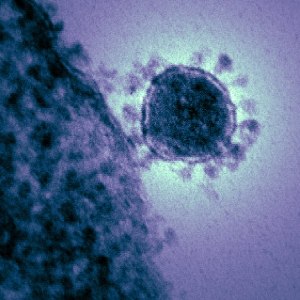
Photo credit: National Institute of Allergy and Infectious Diseases (NIAID), National Institutes of Health (NIH), via Wikimedia Commons

WHO has indicated that some nations (the usual suspects) are keeping numbers down not through effective measures, but through not reporting them.  Since honest reporting helps to trace, track, and understand transmission, such nations are essentially holding out hope that they’ll somehow bend this crisis to their advantage and appear stronger than they actually are.  I’m guessing these nations are male. 

Interestingly, the names of the countries on the overall list don’t always match those I’ve learned in my own study of geography.  The Vatican, for example, is listed as “Holy See.”  I know that’s its name, but it seems kind of odd against Lichtenstein, Peru, and Mozambique.  The Holy See, last time I noticed, had 6 cases.  The number gave me pause.  With a population of just over 600, Vatican City does seem to be a male nation.  It’s a country of clerics. 

Those in ministry toe a difficult line during a pandemic.  Governments are telling people to isolate themselves to halt the spread of disease, and yet clergy, like medical professionals, often have to put themselves in harm’s way.  I think of how Pope Francis had laid hands on the sick, even when it must’ve been difficult to do so.  Local churches have, for the most part, shut down.  Clergy are self-isolating, social distancing.  It is the socially responsible thing to do.  How it fits within an ecclesiastical view of life, however, must be quite a balancing act.  I often think of how I’d be acting if I were a minister.  Would I go to the home of someone suffering in isolation, or would I be afraid of infecting my own family?  Would I be a nation reaching out to the rest of the world with largess, or would I be a holy see cut off from the people?  I don’t have an answer.  I wonder if anyone does.