Treasure Hunting

It is raining in Midtown. On my lunch hour I’m in a deserted public square down on my knees with an umbrella over my head. My free hand is reaching under a piece of outdoor furniture feeling for something. At least this one is not located in the private regions of a metallic stag. What in the world am I doing here?

One of my sometime passions is Geocaching. Many years ago we started this as a family activity but with schedules changing and families being forced apart by work and school, I’ve taken to caching alone. For those not familiar with Geocaching, you many not be aware that in millions of places around the world tiny containers are hidden from view. There is likely one not too far from you. They are listed on different websites, but Geocaching.com is the main source. You set up a free account, get ahold of a GPS device and go looking. Some of the containers have goodies for the kids, while others are very, very small and your only reward is signing your name and logging the find online. As a family we found nearly 400 caches over the years. Since I spend my days in Manhattan I’ve been urban caching. Urban caches are very small and stealth must be used because those who don’t know about Geocaching who find the containers often take them, not realizing that they have a purpose. So that’s why I’m on my knees in the rain in the middle of New York City.

I raise Geocaching as a topic because of a recent article on NBC about Scouting. Girl and Boy Scouts often know about Geocaching. This is similar to what used to be called (probably still is) orienteering—learning how to find your way around. The NBC story, however, focuses on a different kind of finding your way around. Over the past several years, non-faith-based alternatives to the Scouts have been enjoying some measure of success. Not that Girl or Boy Scouts are explicitly Christian, but they did emerge from that social context. The article specifically cites the Spiral Scouts, a Wiccan-based group, as well as several secular, and even some overtly faith-based alternatives. Yes, it looks like many groups, regardless of religion, want to get kids used to the great outdoors.

DSCN2484

Some might fear that alternative movements signal a rend in the social fabric. I think the social fabric ought to be more like a quilt. If sewn properly, a quilt is just as functional as whole cloth, but much more interesting to look at. Girls, boys, gays, straights, Christians, Pagans, Jews, Buddhists, Muslims, Hindus—what is wrong with that? I think that after being out in the rain, I might just curl up under a quilt when I get home, and I’ll be thankful for all the diversity I see comforting me under the gray skies.
Hardsell and Gospel

When I find myself a considerable distance from my point of egress sometimes I have to take the subway to escape New York. Don’t get me wrong—I love New York, but Monday through Friday it is a place to work, not to play. Getting home is serious business. To get to the Port Authority Bus Terminal from the subway, one venue is a long underground passage. When I take this corridor, I find that it is often a favorite place for street evangelists during inclement weather; apparently the gospel goes underground when the weather turns nasty. So as I recently padded along that tunnel, I noticed an interesting conflict in worldviews. There were a series of street preachers, the central one with Bible in hand, and several others handing out tracts. If I’d had time I’d have listened to the preachers a bit; one was riffing with street language and intonation, and another was fluently flashing between English and Spanish. I took one of his tracts.

HanselGretel

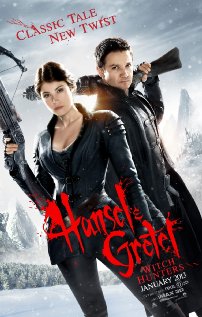
The contrasting worldview was the posters repeatedly displayed in a long line along the wall—Hansel and Gretel: Witch Hunters. The movie is due for release next week. One of the modern remakes of fairy tales in the horror/action genre, this might be a fun ride, but the idea of secular forces taking on monsters clashed with the old fashioned gospel I was hearing with my ears. Or did it? Witch-hunting is not exactly PC in the days of religious pluralism when Wicca is becoming as normal a religion as the Anabaptists. Anyone who listens to most modern day witches knows that they are not evil, so I wonder how the movie plans on setting up the “evil” that our eponymous brother and sister have to conquer. I might just have to go to the theater alone to find out.

Tract

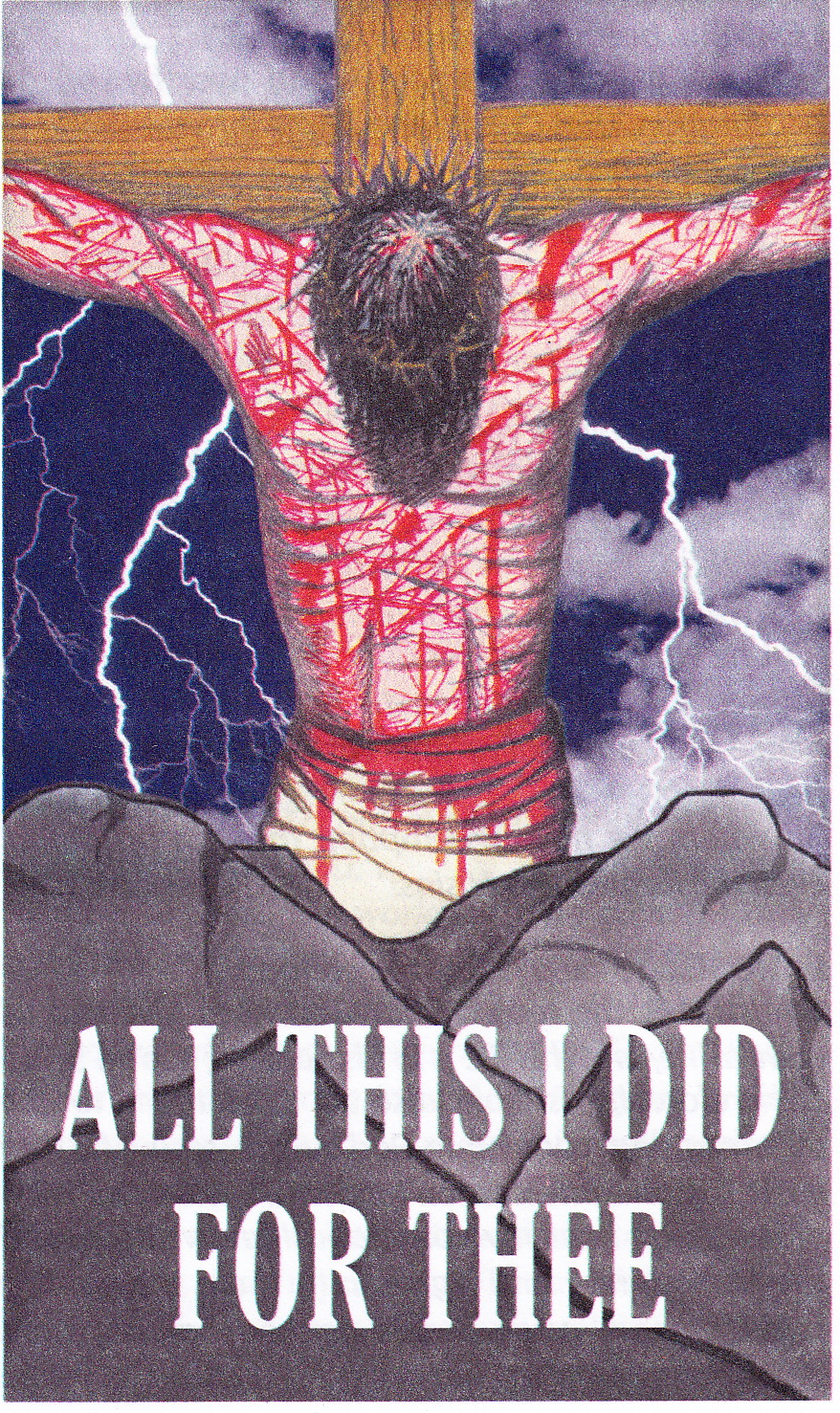
But is this really so different from our earnest street preachers below the ground? They are railing against the evil in the world, and if you follow their tracts, there is clearly no shyness about blood and torture here. The movie is rated PG-13, but what about the slip of paper I hold in my hand that shows a much bloodied Jesus hanging on a cross? Whether it’s with fancy crossbows or just plain crosses, the goal is to overcome evil. The real question is how to define it. Some, I suppose, would consider this movie a kind of evil; Gretel’s tight-fitting uniform is a little low-cut for taking on the forces of darkness, I should think. But the real evil is treating other people as enemies. And that even goes for street evangelists. If only they would admit the same for the wider world, maybe all this blood wouldn’t be necessary.


Spirituality Sampler

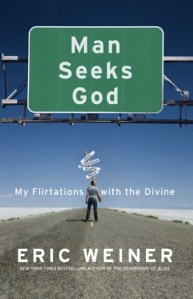
ManSeeksGodSometimes you read a book and wonder if somehow the author got into your head and fished around for material. Although I’m not Jewish, at least not that I know of, I found Eric Weiner’s Man Seeks God: My Flirtations with the Divine to be uncannily familiar at points. Not that I’ve ever been a journalist, nor have I had more than a few hundred people read anything I’ve written, but somehow I just couldn’t shake the underlying connectivity. For those of you unfortunate enough not to have read it, Man Seeks God is Weiner’s spiritual journey through various religions, seeking his God. Born culturally Jewish, Weiner never really resonated with the religious aspect until the last chapter of the book. In between, however, he shows a true pioneer spirit and tries diverse faiths, some of which are not for the fainthearted. As fits the postmodern period, he’s an authentic, intentional spiritual shopper. And he provides many laughs along the way.

Such a book must be difficult to write. There’s a lot of baring of the soul, and even a little baring of the body, at times. Weiner begins with Sufism, the mystical branch of Islam. Yes, it’s based on love. He then travels to Nepal to pursue Buddhist meditation, followed by a stint with the Franciscans in the Bronx. The only one of the “big five” he doesn’t sample is Hinduism. That might have thrown a speed-bump into his ending, though, to be fair. He makes no claims of comprehensiveness. At this point the story takes a turn toward decidedly exotic selections in the cafe of spirituality. I couldn’t read his account of the Raëlians without snorting aloud once or twice on the bus. Taoism takes Weiner to China and into a distinctly more philosophical frame of mind. He explores Wicca and Shamanism, which may be more closely related than he supposes, before coming home to Kabbalah, the mystical branch of Judaism.

Spiritual seeking is as mandatory as breathing for some people. Eric Weiner is one of those teetering on the edge of active exploration and the ability to shut out the questions, if only temporarily. Reading his confessions, it’s clear that he’s a rational, intelligent man. He made it through decades without really feeling the need for religion. When the ineffable pressed itself onto him, however, he turned to the mystical traditions. I was warned, in conservative Grove City College’s religion department, to be very careful of mysticism. The professor was dry-eyed serious as he said that seeking direct experience of God would generally lead to heresy. So there it was, in plain sight. Doctrine has precedence over the truth. Long ago someone smarter than us figured it all out. Our job? Just follow their path. I have a feeling that Weiner, having had some unexplained experiences of his own, might disagree. Sometimes you have to take out a personal ad in the spiritual scandal-sheets to get an idea what the divine really is.


Anglo-Wicca

Although it may seem the right season for witches, the revival of serious witchcraft in the religion of Wicca is a much misunderstood and maligned phenomenon. One of the persistant myths that many religions continue to perpetuate is that they go back to the very beginning. If any religion might rightly make that claim, it would be something close to Wicca, or nature religion. The fact is, however, all religions have histories and beginnings, and radical reshaping is not at all unusual along the way. In the western hemisphere, many like to claim a privileged position for Christianity. Certianly in the political world, such a claim is justified. Christianity shaped Europe, and therefore, by extention, all previous colonies of the European powers. The Christianity that shaped Europe, however, was the political powerhouse of Roman Catholicism, and later, reformed versions of the faith. The Catholicism of the Middle Ages, as may be discerned at a mere glance, shares little in common with the ideals given in the mouth of Jesus by the Gospels.

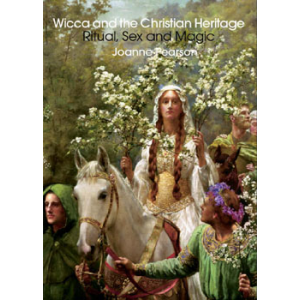
I just finished reading the provocative Routledge title, Wicca and the Christian Heritage: Ritual, Sex and Magic, by Joanne Pearson (2007). I learned a considerable bit about the modern origins of what is recognized as a tax-free (the sign of any true religion) belief system of Wicca. As Pearson points out, this Wicca dates back to the 1950s. What really caught my attention, however, was the tortured religious history of the movement’s founders. Enamored of Anglo-Catholicism (a form of ceremonial I had been force-fed for over a decade at Nashotah House), the founders of the religion (both intentional and unintentional) craved the seal of antiquity. Many of the players invented denomination after denomination of Christianity, sometimes acquiring ordinations and consecrations by hapless Eastern Orthodox bishops who misunderstood where they were spewing their blessings, in the attempt to show it was real Christianity. You need a roadmap to keep all the blind alleys straight. In the end, Wicca derived from an unorthodox combination of orthodoxy, Masonry, and Spiritualism. It is a wonder that modern Wicca appears as sane as it does.

Pearson’s book is not a full-fledged history, but more of a background to such a history. Many Nashotah House affilates, I’m sure, would rage to see time-honored names from Anglo-Catholic history alongside those often considered charlatans and posers. But when it comes to religion, even the most orthodox are very creative. Perhaps each gesture, vestment and accessory has a pedigree. None of them go back to a dirt-poor peasant who told his followers to give all material goods away. We may be willing to accept many things in the name of religion, but let’s not go overboard here. Not even the literalists do that.


Witch Kitsch

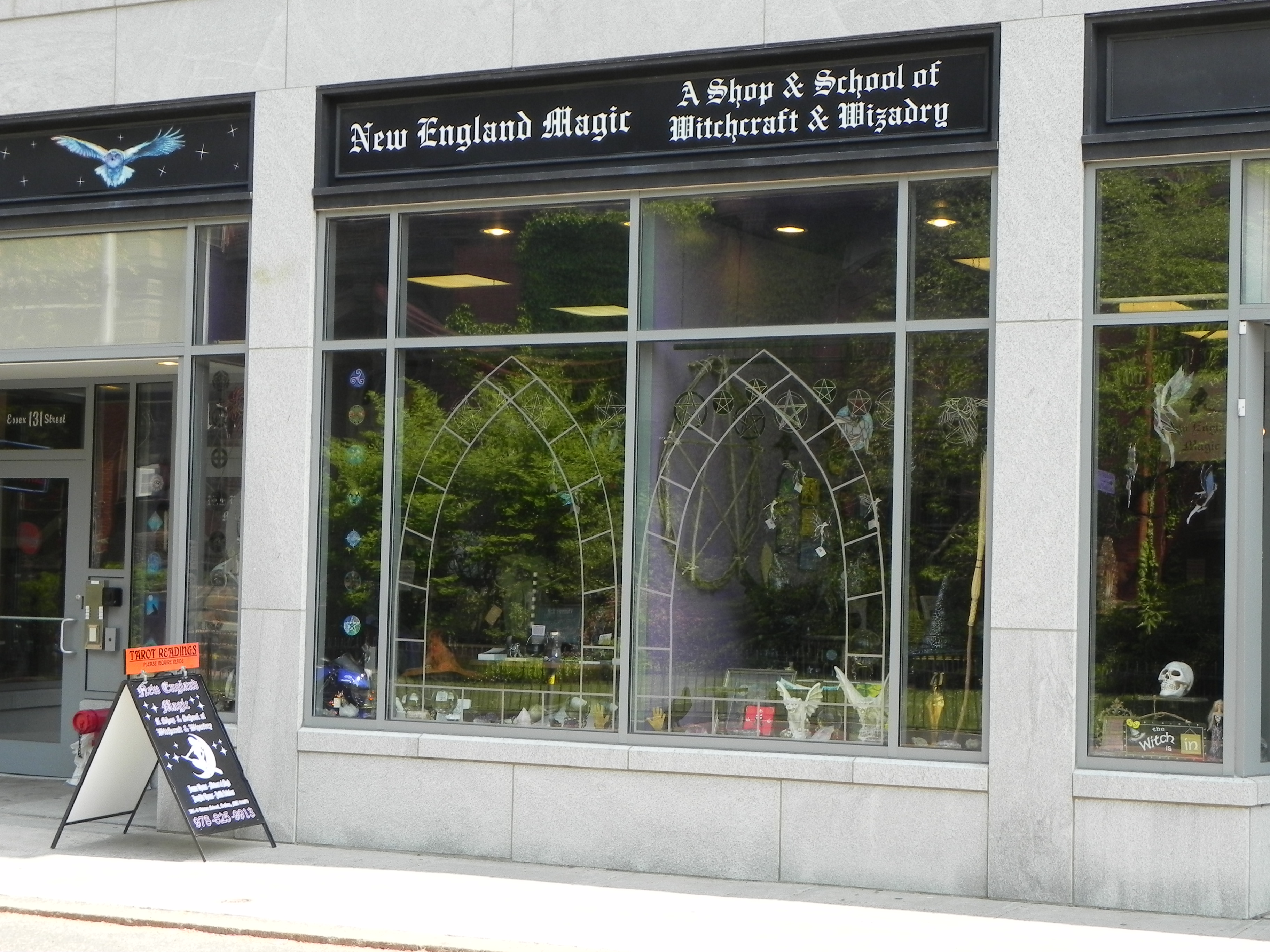
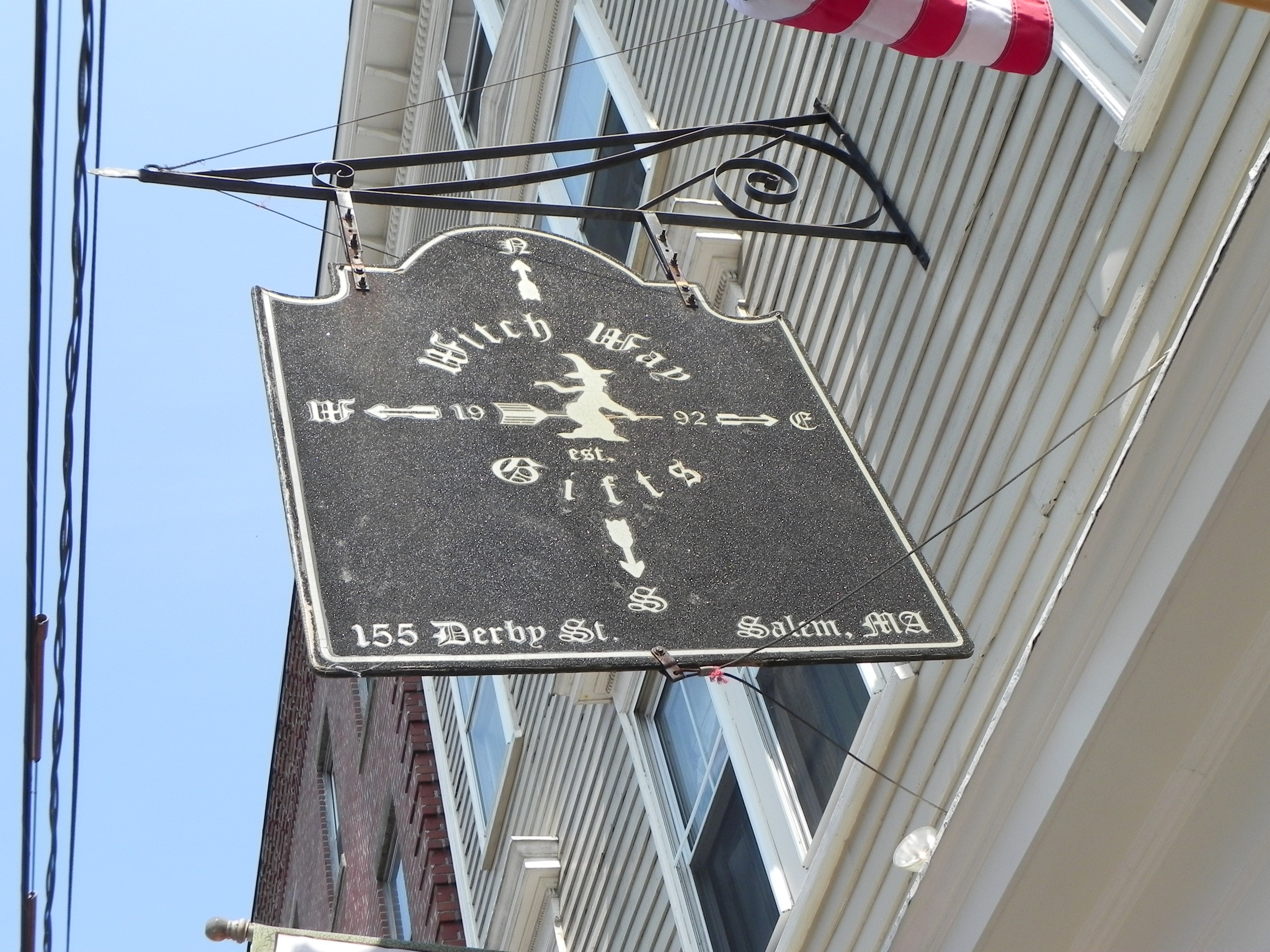
Salem is a town with a conflicted identity. The true history of the death of innocent women and men for a fictional crime is sobering. In a day when few take witches seriously—certainly not many believe that supernatural, green-faced hags fly the unfriendly skies—it is difficult to sense the utter terror the idea once comprised. We are still afraid, but our fears take more current forms. So with its lugubrious history, Salem now demonstrates itself as a model of tolerance. One local source cited the fact that eight or nine hundred modern witches live in the city. Modern Wicca, while taken very seriously by its practitioners, is laughingly appreciated by those who find release in the caricature of fictional, idealized witches. The police cars in the city of Salem even have witches riding broomsticks on them.

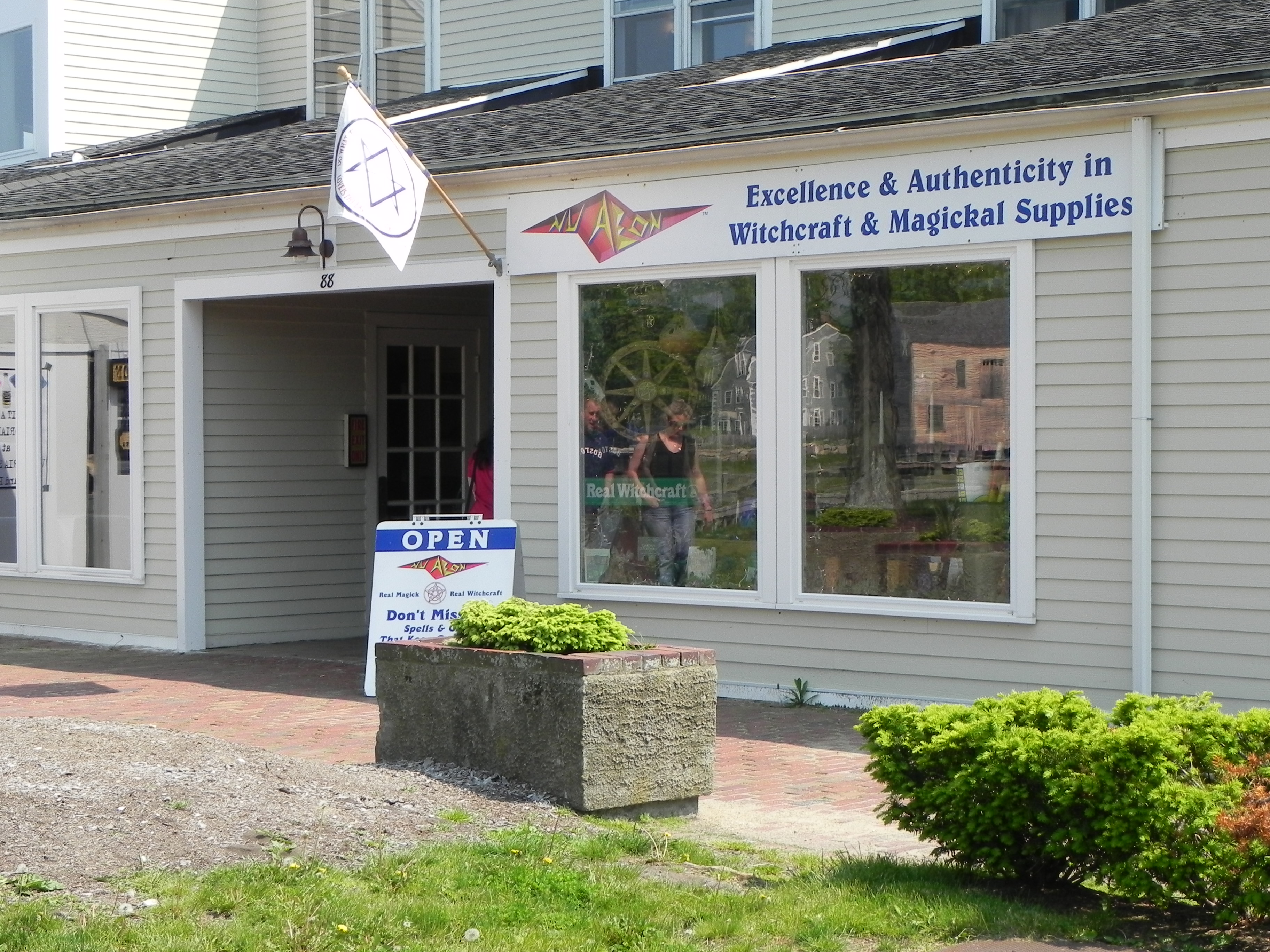
In this day of triteness and easy entertainment, it is easier to project the fictional image of the pointy-hatted witch and laugh at our past mistakes. Salem bills itself as “Witch Town” and hosts several witch museums, varying in historical accuracy. Shops throughout the town exploit this image of the harmless witch. It is difficult for the visitor to know which witch believes his or her establishment to be authentic and which is just out for a quick buck.

Places have a feel to them, as any pilgrim knows. The National Park Service, in its visitor center for Salem has a question-board that asks, “How Many Witches were Executed in Salem?” The answer underneath is “None.” Instead, twenty regular people were murdered for a crime they didn’t commit. The witch hysteria happened so early in the history of the town that it appears foundational for all its later developments. Who would go out of their way to visit yet another thriving mercantile port of the eighteenth century, were it not for the tragedy underlying it all? Like children laughing while making guilty eyes at their parents, those who prosper over Salem’s sad history realize that whether modern witches live there or not, religious intolerance is never a heritage to wear proudly. Exploiting a tragedy to make a profit is a time-honored American practice, and the real witch to fear is the one who says, “cash or credit?”


Witch World

Little did I realize when I posted an entry on witches two days ago that the news this week would itself become bewitched. Tuesday’s New Jersey Star Ledger contained a piece entitled “Catholics publish guide to witches and wizards.” Then the next day a former student posted a link to CBC News article headlined “Witches to face prison for false predictions.” Last week the Jehovah’s Witnesses left an issue of Awake! at my door that reveals “The Truth About the Occult.” Coincidence or black magic? Are we really in the twenty-first century? If only employment had the same staying power as superstition there would be no jobless rate to complain about!

The Roman Catholic Church in England and Wales is concerned about all the interest Harry Potter is generating. Afraid that tweens and teens might tiptoe into the dark side, the Catholic Truth Society has produced a booklet called “Wicca and Witchcraft: Understanding the Dangers.” The booklet, written by a former Wiccan, is a strange answer to J. K. Rowling given that Potter and friends are not members of the Wiccan faith. They are simply fictional witches that haven’t been grounded by the constraints of the Enlightenment. Fantasy grants them their magical powers, not the Devil. In Romania, meanwhile, witches beset by income tax laws are now facing hard time if their predictions don’t pan out. New laws in the economically depressed nation would require witching permits to be obtained and receipts to be given to customers. This is not to sweep out paganism, but to gain some lucre from it. The Jehovah’s Witnesses are just concerned that occult practices, often seen as mere entertainment, might lead the younger generation down the road to sex and violence.

I was disabused of belief in witches before I failed out of kindergarten the first time. Teaching religion and mythology classes at two major universities, I see students from many different backgrounds trying to improve their minds. But once the sun goes down a backlash against the empirical method is nightly unleashed. I’m not sure whether to pick up my Kant and Descartes or my mugwort and rosemary. Religion breeds these darker manipulators of magic, a force against which many fear God has no recourse. So in our world of high tech gadgets and space stations and cyclotrons, we still have to worry about witches. Theirs is a metaphor yet to be fully appreciated.

Weird sisters or strange attractors?