Flighty Thoughts

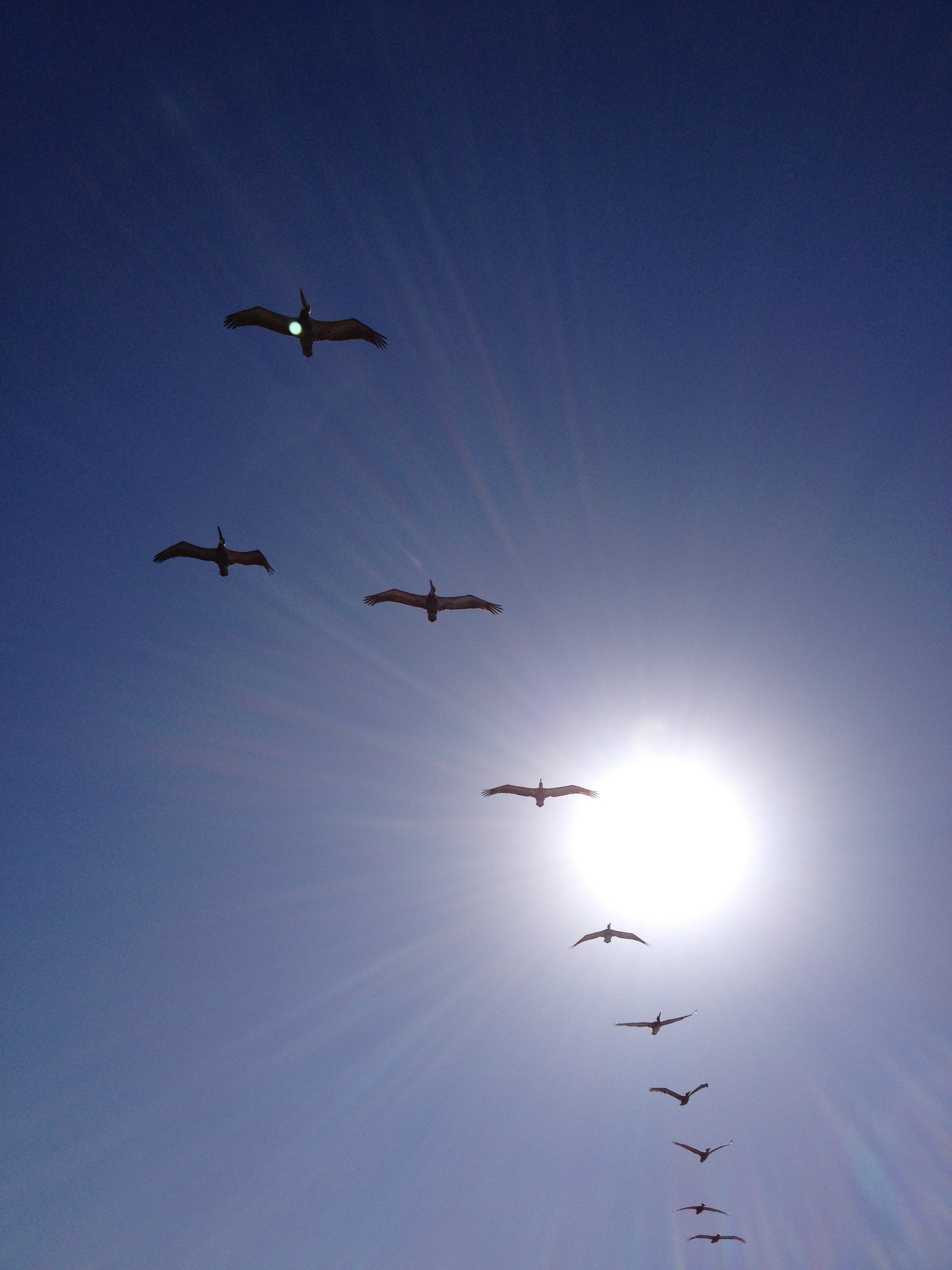
Life, domain, kingdom, phylum, class, order, family, genus, species.  My apologies if I’m bringing back bad memories of high school biology, but I’m doing an experiment.  It has to do with the class level.  (I have to confess that this has become more complicated since high school since there are a lot more of them than I remembered.)  Specifically, I was thinking of those of us with backbones (which seems to exclude many congressional Republicans these days), namely fish, amphibian, reptile, bird, and mammal.  I read somewhere—I can’t recall where; I seem to be reading all the time—that the only other order of animals that human beings see every single day, apart from other mammals, is birds.  I suppose some of this depends on location, but it seems to be true even for landlubbers who don’t work in zoos.  I’ve been watching, however, to see if I do see birds every day.

I work in an office with two windows, one facing south and another facing west.  There are trees outside the west window and during spring, summer, and fall birds are abundant.  Yes, I see them every day.  Winter, however, is a bit more dicey.  Songbirds famously either migrate or retreat into more sheltered places for the season.  The other day, during a cold snap, I got to thinking I hadn’t seen any birds at all.  The only thing that rescued the allegation was that I remembered I saw some birds that I startled out on my jog, before it was fully daylight.  The rest of the day I keep my peripheral vision on alert for any motion outside my windows.  Late in the day I saw a crow dart between two trees.  I do see birds most days, but I’ll be keeping a watch this winter for birdless days.

It’s not that I want to prove this author wrong—I can’t even remember who s/he was.  No, this experiment is driven by pure, naked, curiosity.  I’m pretty sure that the author wasn’t writing in a literalist tone (that’s more of a problem with my wiring).  The point that was being made is that people pay special attention to birds since they are so prevalent in our world.  They’ve adapted from conditions of arctic to desert and they can get around many obstacles that might prove troublesome to our class, even bats.  I know that I rarely see amphibians, reptiles, or fish.  Certainly not on a daily basis.  So birds do seem to be top of the class, and, so far, I have seen at least one every day since reading this from a fellow mammal.


O Deer

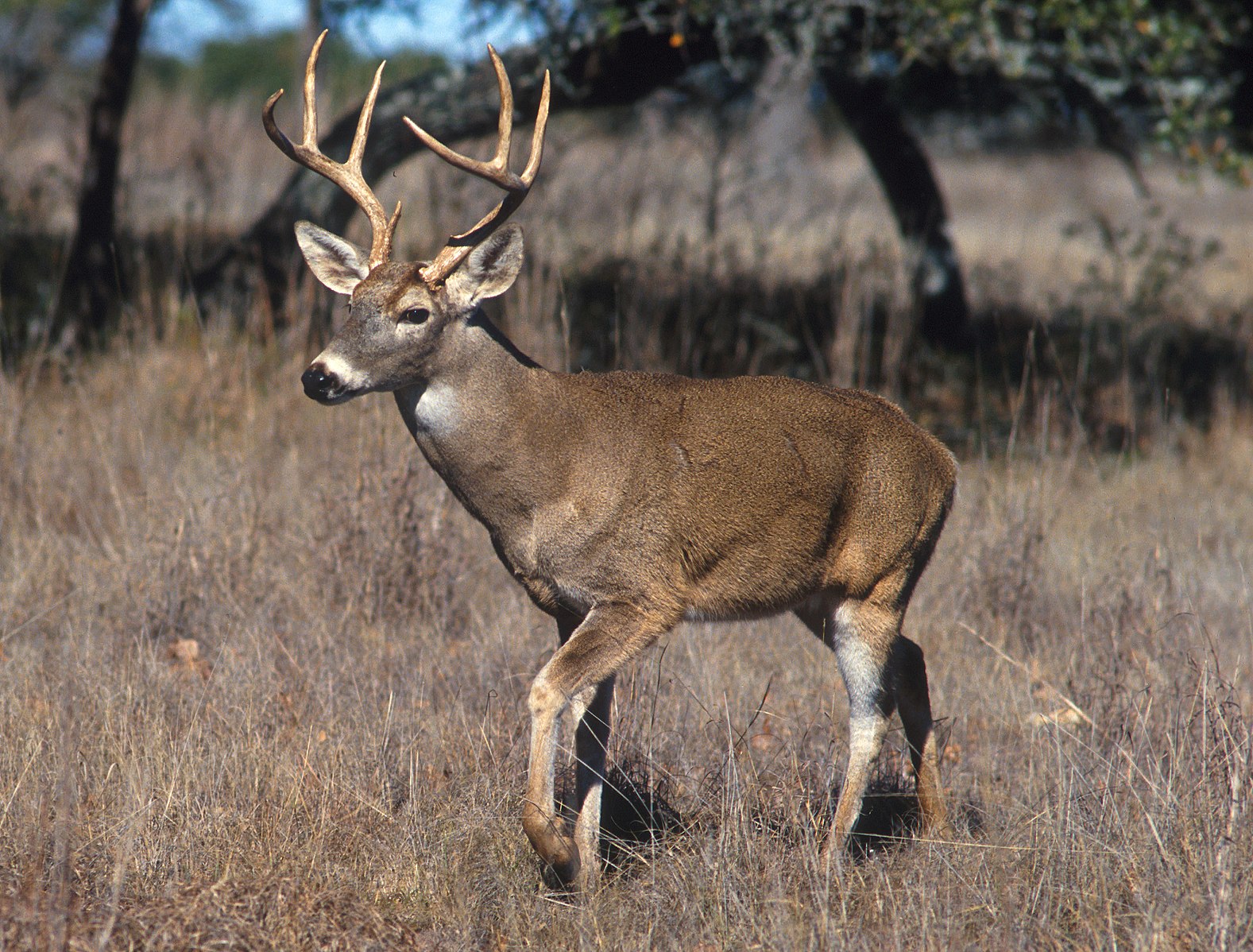
I spent my tween and majority of my teen years in a house that backed up to some rather extensive woods.  We lived on the edge of town.  I spent quite a bit of time wandering among the trees and deer were never an unusual sight.  Opening day of deer season was a literal school holiday, but I was never a hunter.  Since we’ve killed off many deer predators, cars may be their biggest natural enemies these days.  I recently found deer droppings in the yard of my current house, right next to the newly mown down hosta.  I see deer all the time while out jogging.  A few years back I even saw a doe giving birth in a secluded glen along the trail.  I guess we do kind of live at the edge of town here too, but the woods don’t begin until across the road, and the jogging trail, and they aren’t as extensive as those I grew up with.

I’ve started to notice that deer are creatures of habit.  These are the common white-tails that predominate around here.  I often see them in the same area while on my crepuscular jog, sometimes multiple days in a row.  The other day I saw a young buck up on its hind legs to reach some low leaves on a tree.  I’d never seen a deer do that before.  There’s a spot a little further on where a doe and her two, sometimes three, fawns hang out.  I’ve seen them several times.  Recently they were in their accustomed place and when I reached the end of the trail and headed back, they were still there.  These deer aren’t too skittish around people and sometimes I can get quite close before they bolt off.

This particular day, however, I learned something.  Deer can vocalize.  I knew that elk did, but I’d never heard a white-tailed say anything.  Even when giving birth.  I thought they were completely silent, and as an introvert I tend to understand.  Coming back, the doe had crossed the trail and two fawns were on the other side as I approached.  The young ones ducked into the trees and one of them called for its mother.  I almost stopped in my tracks.  I didn’t know that white-tails vocalized.  I had to consult the internet when I got home just to make sure I had actually heard what I thought I had.  I’m at an age where motivating myself to get out and jog at first light isn’t always easy.  But when nature makes it a learning opportunity, well count me in.  

Image credit: USDA photo by Scott Bauer, public domain, via Wikimedia Commons

O Levels

Out jogging last week, I was thinking about a harsh interview I once had.  It was in Manhattan.  The woman interviewing me made no attempt to hide her disdain.  I’m not sure if it was for me personally or what I represent.  She did not smile at all, not even for the usual niceties.  She asked me whether I was better at speaking or writing.  I said they were about equal.  “No,” she briskly corrected.  “Which is it, one or the other?”  This came to me while jogging because I was reflecting that public speaking and writing are really the only two things I’m any good at, and I have worked on both for my entire life.  These years later I still can’t say which is stronger.  That was appreciated by my students and fellow scholars in my teaching career, if reviews are anything to go by.  I like to communicate.  (My wife might say too much so.)

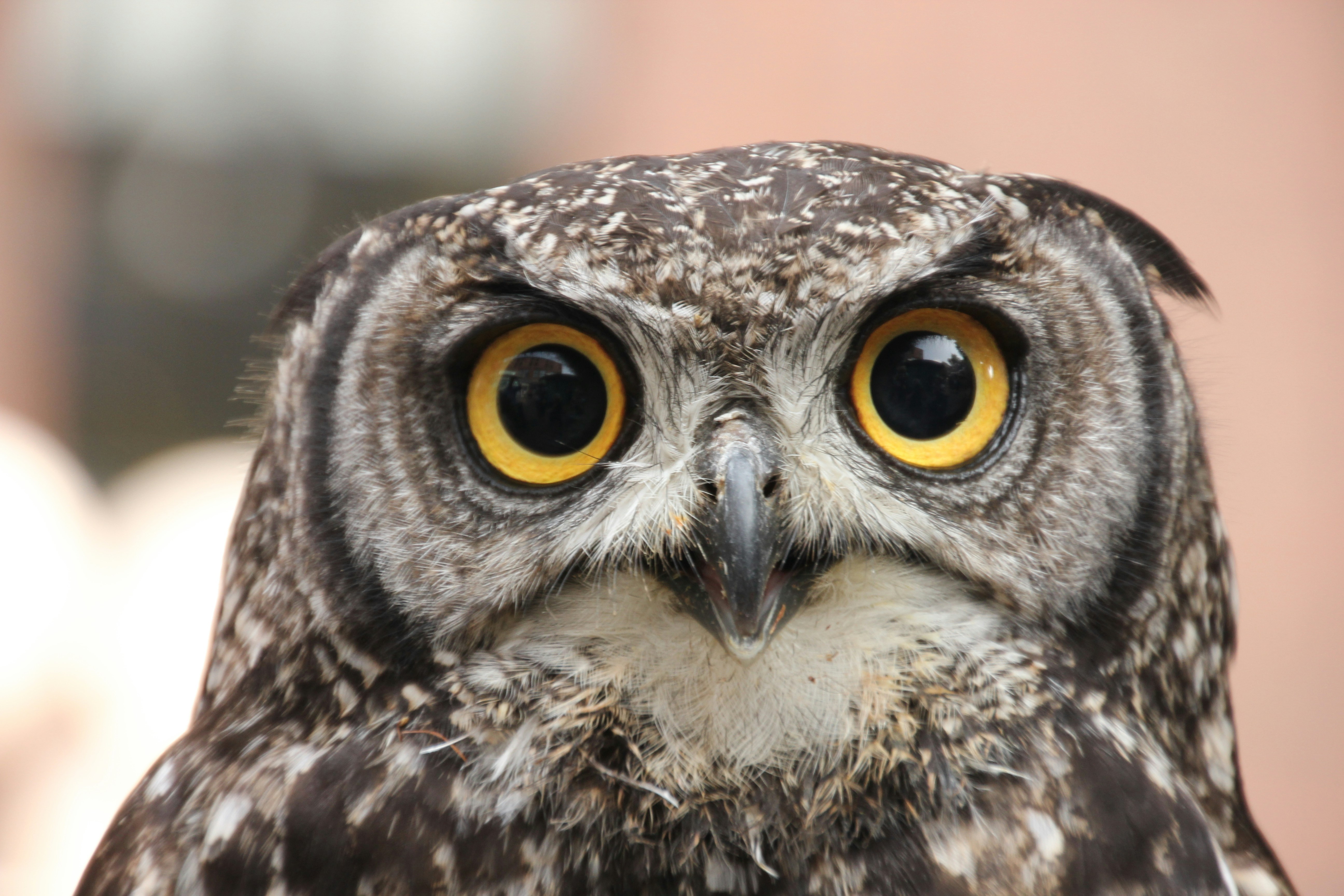
Owls are difficult to spot in the wild.  Just last week I’d seen only my second in some sixty years.  This was a screech owl.  It’s not unusual to hear them when jogging at dawn.  This time my right ear picked up on it more than my left as I jogged past a grove of trees.  I looked but saw nothing.  The trees were budding and some had small leaves already.  I reckon I’ve seen my fair share of bald eagles.  They’re large and they’re pretty obvious when they’re in the area.  Owls are more secretive.  Good at hiding.  I reached the end of the path and turned around.  As I reached the stand of trees, now on my left, it screeched again and I saw a blurred flapping of wings as it disappeared in flight.  I couldn’t identify this owl in a line-up, but then again, that’s not something I’m good at. The voice is distinctive, however.

The person hiring is a bald eagle.  Bold, aggressive, and sometimes literally bald.  I’m more like that screech owl.  Their public speaking is distinct and isn’t really a screech at all.  I can’t speak for their writing ability.  Life is our chance to come to know ourselves.  We may think we have it figured out in our twenties, but each score of years makes you question past assumptions.  Two things I always thought would be part of my career—public speaking and compelling writing—have both fallen by the wayside.  At least professionally.  What we say to others has an impact.  Especially if we’re eagles.  All things considered, however, I would rather be an owl.

Photo by James Toose on Unsplash

Or Plastic

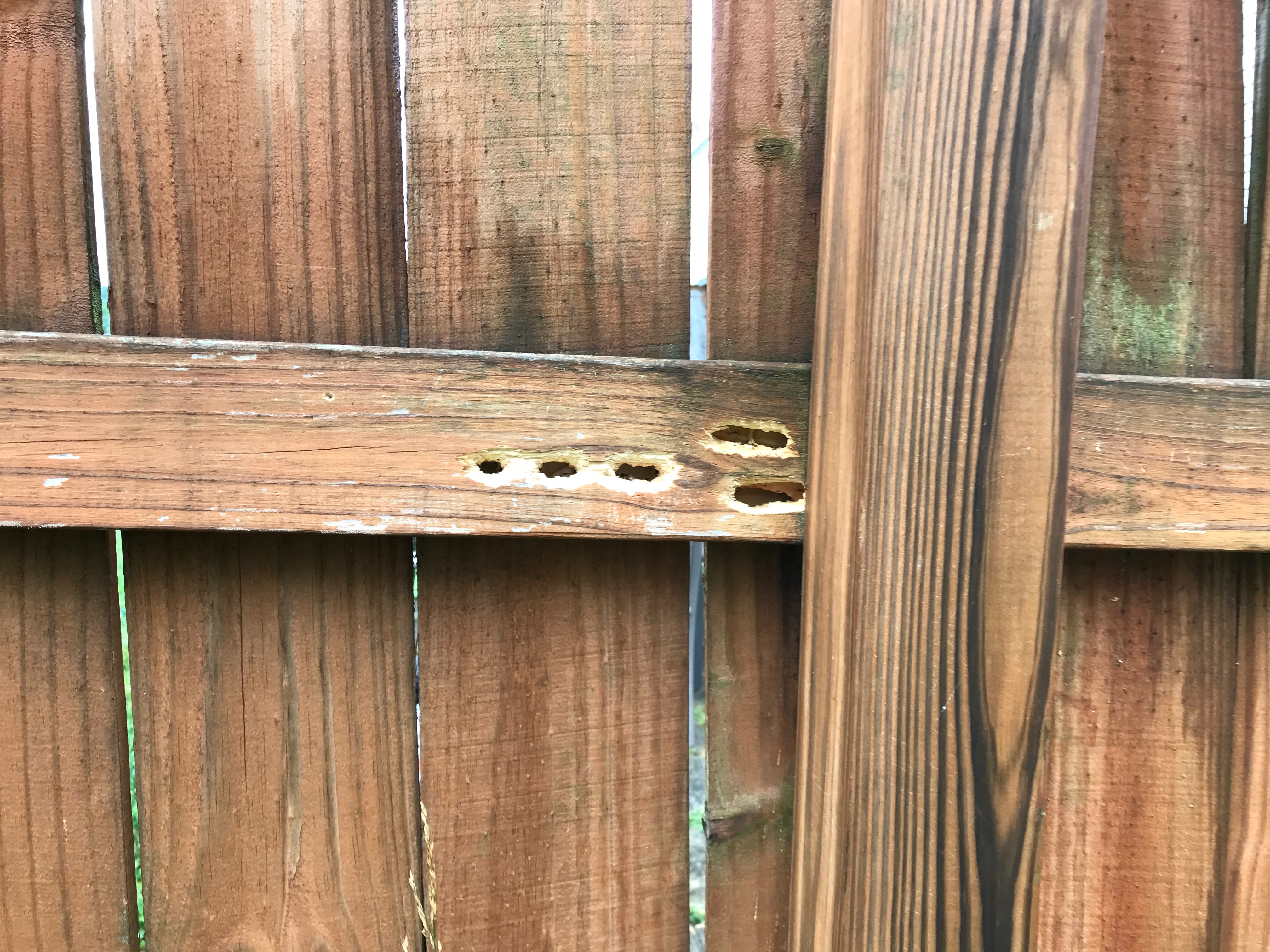
I’m no fan of plastic.  When looking for a house a non-negotiable with me was vinyl siding—nope.  In our neighborhood several houses have plastic fences pretending to be wood. I dislike materials pretending to be something else.  I was dead-set against such a thing, but our house came with a lot of neglected outdoor woodwork.  The fence was wood and had been stained, probably just before we moved in.  Then the carpenter bees arrived.  Local pest control will spray for them, but they come back each summer and unless we have the pest store on speed-dial the bees will find new things to damage.  See, the problem isn’t just the bees.  Woodpeckers, which as a kid always seemed exotic to me, love carpenter bee larvae.  I’ve watched a downy woodpecker hoping along the fence, knocking until it finds one, and then hopping a few feet further to repeat the process for another.  (If you’ve ever watched a woodpecker at work you’d not doubt animal intelligence.)

My wife and I talked it over.  The fence was in poor repair to begin with (another thing our house inspector missed).  I finally came around to seeing why plastic might be the best solution in our case.  Not for me, but for resale value.  The former owners had a thing for untreated outdoor wood.  They’d built a new back porch, but didn’t paint or stain it.  When the carpenter bees noticed, I painted it.  I couldn’t reach the ceiling, though, being short of stature.  Well, this year the carpenter bees have gone for the ceiling.  And the downy woodpeckers have followed them.  Now, when I hear knocking, I have to run downstairs to the back door to frighten off downy.  I will buy a paint sprayer to paint the ceiling, but the bees have had a head start this summer.

So I was in my office and I heard a tapping, as of a woodpecker gently rapping.  I ran downstairs and threw wide the door.  To my surprise, nobody was on the porch.  I went back to work.  Soon again I heard a tapping somewhat louder than before.  I followed my ears to the front door.  Yes, the tapping was from out front but daylight there, nothing more.  I stepped to the edge of the porch.  More tapping.  I leaned over the railing and looked down.  A rare, and large, pileated woodpecker was going at the fence post.  I was about as startled as she was.  My wife was out on an errand and when she returned home she found selfsame woodpecker working elsewhere on the fence.  I’ve learned my lesson.  While wood looks nice, and is natural, it will soon be paper thin if we don’t do something.  It’s a big fence.  And the only option to paper is, unfortunately, plastic.


Hooting in the Dark

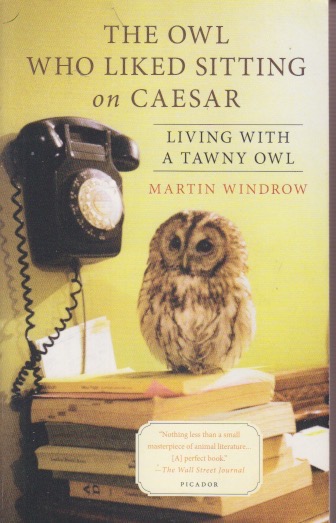
Animals fascinate me.  I picked up Martin Windrow’s The Owl Who Liked Sitting on Caesar: Living with a Tawny Owl at a used book sale.  Honestly, the cute photo on the cover swayed me.  Although some animals like living with humans, and although I grew up with lots of pets, I’ve tended away from that.  Reading about how an owl became a close companion to, and lived a good life with a human was somewhat bittersweet.  In the wild Mumble (the owl’s name) would’ve likely lived a far shorter span.  But I do wonder if she missed out on the challenges that make life rewarding.  (I sometimes wonder the same about those born rich among our own species.)  The struggle is part of nature inside us.  And although this book is generally fun, it does raise some deeper questions in my mind.

When describing the natural life of Tawny Owls, Windrow notes that they have an ability, not understood, to adjust their brood sizes by the amount of prey that will be available during a given year.  Such things always give me pause for a couple of reasons.  One is that we seem to assume we have all the data—that we know all that can be known of our world.  Animals prove that wrong time and again.  The other reason is that we are convinced there is no, for lack of a better term, spiritual world.  Or maybe better, paranormal existence.  Might it not be that owls have some ability to know the future?  Some people seem to have the ability to predict some short-term developments with accuracy.  Perhaps we’re missing something is all I’m saying.

In the end, however, I was surprised how Windrow couldn’t quite bring himself to reject a materialist view of her death.  I’ve had pets die on me—one of the reasons that I have no desire to “own” one—but as Windrow writes it, the relationship grew humdrum before Mumble’s death.  He had to work and she had to perch.  We do tend to take those closest to us for granted, I fear.  Life is so busy that we have to try to squeeze family in next to the demands of capitalism.  So the story towards the end winds down to a kind of “I had a pet owl but I had a life to live too” kind of narrative.  I’m glad to have read the book and I learned a little bit about Tawny Owls.  But I was also left reflecting on some of the larger implications.