Undead Again

I had intended to see it in the theater, but holidays are family time.  And not everyone is a fan of horror.  Last night I finally did get to see Robert Eggers’ Nosferatu.  Eggers is a director I’ve been following from the beginning.  Here’s a guy who pays very close attention to historical detail.  No slips in letting modern language expressions creep in.  Costume and setting designs immaculate—nothing incongruous here.  I was surprised that he was taking an established tale that’s based on a technically illegal film from Bram Stoker’s Dracula as his starting point.  Still, I’m looking forward to Werwulf, probably about two years from now.  (And speaking personally, I’d love to see his take on Rasputin.)  In any case, Nosferatu.  I avoided trailers and online discussions because I wanted to come to it fresh.  He’s managed to make a disturbing story even more disturbing.
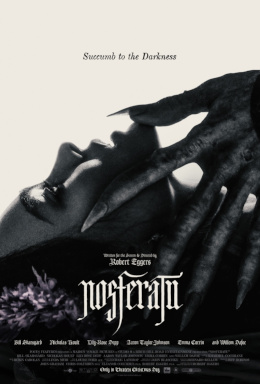
If you’re reading this you probably know the basic story.  F. W. Murnau’s 1922 Nosferatu was in violation of copyright of Dracula, and so the basic story is similar.  Eggers manages to bring to the fore the vampire as sexual predator angle.  He prefers to bite chests and take long, slurping drinks.  I said it was disturbing.  And Orlok really looks the translation of the title, “undead.”   Even at over two hours Eggers has difficulty fitting in all the elements of the story.  And there are some unexpected aspects thrown in as well.  In my mind, I couldn’t help compare it to Werner Herzog’s remake.  Both are art-house treatments of Murnau’s work, which was itself German expressionism.  All three are memorable in their own way.

The one character I didn’t fully buy was Willem Dafoe’s von Franz (the van Helsing character).  This often seems a difficult one to cast.  In Bram Stoker’s Dracula Anthony Hopkins just doesn’t do it for me either.  It must be difficult to pull off eccentric but deadly serious.  The unsmiling obsessive.  That, to me, would be even more disturbing.  Ellen Hutter’s fits are amazingly done and there’s a menace to her melancholy that really works.  I’ve never seen Lily-Rose Depp in a film before, but she seems poised to become a believable scream queen.  I was exhausted after watching the movie after a long day at work (there’s a reason to see things in a theater over the holidays, I guess), but after a night of strange dreams, I awoke to find myself wanting to watch it again.  That’s the way Eggers has with films.  They reward multiple viewings.  And although this story’s familiar from the many versions of Dracula out there, it emphasizes some elements that have, up until now, often only lurked in the shadows.

Not Poor

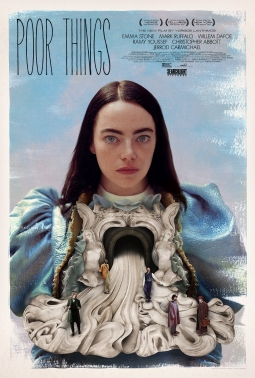
It’s an amazing era for cinema.  A number of genre-defying films have emerged and some of them are quite striking.  Some months ago I saw Everything Everywhere All at Once.  Some called it horror, but that label didn’t really stick.  It reminded me of Parasite, another movie difficult to classify.  Casting about for something we might both like, my wife and I settled on Poor Things, recommended to me by a fellow horror fan.  Other than being amazed by it, I have no idea how to classify it either.  Again, there are horror elements here but it’s certainly not a horror movie.  A comedy, yes, but a dark one.  It’s a movie that has a feminist message, but one that’s been disputed.    Perhaps a quasi-summary might help.

Bella Baxter is not what she seems.  Cared for by a Frankenstein-like doctor named Godwin, she literally has the brain of an infant in an adult body and is rapidly coming to know the world.  Rescuing her just after she died by suicide, Godwin transplanted her unborn baby’s brain into her revived body to see what would happen.  Himself experimented on mercilessly by his own father, Godwin is a rationalist, eschewing emotional entanglements.  He decides to marry Bella to one of his students but before that can happen an unscrupulous lawyer steals her away only to find he can’t control her.  After gaining experience of the world, and learning life lessons in a brothel, Bella returns home to marry her fiancé and be with Godwin as he dies.  Her cruel former husband reclaims her only to have Bella realize why she’d chosen suicide in the first place.  She returns to Godwin’s home and sets up life on her own terms.

A number of things stand out.  One is Bella’s innocence and utter lack of shame regarding her body.  Emma Stone’s acting here is incredible.  Another is the nods to steampunk sensibilities in a story set in Victorian times.  Perhaps the aspect that most caught my attention was Bella’s use of “God” as her name for Godwin, frequently calling him “my God.”  Her grammatical naivety leads to much of the comedy in the film, but this particular choice is freighted with interpretative possibilities.  Obviously, one’s parents are the models one incorporates into concepts of God.  That has been long recognized.  Another, however, is that Godwin did, in fact, create her to see what she would become.  As Godwin faces his own mortality, Bella notes “God is dying.”  What happens after this is that she becomes her own woman for the first time, not under the control of men.  I’m not sure how to classify Poor Things apart from a movie that may require another watching just to attempt a classification.


Vampire Jesus

It was a dark and stormy night. Well, so far that could describe most any night in April or May of this year. Anyway, I had just read about vampire-bots for the first time. Robots, like all machines, require a power source. Those I’ve witnessed up close require rechargeable battery-packs that are surprisingly heavy. I’d read that some robots were being designed to consume their own energy sources—mechanical and chemical eating, if you will. One dreamer figured that blood could work as a source of energy. A robot could be designed to take energy from blood, and thus arises the concept of the vampire-bot. I don’t think such an insidious machine was ever really built, but it is theoretically possible. It is also a reflection of a biblical idea—the life is in the blood. Ancient people tended to associate life with breathing. With no CPR, an unbreathing body was a dead body. Blood obviously played into the picture too, but precisely how was uncertain. Clearly a person or an animal couldn’t live without it. To say nothing of robots.

One of those dark and stormy nights I watched The Shadow of the Vampire. Surprisingly for a monster movie, Shadow had been nominated for two academy awards. Not really your standard horror flick, it is a movie about making a movie—specifically Murnau’s Nosferatu, the classic, silent vampire movie that really initiated the genre. The actor cast as Count Orlock, however, is really a vampire. The premise might sound chintzy, but the acting is very good with Willem Dafoe making a believable Max Schreck (vampirized). Stylistic rather than gory, the story plays out to the fore-ordained conclusion and the vampire disappears in the cold light of dawn.

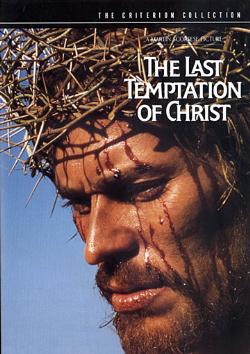
When I was an impressionable child I was told what is likely an apocryphal story about Leonardo da Vinci. The story goes that the man who posed for Jesus in the Last Supper was also the model for Judas, after living a life of dissolution. Willem Dafoe, of course, famously played Jesus in Martin Scorsese’s Last Temptation of Christ. From Jesus to vampire. Both characters are bound by the element of blood. Christianity still celebrates the shedding of divine blood symbolically while the vampire takes blood (also symbolically). Although the vampire cannot endure the sight of the cross, the same man effectively played both sides of the mythic line, almost as if the apocryphal story came true. There are implications to consider here, and not all of them insinuate Hollywood. On these dark and stormy nights, we have something to ponder.