Making Noise

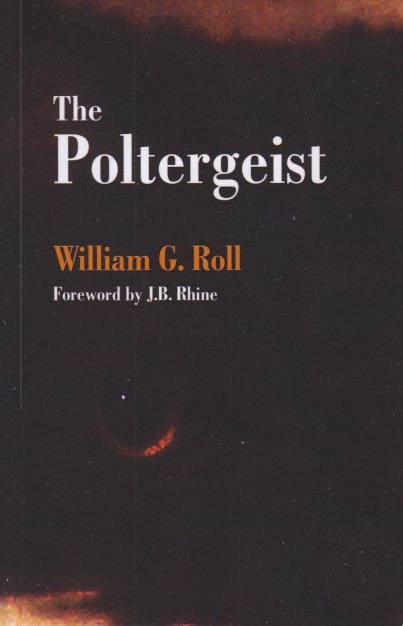
There’s a real danger, it seems, to having an open mind.  We live in a world defined and classified by materialists.  They hold sway not only over science and commerce, but in whether prestigious jobs are on offer.  Consider the case of William Roll.  Roll was a fully credentialed psychologist with an interest in parapsychology.  His book The Poltergeist is a classic in the field.  He’s now frequently called a “credulous investigator.”  What that means, of course, is that he listened to and sometimes believed the people who reported the paranormal.  For materialists that discussion is already closed.  Anyone who tries to pry it back open is ridiculed and called names.  (We’re all adults here, right?)  Yet his classic book still gives pause.

If you actually read it, “credulous” is not a word to suggest itself.  Could Roll have been tricked by clever pranksters?  Yes.  Most people, even clever pranksters, can.  If someone is caught hoaxing a phenomenon, does that mean the whole thing is a hoax?  Not necessarily.  It’s here the materialists swarm.  Interestingly, Roll acknowledges that there could be good psychological reasons for hoaxing after a genuine event.  The person caught hoaxing perhaps realized the benefits of the attention received when something unexplained occurred, and learned how to replicate, or at least imitate it.  People will do anything for attention.  Roll asked a bit more finely parsed question: does hoaxing discount genuine phenomena?  He even tried to get experiencers to the lab where controls could be put into place.  As this book demonstrates, he doubted some of the cases and did so openly.

I became interested in Roll after watching A Haunting in Georgia.  The Wyrick family maintains that the events happened (I’ve written about a book penned by two of the aunts), and they seem sincere.  The problem is money.  Once there’s potential money to be made the skeptics come out, claws bared.  The problem is we all have to make money to survive.  If that involves “capitalizing”—even that word betrays much—on weird things that happen to you, skeptics claim it’s all made up.  There’s an ulterior motive.  For most of us there’s an ulterior motive for going to work, too.  For me, Roll appears to have been sufficiently skeptical.  Statistical anomalies shouldn’t be simply dismissed.  If they are, it’s possible we’re missing something important.  While this book may not have aged particularly well, it is still worth reading with a mind at least a little bit open.  

Haunted State

Some few years back, when FYE was still a thing, I’d hunt for bargains at our local.  I came across a two-for-one DVD that seemed promising, but when I got it home I discovered it was a made-for-television combo, and movies of that ilk often fudge on many angles.  I watched them nevertheless.  These were the Discovery Channel’s first two specials in what would become a series titled “A Haunting.”  I have to admit A Haunting in Connecticut freaked me out so much that I decided to trade the disc back in—something I rarely do.  (The other feature, A Haunting in Georgia, I could barely remember.)  As is usual with things I get rid of, I grew curious once again—this time a decade later.  Fortunately both movies are included in Amazon Prime, so I was all set.  I just needed that rarest commodity of all, time.

You might think that a guy who gets up at 4 a.m. on weekends would have plenty of extra time.  That’s not the case.  Nevertheless, I squeezed the clock to watch these shows again for research purposes.  Neither one was so scary as I recall—I’ve seen quite a few movies since then—but they did get October off to a moody start.  Of the two I recalled far less of the Georgia story.  Perhaps part of the reason is that it left so much unresolved.  The Wyrick family apparently experienced many ghosts and their investigator, William G. Roll, took their claims seriously.  While not an Ed and Lorraine Warren film, like its sibling, it follows the pattern of repeated, reported activity, investigation, and, well, not quite resolution.  The family attends a Pentecostal church, and, interestingly, the documentary treats it respectfully.

Unlike A Haunting in Connecticut, A Haunting in Georgia films some events in real time—notably the church service.  The pastor is interviewed and he, unlike Dr. Roll, believes the entity to be demonic.  The documentary treats him with the same gravitas as it does the Berkeley-trained psychologist.  There’s too much going on here to make a memorable narrative, though.  Stories, at least in the classical fictional sense, have some kind of resolution.  The Georgia narrative has too much complexity and too little sense that anything has been solved.  To me the amazing thing was that I had watched this film before and I remembered maybe only the first fifteen minutes.  Both films went on the bigger things, getting remade into theatrical features that I’ve never seen.  But then again, I barely have time for my own unresolved story.  Maybe FYE offers its own brand of local haunting.