
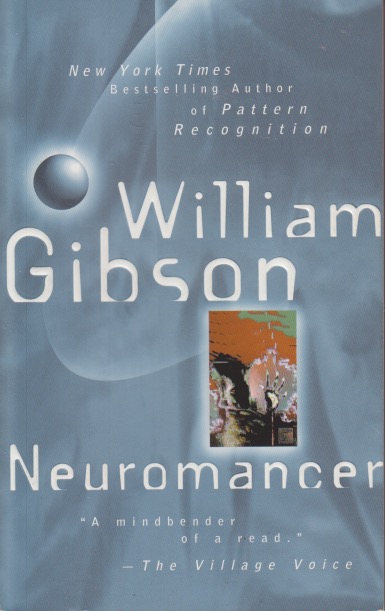
There are books you really want to read, and books you feel you should read. There are authors who delight in telling you what’s going on, and there are authors whose writing obfuscates. I’ve always preferred the former in both scenarios, but I felt I should read William Gibson’s Neuromancer. I guess I’ve grown apart from science fiction. (It’s not you, it’s me.) Or at least some of it. And I encounter too much jargony writing among academics. I’m a simple guy with simple tastes. Also, noir has never been my favorite. Case, the protagonist, is difficult to like. As a literary achievement there’s no doubt that Neuromancer is amazing. And highly influential. It’s the story of a thief/conman (Case) who’s hired for a mission that he doesn’t understand. Along the way he falls in love (sort of), but, well, noir. Dames. The imaginative elements are pretty stunning, and some of them have come true. AI being one of them. And maybe that didn’t help sway me to liking it too much. I’m no fan of AI.
I didn’t read the novel to critique it. Admittedly, I’m a Neo-Luddite. I use tech, and even enjoy it sometimes, but I prefer print books, movies (on celluloid) in theaters, and music, if recorded, on vinyl. Old fashioned. I do like some of the convenience, however. Who isn’t addicted to getting tedious things done quickly? Well, some of them. In any case, I found the Molly character intriguing. I couldn’t help but think of Blade Runner the whole way through. William Gibson claimed that his novel didn’t copy the gritty texture of the movie, and I believe him. I’ve written books after thoroughly researching a topic only to discover, too late, that someone else had largely done the same thing already. It happens.
The plot itself is quite good. Still, there’s an ethical element involved. I wonder how much AI optimism comes from guys who read such novels as teens. I have trouble thinking of any way that generative “artificial intelligence” can end well. It seems a misguided and oversold idea. Now commercials tell us how much we need Al, and he appears in new devices, wanted or not. He’s not welcome in my home. I’m slowly getting used to the idea of having a phone near me most of the time. I use it seldom, but when I do I’m glad for it. I don’t watch movies or read books on it. My favorite times are when it’s sitting there, being quiet. Some of us are dinosaurs in a cyberpunk world that’s become reality. And dinosaurs, well, we prefer the world before the electronic revolution. Maybe even before the rise of the primates.

 Steve A. Wiggins