New Gremlins

I haven’t seen the movie Gremlin in years.  I’m adding it to my Christmas list this year, however.  Probably because I watched Shadow in the Cloud recently.  And although that gremlin wasn’t cute, it led me on a journey of discovery, and that counts for something.  I have to admit, first of all, that I’d never heard of Roald Dahl before a kind family member sent us some of his books when our daughter was young.  We became rather hooked.  His novel The Gremlins was among those we read but there was something I didn’t know (one of trillions of somethings, of course).  And that is that Roald Dahl was probably the reason anyone outside the Air Force knew about gremlins at all.  Dahl was a pilot with the Royal Air Force.  His first children’s book was the aforementioned Gremlins.

Image credit: US Government, public domain, via Wikimedia Commons

I first learned about gremlins from The Twilight Zone.  “Nightmare at 20,000 Feet” came close to giving me literal nightmares.  (And Nope reminds us that there may be things in the atmosphere that we really know nothing about.)  That particular episode was based on a short story by Richard Matheson.  It was also incorporated into the 1983 Twilight Zone movie which I have, unaccountably, never seen.  Of course, I saw Gremlins in a theater back in my college days.  That was before I understood, or really had any interest in holiday horror.  This is one of those instances where the birth of a monster can be traced and its lore can be watched to grow, in real time.

Dahl took something he’d heard about—gremlins weren’t believed to exist by anyone—and made it literal, in the form of a children’s book.  Soon after, other vendors, such as cartoon creators, picked it up.  In the Twilight Zone it began its transition to horror.  Then a regular horror movie was made of them.  All of this has taken place since World War II and there are plenty of people alive who were around at the time.  Shadow in the Cloud was a reboot of a monster generally underused.  There are few times people feel as vulnerable as when they’re flying.  Heck, climbing a tall ladder is enough to give me the willies.  And the movies have shown us that even on the ground we’re not really safe from the monsters of our imagination.  That’s why it seems like a good idea to me to watch Gremlins again.  And to dream of the monsters we invented.
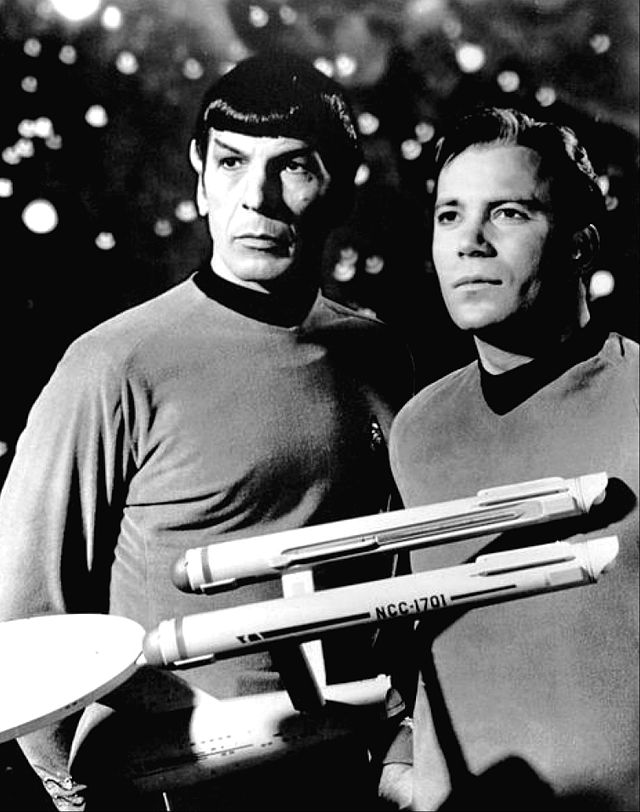

Shatner’s Space

We constantly underestimate the power of fiction.  It’s difficult to break into getting fiction published.  It wasn’t always that way.  When the pulps were still a thing often it took a thimble of talent and a handful of persistence.  Publishers were looking for content and those with typewriters were clacking away as fast as they could.  Ding!  Carriage return.  These days it’s harder.  This came to mind in thinking about William Shatner’s trip to space and his subsequent reaction.  As several news outlets said in anticipation of Shatner’s new book, the experience made him feel profoundly sad and not a little cold.  So much empty space and we still haven’t figured out how to travel fast enough to reach our nearest neighbors.  We don’t even know if we’ll like them when we meet them.

Others, in defense of space exploration, were quick to counter Shatner.  He’s not a real astronaut, after all, having spent nine decades earth-bound.  Or so they said.  But I think I understand, as a fellow land-lubber, where he’s coming from.  We’ve only really got one chance on this planet, being the only creatures evolved enough to type, to capture our thoughts—our essence—in words that can be preserved.  And wildlife statistics are showing an alarming decrease in other animals since the 1970s.  If we’re all that’s left and we can do no better than to elect fascists, well, stand me with Captain Kirk.  We look to the skies and see, well, empty space.  And besides, we need to get home because it’s supper time.

Image credit: NBC Television, public domain via Wikimedia Commons

The reason Shatner got a free ride to space was, of course, fiction.  Star Trek captured the imagination of my generation and those with actual science ability started to put that kind of future together.  Today we can talk to computers and they still mishear us, often with laughable results.  But if writers of fiction hadn’t been available the show would never have succeeded and what would a Canadian actor have had to do?  Maybe a crime drama or two?  And even those require writers.  It seems to me that we should be encouraging fiction writers with talent.  Believe me, I’ve read plenty who really haven’t got it (often in the self-published aisle) but I know firsthand how difficult it is to get fiction noticed.  It’s like, to borrow an image, being blasted off into a dark, cold, empty space and looking at the blue orb below and wanting to be home for supper.