Learning Curve

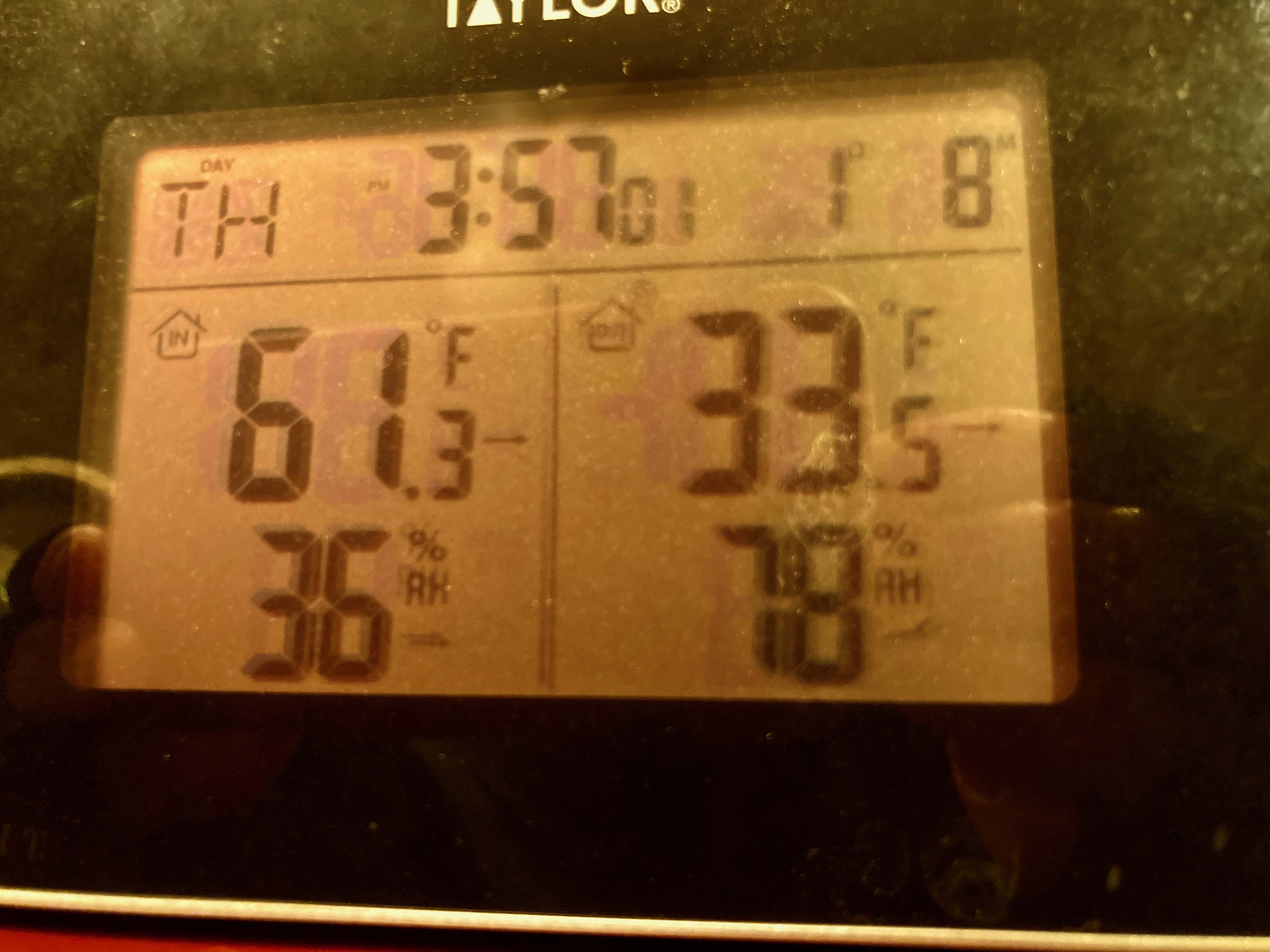
There’s a learning curve to cold weather living.  Now, I need to define cold weather as when you have to turn on the heat.  Around these parts that generally happens mid-October.  We keep our house chilly not because we unduly enjoy shivering, but for two good reasons: it costs a lot to heat a house and it doesn’t benefit the environment to do so with too much zeal.  The cost aspect goes without saying.  It costs more to live in the colder seasons.  At night our thermostat is set to 62.  That’s fine as long as you’re in bed under tons of blankets, but I’m a habitually early riser.  Most of my writing is done before work, when the house is at its chilliest.  I bundle up with several layers of pajamas, a stocking cap, and fingerless gloves.  The part that requires relearning each year is the exercise bit.

Before going out for a pre-work jog, I do some light calisthenics.  I can’t really do these in my pajamas, though, because they can raise a sweat, even in winter.  Besides, I have to go jogging later, so I need to get my exercise clothes on.  Every year I have to remind myself, when do I make the switch?  I don’t enjoy stripping off my warm clothes to put on some chilly ones so I tend to put it off until the exercise mat starts to call loudly.  As the sun rises later and later, as the solstice approaches, jogging gets later and later (with a slight reprieve when we pointlessly end Daylight Saving Time).  There comes a point when I have to start work before my jog.  I can never remember when that happens—November?  December?  It will mean altering my routine, particularly if I have any early meetings.

I used to wonder why, in older films, especially those set in Europe, people were shown sitting around their houses in woolen suits and vests, full-length dresses with shawls.  As a homeowner with a low thermostat, I had an epiphany.  They did it to keep warm.  Europeans often describe American houses as “overheated.”  I haven’t had any European guests lately, but I doubt they’d say that about our place.  Our daytime temperature is 64.  Outdoors, that’s getting to be jacket weather.  My European colleagues don’t mind wearing puffy vests and jackets on Zoom meetings.  Heating a house in Europe is much more expensive than it is in the colonies.  In the dead of winter it’s not unusual for me to be wearing five or six under-layers during the day, and fingerless gloves at work.  The thing is, I need to relearn this each year.  Winter’s on its way, so I’ll do my best to be a good student with my chilly lesson.


Weather Bugs

In one part of my life (ahem) I’m compelled to use Microsoft Windows products.  (In my personal life I’ve used Macs since before 1990.)  On a recent update they’ve added little, frequently changing icons in the lower left end of the task bar.  It took me a few days to figure out how to stop it from sending distracting news and sports updates (I don’t need these, and they disrupt my concentration).  They also send weather updates.  I couldn’t figure out how to turn off the weather, so I let it stand.  Perhaps it’s a sop thrown to workers who now spend more hours a day on the job because commuting is becoming less of a thing, a bit of relief from staying on task.  Something to make you feel connected.  Fine and good.  But does it have to be so alarmist?

Some of us can’t ignore sudden changes on the screen (much of advertising relies on this).  When the weather icon shifts, which it does periodically, it draws my eye.  It uses the language that’s become typical to dramatize the weather.  Temperatures will “plummet” on Saturday, for example.  I looked at a more sober weather website.  The high would be ten degrees lower than it was for that day.  Hardly a “plummet.”  Or it will tell me, in rather heightened tones, that four inches of snow are coming on Wednesday.  The more sober site says possibly one inch.  An hour or so later, the icon humbly admits maybe it’ll just be one inch.  The question is, do we really need these constant updates?  With theatrical exaggeration?  I turned off news and sports, otherwise the work day would include an almost subliminal news feed that goes from boot-up to log-off.

I get through these difficult days by mostly ignoring the news.  I don’t ignore the weather—it seems more real than what’s happening in Washington.  Besides, I wrote a weather-oriented book once upon a time, and I haven’t lost the interest.  We’re going through the time of year when spring and winter are duking it out.  Every few days it snows or ices, and in-between I find wasps inside that think maybe it’s time we should just be getting on with this.  Meanwhile, each day, all day, I’m sent weather updates meant to shock and awe me.  Into what?  Yet more panic?  I’ve noted before that in some respects I have a monastic personality.  I prefer calm, most of the time, without too much extraneous stimulation.  I go for hours each day without even glancing at my phone.  And for the weather, I prefer just to look out the window.


Solstice 2024

We have a small solstice celebration at home.  We’re not pagans, but it seems that the shortest day ought to be observed.  Noted.  Pondered.  You see, this holiday season had its earliest beginnings as solstice celebrations.  Fervently praying for more light, and a bit more warmth, ancient folk of the north knew to propitiate whatever powers that be in the dark.  “Please bring back our sun,” you can almost hear them sigh, in the bleak December.  I’m stunned and stilled by this each year.  The gradual change makes it less of a shock, but we’re living primarily in darkness now.  Until today.  The solstice is a turning point, an axis around which our lives turn.  Forgotten ancients celebrated it and eventually Christian and other holidays gathered around it, as if coming to a campfire on a cold night.  Why not stop a moment and reflect?

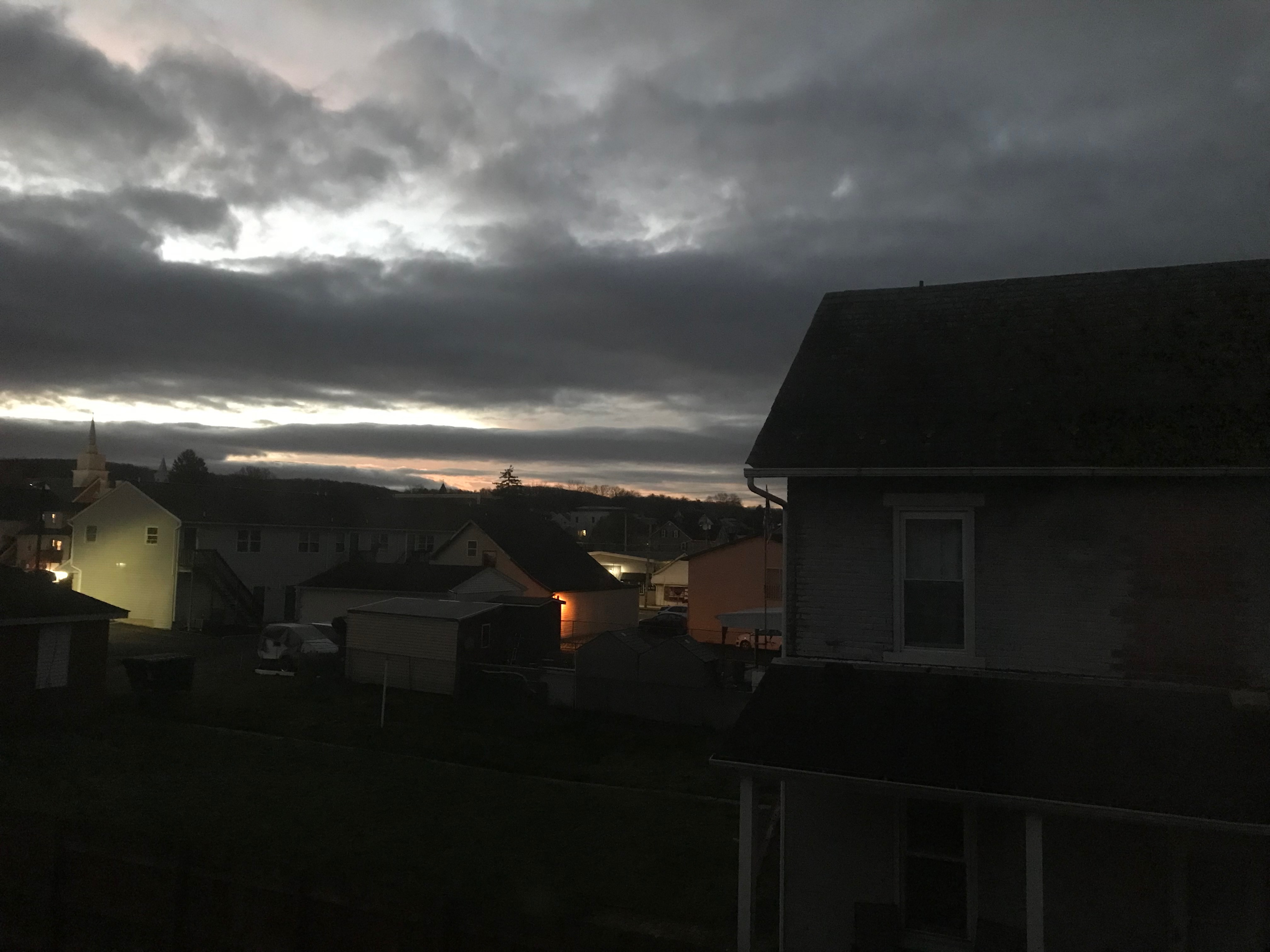
I’m a morning person.  More extreme than most other auroraphiliacs, I don’t remember the last time I wasn’t awake for sunrise.  Attempting to stay healthy, I try to get out for a morning jog before work, and that can be challenging for a guy who starts work early.  I sometimes start work even earlier than usual so that I can jog once the sun shyly glances over those eastern hills.  I notice the slow creep of the year.  At the other end of the day, it’s dark by the time work ends.  Mundane tasks such as hauling the garbage can out behind the garage can become tenebrous hikes.  Others who exercise, and work, most go to the gym.  I’ve tried jogging in the dark—it’s full of peril.  Like the ancient pagans, I look forward to a little more light.

Progress, like lasting change, must come slowly.  The earlier sun rises and later sunsets are first measured in matters of seconds, not minutes.  We remain in the dark even as we hope for light.  Hope pervades this time of year.  We anticipate Christmas, yes, but our light-starved eyes look beyond.  Beyond the chill of January into what some Celts marked as the start of spring—February.  Yes, the cold can be very intense then, but rages are always their most furious before they die out.  I suspect Dylan Thomas knew that when advising his dying father on how to approach the end.  I’m writing this post in the dark.  By dinner time the night will have already settled in.  And we’ll light a candle, encouraging more to join in looking for the elusive light.  Dawn always comes.  Eventually it comes.


Springing

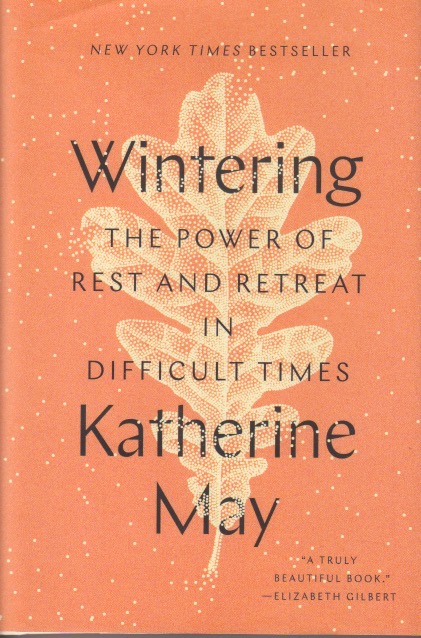
Life, for everyone, has difficult times.  Katherine May has a reassuring, but not always cheerful way about her.  She calls troubled times Wintering.  The subtitle of her book explains that it’s about The Power of Rest and Retreat in Difficult Times.  My wife and I read this one together.  It reminded me, in some ways, of Barbara Brown Taylor’s Learning to Walk in the Dark.  In a society vapidly preoccupied with an often shallow happiness, admitting, even pondering the things that are difficult is an act of courage.  May has a disarming way of writing, a humility and self-deprecation that are an antidote to the brazen self-assurance we too often see in the media.  She looks for lessons in her own experiences of pain and loss, and yes, surviving through winter. 

Winter is often a quiet time of reflection.  In our bright, loud, beeping, buzzing world we don’t take much time for such things.  Indeed, capitalism (which is generally not deep, although deeply engrained) doesn’t encourage it.  “The more you can work,” it whispers in your ear, even while sleeping, “the better you’ll feel.”  Winter slows things down.  Makes life a bit harder.  Think of all those days when you just don’t feel like going outside in the cold, snow, and sleet.  When the chill drives you next to the radiator, covered in lap blankets.  When it’s dark most of the time.  Such are good times to think.  As May shows, when you turn a difficult situation around and look at it from different angles, truths about yourself, about life, begin to emerge.  What is it we’re after that keeps us running all the time, dangerously overheating?  We need winter.

The anecdotes here are deeply personal.  This is particularly difficult for a writer because many of us face rejection frequently.  When you’ve poured yourself into a book, blithe casting aside by agents and publishers hurts.  I admire the bravery and the wisdom of writers like May.  She shows that wintering is possible, and that it is followed by spring.  Lives, she notes, are cyclical.  We can find quite a lot of meaning in that.  I often find myself fearing winter.  The heating bills.  The wearing of many layers of clothes for months at a time.  The dark and cloudy days.  Yet a good part of me welcomes the retreat.  I know that, in the cycle of the year with few days off from work, that if I can make it to Halloween, some rest—some wintering—awaits.  And that is a hopeful thought indeed.


Running out of Time

How can you let a solstice slip past without noticing it?  Admittedly, it’s sometimes easy to do in summer, but for the winter solstice it’s more serious.  Ironically for me, the issue is that I’m still a jogger.  When you start your work day early, and you try to jog before work, the shortness of the day works against you.  Even if you prefer the after-work jog, December and January give you that perpetual feeling that you’re running out of time.  Each year around about now I look at charts.  Some organizations helpfully publish sunrise and sunset charts free on the internet.  I trace them to see when there will be enough light to jog in the morning.  Because of the offset between latest sunrise and earliest sunset, the evenings have been getting microscopically longer for a couple weeks now.  Sunrises, however, are still coming later.  They’ll continue to do so until about mid-January.

For those of us who parse out our days into minutes, trying to feed the beast that requires our utter devotion, finding time to jog can be difficult.  It’s dark after work, and besides, I’m exhausted and hungry by then and need to start on supper.  Morning’s an easier thing to control.  With pagan fervor I await the lengthening days.  Particularly the early mornings, which I crave to be earlier again.  So we light a Yule log and pray for the best.  Not that it ever changes sunrise times.  Around here there’ve been a couple of epic December rainstorms and cloudy days push available light back even further.  With the sun technically risen, it can still be dark.  There’s a metaphor here, dear reader.

Winters are for reflection.  Unless we’re busy cramming each day full of seasonal festivities, we spend a lot of time indoors with our thoughts.  That’s one of the reasons I jog.  It clears my head.  It’s the reboot that comes after the reboot of a night’s rest.  I’ve generally been awake for hours before sunrise.  These little thoughts I share with you daily are courtesy of those quiet moments in the dark.  A winter is wasted if we don’t use it for reflection.  Employers should be more generous with their December holidays.  It’s in sync with nature, which is more in keeping with being human than “business,” or “busyness” is.  Today is the winter solstice.  Around sunset we will light some candles of hope.  And we know that even if we can’t really tell, tomorrow will have a bit more light than today.


All of Us

All Souls is a democratic holiday.   Since Halloween is really the start of the holiday season, we really should keep it, together with All Saints and All Souls, as a time off work.  (If I had the vacation days to do it, I would.)  I realize these are holidays of Christian origin, and some object to even getting Christmas off because of that—hey, some of us think holidays are a great and necessary part of life!  Of course, I’d be happy having Jewish or Wiccan holidays off too.  Halloween and Christmas are generally secular holidays these days, but that makes them no less meaningful.  In any case, All Souls is the day we commemorate the dead who may not have been recognized as saints.  Like the Day of the Dead, it’s a time to reflect on those we’ve loved and lost.  I always find the naming of our departed especially moving.

Doris Ruth Miller

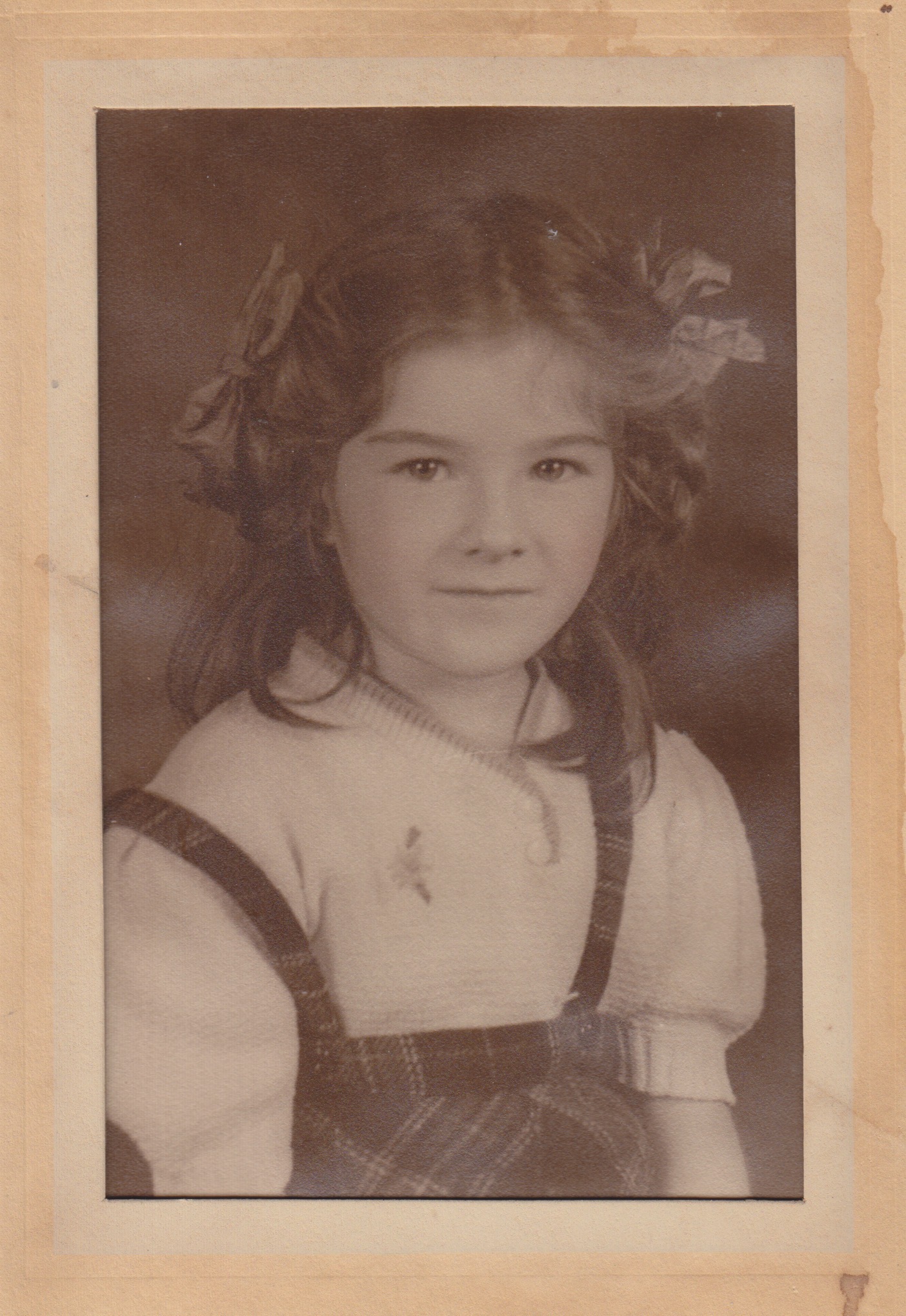
Among northern Europeans (they aren’t all bad guys) the steps into November were a liminal time.  The restless dead might attempt to return and the living should pay their respects.  The church tried to address this through All Saints Day with its exalted music and ceremony.  Like an afterthought, it seems, All Souls was a time to remember those who are the majority.  The unrecognized, the non-famous, but often very good folk without whom sainthood would be impossible.  You see, I truly believe that most people try to live the best way they know how.  They struggle, yes, and they may have made bad decisions based on what they knew at the moment.  They were, after all, human.  The church set aside November 2 to pause and consider that death comes to all of us.  Winter is on the way.

Winter, in many ways, defines life.  It’s a time in which disaster comes to those who fail to plan ahead.  Food must be stored in advance since it will be scarce.  Nights will be long.  Even keeping warm will be a challenge.  And it can come at any time now.  Some years snowstorms come on Halloween.  And even if no snow falls we enter that fallow time when we’re forced to sit and wait.  It is nature’s way of saying, “Stop.  Reflect.”  Those already departed on All Souls are missed by those of us who remain.  We put on another layer, or perhaps turn up the thermostat, trying to distance ourselves from the chill.  We look to Thanksgiving, and Christmas soon to follow.  And those who perceive subtleties know that hope of spring begins early in February.  The souls who’ve already gone on know more than we, and the least we can do is remember them once a year on the holiday meant for all.


Winter Waiting

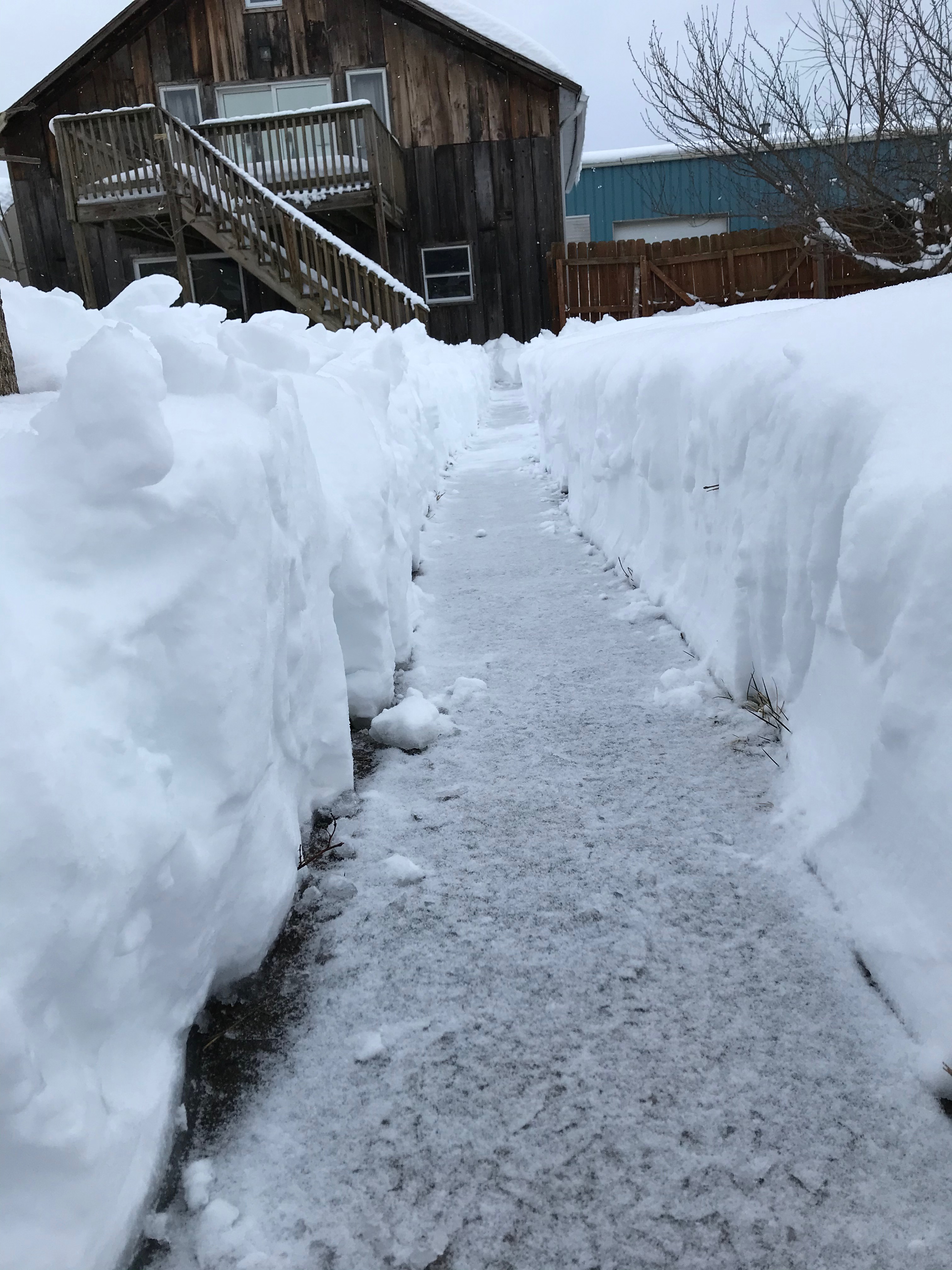
The waiting, as Tom Petty knew, is the hardest part.  Along the slow turning of the wheel of the year it’s now light enough to go jogging before work.  That won’t last, however, because Daylight Saving Time is imminent and will set us back a month in the illumination department.  Also I haven’t been able to jog because the massive snowstorm we had a couple weeks back dumped over two feet of snow on the jogging trail and it hasn’t melted yet.  I miss it.  The jogging, I mean.  I’ve become one of those people who never the leave the house and I see how difficult it is just waiting.  Waiting for the snow to melt.  Waiting for the vaccine.  Waiting for the light.

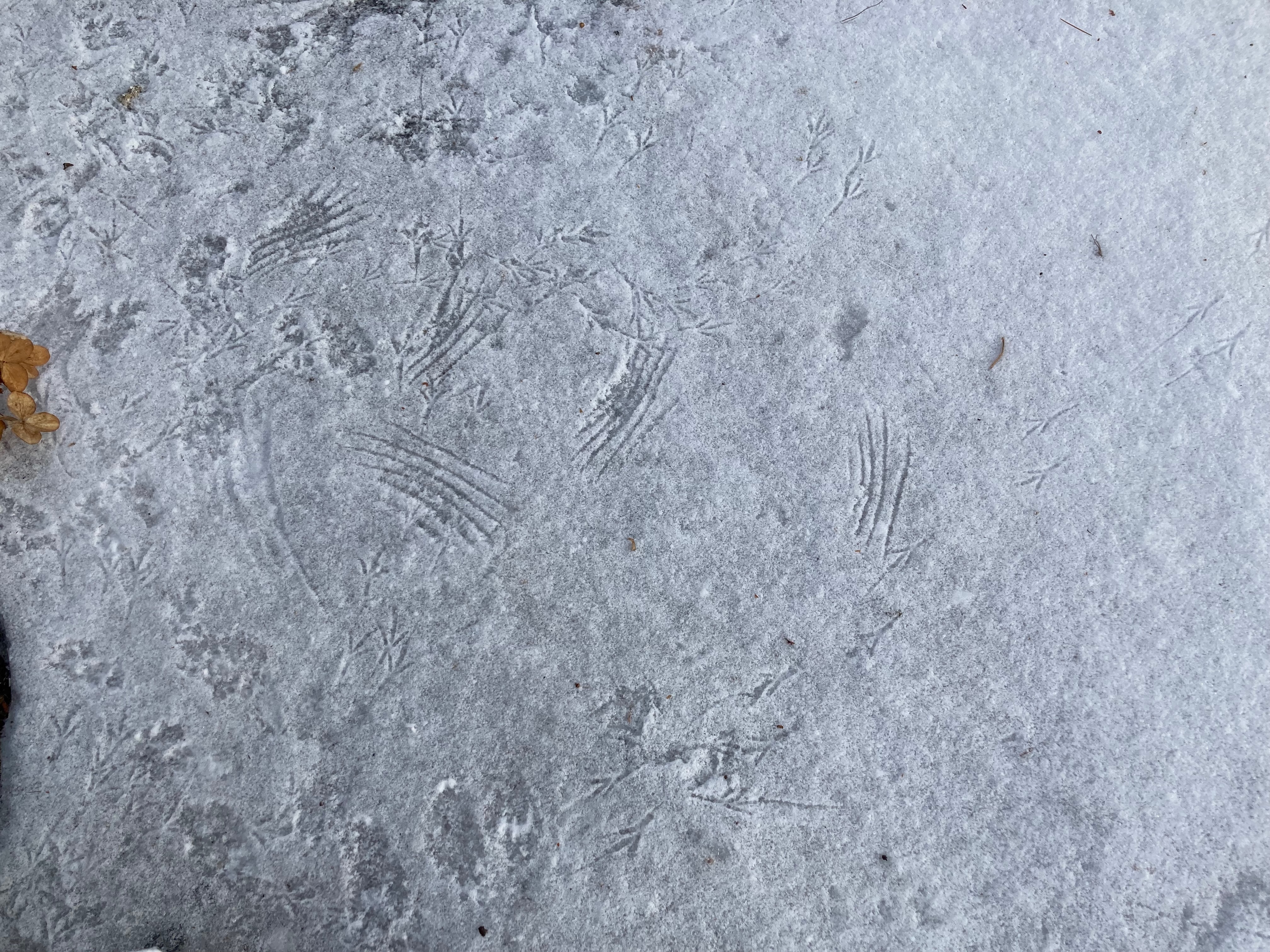
I’m no psychologist, but I have to wonder if that isn’t one of the greatest stresses faced by the many stir-crazy people who’ve been shut-ins for pretty much a year now.  For us this snowstorm took away the little mobility we had.  Getting out daily for a constitutional put me in touch with nature, at least.  Now nature is under a thick, crusty white blanket, slumbering away.  But the birds have begun to return.  With their avian wisdom they’ve seen the end of winter.  Suddenly this past Wednesday they were here, bringing hope in their wings.  Birds have long been symbols of freedom—we’ve got a couple bald eagles in the neighborhood, reminding me of that.  A far more ancient association was that between the bird and the human soul.  The ability to soar.

We may still be mired in winter, but time is inexorable.  Relentless.  As the globe wobbles recklessly back toward the warmer seasons we need to take responsibility for our part in global warming.  Ironically these freak storms are the result of an overall warming trend.  The weakening of the jet stream that allows cold northern air to drop snow in Texas and storms to cover much of the rest of us all at the same time.  The pandemic has helped clear the air a bit.  At least we’ve rejoined the Paris Climate Accord, and we’ll try to begin undoing the damage to our planet that the last four years introduced.  It will take some time, of course.  By now we should be experts in biding our time.  The snow will melt.  The light will continue to grow.  I will get back out on that jogging path again.  But for now we wait.


Smelling Winter

We’re experiencing the January thaw around here.  This isn’t a scientific thing, of course, and it doesn’t happen every year.  We had snow before Christmas, but it didn’t linger too long.  We’ve had cold days since, but none so bad that I couldn’t jog a couple miles over lunch.  The ground has started to freeze but much of the grass is still green.  The changing seasons are largely olfactory to me.  You can smell fall and spring coming.  I’m not talking about burning leaves in autumn or the first hint of magnolia in spring.  No, I mean the aroma of the earth.  Stuck indoors as we often are, we’ve been conditioned to think our sense of smell is under-developed and therefore unimportant.  Overall, however, humans don’t rate too shabbily in the nasal range.  We don’t experience the aromatic realm as much as dogs, vultures, bears, or mice, but our sense of smell is vitally important.

Not only does smell tether us to memory, it also influences moods.  Studies done on those deprived of scent by disease or accident indicate higher levels of depression.  All of us know how vital scent is to taste.  We don’t appreciate, I suspect, how the aroma of our earth can inspire us.  Yesterday as temperatures crept into the 60s, I stood outside breathing deeply. It was only in my back yard, and the clouds were low and gray.  Spring clearly came in the gusty air.  I know that the bulk of winter lies ahead.  January’s only just tuning up, and February has us in its sights.  The aroma of spring will once again be frozen to await release in more timely fashion.  I’ve been feeling chilly since October, layering up and reluctantly bidding goodbye to the scents of autumn.  Winter’s sterility has begun, but we’re being teased just now by a nature that likes to remind us who’s really in charge.

As I grow older, I’m hoping I’ll learn to smell winter.  My nose spends too much of it feeling cold, and when I wrap my face in a scarf, I have only my own breath to breathe.  What is the odor of winter?  The faint hint of smoke from a neighbor’s chimney?  The briny tang of a freshly salted roadway?  The pine of a newly cut Christmas tree?  Outdoors there’s life throbbing, pulsing slowly beneath the chill.  Even after the great ice ages, it was ready and eager to reemerge.  Today I smell spring in the air.  It’s not yet here, and won’t be for some time.  Scent is ever only temporary but today there’s yearning in the air.


Holi Daze

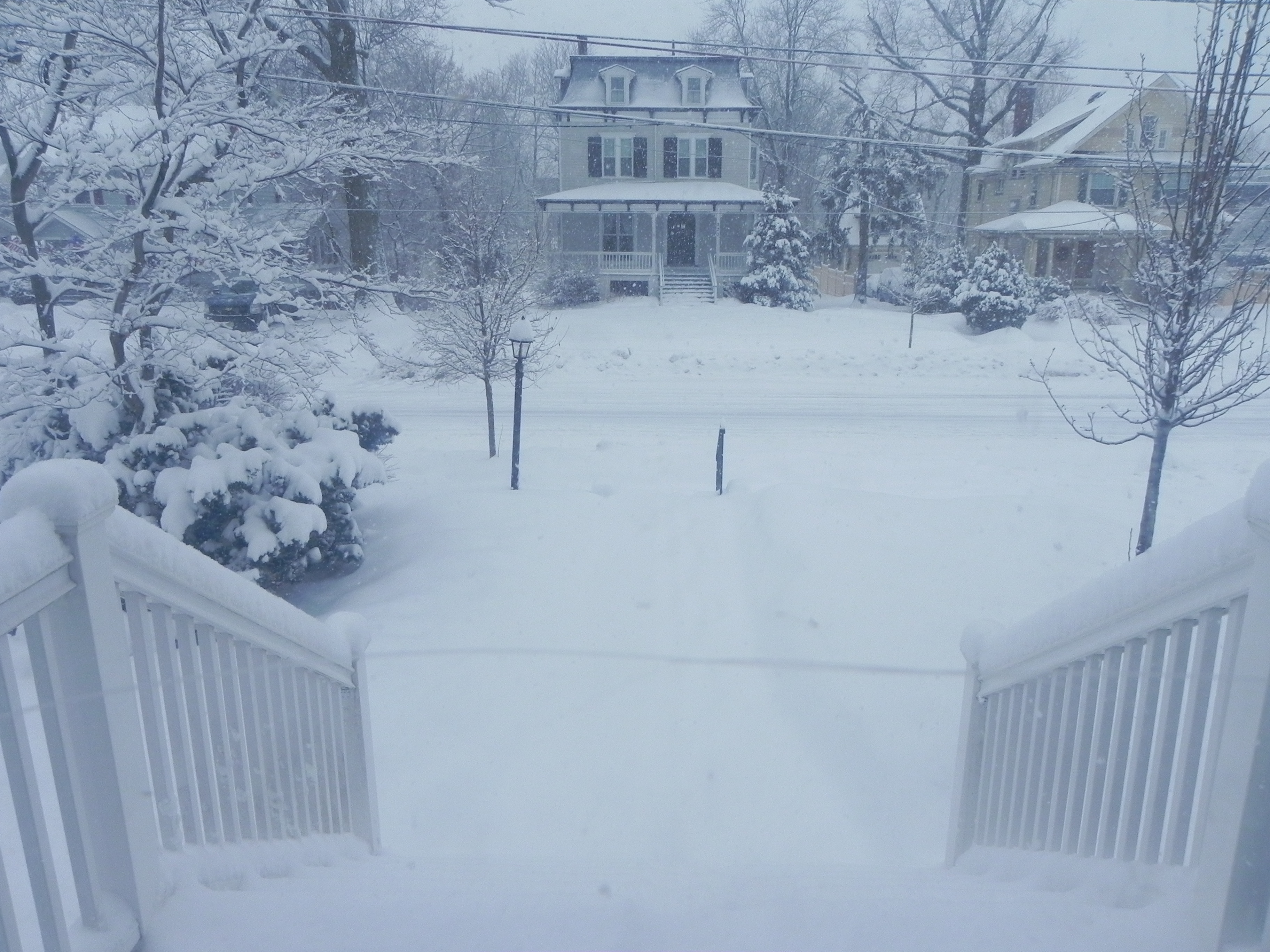
It’s pretty white out there. For many parts of the eastern United States it has been a season of snow on snow on snow (why does that sound familiar?). The wisdom back in old white Wisconsin was there’d be three snows on the crocuses. This year the crocuses have remained buried, even in New Jersey. Judging from the number of people not driving, it looks like most people had a snow day yesterday. The color white has often been treated as a symbol of purity in various religions, but today is also the celebration of Holi, a Hindu festival of color. I’m no expert on Hinduism, but I do find the concept of a day of color to be immensely appealing. Anthropologists trace its roots to some fertility festival, but the fact is, we could all use some color right about now.

DSCN5027

Winter technically lasts, in this hemisphere, until the vernal equinox. Religions around the world have festivals to celebrate this slow turning of the seasons, and the lengthening of days. A long while back I wrote a little book on the holidays. In it I tried to find the basis for various holiday colors. We all know red and green clash, but when we see them together we think of Christmas. Black and orange make a standard Halloween combination, and red by it self suggests St. Valentine, while green alone gives St. Patrick his identity. A more recent addition is black and silver for New Year. Easter, coming in the spring, however, is a celebration of color. We don’t dye the eggs just one hue—it has been a long winter and we celebrate its close with a burst of color. Even the staid old Episcopal Church reverences the liturgical seasons with distinct colors. In other words, colors mean something.

Years ago a friend recommended Jasper Fforde’s Shades of Grey (this was before Fifty Shades of Grey took over the world). It quickly became one of my favorite novels. It’s all about color. Apart from a few years under the influence of a friend with a strong personality, I’ve always been a subdued haberdasher. I tend to wear understated colors because I don’t like people commenting on the way I look, or, even for that matter, looking at me. I enjoy public speaking, but having someone single me out on the street or the bus has always felt distinctly uncomfortable. Still, I think we may have lost something that Holi has retained. Color exists to be celebrated. And shared. It is so important that commerce and trade apparently stopped last week to figure out the color of a certain dress. I may not be a Hindu, but I think I might wear my brightest shirt today to welcome color back to the world.