My Beloved Monsters

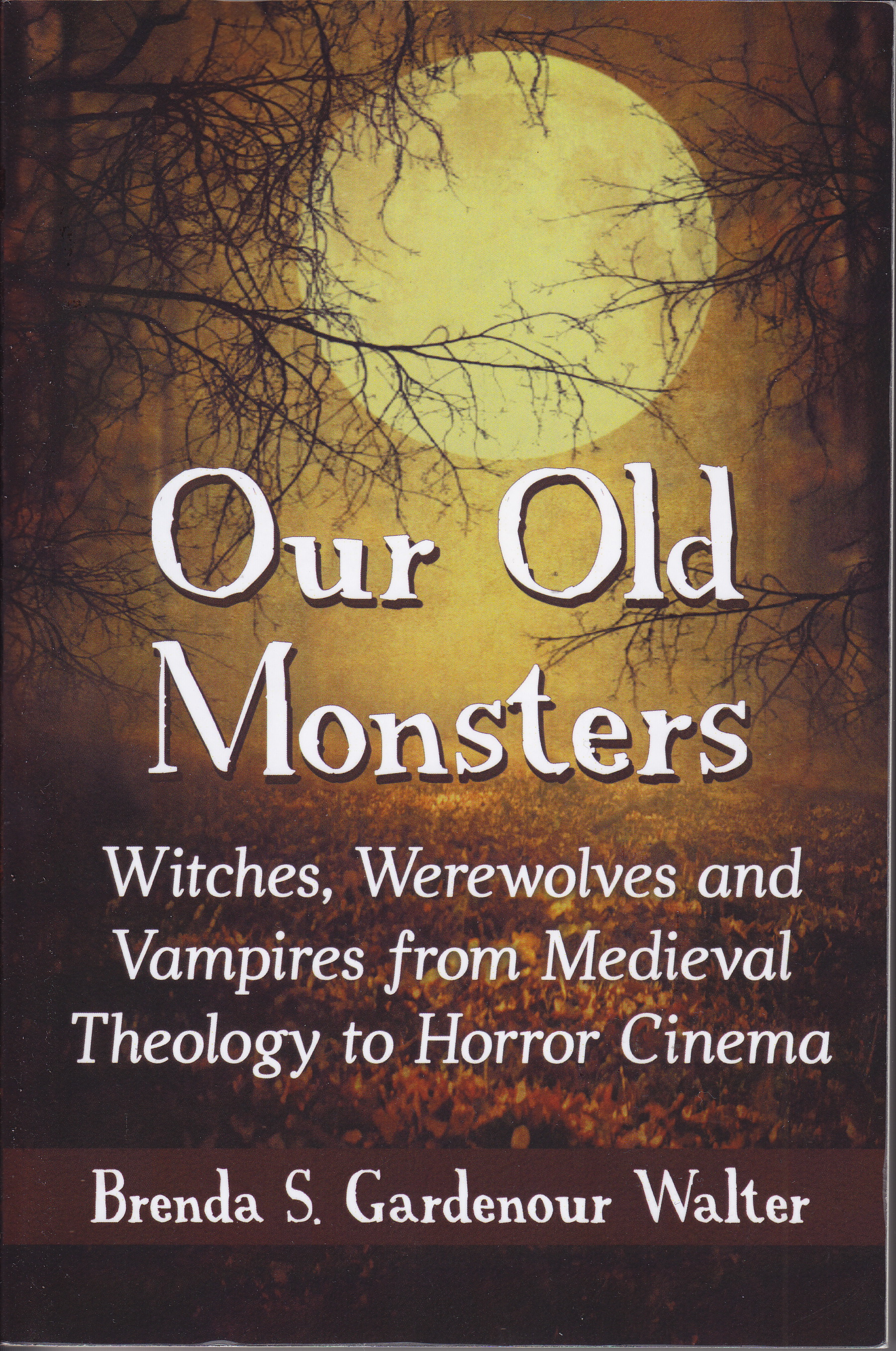
OurOldMonsters copyOnce upon a time I felt radical in claiming that monsters and religion shared a pedigree. Having grown up fascinated by Universal, as well as much cheaper and more tawdry, monster movies, I always experienced a twinge of guilt. My family was very religious, and these monsters were, well, evil, weren’t they? Yet I couldn’t let them go. Although college, seminary, and graduate school each took their toll on this early fascination as I was restructured as a more rational man, the monsters always lurked. In college a friend and I named an invented monster “the lurking.” In seminary and graduate school, demons and ghosts still captured my imagination. Brenda S. Gardenour Walter has, quite unintentionally, vindicated my outlook. Our Old Monsters: Witches, Werewolves and Vampires from Medieval Theology to Horror Cinema just about says it all. Not limiting herself to witches, werewolves, and vampires, Gardenour Walter has given us a novel thesis: monsters come from theology.

Well, not exactly. Medieval theology, as many of us learned in seminary, continued the ancient Greek practice of dividing the universe into four substances: air, fire, water, and earth. Each was associated with a humor in the human body: blood, yellow bile, phlegm, and black bile. Keeping these humors in balance led to healthy bodies. Gardenour Walter, who teaches history in a Pharmacology school, shows how monsters were often viewed against this paradigm. As she notes, this Weltanschauung was not friendly to women. Seeing man as the perfect, rational being, women were considered less rational and more controled by their base urges, leading to the concept of witches. Witches were also associated with demons at a later time, and there is a considerable discussion of that transition.

Vampires were often associated with black bile. Although there are vampiric beliefs going back to very ancient times, Gardenour Walter shows how the modern vampire indeed derives from medieval theology as eastern ideas met western. Unfortunately, in unenlightened times, the concepts were anti-semitically applied, with unwonted liberality. Werewolves were generally dismissed as illusions wrought by demons, although, there always remained an ambiguity. I have to admit not having known that even Augustine discussed werewolves in The City of God, which, it comes to mind, would make an excellent horror movie. The book brings each of these medieval monsters up to the silver screen and considers how their theological pedigree plays out in modern times. This is a book I would have enjoyed as a college student, but maybe, secretly, enjoy even more now as an adult.
A Writer’s Life

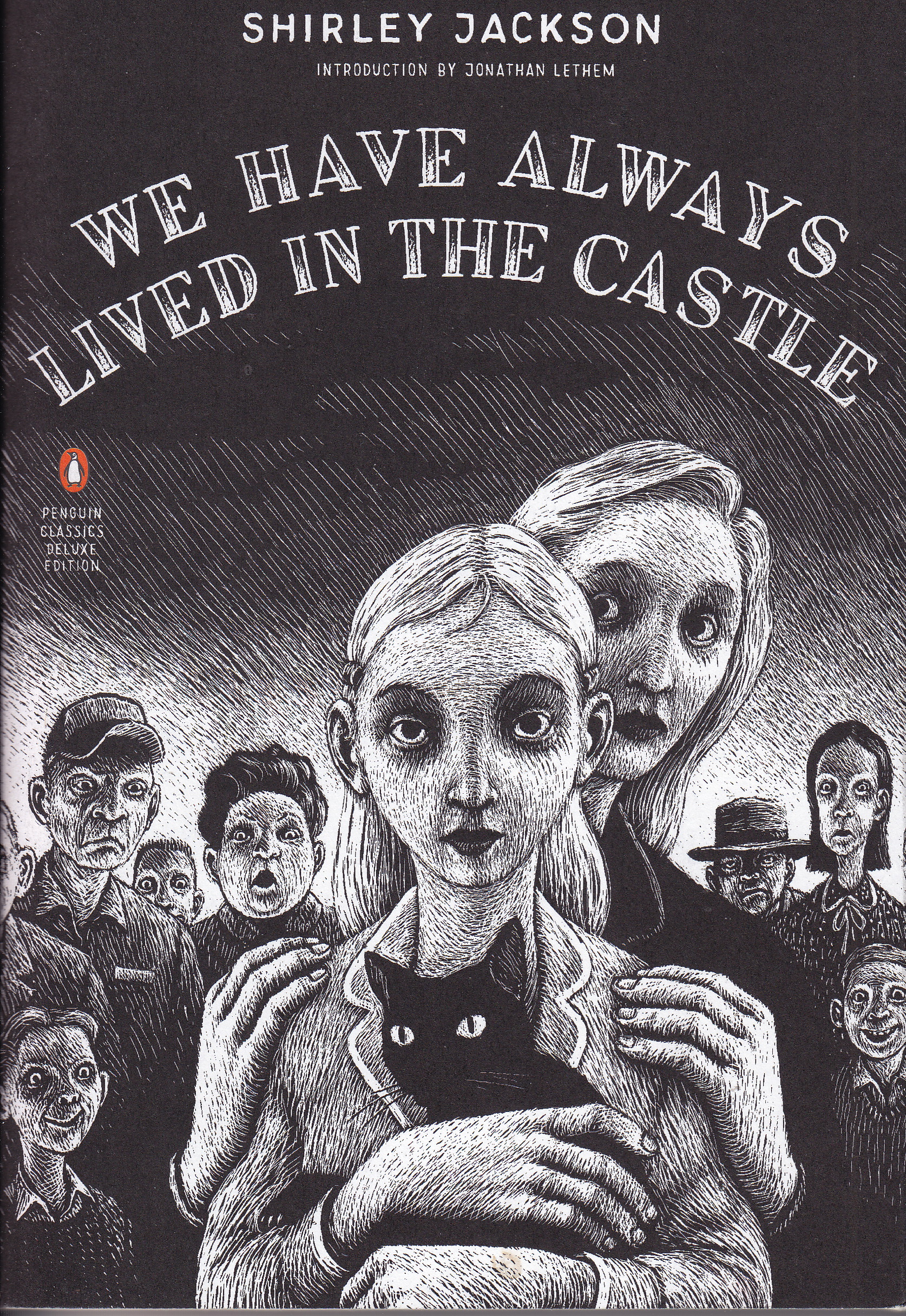
WeHaveAlwaysLivedSometimes, an experienced editor once told me, the author’s life is just as important as the book she’s written. I can’t pretend to know much about Shirley Jackson, beyond that she wrote compelling fiction and that her name is barely recognized today. Best known for her short story “The Lottery” and her novel The Haunting of Hill House, she didn’t match the output of more prolific writers and therefore, in a world driven by capitalism, didn’t receive much notice. Her work is difficult to classify. Not exactly horror, it is nevertheless unsettling by implication. There’s something wrong beneath the surface. Jackson apparently suffered neuroses for much of her adult life, and her ability to translate angst into literature has gathered her a following among fans of ghost stories. I just finished reading her last novel, We Have Always Lived in the Castle, a funny, quirky, and serious story about two young women who live alone and who, one suspects, are thought to be witches by the local population.

This little novel is difficult to lay aside for long. The characters of Constance and Merricat are too compelling to leave alone for any length of time. The fact that they are pariahs makes the reader want to ensure that they are safe as they remain carefully inside the home they’ve always known. Even though you know one of them murdered her family, you want them to be happy and secure, perhaps because the whole town is against them. I wouldn’t presume to say what Jackson meant by this story, but to me it seems a clear description of xenophobia by a woman who felt she was never accepted. Women being persecuted in New England always brings witch trials to mind. Although we don’t know why one of the girls killed her family, it is easy for the mind to fill in the blanks.

Although Jackson died prematurely, her work has influenced novelists such as Stephen King and Neil Gaiman. Uncompromising in her outlook, she allows her characters access to those strange places of the human mind where many of us wander from time to time. Merricat, for example, practices that sympathetic magic that we all, if we’re honest, admit that we attempt every now and again. Hoping in magic doesn’t make one a witch any more than prayer makes one a priest. We Have Always Lived in the Castle, although as old as I am, reflects a world in which reality can’t be pinned down. Assumptions are made and challenged. Protectors turn out to be exploiters, and the only ghosts are very human characters hated by the community in which they live. Still this is an uncanny tale, haunted by a reality that women still face in even the most progressive countries. Listening to their voices, even if from beyond the grave, may demonstrate just how much a writer’s life might mean.


Fear and Dissembling

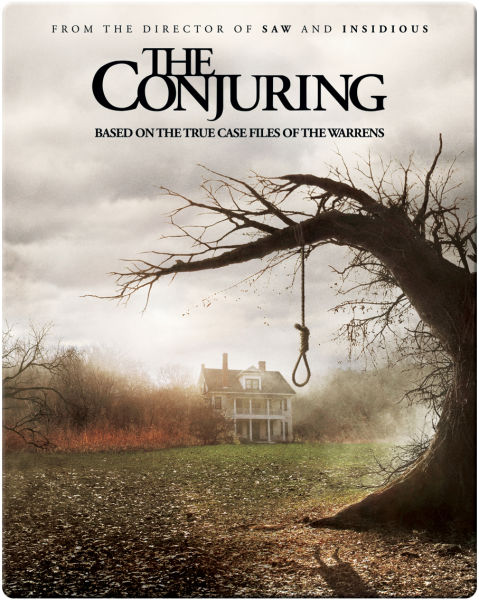
The ConjuringLast year, when The Conjuring was released, it quickly became one of the (if not the) top earning horror films of all time at the box office. Based on a “true case” of Ed and Lorraine Warren—real life paranormal investigators—the film is a demonic possession movie that ties in the Warren’s most notorious case of a haunted (or possessed) doll, with a haunting of the Perron family of Rhode Island. (The Warrens were also known as the investigators behind the Lutz family in the case of the “Amityville Horror,” showing their pedigree in the field.) Given that Halloween has been in the air, I decided to give it a viewing. As with most horror movies, the events have to be dramatized in order to fit cinematographic expectations. Apparently the Warrens did believe the Perron house was possessed by a witch. In the film this became somewhat personal as the dialogue tied her in with Mary Eastey, who was hanged as a witch at Salem (and who was a great-great (and a few more greats) aunt of my wife). Bringing this cheap shot into the film immediately made the remainder of it seem like fiction of a baser sort.

Witches may be standard Halloween fare, but when innocent women executed for the religious imagination are brought into it, justice demands separating fact from fiction. Writers of all sorts have toyed with the idea of real witches in Salem—it was a trope H. P. Lovecraft explored freely—but there is no pretense of misappropriation here. Lovecraft did not believe in witchcraft and made no attempt to present those tragically murdered as what the religious imagination made them out to be. The Conjuring could have done better here. It reminds me of Mr. Ullman having to drop the line about the Overlook Hotel being built on an Indian burial ground. Was that really necessary? (Well, Room 237 has those who suggest it is, in all fairness.) The actual past of oppressed peoples is scary enough without putting it behind horror entertainment.

A doctoral student in sociology interviewed me while I was at Boston University. She’d put an ad in the paper (there was no public internet those days) for students who watched horror movies. I was a bit surprised when I realized that I did. I had avoided the demonic ones, but I had been in the theatre the opening week of A Nightmare on Elm Street (on a date, no less) and things had grown from there. I recall my answer to her question of why I thought I did it: it is better to feel scared than to feel nothing at all. Thinking over the oppressed groups that have lived in fear, in reality, I have been reassessing that statement. What do you really know when you’re a student? As I’ve watched horror movies over the years, I have come to realize that the fantasy world they represent is an escape from a reality which, if viewed directly, may be far more scary than conjured ghosts.


Banned Magic

Grimoires“If you believe in the power of magic,” Eric Woolfson plaintively sang, “then I can change your mind.” A song that bewitched my younger years, when the atmosphere is just right, it can still bring a silent tear to my eye. Magic is a powerful elixir.

On my own personal almanac of holidays, Banned Book Week is one that takes the most preparation. In anticipation, for it is next week already, I read Owen Davies’ Grimoires: A History of Magic Books. Since this blog doesn’t get nearly the readership of a banned book, I might explain that witches are among my favorite topics. Despite that, and despite growing up with constant curiosity about religion, I only learned about grimoires recently. Davies makes it clear in his book that apart from some standard texts that have been around for a few centuries, the idea of a magic book is really relatively recent. Yes, the Egyptians and Mesopotamians had books of magic, but the concept of a grimoire only really fits the Zeitgeist of medieval Europe particularly well. Such books may draw on or cite oriental wisdom, frequently stepping into the forbidden territory of Arabic learning and alchemy, but they reflect the worldview of the Middle Ages when magic still seemed possible. In earlier centuries conjuring seems to have been subsumed under the miracles associated with Jesus, and we don’t hear much about magi beyond people like Simon Magus.

Davies packs a lot of information into his book, but my reason for focusing on it here, now, is the banned nature of grimoires. Many of them are considered rare and valuable books today, but in their day they were dangerous and forbidden. The concept that an idea can be suppressed is an odd one. In fact, many ideas have a very difficult time finding receptive minds. Once it is written down, however, an idea can circulate. The surest way to guarantee that it will is to ban it. People want to know what is so dangerous about this idea that it must be kept hidden. It makes an idea powerful, esoteric. Forbidden fruit, we all know if we’ll only be honest, is the sweetest.

Grimoires were considered most efficacious when written by hand. Although it took the printing press to proliferate such books, magic was believed to be most potent in the hand-written form. By writing text, one engages intimately with it. This is a reality we are in danger of losing in the computerized age. I grew up with only a second-hand typewriter acquired by my family when I was in high school. Most of what I wrote—for inspiration seldom comes when you’re sitting at your desk—was done by hand. My own little grimoires. Now we’ve added the interface of a keyboard. It is faster, and more efficient. Clinical even. But often the magic seems to be gone. And that is testified in many banned books. They especially, I would aver, believe in the power of magic.


Candle, Book, and Bell

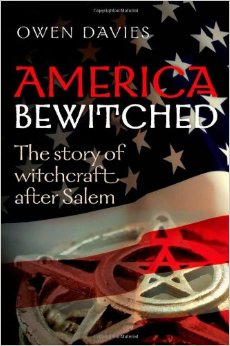
AmericaBewitchedHaving married into a family descended from the surviving relatives of women executed as witches at Salem, I have long been saddened and fascinated by the story. Not just the story, but also by the cultural milieu. We all know about the witch trials and the tragic massacre of innocents (mostly women) that took place in late Medieval and early modern Europe; the Salem miscarriage of justice came at the very end of that, after the start of the Enlightenment. Owen Davies is also fascinated by witchcraft, and his America Bewitched: The story of witchcraft after Salem is an exploration—mostly via newspapers and court trial records—of witchcraft accusations in America that continued up until about the 1950s. The coincidence of the 1950s with the “witch hunts” of McCarthyism will not escape some readers, and indeed, from the time of Arthur Miller’s nemesis on, those who vociferate against witches have kept rather quiet. Unless, of course, you count those who subsequently feared “terrorists” or any other group that might be profiled. We could learn from history, if we’d let ourselves.

Davies’s book brings together largely overlooked, nearly forgotten instances of how many cultures, including that cultural mix of Europeans who were to become “whites,” feared and sometimes killed witches. The difference from Salem was that almost all of these cases took place at the hands of self-appointed accusers (vigilantes) who hounded, punished, or killed someone suspected of being a witch. Surveys still show that a large percentage of people in the United States, although not a majority, believe in witches. It is an idea that has a primal hold on human psyches, and, as Davies points out, it is often used to explain misfortune. As I read this book I reflected how Americans come across as pretty gullible and not exactly sensible in this matter. The germanic strains of immigrants, it seems, were particularly susceptible to such beliefs. We also find witches, however, among Native Americans and African Americans as well. Misfortunate plays no favorites.

There are those who claim technology will save our culture. The other day a friend reminded me of the third of Arthur C. Clarke’s laws: “Any sufficiently advanced technology is indistinguishable from magic.” Even the most scientific of us knows, whether or not s/he will admit it, that “spooky action at a distance” does occur. It is perhaps only a matter of time before we find the hidden laws that operate the mechanism, but I can’t help but feel a little bit uncanny when I see more and more lifelike robots operating with what seem like human intentions. Of course, those intentions are programmed by humans. And it is often otherwise rational adults who with gun in hand, up until fairly recent times, accused flesh-and-blood neighbors as witches. America Bewitched can be a scary book, especially since unlike vampires, witches do cast their reflections in a mirror.


Witches in History

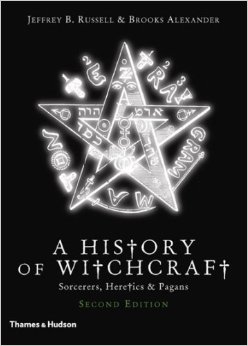
History of WitchcraftIn a rationalistic society, the concept of witches has no place. If only we knew what witches were. Sadly fascinated by the unfortunate—evil would be the more appropriate word—victimization of women in the late Middle Ages as partners of the Devil, I read Jeffrey B. Russell and Brooks Alexander’s time-honored study, A History of Witchcraft: Sorcerers, Heretics and Pagans. With its bold pentagram on the cover, I’d been afraid to take this on the bus, and so it sat in my reading pile until I figured out a way of keeping the cover from view while I perused the contents. The authors wisely spend the introduction with definitions. We define our world through lenses. For the most part, people today use the lens of science, as if that were the only way to view the universe. Still, even with that polished glass in hand, we have a difficult time knowing what “witch” is supposed to designate. Russell and Alexander suggest that it changes over time.

No doubt, witches still exist. The recognition of Wicca as an authentic religion (for tax purposes, the only true measure of a religion’s bona fides) demonstrates that. The problem is that Wicca is not in any sense a direct continuation of the witch hysteria that swept Europe, and parts of New England, centuries ago. As A History of Witchcraft demonstrates, this was a religion practiced by no one, but imagined, and feared, by many. Particularly men. Particularly religious men who had problems with women harboring hidden powers. It was a full-blown and horrible fantasy that led to many thousands dying for a religion that didn’t even exist. Modern witchcraft began in the 1930s and has become a nature religion that sees itself connected to that past, but which really only touches at the very edges.

Witchcraft was a way of looking at the world that saw all things as intimately connected. Russell and Alexander point out the similarity to chaos theory with its butterfly effect. We do see effects at a distance. Science tries to make them less spooky. Those who practiced witchcraft in ancient times, before the Middle Ages could even be dreamed, tried to bring such forces under human control. If some anthropologists are to be believed, some may have succeeded. This idea pulls at our darkest fears. Can we accept a world where we are manipulated by others in unseen ways? It happens every day. Not by spells or incantations, but by forces far more powerful than that. You don’t need to be a witch to see it. You only need to open your eyes.


Rosemary by Any Other Name

Rosemary

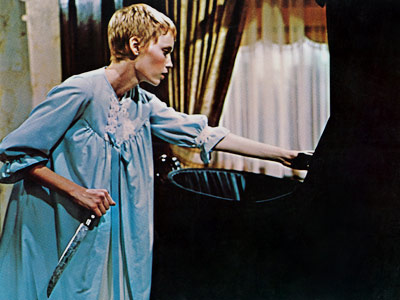
With NBC’s remake of Rosemary’s Baby into a mini-series in the news, I sat down to watch the original again. I’ve blogged about it before, but with most available funds being diverted to college, watching new movies will be a rare treat for some years to come. Besides, the original is a mishmash of religious ideas that despite their lack of coherence still leave the viewer somewhat disturbed. Since the last time I watched the movie, I’ve read several books on witches and have come to recognize the strange brew that Roman Polanski concocted for public consumption. Reaching back to the myth of diabolic witches, the original movie presents such witches initiating a new world by literally spawning Satan on a woman whose name is based on the mother of Jesus and who will ultimately care for the helpless little devil. The viewer, despite the knowledge that Rosemary is carrying evil incarnate, still sides with the vulnerable, pregnant protagonist. It’s the end of the world as we know it.

I’m not sure how you make a miniseries out of this thin plot. I suppose a nine-month pregnancy would lend itself to slow development, but haven’t we grown a little too old for witches and devils? In fact, Wicca is now a recognized religion in much of the industrial world, and the devil’s been on the run for decades. Religious movies, or at least movies based on religious themes and characters, are perennially popular, however, no matter what the secularists tell us. And why not open a series about pregnancy on the weekend of Mother’s Day? Nothing stirs the emotions like putting a young mother at risk. That’s perhaps the insidious side of the original movie—we silently side with the devil.

Rosemary is, of course, manipulated by her husband with the everyman name of Guy. This isn’t in any sense his child and, like any businessman, he stands to gain enormously from someone else’s labor. Exploitation is the cost of the continuation of the human race. It doesn’t take much to figure out that we’re watching a parable here. After all, the Time magazine cover asking if God is dead makes a cameo in Dr. Saperstein’s office. And the setting in Manhattan clues us in from the beginning that this is the place were many millions are asked to make a few very rich. There is a witchery in New York, and for those who know how to look, the devil may be found in the details.


Any Witch Way

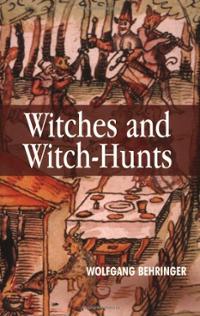
Witches&WitchHuntsIt’s easy to feel smug over the past. At every moment of human civilization we deem ourselves higher than those who came before. There’s no doubt that the eradication of the thought-processes that led to the witch hunts of past centuries seems decidedly positive for all parties involved. Wolfgang Behringer’s Witches and Witch-Hunts, however, is a surprising book. I’ve read a fair number of studies of those dark ages when people were cruelly tortured and murdered in horrendous ways because they were deemed to be in league with Satan. As usual in such books, Behringer begins with that history. What makes his study surprising, however, is that he doesn’t stop in the eighteenth century when, in what we’re usually told, the witch trials ended. Behringer points out that witch hunts are still happening, and that the rates of those killed perhaps rival those, per capita, of the numbers during the Middle Ages. How can this be? In an era of global awareness, we sometimes forget that the focus isn’t always on Europe or America.

In many parts of the world, witches are still part of local belief systems. Not all of these are women, by the way. Many cultures favor the male witch. What these cultures do have in common, however, is their natural fear of black magic being suppressed by colonialism. More “civilized” westerners came and enacted laws which, to the minds of the locals, protected the witches! Local tradition of eradicating those who practice black magic was considered righteous, and now the government forbids it? That seems strange, especially when many of the colonizing forces were also interested in Christianizing as well. Missionaries wanted to affirm belief in the supernatural, and, ironically, often became the vehicles that allowed beliefs in witchcraft to continue. As Behringer points out, some populations converted to Christianity precisely because it allowed the continued belief in physical evil—therefore witches—and the eradication thereof.

This creates a vexing problem. When cultures meet they inevitably attempt to assert their values. When the technologically superior force their ways of life on those behind on that front, a kind of pressure of misunderstanding builds. Instead of bringing witches to trial, they lynch them instead. It seems we may have underestimated the pull that belief in witches has on people. Traditional societies uninfluenced by the developments in Europe also came up with the idea of witchcraft independently. Witches, it seems, stand for the classic issue of theodicy—explaining why things go wrong in a world that should be ordered by deities. Coincidence is always cold comfort in explaining loss. Even the rule of law breaks down. At the same time, how can it be right to allow the murdering of those suspected of witchery even in the enlightened twenty-first century? This fear is one of our most abiding demons, and the solution remains out of reach, unless, of course, we allow ourselves to resort to magic.


Witch Way

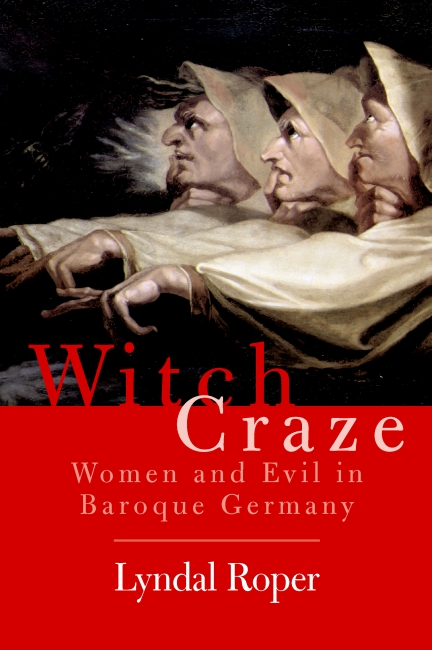
WitchCraze2Women generally bear the brunt of religious intolerance. This is an evil that has proven tenacious and insidious, and which has played out in history far too many times. Lyndal Roper’s Witch Craze: Terror and Fantasy in Baroque Germany brought this home to me once again. Books on witch hunts are deeply disturbing, but we need to engage with the brutality of the past if we want to prevent its reappearance. Roper points out that although many nations persecuted “witches” in the Middle Ages, even into the early modern period, Germany by far had the highest numbers. There were probably many reasons—no simplistic answer meets all the clues. One is clearly related to politics. Germany lacked the central cohesion of other European nations in this period. Feuding princedoms from a fragmented Holy Roman Empire had no strong central authority. When it is everyone for themselves, scapegoats are never far off. Roper doesn’t leave it at that. She points out that the central characteristic of the witch is the intent to harm Christians. Indeed, the witch is a monster born of religion, and which murdered thousands of women in the name of Christianity.

Compounding this unrealistic fear that Christians have always seem to have had, was the emerging Reformation. Distrust erupted in Germany. Was one’s neighbor a Lutheran or a Catholic? In either case, the other was heretical, from someone’s point of view. Distrust ran at premium prices. And women picked up the bill. Yes, there were male witches, most of them associated with women who’d been accused, as Roper points out. Even as the Enlightenment was burgeoning, renewed hunts for witches broke out, leaving innocent women dead in a land that valued fertility perhaps above all else. Women’s bodies, as Roper notes, were to focus of suspicion and fear on the part of a male power structure that dealt with its phobias by the use of violence. Even the Enlightenment couldn’t wipe this slate clean.

Today in the western world, secular thought has replaced superstition for many people. Women are not longer accused of witchcraft. Besides, witchcraft is a chic new religion in many places. But the longed-for equality is still not here. In many parts of the world religious violence is still directed at females by male power structures that should’ve died out with the fading of medieval Teutonic anxieties. Those who perpetrate such violence hide behind scriptures—even the Hebrew Bible acknowledges the reality of witches. Religion creates its own cadre of monsters, and those with stout conviction look for women to blame. The flames of the pyres did not lead to a universal enlightenment and the Tea Party tells us Christianity is still endangered in a world where it may spread largely unhindered. One truth, however, remains. The truly endangered are women, and men who don’t fight against the real monsters do not deserve to be called defenders of the faith.


Dangers de la nuit

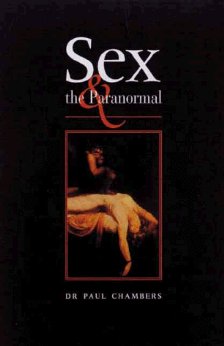
Sex&Paranormal Some books require extra clothing on the bus. When I saw the title of Paul Chambers’ Sex and the Paranormal, I noted the juxtaposition of two aspects I’ve frequently argued are intimately related to religion. There can be no question that religions in some way attempt to regulate sexuality. Those forbidden topics loosely collected under the sobriquet of “the paranormal” tend to be only a baby-step or two away from religious beliefs. Often those who are open to religious acceptance also allow for the possibility of the paranormal. So what did these two quasi-religious phenomena have to do with one another? How was I going to read a book with a title like this on public transit? How would I plumb the depths of its wisdom without feeling like a pervert? I found an unused book sock, a kind of colored condom for textbooks, and wrapped in around my questionable interests and read as discretely as possible.

Chambers, a member of the Society of Psychical Research, as well as a scientist, starts the reader off with what he is surely correct in identifying as a combination of sleep paralysis and hypnopompic hallucinations—the feeling of being violated by demons or ghosts in the night. While the reasons are poorly understood (beyond our latent sense of vulnerability while asleep), the fact of sleep paralysis is well documented. As Chambers points out, our over-active, often religiously fueled, imagination fills in the blanks for those who wake up unable to move, feeling a presence in their darkened rooms. This leads Chambers into a discussion of Lilith and succubi and incubi, the molesting demons of ancient lore. Witch-hunts and amorous aliens are strange bedfellows in this volume as well.

Studies like this daringly bring together subjects that have been parsed apart by conventional society. They are also deeply relevant. Many of us remember the (largely mythic) Satanic worship scares that plagued pockets of America, and then Europe, in the 1990s—latter day witch-scares, as Chambers points out—the tremors of discontent that rumble through societies struggling for an overly rational explanation for human behavior. They are present-day reminders that no amount of fiscal solvency and empirical data will ever banish the deep fears from the human mind. Our emotions have often served us very well, and have sometimes abused us, for the entirety of our evolved existence. And although we can hold them at bay in the clear light of day, at night we are surprised to discover that we really believe in monsters after all.


Hansel and Regretel

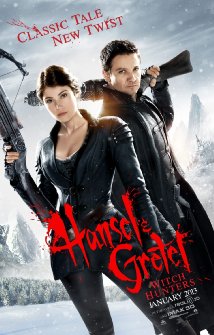
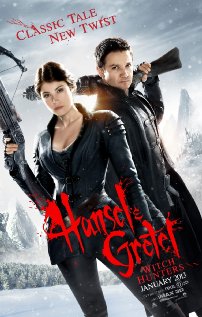
HanselGretelHansel and Gretel: Witch Hunters was on offer on the trans-Atlantic flight. Since I missed it in theaters, I decided to watch it on my mini-screen inches from my face. Witches, among the classical monsters, have a strange longevity into the world of science—like van Helsing (of movie fame) the protagonists have steam-punkish gadgets to destroy the naturally invincible foes. What’s not to like? I could not help but be disturbed, however, at what seemed to be the inherent misogyny of the film. Perhaps it was the lighting on the plane, but I saw only one male witch among the monstrous hordes of females who were battered, shot, and burned with apparent sangfroid. Women were guilty, it seemed, until proven innocent. And Mina, the white witch, again underscores that women who are “clean” are still potential witches underneath. Naturally, she dies before it’s over, but in a noble way.

The witches in the movie are strangely removed from a traditional, satanic context. They derive their power, like modern wiccans, from nature and strange mixes. The source of their magic is never explored very deeply, but when they catch trespassers in their forest, their queen states that even God himself fears to go there. Bewitching bravado, to be sure, but where does this image of God originate? A god afraid of the very nature that (in a film such as this, certainly) “he” created? The sacrifice of children is a good biblical trope, but seems to do little more here than to build the tension.

Monster movies, I realize, are “guy flicks.” Something about all that testosterone seems to be energized by images of ordinary people fighting monsters, against incredible odds. The monsters here, however, are barely distinguishable from regular women. Folklore has a deep well of traditions about witches from which the savvy might draw to write an intelligent, entertaining tale of witch-hunters. After all, the real antagonist, traditionally, is the male devil. He is, in medieval tradition, the source of witching magic. By removing Satan from the picture, we are left with strong women who must be repressed, and the world is really no safer when Hansel and Gretel are done. In fact, the end of the movie implies that they will never be finished. An opportunity for a subtle shift of paradigm was missed in this film, and, as usual, it is women who end up paying the price.


Witching Fiction

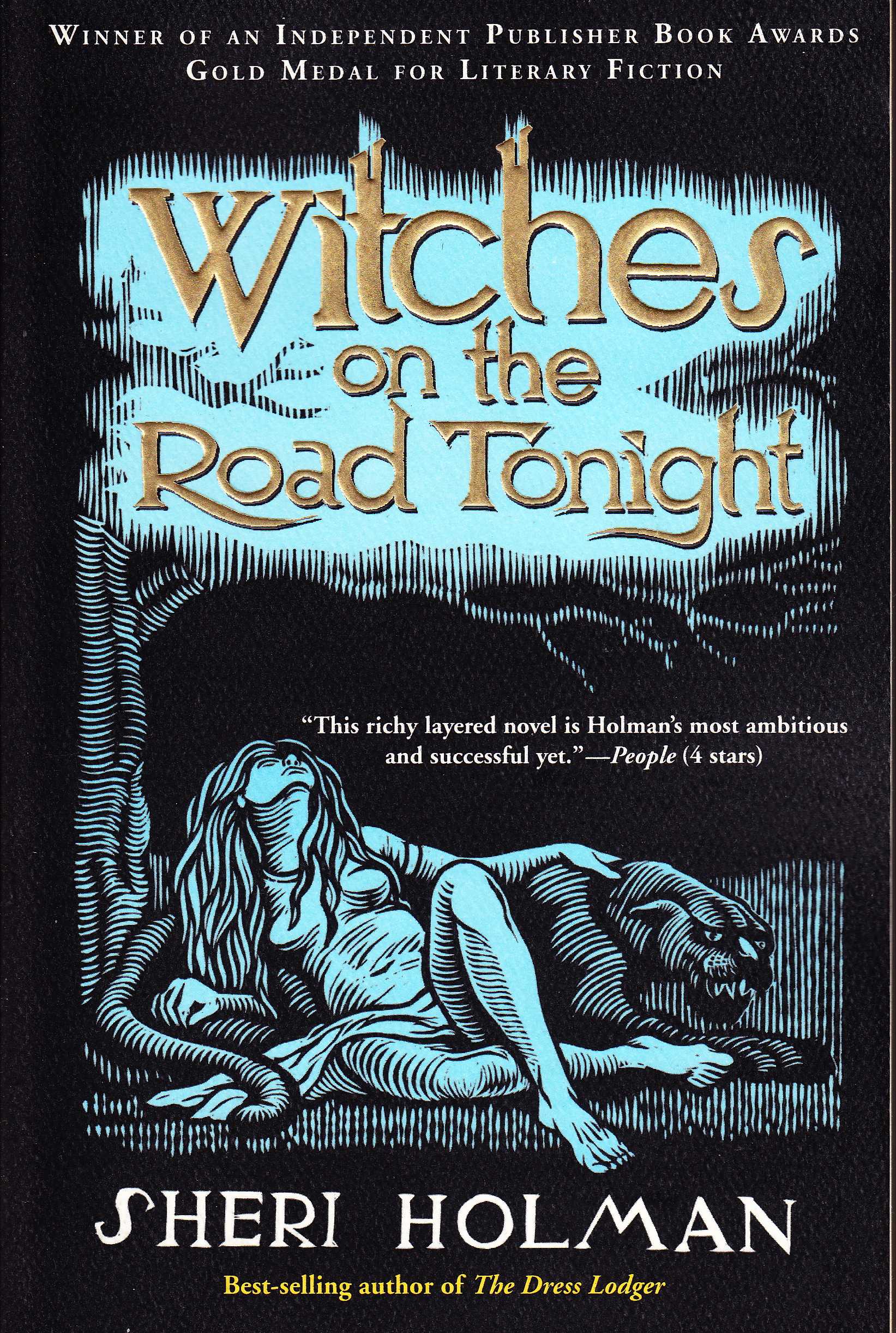
WitchesRoadLiterary fiction is a rich trove of religious thinking. Consuming fiction sustains the soul as well as the mind. Sheri Holman’s Witches on the Road Tonight was an impulse buy. The title, the cover, the intricate implications, the price were all right. It turned out to be a rewarding story that involved, possibly, witches and certainly religion. Not that it is a story about religion—definitely not. Yet, the protagonist is a weatherman who dresses as a vampire to present old monster movies on late night television. His relationships define him and, as his daughter learns, he may be the son of a witch. Deeply textured with the earthy reality of the rural poverty-stricken, at several points in the novel a thoroughly naturalized biblical vocabulary effortlessly flows. At crucial moments the story is poised on the crux of heathenism and religiosity. It is a book difficult to forget.

The fascination with witches has deep explanatory roots. When hopes are not realized as they are carefully planned, people naturally seek a scapegoat, someone to blame. Too often in history the blame has fallen on the powerless, the marginalized. Too often on women. In the somewhat enlightened twenty-first century it has become passably safe to declare oneself a witch. Our scientific worldview allows it as a harmless delusion, but the issue is more than it might seem. For some, witchcraft is the only channel available for a power that should belong to all. For others it retains a taint of evil, primarily because of a biblical point-of-view.

Israel in antiquity was a patriarchal culture. It was a man’s world that kept most women from any seat of power. “Witches” in this world are simply those who continue the trajectory of a kind of animistic faith in the vibrant life of nature. Prior to “revelation” it was self-evident that nature itself was full of vitality—spirits—if you will. When God was added to the equation, the life-force of nature fell on the “less than” side of the comparison. Even today children recognize the shaman under the name “witch-doctor,” euphemistically applied to those closer to nature than to the Bible. Reading Witches on the Road Tonight brought all of this back to me. Although largely set in New York City, it spoke to me as a rural urbanite who left something valuable in the woods of my childhood.


More Witches

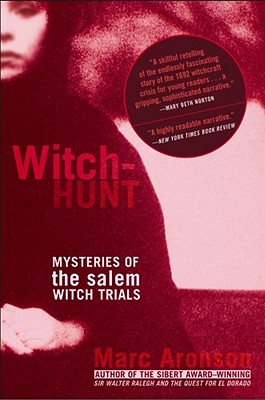
WitchHuntAronson It’s been some time since I’ve been to Salem. It’s been even longer since I’ve read Arthur Miller’s The Crucible. The events of 1692, however, continue to haunt me. I recently read Marc Aronson’s Witch-Hunt: Mysteries of the Salem Witch Trials. Intended for a young adult readership, Aronson’s book really isn’t proposing any new theories about why religious violence was perpetrated against the vulnerable, mostly female, pool of those living in a very superstitious society. It does, however, show some of the issues in sharp relief—more academic books sometimes cloud the issues with erudition. Historians will continue to debate what happened in Massachusetts at the end of the seventeenth century when the Enlightenment was getting underway and the explanatory value of science was overcoming the world of miracle and magic. Even with science on our side, however, adequate explanations of the sad social madness of Salem are still lacking.

As Aronson points out, there seems to have been a certain amount of greed involved as laws allowed the property of “witches” to be confiscated. Equally culpable are the learned clergy of the day, some of whom overrode their disinclination towards belief in witchcraft to hang a few women (and fewer men) for an imaginary crime. Lack of full historical documentation and the unrecorded lives of women often combine to raise many questions about Salem. It remains clear, however, that the outlook of the clergy influenced perceptions on the ground. Aronson suggests that Cotton Mather’s earlier accounts of Goodwife Glover of Boston—a woman executed as a witch without even her first name having been recorded—may have “inspired” similar violence among the population of Salem. When devils are suspected, the clergy are never far.

When the mania died down after a lethal year, the clergy, both Increase and Cotton Mather among them, recanted the easy execution of a few expendable women, and fewer, less expendable men, in Salem. Since we lack documentation, we will never know fully what was behind the witch-hunts, apart from misogyny and misperception.

Aronson ends his little book by asking us to consider modern terrorist hunts and the eerie similarities to the mindset of Salem. Listening to some media interviews, particularly on Fox, after the Boston Marathon bombings, we haven’t traveled so very far from Salem. In a world of high technology, where Satan is said to once again stroll the streets of Massachusetts, we have to wonder if the witch-hunts will ever truly end.


Which Lethbridge Witch?

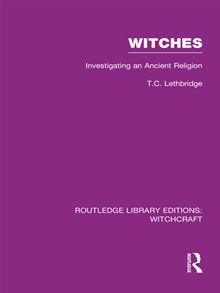
witcheslethbridge Thomas Charles Lethbridge was a twentieth-century explorer. I knew his name only from book covers, and since books published before the cynical 1980s have a feel of the parsimoniousness to them, I tend to be trusting. As a former academic, my choice of reading is, in an odd way, sequential. You see, academic research is often a matter of following leads, rather like Sherlock Holmes with his clues. One thing leads to another. I’ve been learning about paganism at work, and so when I noticed T. C. Lethbridge’s book, Witches: Investigating an Ancient Religion, I figured that I might learn something about belief in witches in the Middle Ages. The book was published by the Routledge Kegan Paul phase of my employer in 1962. I quickly learned that Lethbridge was far from conventional, even in the twenty-first century.

Lethbridge’s book on witches turned out to be a romp through mostly Celtic mythology, with a bit of Norse and ancient Near Eastern myth thrown in for good measure. It turns out that Lethbridge literally did believe in the power of magic and was no slouch when it came to dowsing. In the great Frazerian tradition, Lethbridge brings together some elements that are probably best left separate, but the result is undeniably interesting and entertaining. I’m not sure he would be considered a balanced source for research purposes today, yet his book does contain unexpected insights. But no witches. Witches, according to Lethbridge, were adherents of the old gods. Their worldview collapsed with geocentrism and there was little left for magic to do in an empirical world.

Lethbridge’s constellation has dimmed from the scholarly zodiac. In recent days he has found a new set of disciples, however, who see his work as profoundly prophetic, in a manner of speaking. Lethbridge was an occult investigator before such pursuits became big business. Among mainstream academics these ideas still fall into the category of bogus, naive, or superstitious, but that is beginning to change in some quarters. Lethbridge, as it quickly becomes apparent, reserved a kind of scorn for establishment academics. It is true that stepping out of line has its consequences even in the rarified halls of higher education, but the results of the research are often of high quality. Even witches can be studied with an academic eye. The difference seems to be that T. C. Lethbridge believed what the witches said. That makes him a real explorer.


Hardsell and Gospel

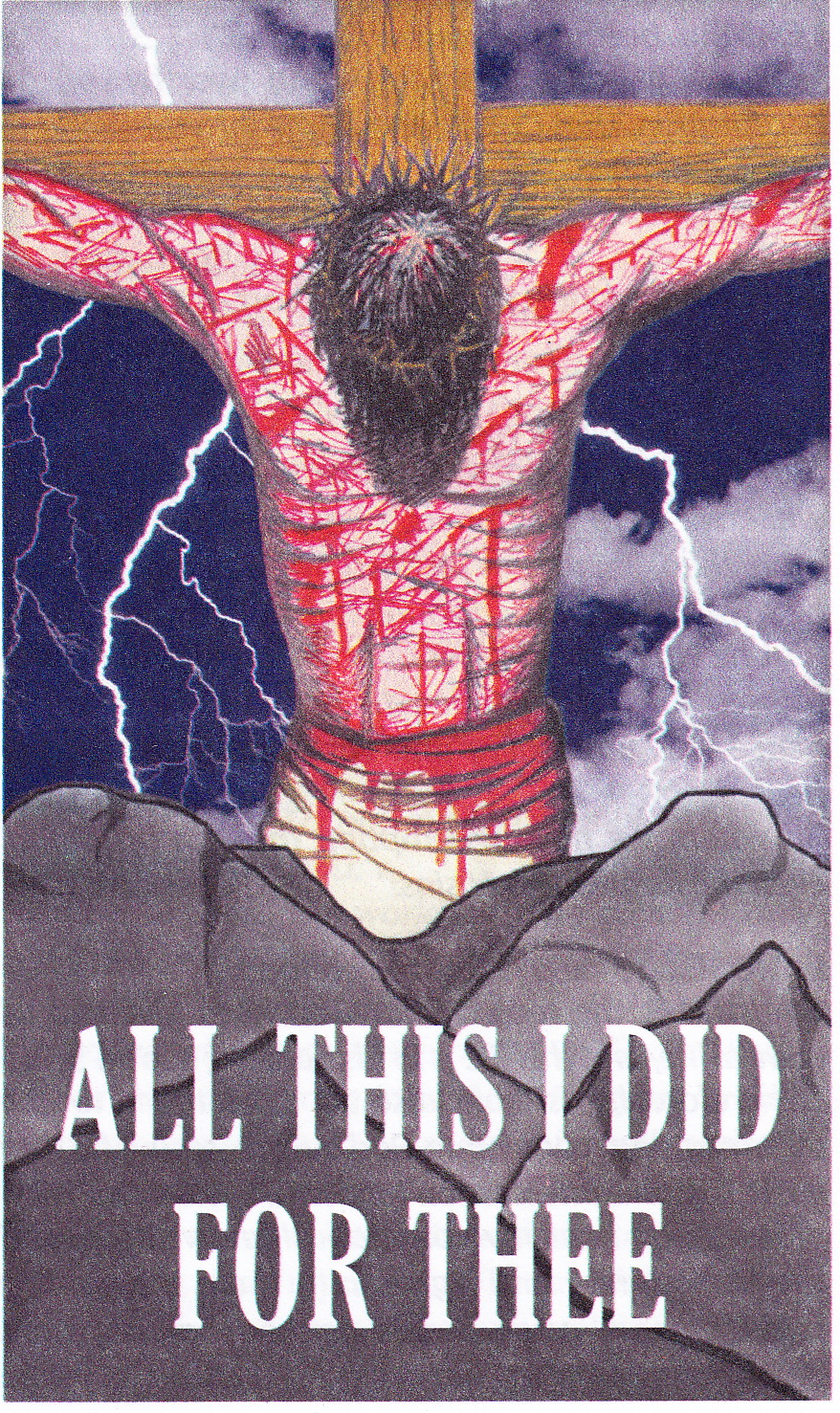
When I find myself a considerable distance from my point of egress sometimes I have to take the subway to escape New York. Don’t get me wrong—I love New York, but Monday through Friday it is a place to work, not to play. Getting home is serious business. To get to the Port Authority Bus Terminal from the subway, one venue is a long underground passage. When I take this corridor, I find that it is often a favorite place for street evangelists during inclement weather; apparently the gospel goes underground when the weather turns nasty. So as I recently padded along that tunnel, I noticed an interesting conflict in worldviews. There were a series of street preachers, the central one with Bible in hand, and several others handing out tracts. If I’d had time I’d have listened to the preachers a bit; one was riffing with street language and intonation, and another was fluently flashing between English and Spanish. I took one of his tracts.

HanselGretel

The contrasting worldview was the posters repeatedly displayed in a long line along the wall—Hansel and Gretel: Witch Hunters. The movie is due for release next week. One of the modern remakes of fairy tales in the horror/action genre, this might be a fun ride, but the idea of secular forces taking on monsters clashed with the old fashioned gospel I was hearing with my ears. Or did it? Witch-hunting is not exactly PC in the days of religious pluralism when Wicca is becoming as normal a religion as the Anabaptists. Anyone who listens to most modern day witches knows that they are not evil, so I wonder how the movie plans on setting up the “evil” that our eponymous brother and sister have to conquer. I might just have to go to the theater alone to find out.

Tract

But is this really so different from our earnest street preachers below the ground? They are railing against the evil in the world, and if you follow their tracts, there is clearly no shyness about blood and torture here. The movie is rated PG-13, but what about the slip of paper I hold in my hand that shows a much bloodied Jesus hanging on a cross? Whether it’s with fancy crossbows or just plain crosses, the goal is to overcome evil. The real question is how to define it. Some, I suppose, would consider this movie a kind of evil; Gretel’s tight-fitting uniform is a little low-cut for taking on the forces of darkness, I should think. But the real evil is treating other people as enemies. And that even goes for street evangelists. If only they would admit the same for the wider world, maybe all this blood wouldn’t be necessary.