Symbolic Confusion

While on a drive through New England, we were discussing Islam with our daughter. Now I’m no expert on Islam, but I have covered it in a few classes. It has had a presence in America for a couple of centuries at least, probably first arriving with slaves from Africa. As we drove into Springfield, Massachusetts, I saw four slender towers rising into the sky off the highway and said, “Look, it’s a mosque,” supposing the towers to be minarets. When we drew closer, it was clear that these were really just the decorated finials of a quite secular bridge. Embarrassed at my mistake, my family was kind enough to console me with the suggestion that the four towers from that angle did look like the accoutrements of a mosque. (Earlier in the day I had seen my first Sikh temple in Connecticut, so the mistake might be at least slightly justified.) My wife mentioned how misidentified symbolism could be confusing. This spurred me to consider how symbolism frequently becomes a stand-in for reality.

I’ve been reading about witches lately. Like many legendary fears, witches can be interpreted in many ways. They have their origins in the belief that nature may be manipulated by will over a distance and had been feared for the effectiveness of their powerful spells. After the tragic witch-hunts of the Middle Ages ran their horrible course, witches came to be seen as the result of overactive imaginations and rampant superstition. The modern Pagan movement has revitalized the witch in a somewhat safer environment, and has applied various symbols to it. Thor’s hammer, the ankh, and the pentacle are considered the symbols of modern witches by various covens and practitioners. While passing by a department store on East 43rd Street, I noticed apparel decorated with pentacles—the symbolism adopted by some witches.

This reminded me of a fracas that erupted some years back when a fashion designer incorporated the ornate letters of the Arabic script into the design of a sleek dress that left less to the imagination than a traditional burka. The designer expressed surprise when Muslims objected to words from the Quran being used to decorate immodestly covered women’s bodies. In both these scenarios symbolism has demonstrated its power for being what philosophers call the Ding an sich, the thing itself. Symbols are often that way, bridging as they do the worlds of religious thought and secular existence. I wonder how much we as a society would gain from letting bridges be symbols that participate in the reality they represent.
Ashes to Ashes

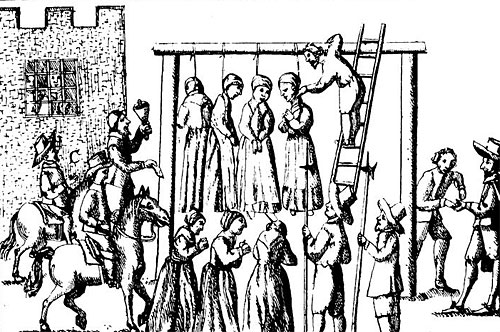
It was just a small blurb in the paper. Down at the bottom of page 17, it could have been easily overlooked. “Alleged witch killed by being set on fire” the small headline stated. And the date was 18 February 2012. This sad incident took place in Nepal. The story notes that “Each year hundreds of women in rural Nepal are abused after being accused of being witches.” Just last week, to the scorn of many, Cologne, Germany reopened the case of Katarina Henot, a woman burned as a witch 385 years ago. Katarina Henot was declared innocent because of the efforts of a priest to raise awareness of the persecution of women around the world. Five days after the story hit the news, Theganidevi Mahato was burned to death in Nepal. Although some called the action in Cologne a publicity stunt, it was anything but. We need to put names on those we continue to allow society to brutalize. Katarina Henot and Theganidevi Mahato, separated by 385 years and many, many miles, both died for the insanity that equates tragedy with women.

How blithely the word “witch-hunt” spills off the tongue. Each time we invoke it, the very phrase trails the ghosts of many thousands of women made to pay the price for society’s paranoia. The answers to why such tragedies occur may never be fully understood, but the events are preventable. The key is education. Even in the most advanced culture in the world, as we like to style ourselves, we heap contempt upon education, claiming that teachers barely work and that professors get paid for doing nothing. We have fallen into the fallacy that one size fits all—not all jobs can be measured by the wicked, black dip-stick of the oil industry, or the quick-cash-and-crash of the stock exchange. Education is a lifelong process, and as the political ridiculousness we constantly hear reminds us, lessons must be endlessly repeated until they sink in. Too many people think it is just easier to burn witches.

Witch-hunts arise when societies are stressed. Scapegoating is one of the most unfortunate legacies religion has left us. Evidence points to the scapegoat as being earlier than the Bible, although it takes its characteristic form there. We hear how the sins of the people were transferred to the goat on a day not so different from Ash Wednesday, to be symbolically born away where the animal would die instead of us. Somehow we’ve come to believe that burning the representative of our neuroses will somehow cure our society. Does it? Has it ever? This day as millions of Christians contemplate their sins and wear ashes on their heads, I suggest that we think of the women whom religion has allowed to become its victims. Whether due to the superstition of a remote village in Nepal or the irrational fear of “civilized” Europe with the blessing of the church, we’ve let scapegoating go too far. And those who’ve been killed are not the nameless females of forgotten times, but are the Katarinas, Theganidevis, Marys, and Rebeccas who were just as human as their neighbors.

What are their names?


Anglo-Wicca

Although it may seem the right season for witches, the revival of serious witchcraft in the religion of Wicca is a much misunderstood and maligned phenomenon. One of the persistant myths that many religions continue to perpetuate is that they go back to the very beginning. If any religion might rightly make that claim, it would be something close to Wicca, or nature religion. The fact is, however, all religions have histories and beginnings, and radical reshaping is not at all unusual along the way. In the western hemisphere, many like to claim a privileged position for Christianity. Certianly in the political world, such a claim is justified. Christianity shaped Europe, and therefore, by extention, all previous colonies of the European powers. The Christianity that shaped Europe, however, was the political powerhouse of Roman Catholicism, and later, reformed versions of the faith. The Catholicism of the Middle Ages, as may be discerned at a mere glance, shares little in common with the ideals given in the mouth of Jesus by the Gospels.

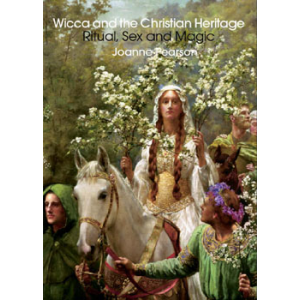
I just finished reading the provocative Routledge title, Wicca and the Christian Heritage: Ritual, Sex and Magic, by Joanne Pearson (2007). I learned a considerable bit about the modern origins of what is recognized as a tax-free (the sign of any true religion) belief system of Wicca. As Pearson points out, this Wicca dates back to the 1950s. What really caught my attention, however, was the tortured religious history of the movement’s founders. Enamored of Anglo-Catholicism (a form of ceremonial I had been force-fed for over a decade at Nashotah House), the founders of the religion (both intentional and unintentional) craved the seal of antiquity. Many of the players invented denomination after denomination of Christianity, sometimes acquiring ordinations and consecrations by hapless Eastern Orthodox bishops who misunderstood where they were spewing their blessings, in the attempt to show it was real Christianity. You need a roadmap to keep all the blind alleys straight. In the end, Wicca derived from an unorthodox combination of orthodoxy, Masonry, and Spiritualism. It is a wonder that modern Wicca appears as sane as it does.

Pearson’s book is not a full-fledged history, but more of a background to such a history. Many Nashotah House affilates, I’m sure, would rage to see time-honored names from Anglo-Catholic history alongside those often considered charlatans and posers. But when it comes to religion, even the most orthodox are very creative. Perhaps each gesture, vestment and accessory has a pedigree. None of them go back to a dirt-poor peasant who told his followers to give all material goods away. We may be willing to accept many things in the name of religion, but let’s not go overboard here. Not even the literalists do that.


A Midsummer’s Daydream

Solstices and equinoxes are among the earliest religious festivals in the world. While there is no means of proving this, the signs are fairly indicative; ancient peoples were close watchers of the sky. Like many other species of animals, they used subtle clues to help them determine which direction to go at what time of year. Once agriculture developed, the sky contained the key of when to plant and when to harvest and when to thank the gods. It is no surprise that when the classical religions developed many of their festivals centered around, especially, the equinoxes and the winter solstice. Did they even bother with the summer?

The summer solstice tends to get lost in most modern festive calendars: it is summer, a time when we are busy relaxing—the crops are in the ground, firewood need not be gathered just yet, and life is perhaps just a tiny bit easier (except for those poor kids who still have to finish out the school year!). No cause for wonder that this particular holiday (traditionally Midsummer) is most evident in northern Europe where in just six months days will be dreadfully short and very cold. Midsummer celebrates light, fertility, and healing. Some traditions claim that witches meet on Midsummer as the sun begins, once again, its inexorable journey south (from the northern hemisphere perspective) nearly to disappear in the dark December.

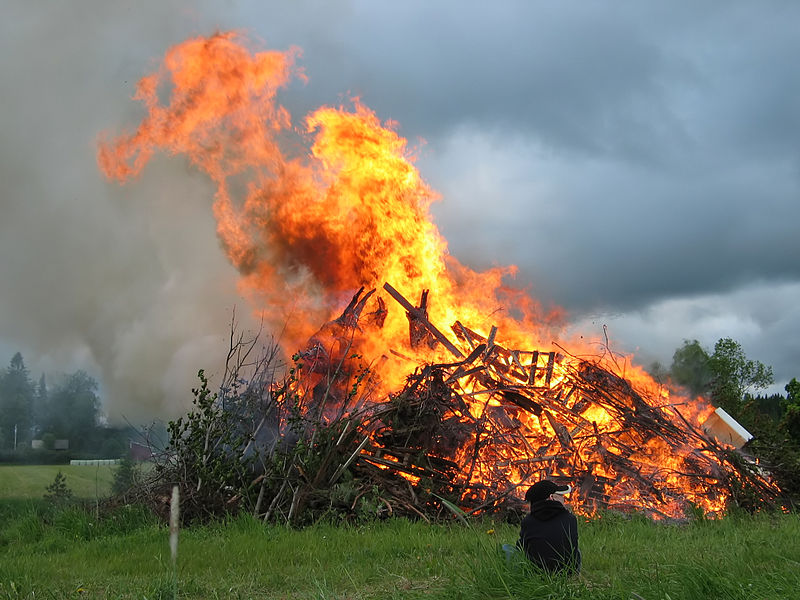
The modern day Midsummer celebration held by reconstructionist Neo-Pagans is Litha. The name is borrowed from the Venerable Bede but the observance of the solstice is certainly authentic. It is often celebrated with fires to shorten the already apocopated night. It is the time when darkness is at bay. It is perhaps telling that the major religions have little to add to days of relatively carefree existence. People need their religion when things go bad, but when the struggle is minimized we might leave angry gods behind for a while and just bask in the ease of it all. But, as the Neo-Pagans and witches know, the longest day of the year also foreshadows the darkness that, until this day next year, will never again allow us as much light.

Northern European Midsummer's bonfire


Malleus Practice

Misfortune takes a quiet seat in the back of the bus for many people, but it is always there riding behind you. My recent trip to Salem is now over, but it has left me with that haunted feeling that sometimes tragedy just won’t let go. Reading up on the history of witches and the belief therein, it is pretty clear that the whole idea began as a form of theodicy. Misfortune happens. When a one-to-one correspondence attends it, people don’t worry too much. (John has a stomachache. We know that John slapped Bob, and Bob punched John in the stomach so there’s no supernatural agent at work here.) When the adversity comes out of nowhere, to all appearances, we naturally look for a cause. As long ago as ancient Sumer, and probably before, the answer was sometimes the baleful influence of enemies with supernatural powers. The witch was born.

This idea has remarkable longevity. Even as the eighteenth century dawned, just a few short years after the tragedy at Salem, Puritans and politicians embarrassingly looked at their feet and admitted this mockery of justice had been an unfortunate error. Yet they still believed witches existed. The concept is alive even today in parts of the world minimally influenced by schooling in science and logic. (I taught at a seminary where various witch hunts still took place; books were even burned.) Who doesn’t know the feeling that a totally natural disaster was in some way targeting them? Whether tornadoes, tsunamis, or rain on your Memorial Day picnic, the normal human response is one of a minor (or major) persecution complex.

To solve the riddle of witches, horseshoes and witch bottles are not necessary, but education is. Witchcraft was not considered Satanic until the late Middle Ages when apocalyptic fever raged through Europe with the Black Death. Not understanding microbes, the populace supposed a great war presaging the end of times was escalating between God and Satan. The minions of the Dark Lord were spawned by witches and demons. (Add Tim LaHaye and you’ve pretty much got Left Behind.) To solve the problems of the righteous, sacrifice a few innocent victims. If we call them witches—actually any undesirable name will do, eh, Senator McCarthy?—we will feel justified in doing so. The real solution, namely, working together to overcome natural and human-made afflictions, is really just too hard.


Witch Kitsch

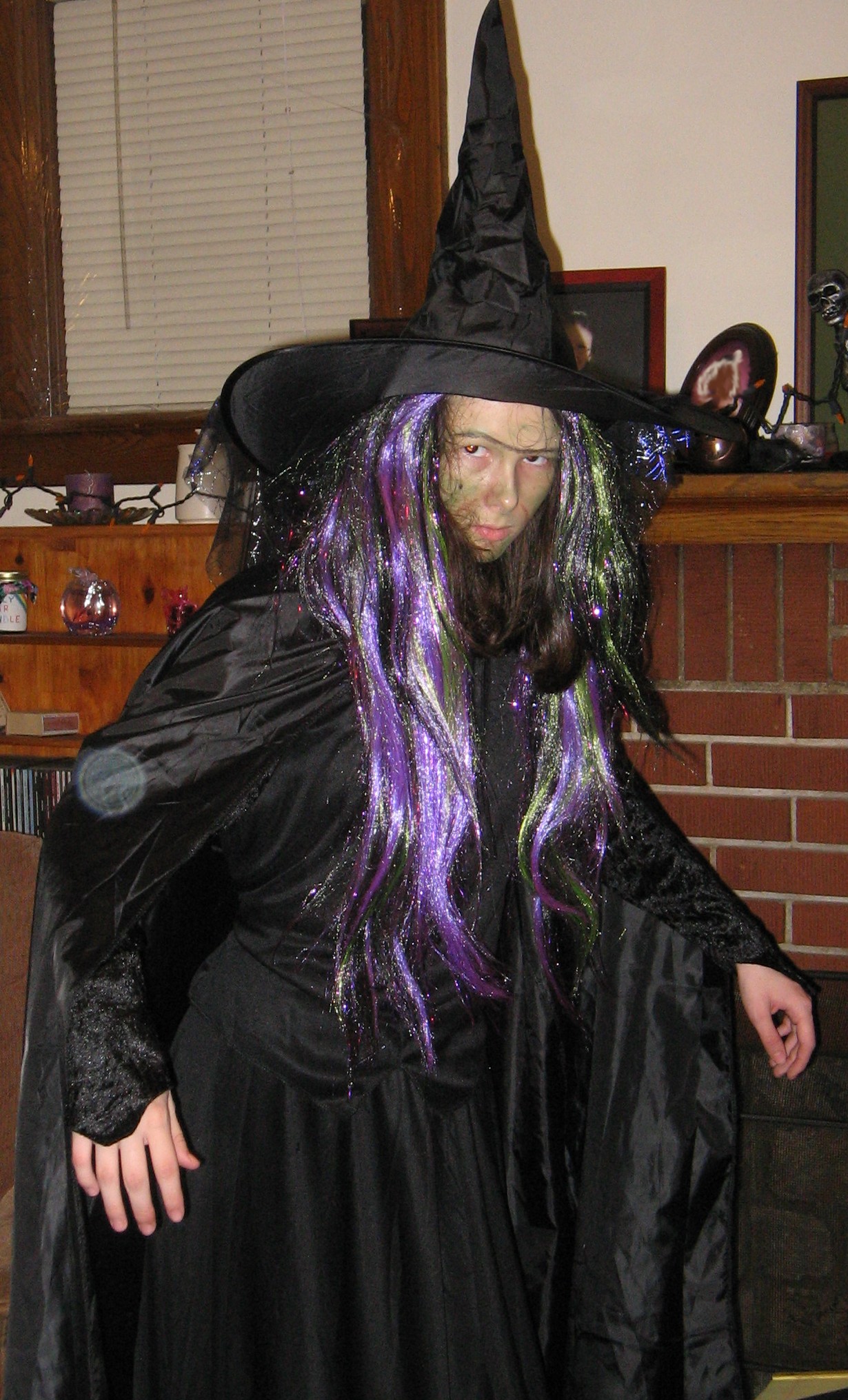
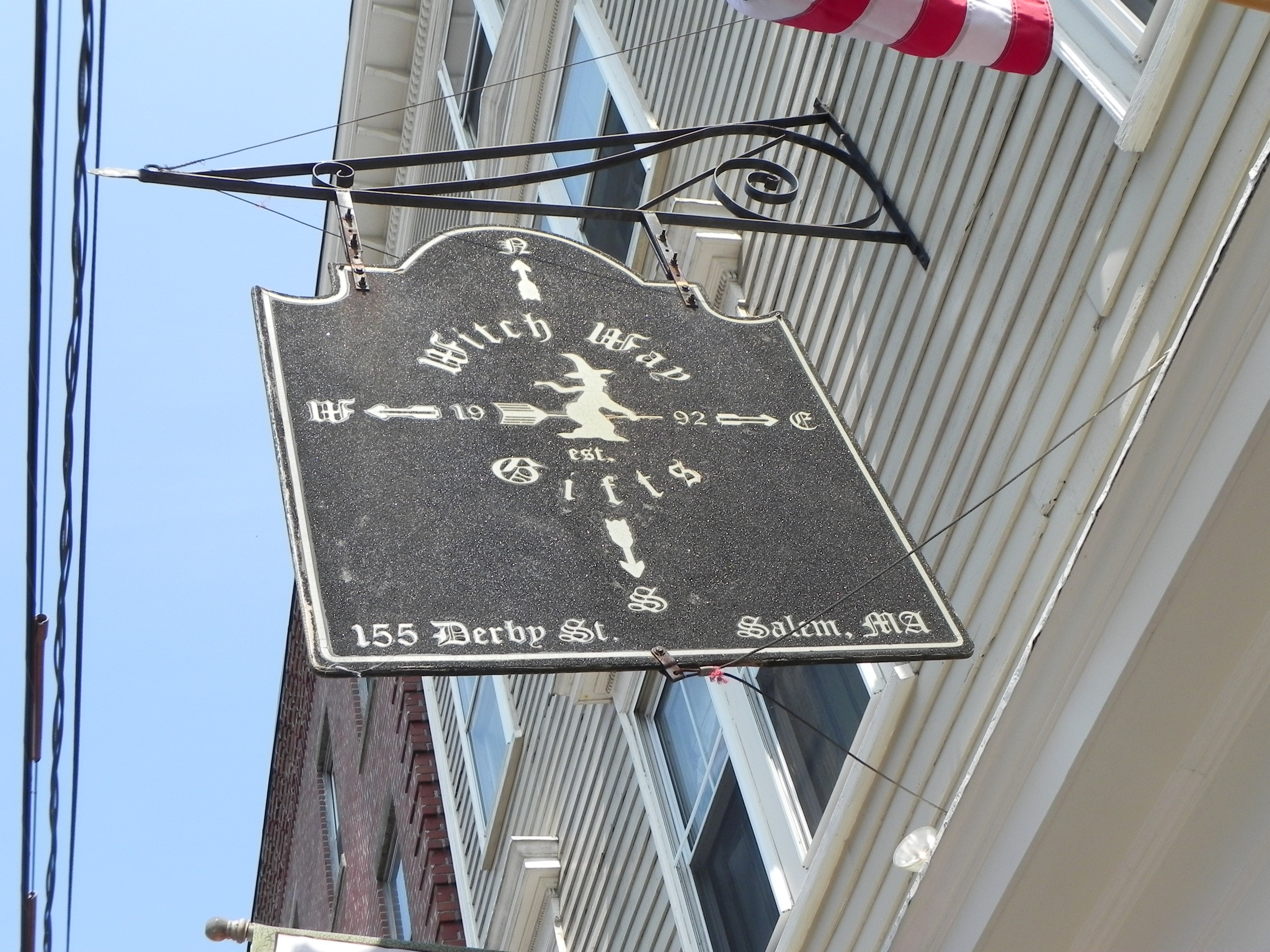
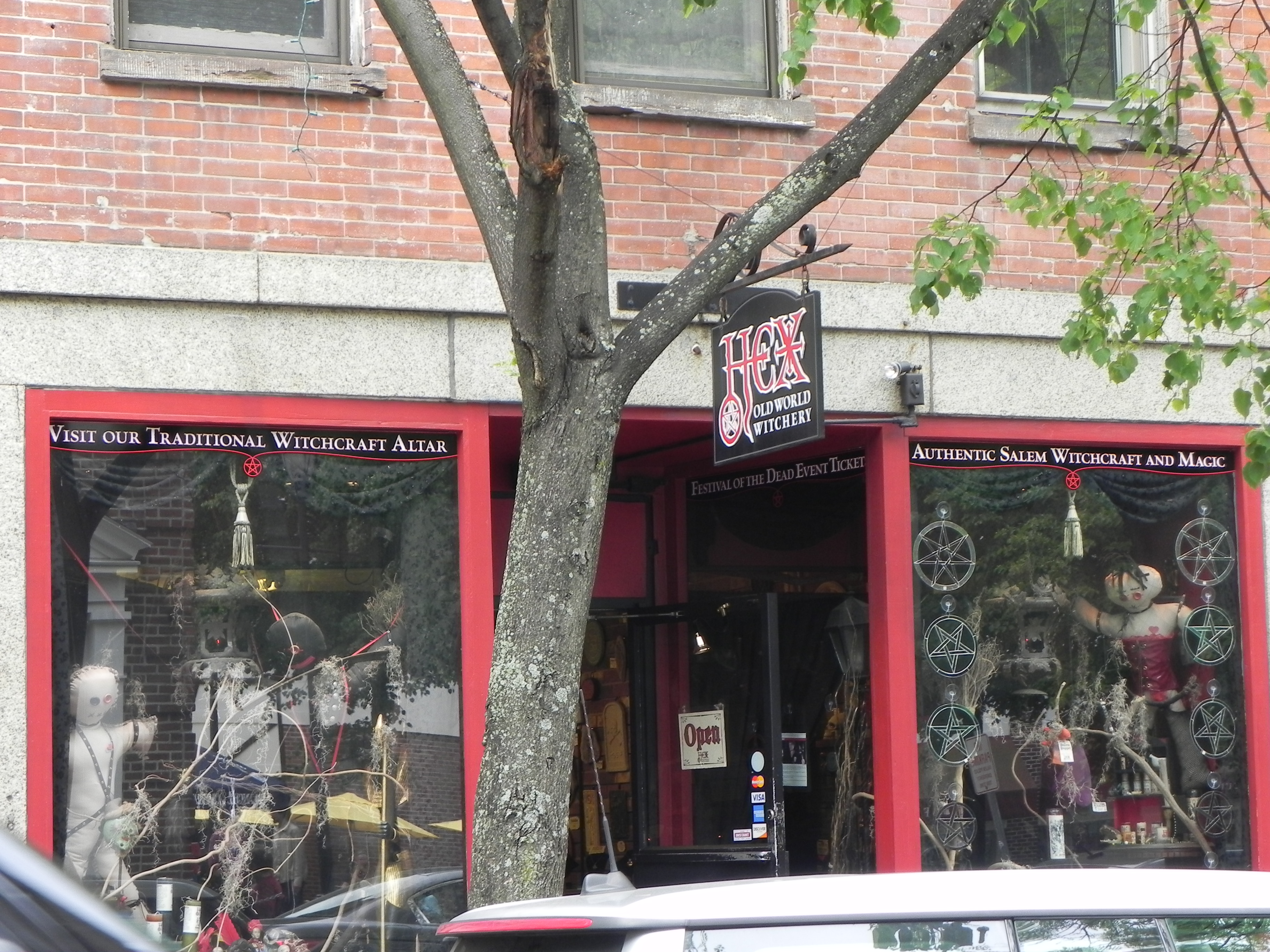
Salem is a town with a conflicted identity. The true history of the death of innocent women and men for a fictional crime is sobering. In a day when few take witches seriously—certainly not many believe that supernatural, green-faced hags fly the unfriendly skies—it is difficult to sense the utter terror the idea once comprised. We are still afraid, but our fears take more current forms. So with its lugubrious history, Salem now demonstrates itself as a model of tolerance. One local source cited the fact that eight or nine hundred modern witches live in the city. Modern Wicca, while taken very seriously by its practitioners, is laughingly appreciated by those who find release in the caricature of fictional, idealized witches. The police cars in the city of Salem even have witches riding broomsticks on them.

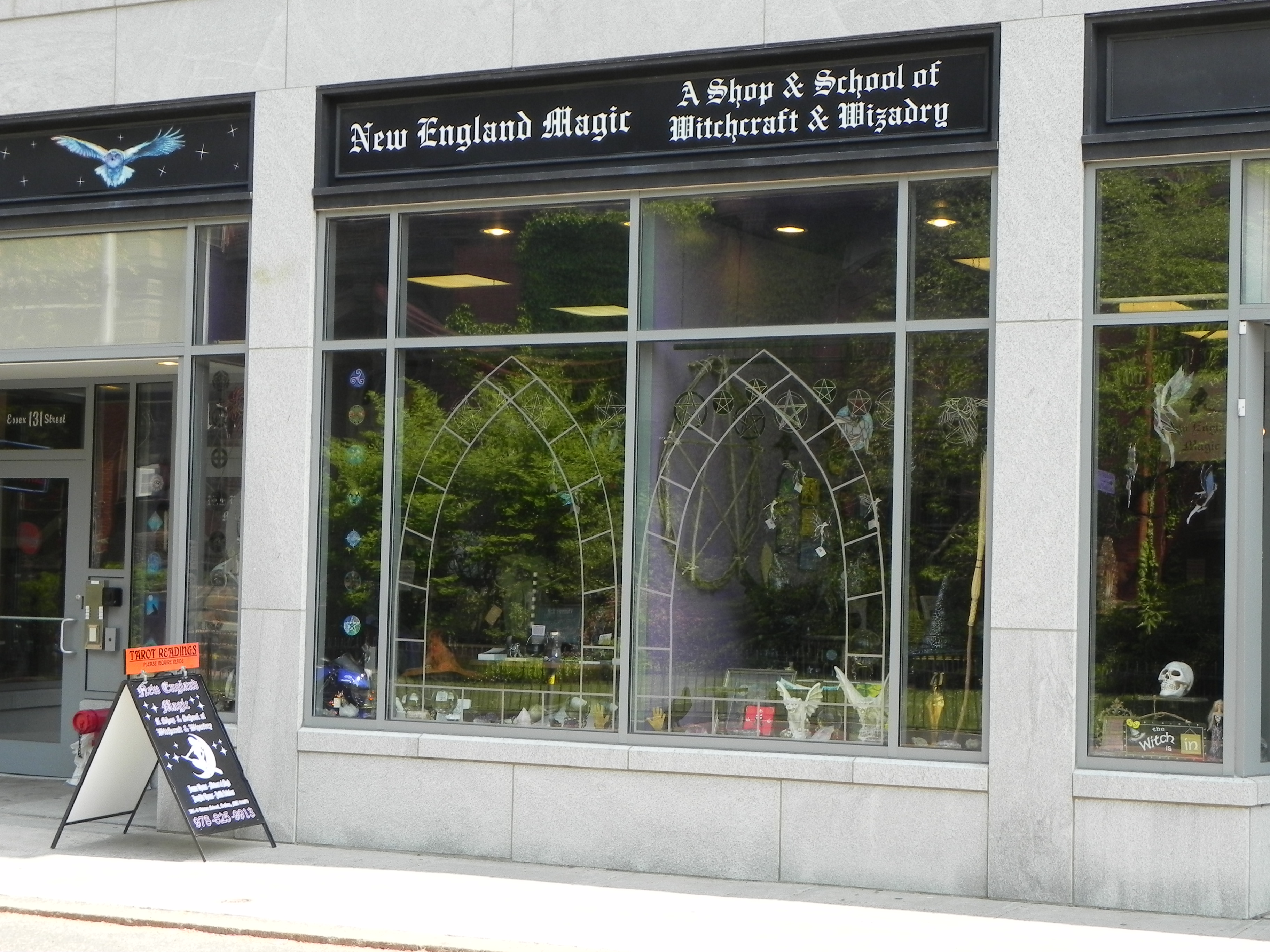
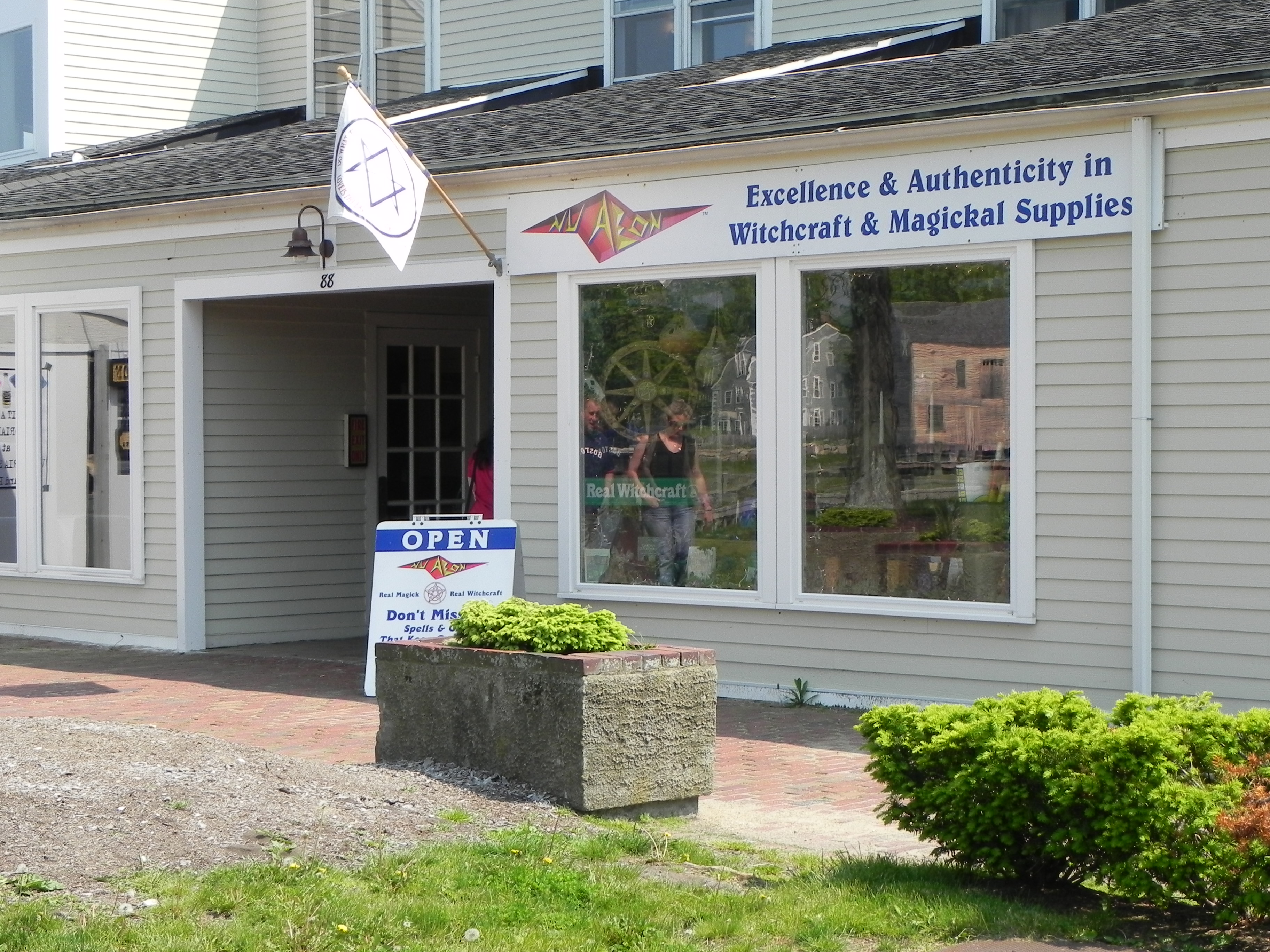
In this day of triteness and easy entertainment, it is easier to project the fictional image of the pointy-hatted witch and laugh at our past mistakes. Salem bills itself as “Witch Town” and hosts several witch museums, varying in historical accuracy. Shops throughout the town exploit this image of the harmless witch. It is difficult for the visitor to know which witch believes his or her establishment to be authentic and which is just out for a quick buck.

Places have a feel to them, as any pilgrim knows. The National Park Service, in its visitor center for Salem has a question-board that asks, “How Many Witches were Executed in Salem?” The answer underneath is “None.” Instead, twenty regular people were murdered for a crime they didn’t commit. The witch hysteria happened so early in the history of the town that it appears foundational for all its later developments. Who would go out of their way to visit yet another thriving mercantile port of the eighteenth century, were it not for the tragedy underlying it all? Like children laughing while making guilty eyes at their parents, those who prosper over Salem’s sad history realize that whether modern witches live there or not, religious intolerance is never a heritage to wear proudly. Exploiting a tragedy to make a profit is a time-honored American practice, and the real witch to fear is the one who says, “cash or credit?”


Gothic Mother’s Day

What does Mother’s Day have to do with horror films and religion? I serendipitously discovered last night. I generally run a few years behind the media, reading books after they come out in paperback and watching movies when I find a copy of the DVD. Last night as a family we watched The Sound of Music. I’d never seen this show until after I was married – musicals were not popular in my blue collar neighborhood growing up. Of course, I am now a veteran viewer. Last night, during mother’s choice evening, I noticed that if the music were removed (itself a weird concept) The Sound of Music is actually quite gothic. The interior settings, the use of shadow, the dark, Nazi threat, the stonework of the gloomy abbey – all of these things add up to a disturbing collage. In the mood for something more baldly gothic, I stayed up to watch Silent Hill.

I tend not to research movies before watching them since it reduces the visual impact. For those films based on books, I generally read the book afterward to see what was “really going on.” Silent Hill, of course, is based on a video game. I do not play video or computer games; “Pong” may have been my last serious attempt at doing so. Silent Hill, therefore, was a complete unknown. The gothic element did not disappoint, and as Sharon, the adopted orphan, began her sleepwalking scenes being shown beneath a lighted cross in the night, I knew that religion and horror were once again coming together. Indeed, the driving force behind the gruesome story is a religious cult on a witch-hunt that is set in a village based on Centralia, Pennsylvania. The cult, believing those who are different are witches, seems to enjoy the medieval pastime of barbecuing them. Centralia’s ongoing mine-fire was used to great effect. Rose, Sharon’s devoted adoptive mother, of course, rescues her daughter. The line in the film is “Mother is God in the eyes of a child.” (There is the Mother’s Day tie-in.)

Having been invited to present an adult forum to a local church on Christian themes in popular cinema, I have been recharging my attempts to test my hypothesis that what truly frightens people is religion. Silent Hill would support this hypothesis. I did not miss the significance of the names: “Rose of Sharon” is a popular biblical trope. The impotent father is named Christopher. Centralia’s predicament is often vividly compared to arcane ideas of Hell. And mother’s are, in the eyes of many children, saviors. Perhaps that last point is why we celebrate Mother’s Day on a Sunday. Although films such as Silent Hill may not make the best family viewing, even here where religion destroys, the divinity of motherhood is underscored.


Witch World

Little did I realize when I posted an entry on witches two days ago that the news this week would itself become bewitched. Tuesday’s New Jersey Star Ledger contained a piece entitled “Catholics publish guide to witches and wizards.” Then the next day a former student posted a link to CBC News article headlined “Witches to face prison for false predictions.” Last week the Jehovah’s Witnesses left an issue of Awake! at my door that reveals “The Truth About the Occult.” Coincidence or black magic? Are we really in the twenty-first century? If only employment had the same staying power as superstition there would be no jobless rate to complain about!

The Roman Catholic Church in England and Wales is concerned about all the interest Harry Potter is generating. Afraid that tweens and teens might tiptoe into the dark side, the Catholic Truth Society has produced a booklet called “Wicca and Witchcraft: Understanding the Dangers.” The booklet, written by a former Wiccan, is a strange answer to J. K. Rowling given that Potter and friends are not members of the Wiccan faith. They are simply fictional witches that haven’t been grounded by the constraints of the Enlightenment. Fantasy grants them their magical powers, not the Devil. In Romania, meanwhile, witches beset by income tax laws are now facing hard time if their predictions don’t pan out. New laws in the economically depressed nation would require witching permits to be obtained and receipts to be given to customers. This is not to sweep out paganism, but to gain some lucre from it. The Jehovah’s Witnesses are just concerned that occult practices, often seen as mere entertainment, might lead the younger generation down the road to sex and violence.

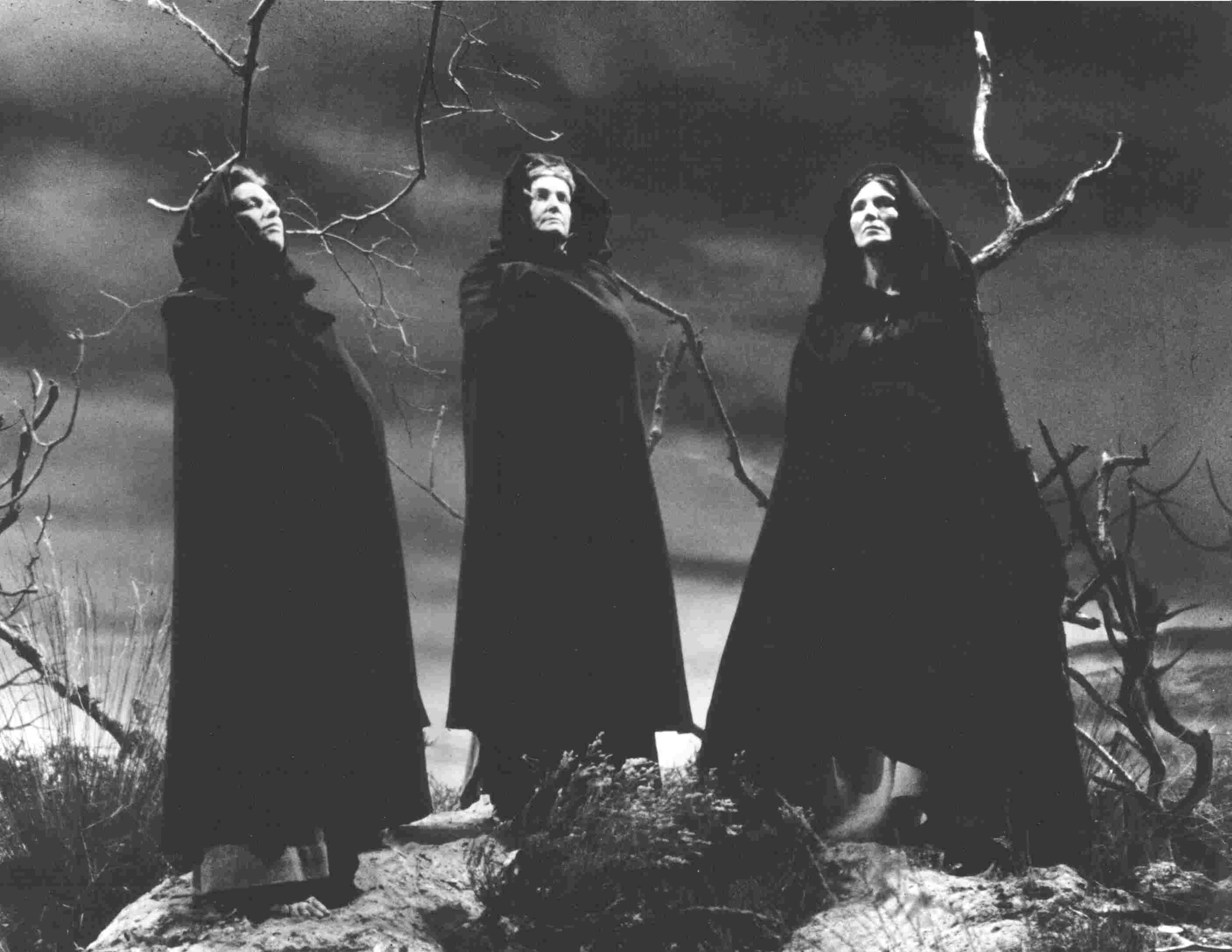
I was disabused of belief in witches before I failed out of kindergarten the first time. Teaching religion and mythology classes at two major universities, I see students from many different backgrounds trying to improve their minds. But once the sun goes down a backlash against the empirical method is nightly unleashed. I’m not sure whether to pick up my Kant and Descartes or my mugwort and rosemary. Religion breeds these darker manipulators of magic, a force against which many fear God has no recourse. So in our world of high tech gadgets and space stations and cyclotrons, we still have to worry about witches. Theirs is a metaphor yet to be fully appreciated.

Weird sisters or strange attractors?


The Danger of Books

Yesterday the Hunterdon County Library booksale began. I did not grow up as a reader. As a child, television was my primary source of information. For reasons unclear to me, I took to books when I started junior high school. Suddenly I couldn’t get enough of them. I lived in a town with no bookstores, so I usually depended on what I could find on our periodic trips to Goodwill to look for clothes. While my mother was looking for apparel for my brothers and me, I hovered over the quarter-a-piece book bin, buying up to a dollar’s worth of used books at a time. I kept my books in a ratty old suitcase under the bed. There were no bookshelves at home, nor any room for them. Besides, I liked to keep my books separate from other aspects of my life. Perhaps it is an illness, but from that day on, I have not been able to resist the draw of books. It is perhaps natural that I would go into higher education (although my field might have been chosen a bit more wisely). In any case, yesterday I drove to Flemington, New Jersey, with, at least to judge by the traffic, three-quarters of the population of the county.

One of the books I purchased had a slip of paper tucked between the leaves. When I got home I read on it, “The naked witches have been regarded either as a jokey press gimmick or as a complete non-event. The truth of the matter is that the witches played a very important role in a whole series of monster invocations.” Intrigued, I wondered what the source of this unusual quote might be. Then I was struck by the religious imagery implicit in the piece: witches, no matter how defined, are a religious subject. Monsters, as I have frequently noted, share intense neural territory with religion. And invocation? It is a liturgical term! I can only wonder what the original context of this quote might have been, but the book in which it was stuck was in no sense religious. I am a very eclectic reader (so it is perhaps unusual that I would go into higher education) and no books I purchased had anything to do with religion. It seems that religion never fails to find me.

My devotion to books often reminds me of the day when Amazon used to include bookmarks when you purchased from them. My favorite bore a quote from Erasmus: “When I get a little money I buy books; and if any is left I buy food and clothes.” It sometimes drives my wife to frustration that I still wear clothes I purchased before we were married some twenty-two years ago. My informal student evaluations on Rate My Professor sometimes comment on my out-of-date fashion sense. The reason is, however, that I buy books before clothes, and yes, even food. And when you buy used books at a library book sale, you may learn that naked witches invoke monsters, and that may be valuable information. And my clothes are never in a condition Goodwill would consider accepting when I’m finally forced to relinquish them for lack of functionality.


Feline Angels and Demons

Happy National Cat Day! Well, to you readers in the States in any case. October 29 has been declared National Cat Day, and as a blogger who has frequently posted on ancient cats, I feel a sense of duty to include our feline friends in today’s entry.

Elsewhere on this blog I have extolled the divine nature of cats. The Egyptians revered them to the point that killing a cat was a capital crime, but the evolution of domestication was probably very practical. Domestic cats appear in the archaeological record along with the advent of grain silos, also an Egyptian invention. When the grain attracted rats, the rats attracted cats, and the cats stole Egyptian hearts. Even before the Egyptians, however, archaeology points to associations of cats and humans in Neolithic Jericho, perhaps the oldest city in the world. As early as 9000 years ago, cats were stalking the allies of the city of the moon god. They have been among our most loyal companions.

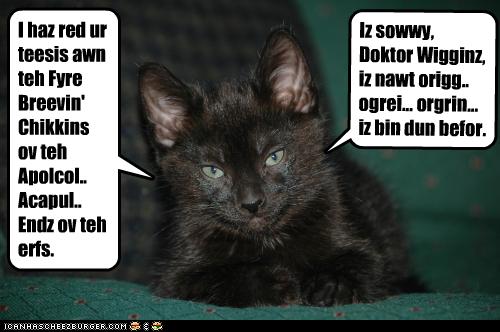
The domestic cat’s spread into Europe only began in earnest, it seems, when Christianity reached the continent and the cat was no longer considered divine. Perhaps cats had to be profaned before being admitted to the church’s roster of approved animals. Nevertheless, under the influence of a predominantly Christian milieu, in the Middle Ages Europe had come to see cats as the demonic companions of witches and vampires. Did some memory linger of the divine cat of Egypt? Did those dark days of suspected sorcery glance back to the magicians of Egypt and their suspect pets? We will never know the answer as to why cats, long encouraged to join human households, became evil in superstitious Europe. Even my stepfather in the twentieth century America counted to ten after spotting a black cat, and followed the count with a solemn cuss each and every time.

I, for one, cast my vote on the side of the felines. I don’t have cats (allergies and irate landlords, and such), but I enjoy them when I visit those who do. Sure, they rip up furniture and bring unwanted gifts of dead things to you as a kind of feline worship, but with their loving nature I simply can’t see a devil in our everlasting cats.

Swiped from Dr. Jim's Thinking Shop

(Swiped from Dr. Jim’s Thinking Shop)


Hallowed Be Thy Wolfbane

Anti-pesto to the rescue!

Anti-pesto to the rescue!

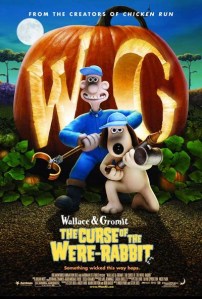
With autumn in the air and the harvest season looming near, my family recently watched Wallace and Gromit: The Curse of the Were-Rabbit. Quite apart from the inspired improbability of Aardman Studios productions, the central role of the village vicar in this film aroused my interest. Confirming an oft-cited proposition of this blog that mythical creatures burst from the same mental regions as religion, at Lord Quartermaine’s inquiry as to what might kill a were-rabbit, the vicar promptly pulls down a monster book from his shelves to reveal the secret. It is the church that knows about monsters.

In my continuing research into religious reactions to death and the afterlife, I constantly run into the name of Montague Summers. Summers was the author of the definitive books, in his period, on vampires, werewolves, and witches. He is best known for his translation of the Malleus Maleficarum, “the hammer of witches,” the main witch-hunting tome of the Middle Ages. A deacon of the Church of England before converting to Catholicism, Summers was a believer in the phenomena that he researched. Styling himself a witch-hunter (he lived from 1880 to 1948), he tried to live the fantasy world he helped to create.

The more that neurologists study the brain, the more we discover how deeply embedded religion can be. Any number of researchers have suggested various “God-shaped nodules” in the gray matter that provide for continuing religious belief in the face of advancing scientific knowledge. I would suggest, as a “religionist,” that perhaps nestled next to our mental menorahs, crucifixes, and statues of the virgin, there are also ghosts, witches, werewolves, and vampires lurking in the dark corners of the God node.