Can I Get a

Public restrooms have always made me uncomfortable. This has nothing to do with North Carolina. It’s more an issue of being raised to be ashamed of bodily functions and then trying to shift, as it were, in mid-stream. Coming back from the Women’s March on Washington (we have to keep talking about this to give us momentum to move forward) we had an hour layover in Philadelphia. I can’t walk into Philadelphia’s 30th Street Station without thinking of Witness. Indeed, they were announcing the train to Lancaster on our layover. Then I realized coffee before a somewhat long train ride isn’t a great idea. As I headed to the men’s room I remembered what happened there in 1985. After all, with Trump in charge all kinds of carnage can be expected.
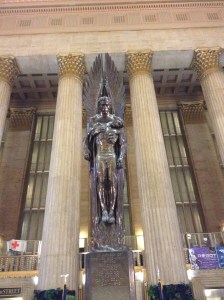
img_3158

Witness has a redemptive message. And maybe it’s a parable too. Anabaptists, such as the Amish, take their Bible seriously. Not being conformed to the world, but separating out from it is a kind of Protestant monasticism. Even those who can’t understand their lifestyle choices (so Republican in so many ways) admire their industry and care (so unlike Republicans in so many ways). The problem is, we can’t separate ourselves from the world any longer. We’re all Samuel staring out of that toilet stall. We have seen the truth and we feel vulnerable and violated and unsure of where to turn. When someone’s hurt they reach out to others for help. The others are the world. A community may be self-sufficient, but it shares the planet with aggressive others. You can never truly be alone.

The lifestyle of the mean and corrupt erupts into the calm, peaceful, and contemplative life of those who want to live simply and unmolested. Some mentalities—particularly capitalist ones—see the non-aggressive as chattels. Women, children, men who don’t fight, any minority—these can be exploited for one’s own grandiosity. We’ve seen that already in the regressive and repressive policies an illegally elected president has already started to enact. John Book is not going to come save us this time. We need to take the initiative to protect the way of life we simply wish to lead, without interfering with those who sadly believe money really means something. You and I, my readers, are witnesses. And like witnesses we have the responsibility to make certain that the world knows the truth of what we’ve seen.
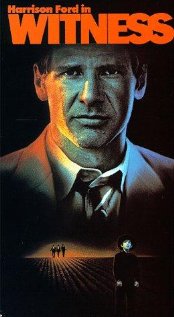

Witnesses All

Witness“Only the bad man. I see. And you know these bad men by sight? You are able to look into their hearts and see this badness?” The words of Eli Lapp in one of the most memorable scenes in Witness often come back to me. While the lifestyle of the Amish strikes me as somewhat extreme, I have always admired their conviction that a simple life is a better life. The finer points of Anabaptist theology don’t always agree with my Weltanschauung, but their pacifism is the closest thing to Jesus’ Christianity that I can imagine. So as the NRA pulls out its big guns, arguing that the solution to children being massacred is to provide even more guns, I say they should watch Witness.

The year is 1985. In the movie Samuel Lapp witnesses a murder and when detective John Book finds out, he is chased to the Lapp’s Amish community where he hides out. One day young Samuel finds his gun and the camera angle is so oblique as the weapon in the foreground fades out to his grandfather Eli’s face, that you sense some violence has already been done even in the smelting of the metal to cast the revolver. “This gun of the hand is for the taking of human life. We believe it is wrong to take a life. That is only for God. Many times wars have come and people have said to us: you must fight, you must kill, it is the only way to preserve the good. But Samuel, there’s never only one way. Remember that. Would you kill another man?”

At this point all the fuss is only about limiting assault rifles. There is no sane reason that private citizens (my convictions go even further, but let’s not be too idealistic here) should have assault rifles. Not even a grizzly bear attack would justify it. The only effective weapon against violence is education. But look at one of the first budget items to get slashed when times get tough. Imagine a world where people were taught to solve their differences with discussions rather than violence. Even most crime, I suspect, would vanish if people didn’t feel themselves unfairly disadvantaged. Our violent legacy may go back to our common ancestor with the chimpanzees, but we like to imagine we’re better than they are. Are we?

“I would only kill the bad man.” So Samuel says with the conviction of a child. Badness is a fraught concept. It is often one of those qualities that we are not fit to judge in others, because we all know the directions our own thoughts take from time to time. Eli’s grandfather is a voice of wisdom here. But Samuel has the last word in this poignant scene, “I can see what they do. I have seen it.” If we exegete this just a little, however, I think we may be surprised at just who the bad really are. Think about it.