In Praise of Libraries

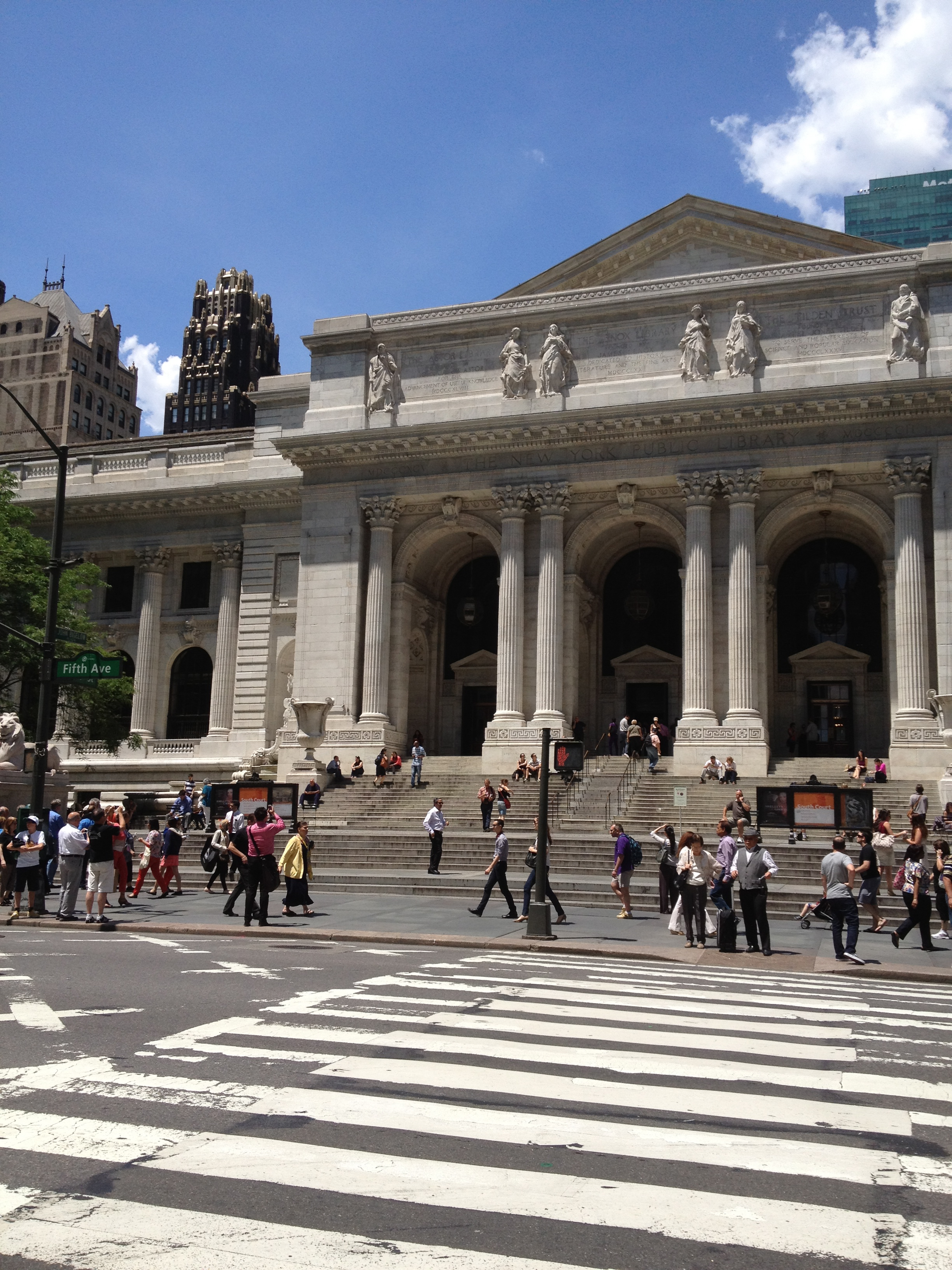
It felt like a rare, and momentous moment in a young writer’s life.  While working at Routledge I happened to notice that the New York Public Library did not have a copy of A Reassessment of Asherah in their catalogue.  The first edition was published in Germany, so I wasn’t surprised that it was not there.  Gorgias Press, however, had published a second edition and few people were citing it.  I contacted the office on Fifth Avenue and offered to donate a copy.  A librarian contacted me and we set up a time.  I went between the stone lions (Patience and Fortitude by name), met my contact, and handed my work over without ceremony.  He seemed genuinely glad to have the book and I felt like I’d made a small contribution to a big city.

When I need a pick-me-up I look at WorldCat.  WorldCat is a conglomeration of library catalogues where you can find just about any book, including obscure ones, such as mine.  I recently hopped on to see how many libraries had Holy Horror.  (The answer is 90.)  While there I decided to check my others.  Nightmares with the Bible registered 68.  These numbers aren’t bad considering neither publisher markets the books and they’re priced too high.  The Wicker Man is still new and is only in 42.  What surprised me was when I looked back.  A Reassessment of Asherah is in 305 (total for both editions, one being in the New York Public Library).  What really surprised me was Weathering the Psalms, which 324 libraries claim.  Since it’s priced under $30, maybe there is something to the idea people will buy books if they can afford them.  As an editor I know that sales of monograph over 300 are considered successful.  Two of my books qualify.
Publishers don’t share sales information.  I can look up those at my current publisher, and I can check some on Nielsen’s BookScan (now called NDP BookScan), the service publishers use to get an idea of other publishers’ sales.  That’s the same Nielsen that does television ratings, by the way.  Searching my own titles there is too depressing, so I stick to library catalogues.  Libraries are feel-good places.  (I couldn’t help but notice that Princeton has all my books—thank you, Tigers!  The seminary has my first two, but the university has my books on horror films.)  I can just feel all the ideas in the air.  And I’m humbled to have contributed to them in a way, no matter how small.


The Mystique of Research

One thing that many people may not understand about research is that those trained in it are basically learning how to find stuff out.  It doesn’t matter what the subject is, research is a matter of learning what’s available to help you understand that particular subject.  Typically it involves becoming familiar with the classic “standard books” on the topic then branching out.  Even the internet, however, has its limitations when it comes to trying to find out what’s available.  My curiosity extends far beyond the religion I often blog about.  I write about religion because I’ve studied it all my adult life.  When I discover a new area of interest, or rediscover it, I often wonder how to get the salient books on the topic.

Amazon isn’t a bad place to start, but they don’t have everything.  I’ve run searches on its powerful algorithms that come up with no results.  Bookfinder.com is great for locating out of print material, but it also depends on you knowing what to search for.  WorldCat and Google Books also help.  The one thing you really need, however, is time.  Research requires a lot of time.  You find a book on the subject and read.  Then you look up the sources the author used.  Search the names of other authors to find out what they’ve written.  Watch publishers’ catalogues for the new books they’re producing.  Read journals to see who’s writing on what.  It’s like a never-ending treasure hunt.  It’s beguiling and addictive.  But it’s limited to few full-time—those who are paid to find things out.  The rest of us make what time we can.

Prior to the internet we had, it seems, a lot more certainty.  Much of that certainty was false, but it was nevertheless firmly believed.  Many people despise researchers because they challenge what we’ve always believed about the world.  As if the truth were known x number of years ago and hasn’t changed at all since then.  We want things to stay the same—we want our wallets in the same place we’ve always put them so we can find them when we need them.  Then your told there’s new, virtual currency but you have to mine it.  I know many people who don’t even own computers.  Research opens new worlds, but not all people are natural explorers.  Some prefer to stay close to home and near to the certainties they learned growing up.  Others are restless and have to learn more.  And perhaps go places where we don’t even need our wallets.


Seeking Knowledge

So, I’m doing some research into a seventeenth-eighteenth century alchemist named Johann Konrad Dippel.  He lived in what would become Germany, and had a bit of a reputation.  The first stop for information these days is Wikipedia.  Now, as any academic knows, you can’t rely on what you find on the site.  I use Wikipedia to help start my bibliography.  The references here are rather slim.  I see there’s an Encyclopedia Britannica article (1911 edition) available for free.  I check their references.  They wouldn’t have passed my 100-level courses.  They contain the initials of the authors, no titles for their books, years and cities of publication but not the publishers.  Okay, so I’ll google/ecosia the authors with just their initials.  And the years.  And the cities.  Nothing comes up.

The next step is WorldCat.  It’s never let me down before.  Indeed, my first search brings up the bibliographic information on one of the mysterious, initialed authors.  (The WorldCat entry doesn’t even have a last name.)  The book is in German and the nearest copy is at Yale.  Looks like I’d better keep looking.  The next book doesn’t show up on WorldCat at all.  No combination of author (with only initials and surname), place, and date appears.  What was Encyclopedia Britannica 1911 thinking?  It’s at times like this that I miss paper research.  Although the privilege is no longer mine, roaming an academic library stack to stack, checking the card catalogue, breathing in the perfume of old books, acquiring new knowledge, these come back to me with the force of meeting an old friend after many years’ separation.

Less about the subject and more about the journey, seeking knowledge used to be an embodied thing.  I suspect somewhere in a bio-mechanical future with the internet coursing through our veins, it will seem quaint to think of oldsters like me tapping away at a keyboard and peering at a screen to find information about a nearly forgotten dead white man.  But even with all the knowledge of the web in intravenous electronic supply, will our future selves be able to put it all together?  Will they solve the problems of sexism, racism, capitalism, and dare we go any further than that?  Of will they elect leaders who care only for themselves and call on Christians to join them in deep corruption and fraud?  Or will, after some collapse, future Leibowitz stumble across a mysterious piece of melted plastic and wonder if there really was anything here before?