Writing Ghost

Despite AI, one of my great regrets is not having learned additional languages in high school.  I took four years of German and the one classmate I knew who was able to convince the administration took two languages, both Spanish and French (gasp!) to become a translator.  In any case, I regret being able to read French only haltingly, with a dictionary.  I watched Colette because it is the biopic of a writer, but I’ve never read any of her books.  I also watched it because it’s considered dark academia, but you already knew that, didn’t you?  Colette lived from the last quarter of the nineteenth until the mid-twentieth century.  Her first husband published a successful series of books she wrote under his name.  The two separated and Colette went on to become a reasonably successful writer in her own regard.

As with most biopics, the details are exaggerated, but still, this is the world of books where fiction and fact aren’t always so far apart as might be supposed.  Interestingly, articles on her husband (Henry Gauthier-Villars), known by the pen name Willy, state that he is best known as the first husband of Colette.  A self-promoter, he had other people do his writing for him.  The movie focuses on what happens when he tried to bring his wife, not yet established in her own right, into his band of ghostwriters.  Not having French, I have never really studied French literature.  If life allowed a bit more time, that is something I’d like to have done.  In any case, Willy was a libertine as well as a self-promoter, the sort that occasionally enters high government position.  And since he was involved in many affairs, Colette explored relationships with other women.  In other words, this is a story that is still very relevant.

Dark academia sometimes involves a literary life rather than a strictly academic one.  I applaud its love of books and book culture.  Some of us miss the days when it was possible to have publishers eager for new material, when books were generally respected instead of widely banned.  The darkness here is clearly the manipulative relationship Willy has with Colette.  He uses her lack of experience in the publishing world to his own advantage, and habitually making poor financial decisions, puts their living situation and security at risk time and again.  I sometimes wonder about my high school friend.  Did she become a translator?  And, if so, is her job, nearing retirement age, under threat from AI?  And this, in the span of a human working life.  A life of books.

Mighty Mouse

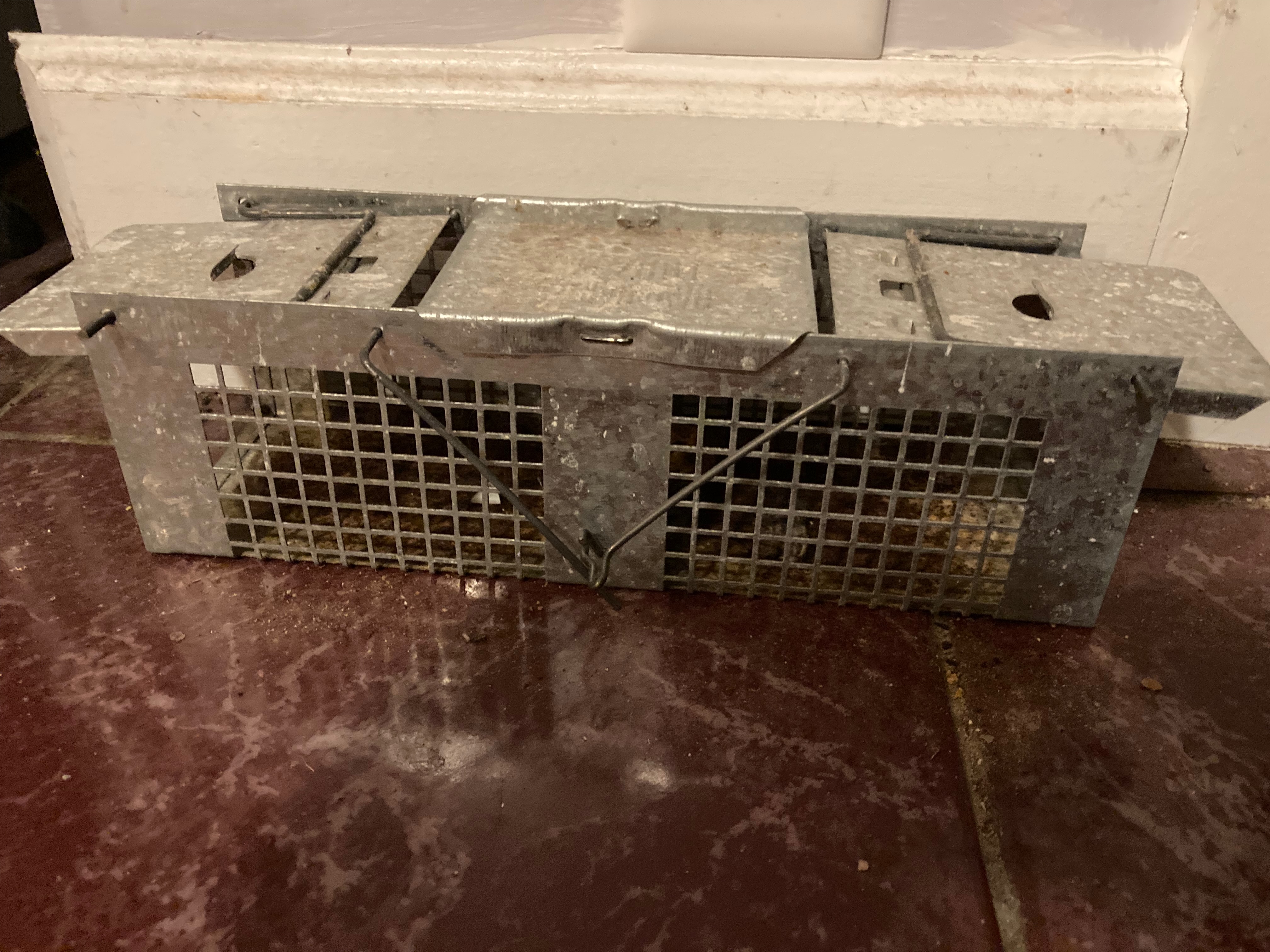
The only way I write my books is by living a regimented life.  It’s front loaded too.  Most of the work is done sometime between two and seven a.m., before starting work.  Disruptions to that time aren’t welcome, but then, many things in life aren’t.  Perhaps the most disruptive weekday event is when a mouse makes its way into the house.  We live in an old house and mice find their way into even more recent structures.  I can’t see killing them for doing what they’re evolved to do—we began using a humane trap when I found a mouse trapped by its paw back at Nashotah House.  I couldn’t stand seeing its distress, so we bought a cage trap that works pretty well.  Fortunately, we don’t get many rodentine visitors, but when we do, my crowded morning becomes even more busy.

I jog at first light and this time of year it’s straight to work after that.  I like to take our mice into the woods, far enough away that they’re not likely to find their way back.  Ideally that means driving, but since my wallet’s in the bedroom where my wife’s still asleep, during weekdays it generally means somewhere along the jogging path.  The trap is probably on the scale of a room at the Ritz for a mouse, and I don’t want to be scolded if I choose to release them in the wrong place.  I put the trap into a bag, for privacy.  Now, I normally jog to the trail but the trap rattles and I can’t imagine how horror movie this must be for a mouse.  Besides, running down the street with a bag in your hand in the dark isn’t at all suspicious.  Why not just paint a dollar sign on the outside of it and be done with it?

 I try to make sure the release spot is across a big road or a river.  There are places like that on the jogging trail.  But then, with the mouse safely released, I have to find an inconspicuous place to leave the trap in the bag so that early-morning garbage collectors don’t take it.  Jogging with a rattling trap is just a bit too strange for even me.  Although I’m an early jogger, I’m seldom the only one on the trail just as it’s light enough to see.  All of this adds up to considerable time carved out of my usual writing period.  And all because of a mouse.  The small can be significant.  Maybe I should write a book about it. 


Fragments Etc.

I’ve never counted, but there’s well over a hundred of them.  And a notebook with at least a thousand more.  What have I got in such abundance?  Ideas for stories that remain unfinished.  I’m not exaggerating or inflating numbers, I assure you.  I’ve been writing short stories for a half-century now, many, no, most unfinished.  Thirty-three have been published.  I was reminded of this recently while reading a nonfiction book that suddenly gave me the ending for a story I’d started many months before.  Perhaps even a couple of years.  I started searching through my electronic files for it and couldn’t find it.  Why?  There were too many stories started with frustratingly short titles (my bad).  To find the culprit, I would need to open each one and remind myself what was inside.

A few months ago, I printed out copies of all eight of my unpublished novels.  I also printed out copies of all my published stories as well.  I never got around to the unfinished majority.  I have a feeling that if I printed them I’d find what I was looking for more easily.  This, even with the ease of electronic life, will be quite an undertaking.  I think it may be a necessary one.  Although I’m hardly well known—I’m an obscure, private intellectual, after all—I do have many fiction ideas.  The stories generally come to me with an impression.  The start of an intriguing tale, for instance, or the end of one.  I then begin writing and either write myself into a corner or I scribble until I realize that I don’t know what happens next.  The story sits, unfinished.  Now and again, however, the missing piece is found.  I try to find the story so I can complete it to send out for several rejections.  Such is the writing life.

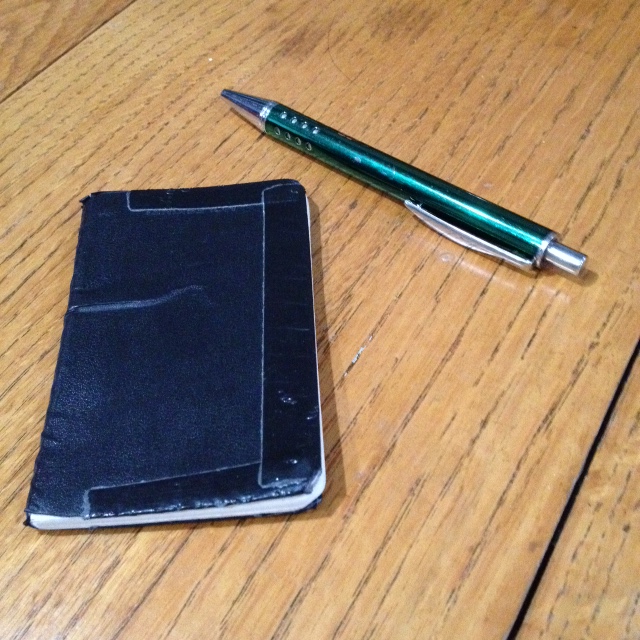
Now, if I could do this for more than the paltry time allotted to personal pursuits, courtesy of capitalism, I’m confident that I’d have far more than thirty-something stories published.  At current count I have seventeen stories ready to send out to literary magazines, several of them already rejected a time or two.  Another twenty finished and nearly ready to send out.  And forty just finished, but requiring a bit of spit and polish.  And these aren’t the fragments.  Don’t get me started on the nearing 6,000 posts on this blog.  Is it any wonder I can’t find anything?  I grabbed my notebook of a thousand fragments and jotted a physical note of how that particular story ends, in case I ever find it again.


A Plea

One literary Saturday recently I found myself in the attic.  When we first moved to this house I sometimes wrote up there but I quickly learned that with no heating it was intolerably chilly on autumnal mornings, and that didn’t speak well for the coming winter.  Nevertheless, I set up a shelf with my fiction writing on it.  I was looking for something on that shelf when I discovered many things I’d forgotten.  Novels mostly.  I don’t know how many I’ve started, but I have completed six (now close to seven).  Going through the papers and folders on that shelf I found about 250 handwritten pages of another novel—one that I’d completely forgotten.  There were stacks of short stories, also handwritten, awaiting some recognition.  I haven’t had a ton of success in getting fiction published—the current count is 33 short stories—but I was inspired by what I found.

When my wife and I visited a lawyer some years back to make out our wills, I kept trying (unsuccessfully) to interject a literary executor.  At that point I had published only three books and two of them were academic.  Besides, there’d probably be an extra charge for adding that codicil.  I guess what I fear is that all of this work will just get dumped when I die.  Retirement doesn’t look like a realistic possibility for me, and what I need is time to sort it out.  Some of the novels aren’t good.  I know that.  Some are.  One was actually under a book contract for a couple of years before the publisher decided to kill it when the acquisitions editor left.  I haven’t found a replacement publisher yet.  Then, a few years back, my laptop started complaining about the amount of writing I was asking it to remember.  I had to buy external hard drives to store some of my writing.  Even I forget it’s there sometimes.

Graphomania should have its definition expanded to include those whose thoughts overflow to the point that they’re constantly writing.  There’s a reason I get up so early in the morning every day.  Up there in the attic I found what I was looking for and pulled it off the shelf.  A half-written novel that I had, unwittingly, started to write again presuming that the original had been lost.  All of the writing has been done while trying to hold down a demanding 9-2-5 with no sabbatical and few vacation days.  Not all of it is finished.  Not all of it is good.  But someone, I hope, will stand in front of the dumpster on some future day and say, “This doesn’t get thrown away.”