Ever Hopeful

Plants are some of the most hopeful entities on the Earth.  As much as I’ve had trouble with houseplants, outside they seem to do fine.  Great, in fact.  Long-time readers will know that I struggle with lawn care.  It really didn’t enter my calculus of house buying—I was rather focused on the actual house, strangely.  We ended up with more yard than we required.  Thus, plants.  I’m not a fan of paving over greenery, but there’s a small strip of land between the sidewalk and the street—technically a “verge”—that’s difficult to mow.  Weed-eating it is also tricky because neighbors park their cars there practically 24/7 and some people don’t want a weed-eater that close to their showroom finish.  A couple years back I hauled some paving stones from our backyard out to the verge.  It decreased the grass by maybe 50 percent, but it still has to be whacked regularly.

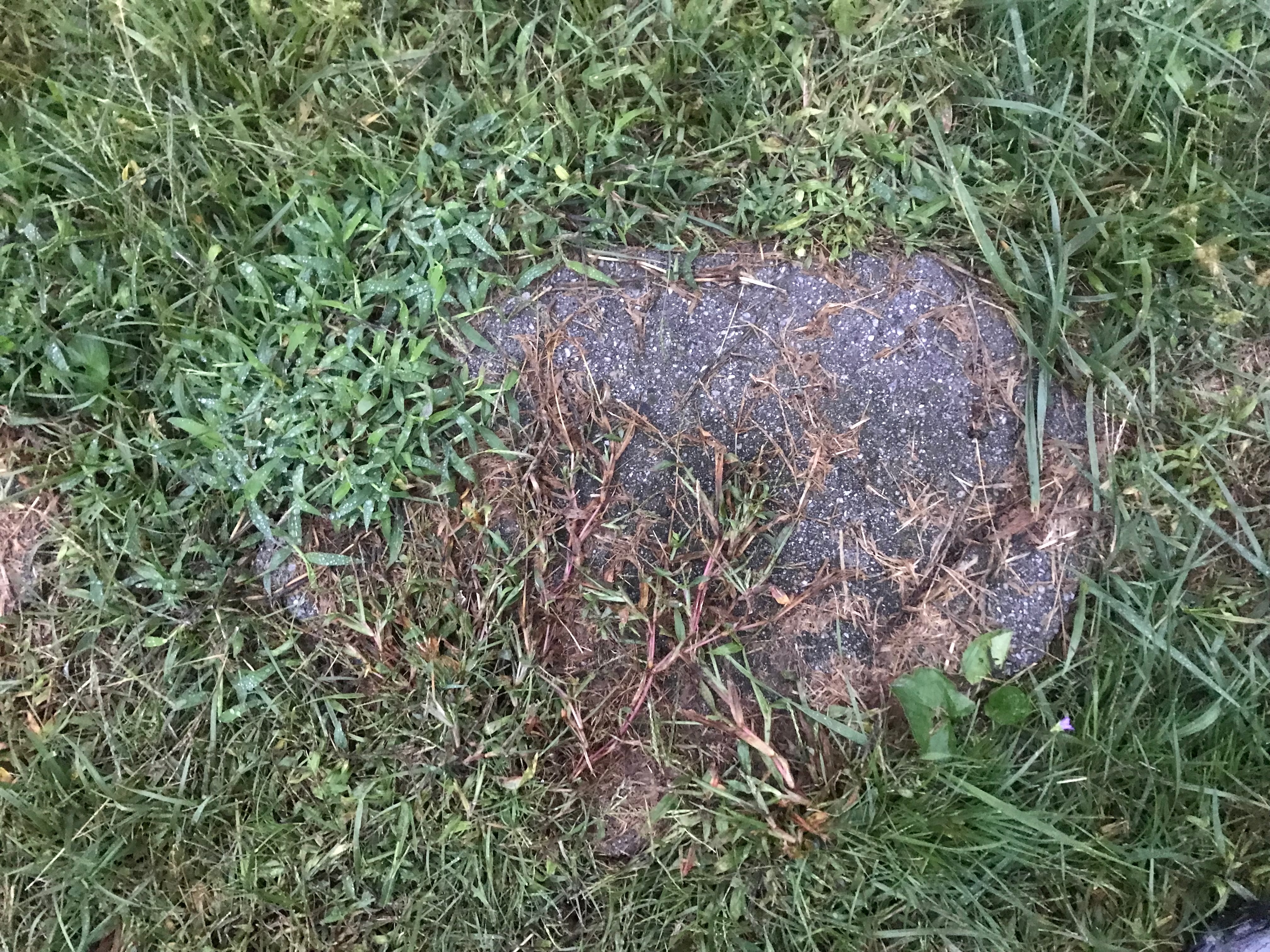
I’ve been noticing over the summer into the fall that grass with a strong will to survive had begun growing roots over the top of the paving stones, intent on breaking them down.  That’s what plants do.  They work slowly, steadily, to achieve more room to grow.  This is always amazing to me.  Life is persistent.  Many animals see a stone as an obstacle—something to be stepped on or over.  Some plants see them as opportunities.  Our human obsession with allowing only certain kinds of plants close to our habitations, and those trimmed just so, seems an exercise in futility.  Of course, yard work isn’t my favorite activity, thus the paving stones in the first place.
After our species is done making a mess of the planet, plants will quietly take over again.  Especially anyplace near where someone once planted ivy.  We’ve got some very aggressive ivy in the back yard that I pull down year after year, and no matter how often I do it comes back with renewed vigor the next year.  And crabgrass.  That stuff won’t take no for an answer.  I can tell some former owners were trying to do some landscaping with, well, landscaping fabric and decorative gravel.  If you turn your back for a few weeks, the crabgrass gets in and its roots begin breaking the gravel down into soil.  I wonder how there’s any exposed rock in the world, or maybe my yard is a paranormal plant paradise.  I can imagine that without people here to “maintain” things, paradise (which is a garden) would return.  Perhaps there’s a parable of hope among the plants.


Sabbatical Request

I don’t know when I became one of them.  It seems that I was pretty busy in my early teaching days, and starting a family.  I didn’t feel, however, that every single minute was programmed down to the second.  I had time for writing, vacation, and family, as well as work.  The other day when I was sending out those reminders to authors that their books are a bit (years) overdue, I realized just how busy they are.  Then I took a moment and considered that I’m not sure how I became one of them.  The people who are too busy.  Clearly buying a house was a big part of it.  I’d been pretty busy before, but now I need to invent time in order to get everything done.  The staycations I allow myself end up with feelings of guilt for all that’s been left undone.

Maybe it doesn’t help that I can see the neighbors out my office window.  When I see one of them weed-whacking or mowing during the day, I think I need to do the same.  But I’m also out of string for the whacker.  I really need to get to Lowes so I can stock up—last time they had only one spool left, which is probably why I ran out.  To get to Lowes I need a weekend.  Preferably not one with temperatures in the high nineties.  And without meetings cutting into weekend time.  And when it’s not raining.  Time is slippery.  Even as I work I often have other things—many other things—I have to do running through the back of my mind.  How did I become so busy?

Speaking only for myself, there’s nothing I’d rather be doing than reading and writing.  I do these daily only by carving out inviolable time for them.  It is costly time, I know, but to me it’s beyond price.  Thinking of these colleagues too busy to submit their books, I think back to my own professor days.  There’s no doubt that I read and write more now than I did then.  There were times (grading, accrediting body visits, commencement, etc.) when there simply wasn’t time to do anything else.  Many colleagues mention health issues on top of all this.  Academics, as those who supply (partially, but responsible for a goodly number of) books, the number published each year truly boggles the mind.  I would try to figure all this out, but I’m afraid I simply don’t have the time.


Life Writing

It’s sometimes thought that a writer’s life is easy.  What’s so difficult about scribbling things that people will pay for?  I’m absolutely certain that, like most systems, this one may be gamed.  Amazon has made it quite easy to slap together words and covers and sell them alongside literary giants.  Only time will tell those that endure.  Most writers, apart from those who achieve early success (capitalism loves nothing so much as a repeat source of money), hold down other jobs.  Many of those jobs don’t involve writing, so those with literary ambitions must carve out time from their busy lives to write.  Not only that, but to write well you have to spend a lot of time reading.  Think about your daily life—how often do you have time to curl up with a good book?  Sure, you can read on the internet, but that’s not the same thing.

I love reading about writers.  Often they had struggles to overcome and many remained obscure as writers until after they’d died.  (At least that takes some of the pressure off.)  Someone saw there was money to be made in what they left behind.  Knowing quite a few writers, I suspect most of them really wouldn’t mind that.  Recognition during your lifetime must be nice, but writers tend to have a longer view.  That’s why things are written down, and, against hope, published.  Literary ambition can be a mean dog indeed.  Especially when the lawn requires mowing again and those invasive trees need constant trimming and gee, why didn’t we buy that house with no yard?  Many writers had even greater struggles to overcome.

Image credit: George G. Rockwood, via Wikimedia Commons

When reading, I’m constantly discovering new old writers that I missed.  I didn’t grow up in a literary family.  I find them by reading other writers and, perhaps more importantly, reading about other writers.  Who influenced whom.  Many remained obscure.  Although it’s only an estimate, 2.2 million new titles are published each year.  Readers are, and always have been, a minority.  Most people don’t read for pleasure.  That makes sense, given that we haven’t evolved for that.  Survival involves working for sustenance and mowing the lawn or shoveling the walk when you’re done with work.  A clueless professional once asked me “Why don’t you hire a service?”  With what?  My royalties?  Sacrifice is an inherent part of writing.  Whether it’s the neighbors thinking you’re a trashy yard-keeper, or you boss wanting you to spend more hours on the clock, or cheating sleep night after night, a writer’s life isn’t for the fainthearted.  That’s why they inspire me.


Closed System?

Photo credit: NASA, public domain

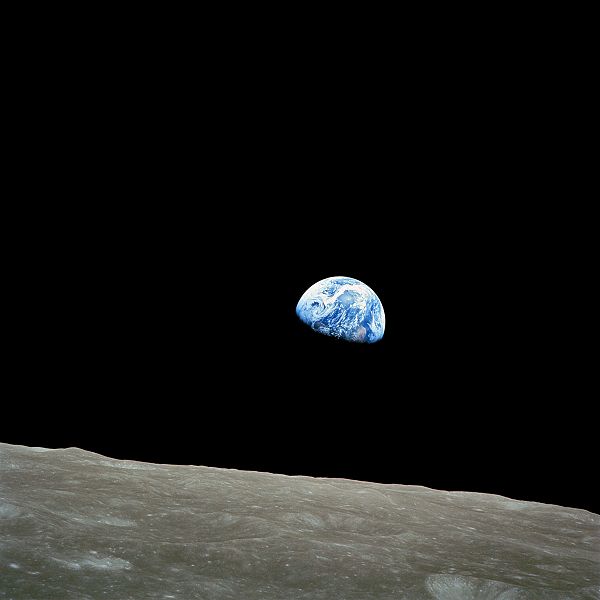
Nothing is wasted.  Not in nature.  Maybe that’s the true economy of life.  We humans come in and make our habitat in our own image and then start throwing things away.  I’m no great fan of yard work.   I would just as soon let nature take its course, but if it did I’d soon have no place to live.  Trees find their way into the cracks in the foundation and those flaccid white roots we see dangling from the ends of weeds can insinuate themselves into tiny places and slowly expand.  Buildings left without maintenance soon begin to crumble.  I’m reminded of this every time I visit Bethlehem Steel.  Weather, plants, even the occasional raven, slowly tear down what human hubris has built.  And it doesn’t stop there.

We set up a composting area for all those weeds, yes.  A place where we could make our own soil.  After three years it was pretty full and when I went to cut back the ever-growing trees and vines, I learned the bees had claimed our pile for their own.  Not happy to see me poking around their home—not happy at all—they began to hover aggressively.  I got the message.  Nothing is wasted, not even compost.  

Our species is in love with petroleum products.  We can’t live without plastic.  Looking at all the plastic litter around is evidence enough of this one-sided affair.  Our plastics cause so many problems.  They do break down, but never go away.  They get eaten.  Undigestible, they can slowly poison animals.  Whatever isn’t recycled becomes part of us.  Nothing is wasted.

Yard work monopolizes my weekends from May through October.  This year it started in April.  I had to mow the lawn in November.  Really only four months to make it through without the endless cycle of birth, growth, death.  Those who are worried that nature won’t recover from our foolish species haven’t paid close attention.  Even as we live here the seeds find every crevice and life, life is irrepressible!  Scientists try to tell us life is unique to this planet, but looking at its tenacity, how can that possibly be the case?  The tardigrade can survive extreme dehydration, very high pressure, very low pressure, radiation, air deprivation, and starvation.  It seems like the perfect space traveller.  We try to make the world in our own image.  We like to think our version of the world is the one to endure.  Nothing is wasted.  Nothing short of human hubris.


Horror Deprivation

Is there such a thing as horror deprivation?  Life has been so busy that I haven’t been able to carve out the time to watch any horror movies for several weeks now.  That steady diet has given me blog topics and a strange kind of personal comfort in this all-too-scary world.  More than that, it is often a coping mechanism.  I sometimes think more people might read this blog if I “rebranded” it as horror-themed, but perhaps there’s a different way to go about it.  Some writers, with enough shares and likes, have their daily observations become part of the national wisdom.  The rest of us, it seems, are simply background noise.  I’ve also been told blogs are passè and that may be the case.  I have trouble keeping up.  I don’t even have time to watch horror!

As with most things in life, I keep a list of movies I need to see.  Like claws such a list continues to grow unless it’s trimmed once in a while.  A movie is a couple-hour commitment and when even weekends are programmed to the last minute it’s difficult to squeeze them in.  I always welcome the more pleasant weather of spring, but so does the yard.  I’ve always thought, like good haunted house owners, that I would let the yard go.  Here in town there are ordinances, though.  It doesn’t look tidy—right now dandelions exceed the tolerated grass length a mere day after mowing.  Like triffids they pop up and won’t go away.  I could be in, watching a movie.  My credibility’s on the line here!

The pandemic, from which horror movies will arise, led many people to having too much time.  Netflix soared.  For whatever reason, it had the opposite effect on me—is this a special effect?—I had even less time than before.  I had to cancel my Netflix account because I had no time to use it.  Horror is a coping technique.  Real horrors spill from the headlines daily.  Sometimes the antidote is in the poison itself.  The way to be less scared is to watch more horror.  We’re still in the pandemic and Putin decides to start a war.  Republicans confess that Trump tried to take over by force and then backtrack.  Global warming continues apace.  There comes a point when the only therapy is to watch something worse unfold, as long as it’s fiction.  It’s Saturday.  It’s raining.  What can one possibly do?