
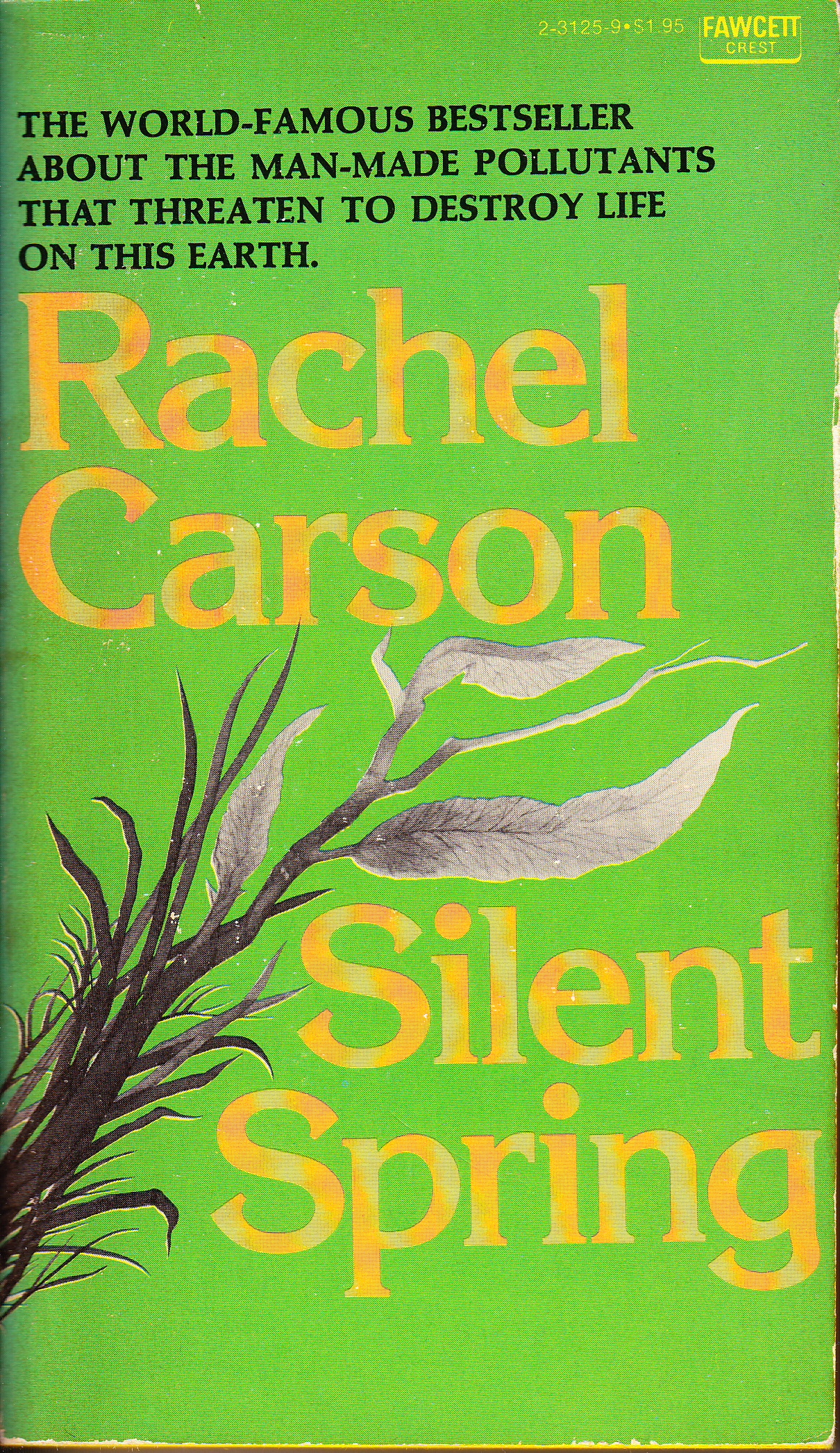
 “[A] sight to be endured with one’s mind closed to thoughts of the sterile and hideous world we are letting our technicians make,” is how Rachel Carson described the indiscriminate use of herbicides fifty years ago. Silent Spring, although clearly dated, remains a chilling book for a number of reasons. One of the most obvious is that although the book is half-a-century old, the breakdown of some of our toxins released into the environment before it was written is still not complete. And perhaps more frightening still is the fact that we continue to stumble forward without giving enough thought to where our actions against our planet might lead. The quote above presses urgently at the heart of the matter: those with the destructive interests are almost always those who set the agenda. As Carson noted fifty years ago, the right of the nature lover to enjoy an unspoiled part of nature is just as valid as the right of the greedy to rape the landscape for “resources.” But we all know who eventually gets their way.
On a finite planet with finite resources, one of those that cannot be replaced is the beauty that nature has spent billions of years evolving us to appreciate. Desire for beauty reaches down to our most primal and basic levels. In the United States how many people drive hundreds or thousands of miles just to see Yellowstone every year? And yet, last time I was there I spied an empty can carelessly tossed into one of the stunning blue hot pools that require a delicate balance of nature to maintain. Those who appreciate the glory must always be those who pay the price. The fancy name for this is aesthetics, and some writers have suggested that the violation of beauty is a deeply disturbing problem on a philosophical or theological level. The basics are easily comprehended: we mar the planet at the cost of not only our own, but of every future generation.
Silent Spring warned those empowered to make laws that a dangerous road had already been selected. The radioactive fallout from bombs detonated to indicate national superiority continues to render some locations uninhabitable, and all of us carry traces of toxins that others have spread in our bodies. Humans, as Prometheus represents, have the ability of forethought. It is not always easy; in fact, it is often very hard. Somewhere back in a cave somewhere, long, long ago, even before our species emerged, future humans realized how. We teach. We teach our young of the dangers we’ve discovered, and instruct them to avoid them. As society evolved, money—the ultimate poison—crept into the environment and education became devalued. Even now, higher education—established for the joy of learning—has become economically driven job training. And people we’ve never met, and companies we’ve never heard of, pay off those who make laws, and another piece of our pristine environment disappears. Silent Spring remains in print, but how can we convince the disinterested to read it?

 Steve A. Wiggins