Excess Ideas

I sincerely hope that after I’m gone someone with more sense than me will look through my notebooks instead of just tossing them in the trash.  There are a ton of creative ideas there that I have no time to develop into stories.  I know that writers are frequently looking for new angles and ideas that haven’t been presented before.  I have them in spades.  Of course, unless someone is noticed at least by shortly after their passing, their stuff becomes detritus lost for all time.  I was thinking of family heirlooms recently.  I come from a poor family, not rich in stuff.  Indeed, most of what we still own is made of paper.  The rare family heirloom is something imbued with history.  One of my grandfather’s things (I have two of his books) that survived was a brief account of his life.  (Also paper.)

Members of his family—I’m still uncertain as to who—experimented with photography.  This was in the days of holding still while being shot, but there were some very interesting prints that made their way to me.  (Paper again.)  This was from the time that negatives were preserved on glass.  I imagine this led to storage issues over time.  And I also know that families have to move from time to time.  Things get lost during every move, from my experience.  In my grandfather’s very brief autobiography, he notes that these glass plates were kept under the floor of the barn and were forgotten at the time of a move.  I very much doubt that they’re still there.  Developers greedily come in with their backhoes and knock and dig and dump and pour.

I sometimes wonder what small, local history was lost on those glass plates.  Some families are erased from history—most of us are, in fact.  Generations on down the road there’s little evidence that we were even here.  For writers, a stab is being made at remembrance.  I tend to think of writing as being like a radio receiver for thoughts.  They may not originate with me.  Some of them are quite bizarre—trust me.  It makes me sad to think of them left rotting in some landfill.  My “Kilroy was here” is inscribed in notebooks.  If anybody’s interested, I’ll warn you in advance that my handwriting’s quite small.  And the ideas are uncensored.  There are so very many of them.  I don’t mind sharing, but I would appreciate the opportunity to try selling them myself, first.  If only I had the time to write them all out.  And I won’t be leaving them under the barn floor.


Finding Books

This is a public service announcement to those who try to find books that aren’t issued by one of the big publishers.  I’m not shy about saying that my books all fall into that category.  One of the things I’ve noticed is that books feed out to different internet venues at an odd rate, before they’re published.  Some publishers use what they call New Book Announcements (NBAs) to get the metadata out to wholesalers, distributors, and other vendors.  Sometimes a book comes to public light in strange ways.  I’ve had my eye on a book that a friend pointed out.  I don’t know how they heard about it, but I went searching for it and found it on Barnes & Noble’s website, but not Amazon.  Well, that’s not quite true.  It is on Amazon, but not in North America.  Amazon China and Amazon Singapore have it, but you can’t find it here.  Yet.

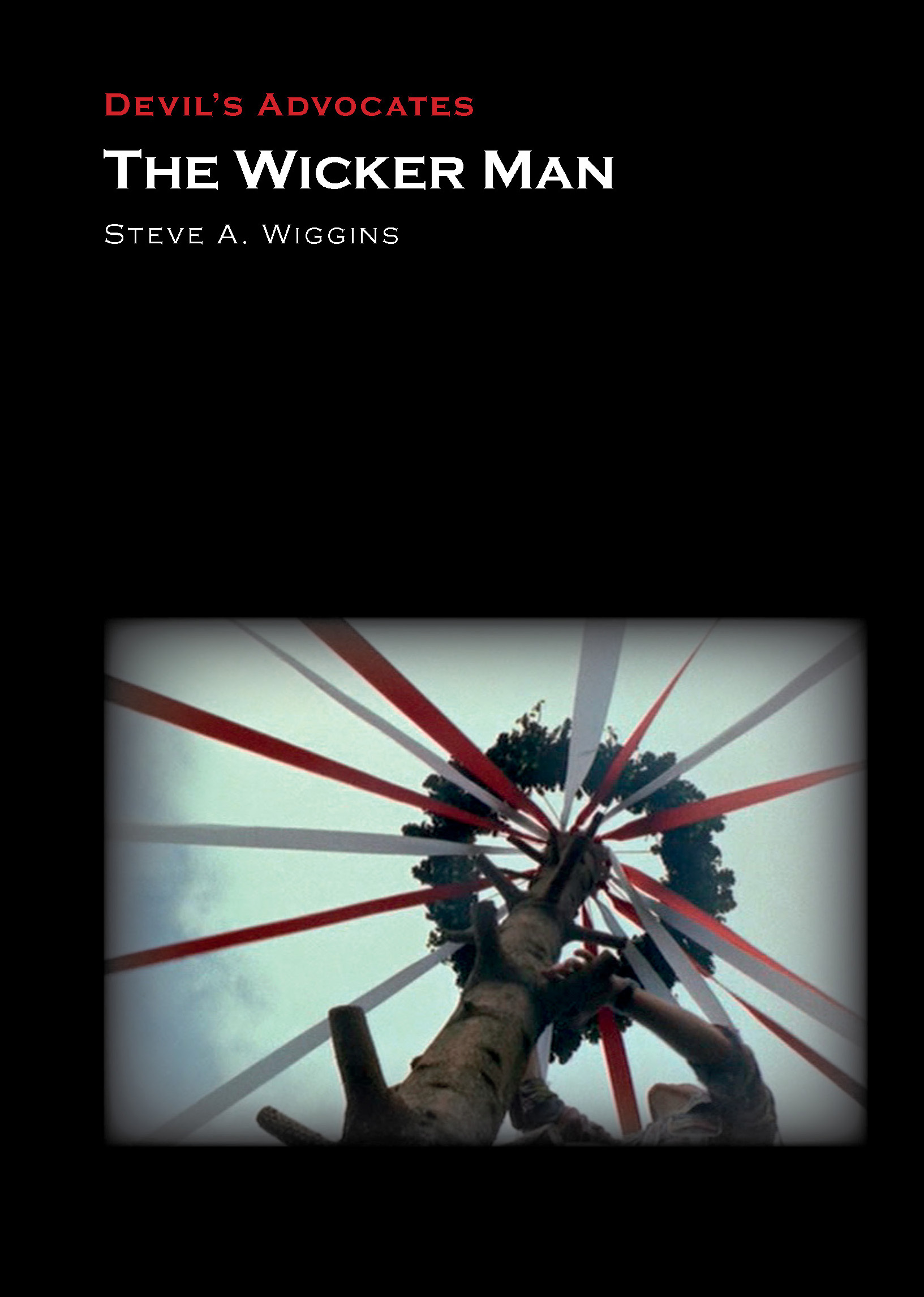
I noticed a similar thing with The Wicker Man.  An anxious author, I kept searching for it online when I didn’t hear from the publisher.  It was first announced at German booksellers.  Eventually it got around to English-speaking sites, and eventually (it took a few months after publication), it became available in “all channels.”  Although, several websites still only list the hardback which retails for more than a dollar a page.  Now that’s inflation!  Even $40 for such a short paperback is a lot, but that’s why I’m looking for anything but an academic publisher for the next book.  But there’s a larger issue here.

Like old Joe, I sometimes can’t remember things.  I have an elaborate and Byzantine set of reminders that fit my neurological profile (mostly).  For books I want to remember to look up after they’re published (I can’t generally afford to buy them right away, so this takes advanced planning), I have an online list.  That online list is associated with a bookseller and I can’t easily add to my list until the book appears on said seller’s site.  I suppose I could write it down in my zibaldone, but will I recall that I wrote it there?  (Those little notebooks get filled up pretty quickly.)  It would just be easier if information on the internet could feed out instantaneously.  If, say, Amazon Singapore could let Amazon USA know that a book that is publishing in the United States can be listed—well, wouldn’t that make sense?  Systems are complicated.  So complex, in fact, that architects must be hired to keep them in order.  Or maybe books could be announced when they’re actually available? What? Lose the buzz?  In the meantime I’ll put a bookmark in this page and hope that I remember to look it up when the time comes.


Scraps of Paper

My wife is a saint.  She doesn’t throw away the little scraps of paper on which I write notes to myself.  They’re everywhere.  And this even though I carry around a notebook to capture ideas.  Sometimes I left it in the pocket of another pair of pants, or on the bedside table.  And I need to write something down.  Soon the scrap is filled with vital info (at the time) and eventually gets mislaid.  When it’s found I need to go over it line by line to see if something remains crucial or if it was just prosaic (get oil change, set up eye doctor appointment, etc.).  You see, ideas can strike at any time.  I keep a commonplace book inside the door in case they do when I’m out jogging.  I now keep a separate notebook on the bedside table in case something occurs as I’m falling asleep.  And, of course, I keep my little zibaldone with me (when I’m wearing the right pants).

Those who believe electronics will save us suggest putting everything in a notes app.  The problem is that I have several.  I do most of my initial writing in Scrivener.  When it’s time to share either with a publisher or a colleague, I convert it to Pages, and then to Word.  But my devices also have Notes, which I can see synced on my phone.  That makes it handy for shopping lists and such.  Then there’s also Text Edit, which I use for rtf documents.  Where an idea gets saved depends on which app I’m using at the moment.  More scraps of paper, virtually.  I need to write it down so I remember what’s where.

All of this led to a rather embarrassing situation the other day.  As usual, I’m at work on another book.  Since writing about horror isn’t something I was trained to do, I have to do quite a bit of bibliography building along the way.  This is the kind of thing you learn in higher education, so no worries.  The thing is I had started a bibliography in one app and began writing the book in another.  I’d very nearly finished a draft of the book when I just happened to scroll through the folder where my former bibliography was kept.  I was stunned to learn I’d already done this work since I didn’t remember recording this at all.  I suppose the solution would be to record all my thoughts.  But that would be too dangerous.  And besides, when would I have time to review them all?  I guess I still prefer scraps of paper, even if they’re sometimes electronic.


Receiver

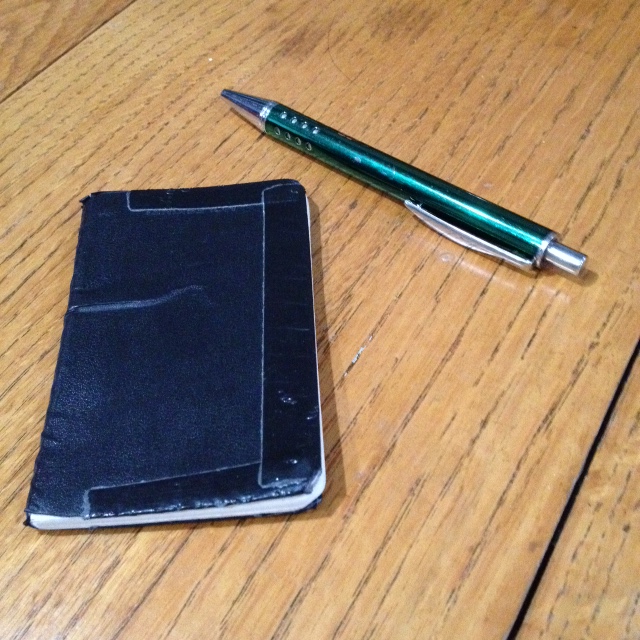
Being a writer (I can’t claim to be an author since I don’t make a living at it) is like being a radio receiver.  You pick up signals, or so it seems, and it’s your job to try to make sense of them.  That’s why I always carry a notebook.  Specifically a Moleskine volant extra small plain notebook (I can’t abide lined paper).  I’ve been using them for years and I’ve got quite a little stack of them in my writing nook, battered, taped, and well-used.  There’s part of my soul in those little things.  But they’re getting increasingly difficult to find.  More than once I’ve come to the last page only to have searched in vain all the local bookstores and speciality shops without finding a replacement.  (Big boxes like Staples appeal to the lowest common denominator and writers demand special treatment.)

Tools of the trade

Sometimes they’re not even available on Amazon, surprising as it may seem.  You see, I’m particular about where I store my thoughts.  People have suggested to me that I use my phone, but by the time I get it out of my pocket, turn it on, type in the passcode, and open the app, the thought is gone.  They travel quickly.  My notebook, always with me, has a pen companion.  It’s refillable and I take great care to buy refills that write instantly, without having to scribble to get them going.  I keep careful note of the brands that are reliable.  There’s nothing more frustrating than watching a great thought flee as you’re furiously scribbling to get your pen to capture it in your Moleskine.  No, this is an area where there can be no compromise.  If only notebook sellers saw it that way!

The trouble with being a receiver is you have no control over when the signal comes.  You wouldn’t know it from my publication record, but I have many, many unpublished pieces.  Most of them, regrettably, have to be reduced to electronic form so they can be submitted and rejected via email or Submittable.  I would have nothing with which to build, however, if my zibaldone were absent.  After my brain this is the first filter.  And when they’re full it’s time for another.  The next time I find them in my favorite indie bookstore I’m going to buy them out.  I’ll store them in the attic—I can find space up there, along with my pen refills—against a time of need.  Somethings a writer just can’t do without.


Ode to Zibaldone

Scribbling. All it takes is a margin of an agenda paper or the back of an envelope. I don’t remember when I started doing it—I’ve been writing my own blend of fiction, facts, and philosophy since I was in elementary school—but I would find a relatively clean piece of paper, fold it up, and put it in my pocket. I’ve carried a pen around with me for decades. Why? You never know when an idea might strike. There’s nothing like the discovery of a new idea. Lifelong learning is like that. So it was when I was reading Lemony Snicket’s Series of Unfortunate Events to my daughter that I learned about commonplace books. A commonplace book is a notebook where you jot all kinds of things down and you know where they are, unlike that piece of paper in my pocket that long ago started to rip apart at the folds, the ink becoming illegible as the paper grew softer and more pliable. A commonplace book seemed like a great idea.

This all came back to me when a friend send me a story on zibaldones. I’d never read the word before. A zibaldone, according to the story by Cara Giaimo on Atlas Obscura, is an Italian commonplace book. They used to be part of every thinking person’s accoutrements. A blank book where you could write down anything of importance. Giaimo suggests that the internet has taken the place of the zibaldone—blogs, Facebook, Twitter, Pinterest—we’re spoiled for choice where to put our thoughts. I still carry a commonplace book, however. Too many, in fact. Next to my writing chair rests a stack of notebooks. There’s one for each non-fiction book I’ve written, whether published or not. There are several filled with fiction. Some with poetry. My most recent zibaldones are Moleskines, which I purchased—as many as I could afford—when Borders sadly went out of business. Ideas. They just keep coming.

Some of my notebooks.

Some of my notebooks.

Perhaps the greatest benefit of the zibaldone is that, if one survives, an historian gets a glimpse at what someone who was not famous saw. Observations about the world scribbled down. The most proficient of scribblers organized their commonplace books in advance. As for me, I still scribble things on scraps of paper. I carry a notebook and pen at all times, but sometimes an idea is so slippery I don’t have time to pull a formal zibaldone from my pocket. I tape scrapes of paper into my notebooks. Right next to new words I’ve learned. Somewhere among today’s scribbles you’ll find the word zibaldone along with the hope that some day some of this might be significant.