Zombie Reality

The origins of zombies notwithstanding, they are the autumnal monster of choice in a post-modern society. They are the symbol of secular resurrection—no faith commitment is required, no pristine, moral lifestyle. Resurrection happens to you by accident, a chemical, a disease, cosmic radiation—whatever the cause it is not divine. And the zombie is fair game for the release of violent aggression; already dead, there is no moral imperative to keep them alive and well. Each year the mass of zombie walks increases where children and adults alike become the living dead for a day. Macabre? Indeed. It seems that the very word “macabre” may have come into English from Hebrew. Hebrew words are based (mostly) on triliteral roots, words with three unchanging consonants. The Classical Hebrew word for “grave” is based on the root q-b-r. The prefixed m is often the preposition “from.” Macabre, morphed through Latin and French, could go back to the root meaning “from the grave.” Literally, the source of zombies.

Resurrection is among the most poignant of human hopes. Religions often assure us that death is not final, but we can never know that this side of the veil. Those we love go away, we hope, to a better place than this. It is no surprise that the largest zombie walk in the country is in Asbury Park. We can imagine better. Why can’t God?

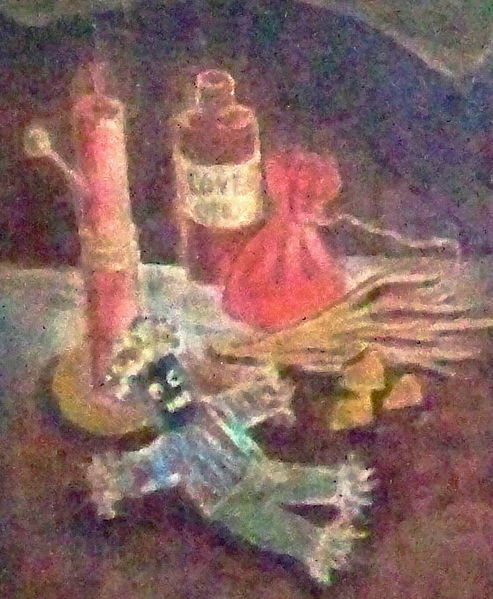
According to Wade Davis, there is a powder that vodoun priests use to zombify a person. This involuntary treatment does not actually prolong life, nor does it really resurrect the dead. It is, like many religious treatments, a show of faith. In The Serpent and the Rainbow Davis describes how psychosomatic attacks span the globe. All they require is belief. If a person believes in curses or the evil eye, the results can be physical and fatal. We create our own reality. Over the weekend I watched What the Bleep Do We Know? again. I sometimes showed this movie to my classes. Here physicists and gurus together affirm that we create our own reality moment by moment.

Zombies have migrated from the realm of religion to secular society. It is hard to imagine our modern world without them. They are cut from the same cloth as All Souls Day, reminding us of our mortality and suggesting that there might be something more. It is a reality we create ourselves.

Zombie Friday

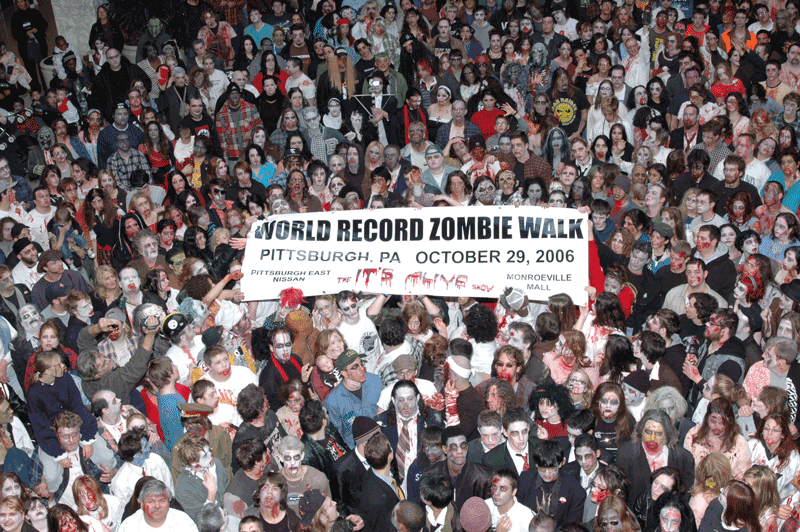
New Jersey is known for its zombies. Last October Asbury Park gained admission to the Guinness Book of World Records for the largest zombie walk (exception is made, of course, for daily life in Washington, DC). The movie zombie, in its now classic form, was reborn in western Pennsylvania, but New Jersey is the place where strange afterlives appear to gravitate. Yesterday Stephen Finley was sentenced. Finley, a mortician, had been convicted of selling the healthy organs of his dead customers to earn a little extra on the side. Given that the governor, Chris Christie, might rival Vlad the Impaler in his zeal for chopping, this really does not surprise me at all. Is it not the ultimate triumph of the free market to consider human beings commodities to be packaged, used up, repackaged and resold? Moral rectitude is on the side of the strong arm.

As someone who has been on the receiving end of the chop more than once, and reduced to a zombie-like state of perpetual job-insecurity, I think I know how the undead feel. Not having a place in the normal world of the living, but not quite dead, the zombie wanders about looking to feed on brains. This idea of brain-lust seems to stem from the cult classic The Return of the Living Dead, although, not being a film specialist, I would welcome correction on this point. Nevertheless, like the modern zombie I hail from western Pennsylvania and nothing satisfies me like a good brain (metaphorically, of course).

The idea of harvesting the organs of the powerless dead also suggests the endlessly referenced Soylent Green. Here the staunch NRA promoter Charlton Heston fights against the establishment that is turning (spoiler alert) people into Soylent Green, the ultimate solution to food shortages! For, after all, are people not just commodities? America’s thirst for zombies reflects our growing sense of victimization: the zombie is primarily a creature without a will, brought back by powers beyond its control. In the original vodun context the zombie was a source of cheap labor. Is it any surprise that West African slaves brought the concept to the New World with them? Today, of course, those with the cash may simply purchase the organs they desire, cutting out the middle man and going straight to the source.


Zombie Walks

As October nears its creepy climax, signs of the macabre have become abundant. A trend that has reached new heights in recent years is the zombie walk. Various cities or regions host large groups of brainless, reanimated corpses in parade (rather like a Tea Party, I should imagine) to welcome in the darker half of the year. In a most unconventional display of cultural unity, groups of strangers meet for the purpose of sharing their fascination with the undead. Given the inherent potential for overly enthusiastic participation, these events are usually held during daylight hours and are becoming as accepted as trick-or-treating on Halloween.

Fear of death is sublimated in a conquest of the same with less definitiveness than traditional resurrection, but with a more gritty and graphic triumph of life. Organized religions have had difficulty maintaining numbers in much of the “developed world” while this new danse macabre has taken on a life of its own. Many find claims of divine authority in institutions that refuse to make clean breaks with sex scandals or threats of Quran burning somewhat disingenuous, while nobody questions the motives of zombies. They simply do what it takes to survive. An honest zombie stumbles toward eternal life.

Credibility is less easily commanded than it had been in former times. While many voices, such as Tea Partiers’, are claiming the need to erase the sixties and seventies and subsequent decades from the calendar so that the authoritarian Father can be returned to power, thinking people are asking what the plan might be. Is it time to break down that putative wall between church and state and declare America a plutocratic, evangelistic Republic? Never mind that inevitable conflicts will break out over who has the right to set doctrine and public policy – most citizens will be found out walking with their fellow zombies, welcoming in the darkening season.