New Age Present

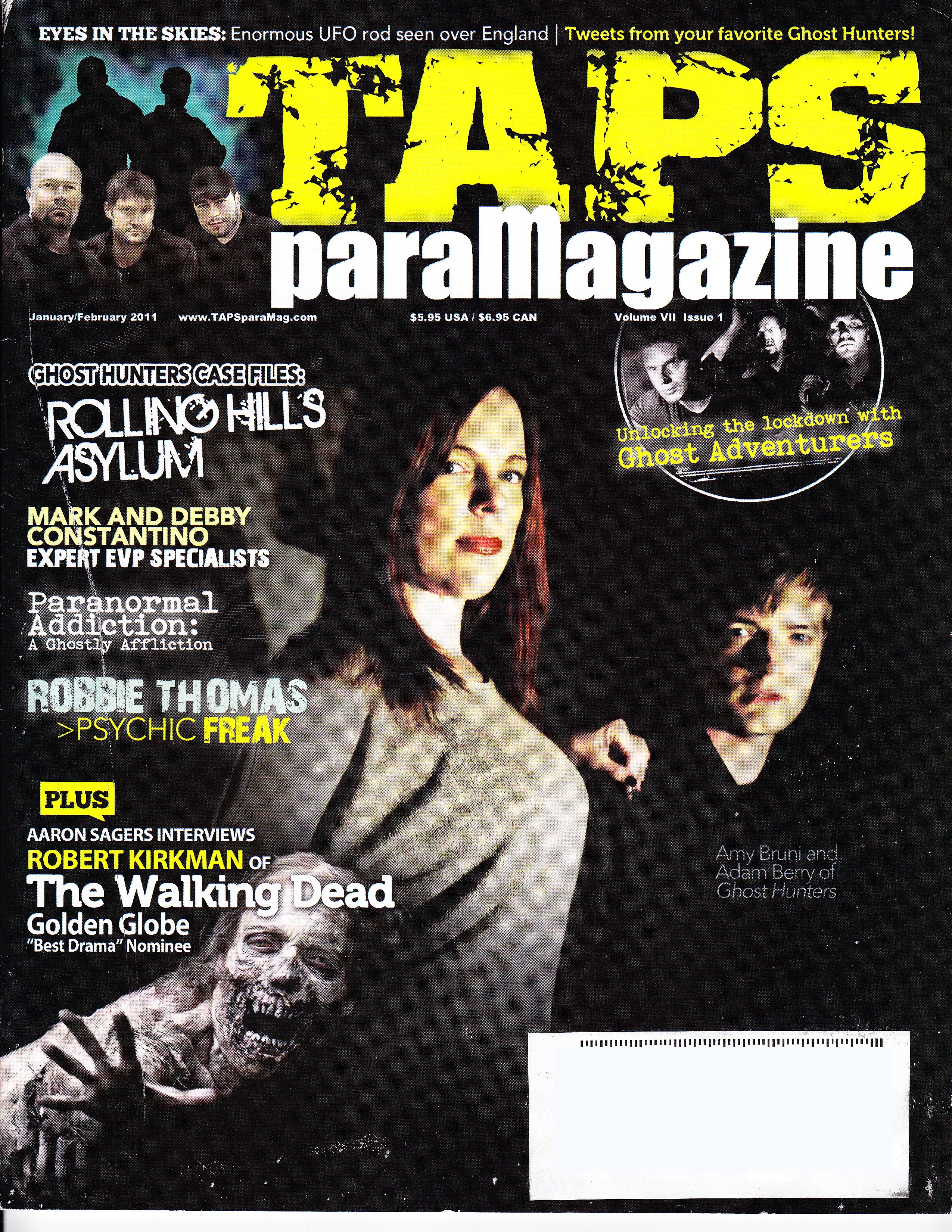
Okay, so I admit I’m curious. As my “six month” subscription to TAPS Paramagazine continues into its second year, itself somewhat paranormal, I get the feeling that I’m witnessing the birth of a new religion. I’ve been in this business long enough to know that new religions are hardly rare, but this one seems an accidental entry into the field. Now ghosts and religion are natural enough as corollaries. Both involve afterlife concerns and the unknown. Having watched TAPS Paramagazine feature fairies, tarot cards, and zombies, however, I wonder if the distinctions are becoming blurred. In this latest issue (January/February) many of the articles make explicit mention of God. God and ghost in the same breath, with the exception of a particularly holy spirit, is an odd combination, given the biblical injunction against mediums.

Spiritualism in the late nineteenth and early twentieth centuries was descried by famous debunkers such as Harry Houdini and accepted by famous intellectuals like Sir Arthur Conan Doyle. It is that liminal area that stays out of the reach of traditional Christianity and Judaism, but strays into the afterlife-prepared psyche. If the dead are out there, they should be able to communicate. Right? And with God’s full approval, so it seems. This latest issue alone suggests that UFOs may be demonic, that clergy may be legitimately interested in ghosts, God may speak through dead children, and that one may become addicted to paranormal investigation. Sounds like a recipe for a New Age mythology. Throwing in light-hearted contributions about the Walking Dead, and suddenly zombies become real as well. Oh, and skunks have a special wisdom.

Traditional Christianity cautions against all of these things (except skunks). When it comes to the supernatural, it claims, there is only one super, supernatural being. The rest are charlatans and wannabes. The Bible certainly does not encourage consorting with ghosts, and yet, in this New Age milieu it is possible to find any remotely spiritual entity touted as proof of reality beyond reality. As Bader, Mencken, and Bader observe in Paranormal America, citizens of this country are inclined to believe. Where does belief lead when there is no pole-star to guide the ship? I sense that we may be steering into uncharted waters. Anyone want to volunteer to be captain? Religions always get to make up their own rules, so feel free to devise your own compass.


Black and White Zombies

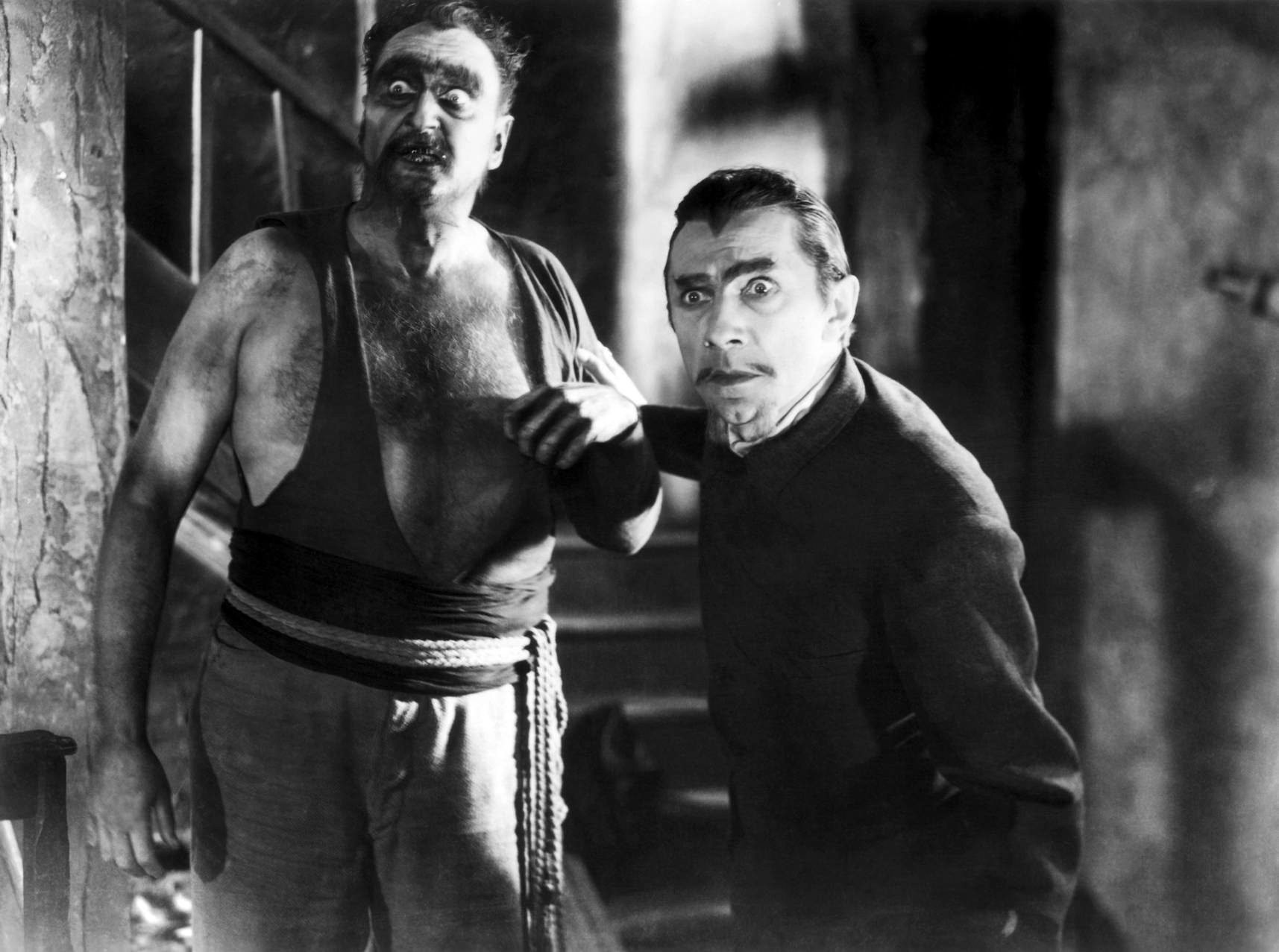
One of the sweetest privileges of a school-year weekend is the Saturday afternoon movie. The advent of relatively cheap, boxed sets of old films has opened the realm of many forgotten classics for me. My wife recently purchased one of those 50-movie boxes of classic horror films for me, and I’ve been making my way through it weekend-by-weekend, and occasionally there is a gem among the tailings. Yesterday I saw White Zombie for the first time. Back in the days when Bela Lugosi claimed a faithful following after his trend-setting interpretation of Dracula, he played a voodoo doctor with the power over zombies in this widely panned movie. In these days of the Walking Dead, it may be hard to appreciate that White Zombie was the first full-length film about our undead friends.

With the exception of the always professional Lugosi, the acting in the film received a well-deserved trouncing. Interestingly, the “van Helsing” of the drama, the doctor who overcame the monster, was a missionary. White Zombie is authentically set in Haiti, and it is never made clear whether the undead are really deceased or simply mindless. But the goofy, pipe-smoking missionary is the one who defeats evil at the end of the day. As noted elsewhere on this blog, monsters frequently emerge from the dark realms of religion, and the zombie especially so. Today, however, the zombie is all the scarier for being secular, unaffected by God or human deterrent. Originally it was a case of voodoo versus Christianity.

In what is perhaps an unintentional irony, the character who comes across the most sympathetically in the film, apart from the fetchingly pouting Madge Bellamy, is Murder Legendre (Lugosi). The missionary wins out by dim-witted happenstance, while the character responsible for the actual death of the zombie master is a partially aware zombie fighting against his fate. It may be assigning far too much credit to assert that the film had intentional social commentary, but White Zombie has had an often unrecognized impact on what has today become the symbol of corporate America: the once humble zombie.

A typical zombie


Zombies, Golems, and Robots – Oh My!

A truly great metaphor is hard to kill. Despite detractors and naysayers, the zombie has clawed its way into the modern psyche as a denizen of the living death of a world we’ve created for ourselves. Joblessness, environmental disasters, tea parties – just when you thought it couldn’t get any worse, the dead refuse to stay dead. Elsewhere on this blog I’ve written about the origin of zombies in Voodoo, and I mentioned in passing the connection with the golem. The golem is a mythical Jewish creature that serves the role of protector of the oppressed (one can’t help but think of the Democratic Party). It is strong, dedicated to its task, brainless and soulless (one can’t help but think of the Religious Right). Like the zombie, the golem has no inherent ability to think for itself, and it must be animated by a magical word written on its forehead.

Golem around the corner

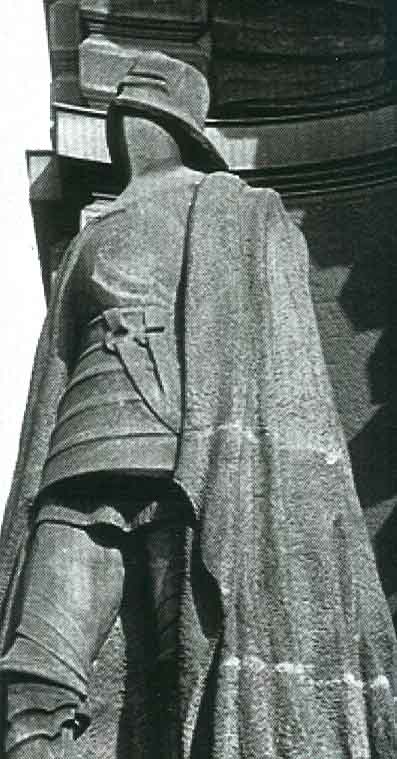
One of the most famous golem stories involves the Golem of Prague, defender of the oppressed Jews in that city in the Middle Ages. The Prague connection also forever ties the golem together with robots in Karel Capek’s 1921 play, R.U.R. (Rossum’s Universal Robots), the very origin of the word “robot.” Like the golem the robot putatively has no soul. It too is controlled by a code written precisely for it. Unfortunately on my one trip to Prague back in 1991, I didn’t know to look for the golem – I did find the statue of Jan Hus, however. Right around the corner the golem lurked, standing guard over the oppressed. It is a powerful image when the world is in such a state.

We need a hero

With the recent release of George Romero’s Survival of the Dead, the zombie has been given renewed life. Watching the Republican Party gearing up for a major thrust at the very soul of America, lining up the local BP station to support big oil, spouting false rhetoric about what the Bible says, I think I’d rather take my chances with the zombies. Does anyone out there happen to have a golem for sale, just in case?


Gray New World

A few months back I purchased a book entitled One Thousand Languages by Peter Austin. Not a “reading book,” this is more of a reference manual to the often bewildering profusion of languages in the world. Having dabbled in the study of about a dozen languages over the course of my academic career, I was interested in seeing what tongues are being spoken in places I’ve only dreamed about. After introducing a plethora of different communication systems, the book dedicates a significant section to endangered and extinct languages. There is a sadness about a language dying; it marks the end of an important aspect of a culture and a move towards a bland universality.

O say what did you say?

Then a Rutgers student sent me this link. It is a video of Wade Davis lecturing on the topic of the rapid disappearance of minority cultures around the world. Initially Davis begins by telling the students that when they were born (this lecture was delivered in 2003), there were 6000 spoken languages in the world. As of 2003, there were only 3000. The rate of language extinction is (was) about one tongue dying out every two weeks. What makes this degeneration so unfortunate, as Davis explains, is that many are dying unnatural deaths. Cultures are obliterated because of exploitation. More powerful members of nations (artificial constructs, all!) ensure compliance by encouraging uniform languages and monochromatic cultures. It is culturocide.

I would encourage my readers to view this video; it is 20 minutes well spent. A major component of these dying cultures is religion, naturally. Davis makes very important observations about this aspect of cultural non-diversity as well. And I can’t help adding that one of the phenomena he addresses is how zombies are made! Quite apart from my fascination with the monstrous aspect of religions, Davis’ cautions are essential to recognizing the plight of the once diverse human cultural domain. You won’t regret seeing this – it is nutritious food for thought.