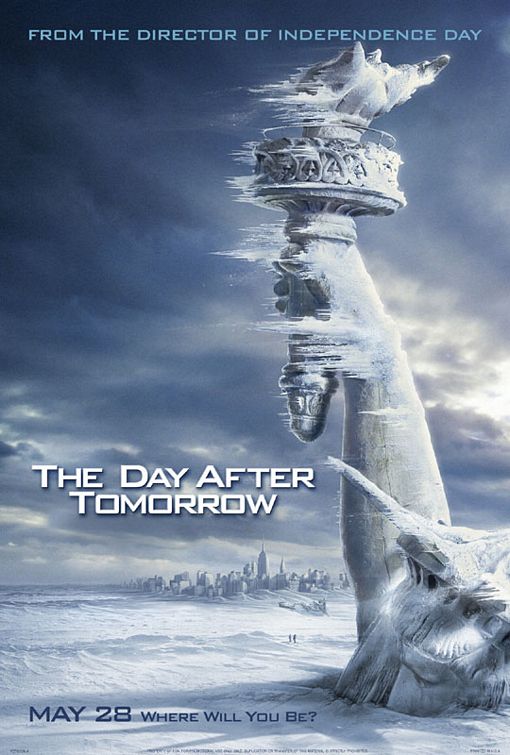
Politicians and Blood-Suckers

The old icons and heroes are gone. It is best just to deal with it. No one is above reproach since we are all in this human morass together. Nevertheless, I’ve always held a soft spot in my cynical heart for Abraham Lincoln. I know he wasn’t perfect, but he stood for an issue that has been a driving force for my life: fairness. Now I see that he was a vampire hunter. After having read Seth Grahame-Smith’s Pride and Prejudice and Zombies last year, I’ve decided to give a try to his Abraham Lincoln: Vampire Hunter. My fascination with monsters and religion has not been disappointed in this fanciful story.

Our quasi-fictional honest Abe begins his vampire-slaying ways when he learns that, yes, a vampire killed his mother. As a boy of only twelve, he finds the knowledge stressful to the point of burning the family Bible that he used to read to his departed mother. Why? In Abraham’s own (fictitious) words: “How could I worship a God who would permit [vampires] to exist? A God that had allowed my mother to fall prey to their evil?” I admit that I was secretly pleased to see the classic issue of theodicy being raised in a story concerned with the undead. It is the dilemma of all who want to see a good God behind all the suffering in the world. It is a dilemma that stems from the same deep wells as our inhuman monsters. We can imagine a better world, but we can’t have it.

Politicians with axes

As I see New Jersey’s governor Christie (for whom I decidedly did not vote!) slashing away again and again like Freddie Kruger at the state’s educational system, I see the twin peaks of vampirism and theodicy peering distantly over the horizon. I am deeply disturbed by the facile disregard this “visionary” Republican has for the future of his own state, for the future of our children. And I am forcefully reminded once again that vampires are symbolic of all those who prey upon the unwary. When staring into the fireplace on a cold night, I imagine myself standing beside Grahame-Smith’s fictional Abraham Lincoln, wondering what god it is that vampires worship.

Virgin Goddesses and Human Fathers

Several years ago today I became a father. I try not to say much about my family online because I am old enough to be cautious about this brave, new, virtual world I post in just about every day; yet being a father is a life-changing experience like no other. The absentee father – something I personally experienced – sacrifices one of the most fulfilling aspects of life. Unless you’ve been there, you can’t understand it.

Today’s paper raises the question of whether celibacy is related to the continuing scandal of sexually transgressing priests that continue to come to light. Men who are not fathers but are called “Father.” Men, sworn by duty never to give in to human nature, appointed as spiritual guides to the masses who have succumbed to the dictates of biology and society. The church denies any connection. Could it do any differently? Two thousand years of frustrated men might storm heaven itself!

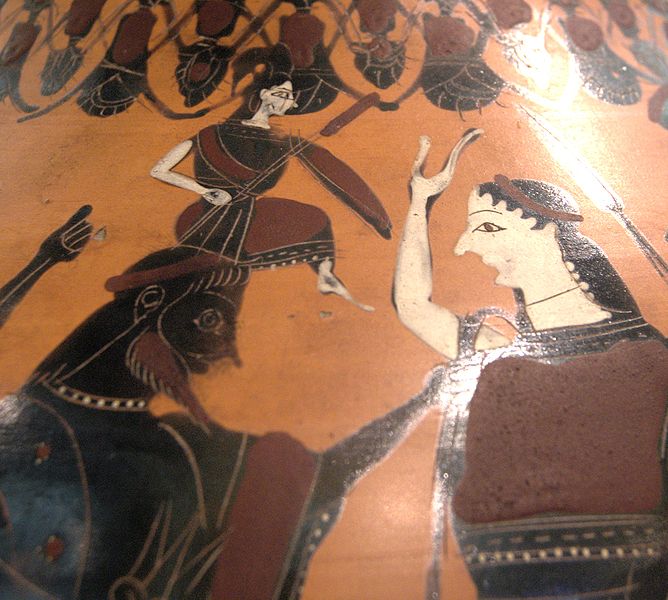
Among the most admired deities of the ancient Greeks were the virgin goddesses Hestia, Athena, and Artemis. Their divinity radiated through their self-sufficiency and self-determination; no god needed complete them. Goddesses had an integrity that few gods ever attained. We don’t read of virgin gods; Zeus was famous for his affairs, as were most masculine divinities. Many gods kidnapped or deceived women to slake their lust. Yet the virgin goddesses were formidable and truly worshipped. By restoring the virginity of Mary, the church constructed its own virgin goddess as a paragon for all to emulate. Priests were to be like the mythically chaste Joseph, longsuffering and self-abnegating. But they are mere mortals. Why not let religious leaders truly become fathers? It has forever changed my life for the better. Perhaps it would be healthier than chasing mythical virgin goddesses?

Athena, most chaste


Under G-d

In one of the great showcases of civil religion, the Pledge of Allegiance is again in the news for its brash statement, “under God.” Lawsuits have been introduced in California to try to label the statement as unconstitutional – state supported religion, a declaration that the United States is a theistic country. Even as a child, a religious child, no less, I was vaguely disturbed by the Pledge. I am a sentimentally patriotic American, and I begrudge no one that natural feeling of pride in their heritage. We all come from somewhere, and we like to think the best of ourselves, and therefore our forebears. I’ve tried to trace my ancestry and find that with a sole exception on a great, great-grandparent’s exodus from Germany that my roots are hopelessly lost in long generations of northern European expatriates that have been on these shores for well over a century and a half. Some even more. And yet, to pledge allegiance to a flag? As a student of religion, I understand the value of symbols, but I always felt that a hand over the heart while addressing a banner was a little like idolatry.

Well, I’ve grown up since then. I spent three years abroad, and returned with a renewed appreciation of how much this country has to offer. I’m still a little puzzled by the “under God” bit, however. Sure, America’s founders were generally deists (not Christian by any recognizable stretch of the definition), and since God is assumed, why not add him to the books? But God was only added to the pledge in 1954. In the heat of McCarthyism it seemed important to fly our “anti-communist,” theistic colors high for all to see. And yet, we never define who “God” is.

The God of the Bible has a name. Every semester I find students that have difficulty grasping the idea that “God” is not the name of a deity – it is only a generic title. It could be anybody divine. Shiva, Zeus, or even Baal. In the written work of many of my students from the Jewish tradition, the reverence accorded to the deity’s personal name has been transferred to this innocuous title. In essays and papers I frequently find reference to “G-d,” as if the Torah commands never to make reference to deity at all. So, out of reverence to the same divinity we have some citizens leaving out the lonely vowel of a one-syllable deity while others loudly proclaim that he (never “she”) must be kept in the little bit of civil religion we impress on our public school children. We don’t agree, as a nation, on who “God” is. Reading the rantings of the Religious Right with their tea parties and Conservapedias, I’m sure that this is not the G-d of the Bible. What does it mean to be a nation under a deity we don’t recognize?


Sex and Violence in Ancient Peru

MSNBC ran a fascinating article yesterday that strangely validated this blog. The Quai Branly museum in Paris is opening a display of Mochica artifacts from ancient Peru. Although I am no expert on ancient Peruvian religion, I do recognize the obvious connection that I have introduced here a time or two: the connection between sexuality and religion. The article states that (but does not show) artifacts of an explicitly sexual nature are among those recovered from the Mochica civilization. Bringing violence (in the form of human sacrifice) and sexuality together, the ancient Moche were just as religious as medieval (and later) monotheistic faiths that assert their right to control sexuality and dole out violence.

The MSNBC article makes clear that the sexual, sometimes violent, images are not representations of everyday life, but religious rituals associated with the death of dignitaries. Emma Vandore, the author of the article, notes that the images demonstrate the social control Mochica religion had on its people. She is clearly right. Religions, while often in the position of providing “theological” rationales for their decisions, are actually forms of social control. Individual salvation aside, your clergy want control over your life.

Tame Mochica pottery from Wikipedia Commons

Because religion is so large and so mysterious, the populace often simply complies. The Mochica artifacts, some of which are reported to be disturbing, justify this interpretation. Even an image search on the web will reveal how graphically cruel religious representations of Hell are; much more compelling in scariness than are feeble attempts in alluring one into an idyllic representation of Heaven. (Heaven is often shown as a garden, and as a sufferer of hay fever, I imagine myself sneezing through paradise.) It is no coincidence that organized religion appears on the historical scene on the coat-tails of civilization itself. The Moche were straightforward about what modern civilization would prefer to hide: religion is more about control than it is about belief.


Love Slap

Over the past few days news stories have emerged raising concerns about implicating very high authorities in the Roman Catholic hierarchy of at least being aware of problems in the church. These problems are by now familiar to all who follow religious news: allegations of abuse, physical and/or sexual, known, perpetrated, and hidden by clergy. The recent spate of cases has come from Germany, home territory to some high-ranking officials.

The church has never done well at steering free of controversy. After all, in Niebuhrian terms, this is “Christ against Culture.” Nevertheless, our human sensitivities have continued to grow, and it is recognized that children, swept into religious institutions because of the belief structures of their parents, often end up victims. Unless something radical happens, those children, imprinted from youth with the stamp of their family religion, spend their lives bearing its marks. What religious leaders command must be obeyed. They, after all, hold the keys to the kingdom.

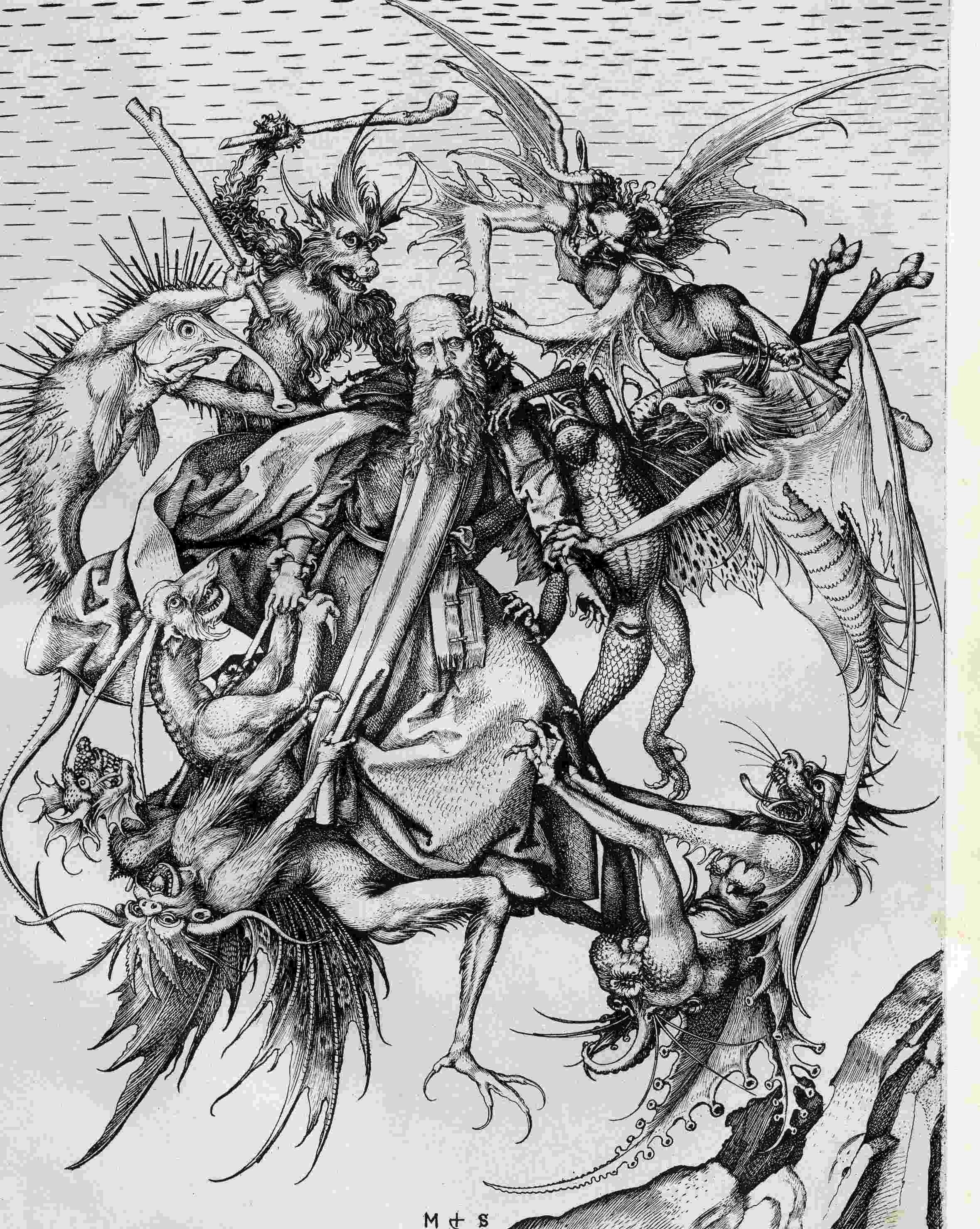
Slapping choirboys (and worse) has underscored the weakness of human clergy. Any religion that is mediated by human agents will be susceptible to abuse. It should not be accepted, excused, or tolerated. Temptation to give in, however, marks an indulgent modernity. Although largely mythical, the torments of ancient saints drew the moral lesson that mere humans could withstand the urge to give in to temporal vices. Perhaps clergy ought to stare long into the patient face of St. Anthony and ponder the implications. (Notice who does the abusing.)

The last temptation of Tony?


Emasculating Science Education

American lags behind. Tough words to read, n’est-ce pas? America lags behind in science education. Even nations as “conservative” as Tajikistan teach evolution in their classrooms without question while the United States just can’t seem to accept the facts. The fault, with no question whatsoever, lies with a very narrow Christian interpretation of the irreconcilably contradictory creation stories that open the book of Genesis. This fact has once again come to an ugly head in New Jersey, among the bluest of states. Our, gulp, Republican governor has recently nominated Bret Schundler, a supporter of school’s rights to teach intelligent design, as state commissioner of education. I shudder.

As I teach classroom after classroom of Rutgers students, there is neither biblical nor scientific basis for Creationism. Creationism is a neo-Christian chimera forged together by political pundits who believe that if evolution is stopped in its factual tracks, America will revert automatically to the pre-hippie days of the 1950s where authoritarian dads with conservative haircuts barked out the family marching orders and saw everyone to gospel-hymn-singing churches each and every Sunday. It is a myth, they assert, that is worth believing.

The problem is that facts don’t evaporate simply because nabobs don’t like them. At the FIRST Robotics competition I attended this weekend, facts were presented. The facts are that America has fallen far behind in science education. Decades of fighting the pointless battle of Creationism at the highest political level in this country have weakened us. Those who study the Bible seriously do not question evolution. Those who study science at all cannot seriously question it. Those who do dig trenches of doubt in the minds of generations of Americans with an already inadequate understanding of science and suggest that maybe there is reason to find an atheistic plot behind evolution. There is no plot, only facts. And if New Jersey is about to join the Kansases, Arkansases, and Texases that see big cars, big oil, and big daddies as the solution to our social ills, it may be time to move to New Hampshire.


When Your World Rocks

The prophet Amos famously dates his oracles as “two years before the earthquake.” In ancient times (and some modern, dimly lit regions of some religious minds) earthquakes were thought to be signs of divine displeasure. We lost that naïve, magical view with the discovery of tectonic plates and fault zones, but it is hard not to take earthquakes personally. A third major earthquake of the year hit Turkey on Sunday, leaving further human distress in its wake. While scientists assure us that earthquakes are not increasing in frequency, we nevertheless hear more and more about them.

Although we have the technology to build earthquake-proof buildings, the nations suffering from the recent quakes do not have the luxury of ensuring that those who live around fault zones all have housing to withstand that unsuspected temblor. Those who cannot afford high cost housing are fated to be victims. We don’t cause the earthquakes, but we can ensure that affluent cities will withstand them. Haiti, Chile, and Turkey seem a long way distant.

Whose fault is it anyway?

Scanning the unfair distribution of wealth across the world, it is far easier to see an angry god behind an earthquake than it is to relinquish our personal gain. Perhaps it is a result of our biological urge to survive that we constantly seek to increase our own advantage while shaking our heads sadly as people we don’t know become the victims. Meanwhile neo-cons and prosperity gospelers bray loudly that wealth is their god’s reward for lives of righteousness in this wicked world. It is a scenario worthy of Amos himself.


Robo-god

Yesterday I again found myself among the robots. After an early-morning school-bus ride to the New Jersey regional competition in Trenton, a mentor to a team known as the Gearheads, I felt a little out of my league. Soon, however, I fell into the spirit of the competition and watched with increasing interest as individuals highly regarded in the world of robotics lamented the lack of science education in the United States. Having just completed the nightmare of two terms with a creationist president, is it any wonder? In any case, the competition, a modified soccer match for robots – with two teams from Brazil, no less! – soon became as emotional as any sporting event. Well, for the human participants, anyway. I’m not qualified to assess robotic emotions. As the event wound down, a respected (human) member of FIRST Robotics, during a recognition ceremony, overcome with emotion, called out “God bless you!” to the adult volunteers.

Many scientists I know are personally religious people. There is no fortified gateway between scientific reasoning and the childhood teaching of religious belief. Nevertheless, an irony became apparent that has been bothering me all night long. I joined Team 102 as a mentor because of my daughter’s interest in robotics and engineering. My role is to help with editing, since I am a “humanities” type. The irony that leaves me sleepless is that Ph.D.s in the sciences are highly coveted and have an assurance for jobs. Ph.D.s in the “humanities,” however, are a sure way to block you from career success. Since I began this blog I have been officially unemployed (I pick up a course or two here and there, but no full-time offers have been presented). The people who have been most empathetic and helpful in this time of difficulty have been the robotics team. People there have tried to hook me up with people who might be able to help, but I am like an alien on the autopsy table among scientists – where do you begin? How do you help an overly qualified “humanities” ex-professor find a job? Meanwhile my co-“humanities” colleagues helplessly wring their hands and do nothing. Worse, they interview me and decide not to make a hire, based on “religious” reasons.

The past several years, as the recipient of calculated cruelty from many religious folks, stumbling along trying to find a means of reasonable support, I have come to trust the robots. The robotics team has demonstrated the most humanitarian attitude to a fellow human who has been suffering for several months. The religious tell me that God will work it out and go their righteous way. Yesterday, being blessed by a “high priest” of the robotics world, I felt that I finally found a place I belonged. Now it might be time to go back to school and find the real pulse of humanity in the sciences.

Kids building robots


War and Peace

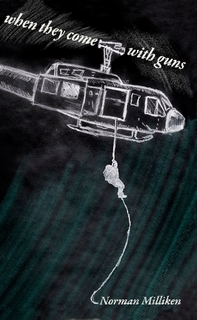
A few weeks back a friend pointed me to a Facebook-style website someone in my high school graduating class had put together. In high school I was awkward, shy, and a little too obvious about my religious beliefs, so I was a bit timid to join. Nostalgia eventually got me in a headlock, just like in gym class, so I signed up. One of my classmates helped me to find one of the people who had a profound impact on my life. Although I never had him for a class, Mr. Milliken was my Creative Writing Club advisor, and a person I utterly respect and admire. I’m not normally a hero worshiper, but Mr. Milliken had been through more suffering than many men his age and had come out of it a sincere, caring, and thoughtful individual. When I found out that he had published a brief collection of his poetry about his time in Vietnam, I immediately ordered it.

Available from Lulu.com

War has always haunted me. Perhaps it was partially because of the tales Mr. Milliken sometimes told, or because of my macabre reading about the terrors of twentieth-century conflicts, but whatever the cause for my fear, it was real. War has been with humanity for as long as its more docile cousin, civilization. Being rational creatures, there seems to be no reason that we should not be able to reason ourselves out of armed conflict, but we don’t. Knowing that one of my most respected high school influences had nearly died in Vietnam chilled me. Reading his poetry, I shiver once again.

While justifying it on theological grounds, the Hebrew Bible takes a fatalistic view of war. Killing of enemies who stand in the way of god’s plan is sanctioned, commanded even. The victims, however, are humans just like the victors.

When I get caught up in the complex web of difficulties my own life has woven into, I find it easy to complain. Reading when they come with guns, however, reminds me that many have had it much worse and have come out as superior human beings. For those who are victims of war, we can only hope that forgiveness will somehow descend on those of us who have not yet put an end to it.


Horror and Head-colds

Religion is such a pervasive vehicle for movies, whether disguised or blatant, that pointing out such connections might seem too easy. Finding these connections in horror movies is child’s play since religion constantly probes our deepest fears. Trying to get over a lingering head-cold and suffering from lack of sleep, I pulled out Ken Russell’s 1988 film, Lair of the White Worm. The film itself is not unlike a Nyquil dream, disjointed with sudden shifts of setting and context. The immediate connections with The Cult of the Cobra and Stuart Gordon’s Dagon – based on H. P. Lovecraft – were unexpected bonuses.

Through all of the B- special effects pulses a strong religion subtext. The crucifixion vision juxtaposed with Roman soldiers raping nuns was a dead giveaway. The supporting female characters bearing the names of Eve and Mary could not be more obvious. And the snake wrapped around a tree – is this Sunday School 101? Lacking the sophistication of Robin Hardy’s Wicker Man, Lair of the White Worm nevertheless does strike some similar religious chords. When archaeologist Angus Flint discovers a Roman temple dedicated to Dionin under a convent in England’s north-country, a mosaic of the great white dragon wrapped around a cross tells the viewers all they need to know.

Like Marduk, Baal, Yahweh, Zeus, and St. George, Lord James D’Ampton becomes the dragon-slayer. Chaoskampf (god slays dragon motif) is perhaps the most ancient form of religion, alongside the world-wide flood and dying gods returning to life. These archetypical images populate many films to the point of saturation and Lair of the White Worm is a treasure trove of them. The plot successfully invents an ancient deity, Dionin, whose name and cult have clear connections with that of Dionysus, himself a dying and rising god. This religion is in conflict with Christianity, and the film is opaque enough not to reveal the winner. I need to ponder this some more. In the meantime, I think I need another dose of Nyquil.

Take it with a dose of Nyquil


Religion Embraces Science

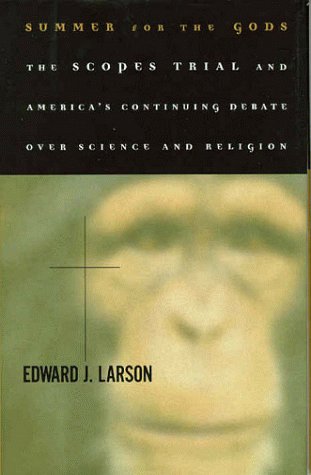
My colleague and one-time dean, Michael Zimmerman of Butler University, has brought his Clergy Letter Project to the Huffington Post. Well, he has written an online piece for the Huffington Post entitled “Redefining the Creation/Evolution Controversy.” His article is clear and to-the-point: the Creation/Evolution debate is not about religion versus science. That has been shown repeatedly for those who care to examine the history of this controversy. Evolution barely caused a ripple among clergy when it was first becoming popular among scientists. Ministers assumed it was just one of God’s mysteries and went about their clerical duties. The issue became a public relations boondoggle with the Scopes Trial of 1925. One of the best books written on that subject is Edward Larson’s Pulitzer Prize-winning Summer for the Gods.

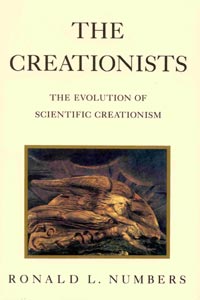
As I have stated in my podcast on this issue, Creationism is a splinter movement within Evangelical Christianity. Over the years it has drawn in members of a wide variety of Christian groups, including Roman Catholics and mainstream Protestant denominations. It has publicized its concerns so well that many people assume that this is the “Christian” viewpoint and that all other views are, by definition, non-Christian. This is the perspective that has driven a wedge between religion and science, creating a false front that has led to many confrontations between Evangelicals and scientists. My favorite history of the Creationist movement is Ronald Numbers’ The Creationists.

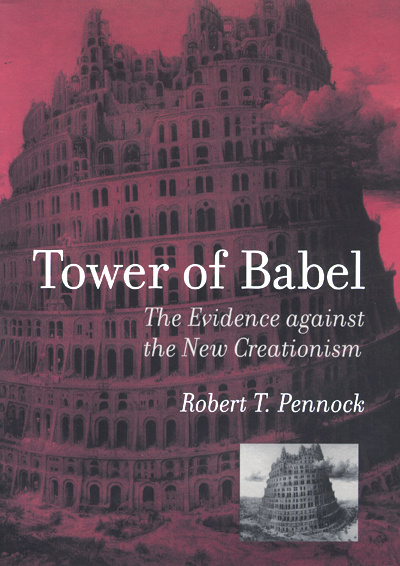
The true motivation of the movement is, without doubt, political. While many sophisticated people scoff at the apparently simplistic machinations of the Creationist movement, what they do not realize is that it is a highly organized and politically savvy alliance of special-interest groups. Robert Pennock’s Tower of Babel was an academic exposé of the inner workings of the Creationist movement. It is perhaps the most important book written on the subject. Published by an academic press, however, it has not found the wide public readership it deserves.

Do yourself a favor: read Dr. Zimmerman’s post. I believe he has framed the dilemma in the correct way: the struggle is one within a specific religion, Christianity, not one between religion and science. The more the public knows about this issue the better off we all will be in the long run.


Neo-Cons and Mockingbirds

Among my high school catch-up reading is one of my favorite novels, required in my own youth, Harper Lee’s To Kill a Mockingbird. While a certain distress accompanies the fact that I read this book over thirty years ago, as I reintroduce myself to the welcoming characters of Scout, Jem, and Dill, I lament that there is so much to read that we can’t simply linger on the great works of literature we’ve loved before. Reading the novel as an adult there is much, I am certain, that I missed the first time around, not knowing what to expect as I approached the story with no preconceived notions.

One of the constant stresses I lay on my students is how the Bible utterly suffuses American society. We are bombarded by Bible, whether we know it or not. It was with appreciation, therefore, that I saw the exchange between Scout Finch and Miss Maudie in chapter five. Miss Maudie, complaining that “foot-washing Baptists” take the Bible a little too literally, declares, “but sometimes the Bible in the hand of one man is worse than a whiskey bottle in the hand of – oh, of your father.” (The incongruous image of Atticus Finch drinking whiskey is not lost on his young daughter.) This statement summarizes much that is true in today’s society as is evident in Max Blumenthal’s Republican Gomorrah. Many Americans create an idolized image of the Bible that is used to gain control over others. When such individuals gain political power everyone else is at risk.

In the backlash to having a moderate man elected to the presidency, the news is full of biblically constricted complainers who fear the impotence of the Bible. Their fears are unfounded. Our society has been constructed on foundation blocks of biblical literalism and although the superstructure is unaware of it, the Bible continues to root many Americans firmly to their planet. The “founding fathers” were not Christians, but many of their country-folk, Puritans and others fleeing the formalized religions of Europe, were. The aggregate of their descendants has been tapped successfully by neo-con politicians to win elections and referenda around the nation. There is no end in sight. If only the wisdom of Miss Maudie were taken a little more seriously, we might have a chance to move beyond the illusion of a pristine yesteryear that never was.

Killing me biblically


The End of the World as We Know It

Well, that may be a bit dramatic, but my whole family is scratching its collective head over the news that our time on this planet has been foreshortened by the Chilean earthquake. Yes, scientists from NASA announced yesterday that Saturday’s 8.8 magnitude earthquake actually shook the earth three inches off its axis and has led to a loss of 1.26 milliseconds of time. Even for the gods this seems to be playing against the rules!

I wonder what the Fundamentalists are thinking about it? I do know that some extremely conservative types mess with time when trying to explain how the 4.5 billion-year-old world could have been manufactured in just 6 days — they call it the “day-age theory.” Or that the globe stopped spinning for 24 hours to give Joshua and his invaders more time to kill the Canaanites. I’ve even had students tell me that this latter case was scientifically proven. Time, however, ticks on despite our concerns with it.

It was my daughter who suggested the title for this post. After she said it, however, she noted, “Well, actually the world as we know it ended with the earthquake.” The world as we knew it. Radical changes have taken place with stunning rapidity on this old globe we call home, and some days the whole world changes. In 1815 the eruption of Mount Tambora led to the “year without a summer.” Wayward space rocks sometimes wipe out over 90 percent of all species on the planet. We live in a constantly changing environment. And it is my hunch that when that final disaster comes, those who’ve spent all their energy climbing the money mountain in the company of financial wizards, bank presidents, insurance profiteers, and oil company gods will come running to those who’ve spent their lives learning about religion seeking comfort in the face of the inevitable. We know we live in a temporary world; the wise spend their time contemplating the implications of that fact.

A little more to the left...


WWJWF?

On the way to work yesterday, my wife spotted an old billboard ad that read, “My birthday wish: Protect life from conception until natural death. Jesus.” Now, I realize that this is a belated birthday response (or perhaps premature – scholars of the Christian Scriptures tell me Jesus was likely born in April), but I felt compelled to exegete this wish. In the biblical world, which, by definition, includes Jesus, there was no such thing as conception as we know it. Ancient folk did not know about sperm and ova, and so “conception” was simply the act of carrying a child. When it began they did not know. The Bible is pretty clear that breath indicates life, so life begins at the moment of the first breath. Everyone in the first century knew that.

As a good Jewish believer, Jesus also knew that the Bible dictates scores of reasons that life would not end naturally. Many acts considered normal and healthy today were singled out in the Torah as offenses against the almighty, and many were worthy of the death penalty. If natural death is the divine will, well, father and son ought to have a heart-to-heart talk. I will go on the record as opposed to capital punishment. Heck, I’ll go on the record as a pacifist and a vegetarian too. I do so, however, fully aware that the Bible has a different view.

My concern with billboards like this is that they co-opt a figure who cannot correct the human errors of misreading emotion for righteousness. Anyone with money can make up a birthday wish for Jesus and, with a willing vendor, splay it out for all passing motorists to see. I respect the sanctity of life, but I don’t force my wishes into Jesus’ mouth. We have the Bible, we have brains. For those who want to know what Jesus really wished for, it is a simple a matter as reading a book.


Trojan Gods

Every great once in a while Hollywood produces a major motion picture that demands the attention of scholars. Well, at least those of us who like to stay current about the way our subject is being displayed to the wider public. When Troy was released in 2004, I was still firmly engaged in teaching biblical studies and the Trojan War, although located somewhere at the fringes of the Ancient Near East, was not a particular concern. Now that I’m also teaching a mythology course that covers the Iliad, I figured I’d better watch the movie. For research purposes only, of course. Although I hadn’t seen the film before, I knew of the critics’ complaints that the gods, conspicuous in Homer, had been left out. I was expecting to be disappointed, but I found the movie to be more intelligent and subtle than I supposed it might be. The absence of the gods, distressing as it may be to purists, gave the movie an angst that is generally reserved for more cerebral subjects.

The question of where the gods might be in all the slaughter and destruction of war reminded me of a book that had profound influence on me several years ago. Richard Elliott Friedman’s The Disappearance of God: A Divine Mystery (Little, Brown, 1995) traces the gradual withdrawal of God from the scene in the course of the writing of the Hebrew Bible. The god who appears so active in the early chapters of Genesis distances himself further and further until the latest writings, according to Friedman’s dating, show few traces of the divine at all. God subtly, quietly, goes away.

Portrayed as defying the power of the gods in the film, Achilles desecrates the temple of Apollo and seals his fate. Nevertheless, although he is shot by an archer, the death of the hero seems more like an arbitrary act than the design of divine majesty. The Greeks, after all, did win the war. Atheism, however, did not exist in any real terms in the twelfth century before the Common Era. Then again, Achilles probably did not exist in any real terms either. Although Troy will never be among my list of most profound films, its commentary on the quiet skies of ancient Ilium serves as a useful metaphor, even for today.