The Hunter

Orion seems to have tripped in his journey across the sky last night. I can remember being told of generals falling in battle, and now I hear how they fall in bed. Nobody really expects Sunday School behavior from an aging warrior, but the brass is used to issuing orders and expects unquestioning obedience. Now we delve into their personal lives and are surprised to find, what? Sex? Sex scandals have become a major source of “news” over the past several years and General Petraeus is only the most recent in a long line of politicians and power-mongers who’ve been caught in compromising positions. How very primate of us. I often think how in the categories of sin we include getting caught in affairs among the most horrible. But also among the most common.

Given the other activities of generals—waging wars and ensuring that enough of the enemy die to gain compliance—you might think that keeping them safely between the sheets might be the best thing for the greatest number. I don’t know the ins and outs of the story, but with the scandal running across the headlines it is pretty obvious that we’re all past the shock of Sandy and election night. Time to find other peccadilloes to amuse us.

If we cast a wide enough net, however, it won’t haul in generals only. No, we find politicians of all orders, televangelists, football coaches and all kinds of other leaders entangled in it. The thing that they seem to have in common is lack of commitment. Or restraint. That worries me a bit when it comes to leaders. None of us is perfect, I realize, but certain activities are taboo and those who ride the trajectory to fame violate those taboos at their own peril. It is the story of David and Bathsheba. I am, however, reminded of the mighty hunter Orion. The various myths tell it differently, but in one popular version it was the jealousy of Artemis that felled him. Perhaps that is why he seemed off-balance as I watch him fleeing the rising sun outside my window.
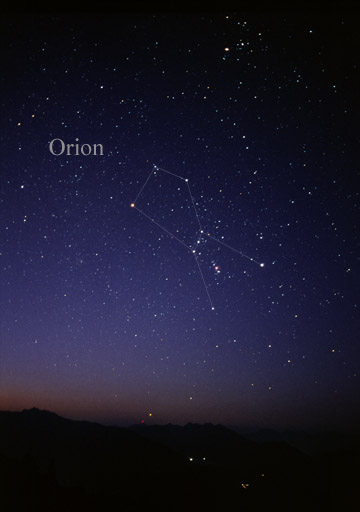
Till Credner’s Orion from Wikipedia Commons
Say Can You See

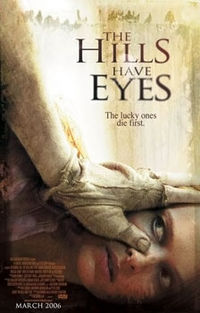
Remakes of classics. It is my sense that a classic has earned its place in its own constellation for a reason. Remakes seldom attain the je ne sais quoi of the original, but sometimes I have trouble telling them apart. I like scary movies—the classics anyway. In recent years various directors think they can improve on the masters and some of us get confused about what’s what. So it was that I came to watch the remake of The Hills Have Eyes without having seen the original Wes Craven version. As is typical for remakes, the writing tends to lack the flare that often characterizes the original vision. The story may be similar (in this case I’m only guessing) but more than the names may have been changed to protect—who? I’m afraid I didn’t care for the film. Graphic violence is seldom as effective as suggested terrors, but it can make you a bit queasy nevertheless.

I decided to stay with the movie to see if my thesis of religious elements and terror would become part of the story. In the remake, in any case, the action is set in a nuclear test zone where people disfigured by the radioactive fallout of American nuclear tests prey upon the victims they can lure into their lair. So an extended family is drawn in and very few of them make it out. The pater familias is a man who trusts his gun and has no fear of walking into the dark desert alone. But before he goes—yes! Religion. The mother of the brood, it turns out, is a devoted Christian and insists on praying before the men-folk set out to try to find help for their stranded vehicle. The eponymous eyes in the hills watch them pray and then begin to prey. The confident father says, “I trust my bullets more than your prayers.” (Or something along those lines.)

Ironically (and I can’t believe it was anything beyond coincidence) both dad and mom end up dead—the father in a crucifixion pose, the mother by being shot. Neither bullets nor begging save them from the mutants who seem to live just to cause others misery. The man who trusts his gun dies in a somewhat religious way, and the woman who trusts prayers is the victim of a gun. Now, in a classic there would be some lingering on the reversal here, but the remake syndrome is eager to add gore and grotesqueness to the screen without pausing for thought. The eerie backdrop of a nuclear testing town with mannequins still intact is effective, but otherwise you know to expect Road Warriors-type action in this small, post-apocalyptic world. The fact that even this wasteland supports a moment of prayer, however, demonstrates that fear and religion are never too far from each other.


Bedrock

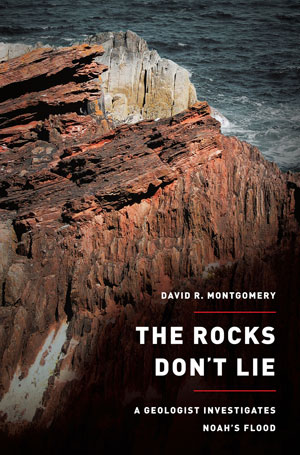
Sadly it is a rare occasion to read a truly stupendous book. There are lots of wonderful books in the libraries of the world, great and small. When I read a tome that brings two of my favorite subjects together in a genteel cotillion, subjects which are generally portrayed as aiming heavy weapons at each other from deeply sunk trenches, it deserves the epithet of stupendous. David R. Montgomery’s The Rocks Don’t Lie: A Geologist Investigates Noah’s Flood is one of those books. By page 8 I was thinking that Montgomery was someone with whom I’d feel comfortable raising a glass and sharing a story. He is a rare, serious scientist who considers that maybe religious stories have something to tell us about being human. The book, as the subtitle indicates, is about the Noah myth. Geology is the science that has taken the brunt of (the relatively new religion of) Creationism’s umbrage. Still, like a rational scientist, Montgomery doesn’t get mad or fly off into hyperbolic denunciations. He takes his rock hammer and taps until the flood myth crumbles.

Unlike many sober writers on the subject, Montgomery considers the possibility that folklore may in fact give clues to science. Those cultures that have flood stories, he patiently explains, probably has reasons to tell such myths. In this one book we are taken on guided tours of the Grand Canyon, bits of the Himalayas, “ancient” Mesopotamia, the scablands of eastern Washington, and even the Creation Museum in Petersburg, Kentucky. At each station, we learn a bit about floods and rocks and fantasies. Although not a biblical scholar, Montgomery obviously did his homework and gives a fresh view of how Christians went from non-literalists in the first centuries of the church, through the scientific revolution, only to become literalists in the geologically very recent twentieth century. Creationism has nothing to do with real floods and quite a lot to do with personal insecurities.

It must be easy for scientists to trumpet bravado throughout the infinite universe. The scientific method is our best testable explanation for the physical world. Montgomery resists that temptation, realizing that religion does count for something after all. Religion evolved for a reason. Maybe it isn’t scientific, but it helps people to make sense of their world. Instead of characterizing religion and science as combatants in a war, Montgomery likens the opposition to a dance where the partners sometimes step on each other’s toes. I read his book dreaming my geological dreams, lost in deep time, and thinking that the world is maybe even more wondrous than miracles could ever convey. And we have occasional floods, and floods sometimes give us reasons for going on. There’s perhaps something religious about that.


Star Tract

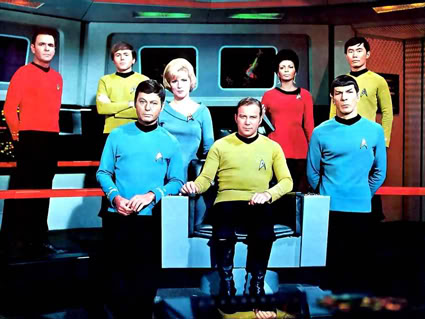
Over the past few years my wife and I have been watching the episodes of Star Trek (original series; please, we are connoisseurs). As a religious child watching Star Trek I had noticed that some of the episodes had biblical titles or themes, but now that I’ve been watching them systematically, if not swiftly, I have noticed a general trend towards more biblical themes as the series goes on. I suspect most readers know that Star Trek had only three seasons. During the first season references to the Bible were a bit vague and indistinct. Episodes 23-25 (“A Taste of Armageddon,” “This Side of Paradise,” and “The Devil in the Dark”) make reference to biblical motifs in their titles, but nothing too explicit. Paradise and the Devil are, after all, in the public domain.

Season two stepped up the ante a bit. In “Who Mourns for Adonais?” the pagan god Apollo appeared, but in “The Apple” the Enterprise was transported back to Judeo-Christian themes in the paradise genre again. “Journey to Babel,” episode 10, brought a biblical place into the title, and “Bread and Circuses” (episode 25) famously put the crew into the world of the Roman Empire where the rebels were found to be sun worshippers. But no! Worshippers of the son of God, we learn. The move away from Apollo is complete, we have come back to a comfortable, Christian world.

The third and final season delved even further into the biblical repertoire. Once again, “The Paradise Syndrome” (episode 3) brings Heaven to the heavens, but episode 4 also has a biblical title “And the Children Shall Lead.” Episode 16, “The Mark of Gideon,” takes considerable thought to unpack the biblical parallel, and episode 19 is entitled “Requiem for Methuselah.” Paradise, obviously a favorite theme, returns in “The Way to Eden,” or episode 20. Each season goes boldly further than the one before.

Quite apart from the titles of episodes, Star Trek, despite the technology and unflinching logic of Mr. Spock, is an extremely biblically literate show. Even as the 1960s were fading into the 70s it was a safe assumption that watchers would pick up on the many biblical motifs and themes. Now when younger people mention Star Trek, they inevitably mean one of the various spin-off series that have grown from this original root. Biblical references are surely there, but like the times themselves, I suspect they aren’t nearly as overt as they were when I was a kid. For many even paradise has lost its shine.


Blame it on the Rain

I’ve been on the losing side of my share of elections (although it feels like far more than my share), but I’m amazed at the character of the GOP that has come through these last few days. The quote that keeps running through my mind comes from The Dark Knight when the Joker says to the Chechen that if they cut him up and fed him to his hounds, “then we’ll see how loyal a hungry dog really is.” Blame has been flying thick and fast, but one thing I don’t hear any Tea Partiers suggesting is that Hurricane Sandy was sent by God to seal the election for Obama. Hurricane Katrina may have been sent by God to wipe out the sinners in New Orleans, but when Sandy gave a chance for Obama to show his true colors, it was just a freak storm. I’ve never been a fan of Chris Christie, New Jersey’s bully governor. During Hurricane Sandy and its aftermath, however, I was very impressed how he handled the situation. He showed a rare side full of compassion for those who were suffering. He vowed to help President Obama make things right again. When the storm of the election was over, however, Christie’s own party verbally crucified him for doing the right thing. Does this not show us just what white privilege spawns?

Turning back the clock is an exercise best left for post-apocalyptic scenarios of rebuilding society and the occasional spring or fall weekend. As our world makes progress—and yes, it is slowly making it—we must constantly reassess the situation. The ethics of the 1950s favored white men, the mores were blithely uninformed that an entire world exists outside this strange isolationism that could only be broken when Communists threatened our way of life. We are over half-a-century beyond that: the Berlin Wall has fallen, the Cuban missiles are gone, and those seeking to move to America are by and large the tired, the poor, and those yearning to breathe free. Not all of them are “white.” Not all of them are male. They are, like the rest of us, human beings.

I have never wished want or deprivation on anyone. I know what moderate want feel like (I lost an entire day of my college education searching for three dollars that fell out of my pocket, wondering how I would make it through the week without it). I have spent several years of my life tip-toeing around unemployment, and sometimes falling into that crevasse for a year or two at a time. Each time I claw my way out I earnestly wish that no one would ever have to face that. A political party that puts such a strong emphasis on giving up all the good we’ve managed to obtain, and cries about health care that doesn’t even approach the humane, universal care available in just about every other “first world” nation, is a party in need of serious, prolonged soul-searching. On this day when we honor veterans who, despite personal differences, stood side-by-side for the good of their country, perhaps those attacking their own might in days of privilege spend a few moments in serious thought.

Blame it on the rain…


Gitche Gumee

Up on the rugged western shore of Lake Superior the lamp atop Split Rock Lighthouse will be illuminated for the only time this year tonight. Immensities and superlatives fail at some sites, and as the cold waves lap eternally at the shore, this is one of them. Split Rock illumines its beacon in commemoration of the sinking of the Edmund Fitzgerald on the far end of that great lake on this date many years ago. While not as large as the Titanic, the Edmund Fitzgerald outstretched two football fields and carried more than fifty million pounds of cargo, immeasurables we are forced to recalibrate into yardage and tonnage. When the Fitzgerald sank during an unnamed November storm in 1975 only twenty-nine people died, but the tragedy soon became part of American legend. The image of immensities battling for the souls of twenty-nine human lives possesses an eerie, epic quality. When faced with the raw rage of nature, we are helpless indeed.

Shipwrecks may be the ultimate metaphor, for like ships we are consciousness in a protective vessel. Of course some deny that a soul exists, but in November it is difficult to doubt. A century ago the Titanic sank, and we still wonder in fascination. Human life is fragile when confronting the north Atlantic, or Lake Superior, or even the great waves that wash ashore and sweep some away. Great bodies of water, some psychologists say, represent forces larger than ourselves in the human psyche. Some suggest the ocean in dreams represents sex, but others would say it’s God. In the realm of metaphor anything is possible. It is no accident that many Christian sects begin the rite of membership with total immersion in water. When the Fitzgerald was baptized, twenty-nine men died.

Standing on the vast shoreline of a gray Lake Superior has a way of making you feel insignificant. Enormity was easily related to divinity in the primitive mind, but standing next to something truly vast still sends me into a protective crouch as I ponder just how little I really am. In this year of destructive storms, as we’ve taken to naming the winter squalls that whip across the continent with noble names such as Athena and Brutus, we are still at the mercy of something unspeakably large. The weather is the ocean above us, and it bears children named Andrew, Irene, Katrina, and Sandy. Each reminds us that we are constantly at the mercy of something far larger than human comprehension. Every year as the tenth of November rolls around I think of the Edmund Fitzgerald and the overwhelming forces that surround us. There is indeed a metaphor hidden here, for those willing to plunge into the frigid depths to find it.


November’s Vampires

It may have been the year without a Halloween here in the northeast coastal region of the United States, but it looks like some of the spirit has persisted into November. My daughter was disappointed when, due to storm damage, our local borough cancelled Trick-or-Treating for this year. So I was intrigued when I spotted a news story yesterday discussing Prince Charles’ relationship to Vlad the Impaler, the historical Dracula of yore. (And a good Christian by his own reckoning.) I wondered about the timing of the story until I noticed the gothic script on Google’s search page and realized that yesterday was Bram Stoker’s 165th birthday. Well, it would have been, supposing that he has remained dead since 1912. Completely unrelated to this anniversary, I read Dracula again in September through October and realized just how religiously charged a story it is. The Church of Ireland, to which Stoker’s family belonged, was Anglican in name and identified with both Catholic and Protestant traditions. In Dracula the more Catholic side seems to predominate.

Prince Charles’ connection to Vlad Tepes suggests perhaps a deeper meaning. The short news clip I saw (I can’t recall which network it was on) noted that the connection is being promoted by Romanian tourist agencies. Nevertheless, Prince Charles appears in the material acknowledging his hereditary connection to Vlad III, and noting that Transylvania has much to teach us. (He goes on to explain that the people of Romania have a lot to teach other Europeans about sustainable practices.) I could not help but note the irony of a member of the royal family, however, inviting comparison with a character who came to be known as the drainer of other people’s blood. Taking that which by no rights belongs to them.

Perhaps it never occurs to those with great wealth that what they amass is absconded from others. In a world that holds to a social contract that values money—which is merely a symbol—for some to have excess means that others will have less than adequate amounts. I’ve always had trouble understanding such selfishness. Perhaps it was being raised in a Christian environment with siblings with whom I was expected to share. Maybe it was just a part of the sober assessment of the social injustice I began to notice when I was a teenager. Somehow I’ve never felt entitled to much, but I do wonder how others can justify taking more than they need while knowing that many others suffer from real want. It is a matter of degrees, I realize, and we all do it to some extent. I have never complained about taxes because I know that my eyes too may be blinded by the beguiling glitter of gold. When the very wealthy don’t pay taxes (not pointing any particular fingers here), they too, like Prince Charles, may claim to be true descendants of Dracula.

Just add vampire of choice


True Myth

A friend of mine, I am glad to see, has started a blog. I’ve mentioned K. Marvin Bruce (“Marvin”) before on my blog, but his situation is such that job and blog don’t mix too readily and so he writes under a pseudonym. While Marvin knows a fair bit about religion, his blog focuses more on writing—he started his blog to announce his forthcoming novel. For those who are feeling adventurous, please stop by. His site is called Reinsurrection, and is located on Blogger.

I don’t envy Marvin his task of trying to make a writing voice heard in this overly noisy world. The decibel level of the internet is deafening for those with any artistic sensitivity. Marvin’s an academic in a poet’s skin, a dangerous combination in these days driven by cash and commodity. His novel, which he permitted me read before sending it off, is called The Passion of the Titans. It’s a fun send-up of Greek mythology told through the eyes of Medusa. For those of you who like off-color parody and classical mythology, I’m pretty sure you’ll enjoy it. It’s due out this summer.

Classical mythology is boxed, academically, in a compartment hermetically sealed away from religion. In fact, mythology is religion. (I wouldn’t look for too many religious ideas in Marvin’s book, though!) What it comes down to is that universities in the “Age of Reason” determined that mythology was fictional and religion—or at least one religion—was factual. Western society has tended to romance fact while jilting fiction as a way of understanding reality. Our obsession with the factual may be our eventual undoing. As for me, I can’t wait for Marvin’s book to appear. Hopefully it won’t be his last.


Substance of Faith

Every once in a very great while, faith is rewarded. I’m not talking about the faith that is bound up in black leather, inaccessible to realists who struggle daily to keep going. No, this particular faith is human based, based on my fellow citizens who saw it necessary to do the right thing. Although I have to rise before 4 a.m. to get to work, I tossed all night wondering what was happening at the polls. Obama’s reelection meant more to me than I guess I even realized. You see, I look at elections symbolically. Not as overtly black and white as Dark Vader and Luke Skywalker (neither candidate is pure good or evil), but I see that candidates stand for something. I don’t care what religion a president claims, but I do watch closely for what they value. Money, to my way of thinking, is not the way to build a society. Once in a while the rich need to be reminded that no, money can’t buy you everything.

Politics went off the rails when conservative religious issues were mingled with unfettered entrepreneurial aspirations during my formative years. God, I hope those days are over! People often vote with their emotions and studies have repeatedly shown that even conservative religionists like George W. Bush did not deliver a more productive, biblically literate nation after eight years of fumbling in the dark. The legacy was a national debt that should have been an embarrassment and a deeply polarized society. I was glad for the GOP nomination of Mitt Romney—it was a chance to test if the privilege of wealth had a chance of winning without the evangelical interests who see Mormonism as a “cult.” My faith in the American people paid off.

No, Obama’s first term was not a picnic, but every time I peeked, it sure looked like hard work was being done. Prolonged vacations to the ranch seemed to be a thing of the past. Difficult thinking was given a place in the nation’s capital again. If we want the one percenters to get the message, we must shout loudly. They live far, far above the rest of us in sound-insulated penthouses and never have to wait in line four hours just to buy gasoline. There is work to be done, and it has to start at the street level, if not below. This is faith. Quoting the Bible while bombing your enemies and protecting the wealthy elite is disingenuous in anybody’s ethical playbook. Thank you America for showing that giving in is not the only option. Tonight I will be able to sleep.


Vote!

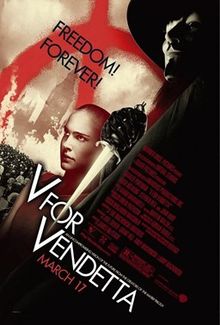
“Remember, remember the fifth of November.” Election day is upon us and my mind goes to V for Vendetta. The movie is about oppressive regimes and, more importantly, people finding a voice. It is a strongly emotional film for me not because of the violence, but because of the symbolism. Yes, V is out for vengeance, but we are all V, having been co-opted into a system that doesn’t seem to have our best interests at heart. At least we can vote. The scene at the very end, where V’s future, alternate universe gunpowder plot succeeds, always leaves me with damp eyes. By virtue of watching many movies, I am not prone to shed tears at what I know to be fiction. But some fiction possesses a verisimilitude that fact lacks. V for Vendetta is one such fictional vision.

I grew up a Fundamentalist Republican before such a combination was de rigueur. I also grew up believing in liberty, an idea that often resonates with those who don’t have much in the way of material goods. At least we have our freedom. By the time I attended a Christian college, I learned the error of my ways. I asked around to find out why America always seemed to get involved with conflicts under GOP administrations. I learned that, in some cases anyway, belief that Armageddon was around the corner motivated such wars. Even some presidents believed, as their religion taught, that the end of the world was nigh and it was their duty to hasten the process. Be careful what you vote for.

As I stood in long lines waiting for a bus out of New York City yesterday, I listened as other passengers wanted to talk. Hurricane Sandy left many people in poor circumstances, feeling the pain that is only alleviated by sharing. They told of devastated neighborhoods where people who hardly knew one another came together, naturally, to help each other. I listened to descriptions of those with power opening their houses and sharing their food with people they didn’t know. It wasn’t because the government forced them to—they did it because it was the right thing to do. When I watch V for Vendetta I don’t cry because I approve of violence; I have been a pacifist since childhood. I cry because the vision of justice prevailing is so beautiful that no other response seems appropriate. With that vision in mind, I am heading out to vote.


Hard to Digest

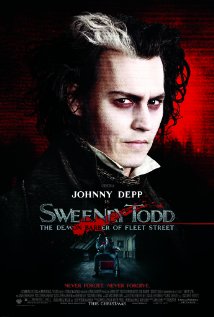
Sweeny Todd has never been one of my favorite shows, but the dark humor and gratuitous bloodshed made it seem somehow appropriate as a November movie after a hurricane. I’m referring to the Tim Burton movie, of course, and as I watched it this time I noticed a few religious themes that I had overlooked in previous viewings. The story is not complex: a barber is robbed of his young wife by a powerful establishment cad and determines that the time has come to exact his revenge. Along the way he rents a room from the hapless pie-maker Mrs. Lovett on Fleet Street and puts his murderous revenge to work supplying her with meat for her pies. The song where they hatch their nefarious plot, “A Little Priest,” is filled with innuendo and even a little social commentary. As the schemers look out at the crowds of London, several of their potential victims are mentioned as clergy.

When Todd asks Lovett if the priest is good she replies, “too good at least,” noting that its only fat where it sat. “Not as hearty as bishop,” nor “as bland as curate,” Todd observes. Mistaking a grocer for a vicar because it’s “thicker,” the duet eventually warble that the friar’s drier, but overall the clergy are “too coarse and too mealy.” Stephen Sondheim and Hugh Wheeler are not theologians, naturally, but it is noteworthy that the only role the clergy play in this film/musical, which is ultimately about social justice, is as fatty meat. When Benjamin Barker is wronged, the clergy are never mentioned as recourse or balance to a corrupt official. The church is simply establishment, a comfortable and expected part of the environment.

Johnny Depp portrays a mostly believable sociopath, interestingly reversing his first big screen role in Nightmare on Elm Street where he is the victim of a psychopath with razors for fingers. Edward Scissorhands, another step on the evolution from victim to perpetrator, found Depp with blades for fingers. In Sweeny Todd he declares with a straight razor held aloft, “at last my arm’s complete again!” The pattern here is a sad but familiar one. The victim who finds no redress in society adopts the role of the vigilante or the perpetuator of victimization. Who might step in to interrupt this cycle if not the clergy? But to return to “A Little Priest”: Todd observes that what the world terms business as usual is really one man eating another (this is, after all, patriarchal Victorian London). This may be the piece that at last makes sense of the puzzle. What is truly diabolical is not one man’s revenge, but the system that insists all play by the rules of genteel cannibalism while persistently calling it civilization.


Lessons from Sandy

While many are still without power and school is cancelled for an unprecedented sixth day in a row, the eastern Mid-Atlantic states are still recovering from Hurricane Sandy. As I noted in my first post-storm blog post, one of the largest disorientations I experienced was being cut off from the internet. An article in Friday’s New Jersey Star-Ledger gives a name to this phenomenon: “nomophobia,” the fear of being left without access to an internet-connected device (specifically a mobile device, but in a pinch even a desktop will do). An article by Allan Hoffman suggests that two-thirds of the population suffers from nomophobia and that there are actual treatment programs available. A decade ago no such phobia existed and some of us were only just beginning to hear about the World Wide Web. This is a fear born of our own engineering—the virtual world of our making has come to haunt us.

No doubt life is somewhat easier with the internet. One word will suffice to illustrate it: phonebook. When is the last time I looked something up in a phonebook? While pulling open a drawer beneath the accumulated phonebooks on the phone stand, I noticed how thick with dust they were. Even the cordless phone with its answering machine appeared just a little bit medieval to my cyber eyes. If this is evolution, we may be in trouble. Technology was envisioned as the liberator from labor, but we’ve clearly become its slaves. Don’t worry about the food spoiling in the refrigerator, get me back onto Facebook—now! My smartphone has a flashlight, several email apps, and can soothe me with its music. It is my rod and staff.

On a short drive to run an errand this weekend, I went by one of the few stores with power in the area. Their electronic marquee read “cell phones charged here.” The greatest service that could be offered to a cold, hungry population living in the dark.

One of the hallmarks said to have ended the Dark Ages was the printing press. Literature, on paper, could now be spread (mostly in the form of the Bible) from person to person until all of Europe would have access to sacred knowledge. That knowledge (and a great deal of nonsense) is now worshipfully cupped in the palm of my hand. As Hoffman notes, even the librarians were telling patrons not where to find books, but where to locate outlets. Robots fight our wars remotely, and wireless networks link us in a web far more valuable than that of the silk moth. And we have realized that even the creator of an entire universe can be held in a child’s hand.

In the valley of the shadow of death, I will fear


Big Top

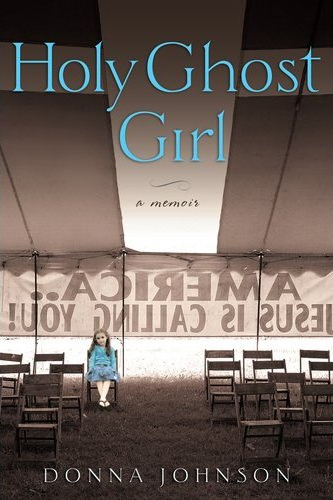
Being raised by a woman who staunchly kept her evangelical faith no matter what the world threw at her has undoubtedly left a deep impression on me. Over the past few years I’ve found myself reading the memoirs of girls raised in evangelical settings who’ve discovered truths often hidden from males in similar circumstances. Clearly one of those truths is that male privilege is the substrate for any kind of biblical literalism. I’ve just finished reading Donna M. Johnson’s Holy Ghost Girl and once again I’ve seen the light. Before I read this book I’d never heard of tent revivalist David Terrell, but I had attended a revival or two with my mother in my younger years and I knew, at least in theory, the evangelist is less important than the message. So they would have us believe. What Johnson accomplishes, however, is no less than astonishing. She presents a portrait that neither condemns nor condones her erstwhile stepfather, although her childhood was frequently undermined by the perils that accompany being raised by a revivalist groupie, and particularly being a girl in that situation.

Plaintive and reflective, Holy Ghost Girl raises questions that evangelicals often leave hanging in the air, such as when Brother Terrell’s son asks why he has to go to school when the rapture will come any day. Why indeed? When a court order had been issued, Johnson describes the puzzlement of the evangelistic team as they tried to decipher the letter: “Dreams, visions, prophecy, and scripture, our primary tools for making sense of the world, offered no insight on how to deal with legal issues.” This sentence suddenly explained so much of my own youth that I felt as if I’d missed out on the class that informed evangelicals of what was expected of them. The rules of this world do not apply here. Men are superior to women and girls who question that do so at their eternal peril. This becomes clear as Johnson reveals while the story unfolds that Terrell kept at least two secret families hidden from his wife, and, more importantly, from his followers. When Johnson’s mother found herself pregnant by Terrell and her daughter asked what she would tell the kids when they grew up the answer was pat: Jesus will return before then.

The idea of being excited for one’s belief is admirable. Evangelicalism has made an industry of it, conflating emotion with spirituality. Biblical literalism will always exact a heavy cost on girls. Those of us who study the Bible professionally learn early on that the Bible reflects the social conventions that gave rise to it and that world was unapologetically patriarchal. That stain will necessarily accompany any form of literalism—the sexes cannot be equal when the Bible says it ain’t so. Herein is the dilemma of the girl raised in an evangelical world: to question authority is to risk hellfire, and authority rests with men. Those who insist on women’s equality are of the devil. Johnson, obviously, took that great risk of making a deal with the devil and became a normal person. All of us raised evangelical have to come to grips with such issues if we want to make a lunge for normalcy, but the cost will always be far higher for girls.


Two Swords

One of the more interesting situations to emerge from Hurricane Sandy’s aftermath was the celebration of Halloween. I know that I’ve already lost some readers right there since Halloween is a disputed holiday. Often Halloween is maligned as “Satanic,” a claim that is absolutely untrue. It may have some paganism in its roots, but then, so do most religious events and ideas. Halloween is a Christianization of various folk customs, frequently Celtic in origin, on a night when the protective wall between the living and the dead was believed to be especially thin. As adults grew more sophisticated and scientifically informed, the holiday lingered as a children’s fun day with dress-up and pranking, both normal childhood ways of playing. This neutered holiday has proved to be commercially viable as well, now supporting September-October Halloween stores at a density of about a dozen per square mile. Its success is rivaled only by Christmas.

In light (or perhaps dark) of the devastation of Sandy, New Jersey Governor Chris Christie canceled Halloween. We heard the news on our battery-operated radio, sitting in the dark. While this was one of those rare times when I think Christie was motivated by the concern of both poor and rich, I did ponder the implications of a government canceling a holiday. All Hallows’ Eve is the night before All Saints’ Day. “Hallows” is simply another—less used but more evocative—word for “Saints.” While largely secular in its present guise, Halloween is a religious holiday. My mind went back to the doctrine of Two Swords that I learned about many years ago. Originating in the papal bull Unam Sanctum, very early in the fourteenth century, the doctrine teaches that in spiritual matters the church holds the sword while in temporal matters the state holds its own sword. Who has the right to cancel a holiday?

Of course, Chris Christie has his own ways of issuing bull, but his real concern was that conditions were too dangerous for trick-or-treating. Indeed they were. On a short walk, I saw power cables dangling like electrified cobwebs on just about every block, snaking along the ground. Branches were still falling from trees. Curfews (many still in effect) were widespread. Not a good night for masked strangers to show up at your door. But as in the case of the Grinch leaning out over Whoville after he’d stolen all the trappings, Halloween came, it came just the same. What we saw on Halloween was people helping one another. No tricks (for the most part, although among the first to recover were businesses who recorded new ads to broadcast on the radio before the wind even stopped blowing), just good natured mortals helping one another, protecting others from the grim reaper. To borrow a line from Charles Schultz, “That’s what Halloween’s all about, Charlie Brown.”

Will the real Halloween raise its hand?


For Saints, All

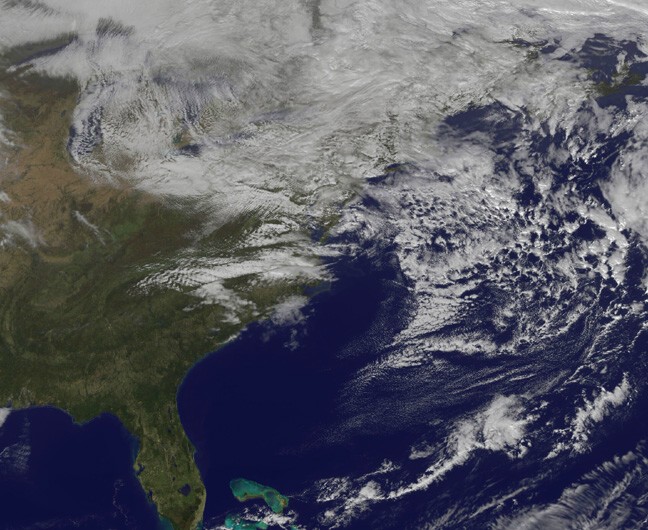
The year without a winter has also become the year without a Halloween. As the first surge of Sandy made herself felt, we were among the 5 million households in New York, New Jersey, and Connecticut without power. To put things in a little context, I have training in wilderness camping, having learned to survive outside with little more than a ball of twine and a pocket knife. Still, when Sandy knocked out our lights, heat, and most importantly, Internet, for three days I found myself in a new kind of wilderness. Each night, buried under blankets, in one room lit with candles (incidentally, candles that we made ourselves nearly a decade ago on a candlemaker spree in Wisconsin), we sat around a card table and played games, read, or just pondered the imponderable. I actually took to working on a blanket I’ve been making, but had set aside for a few years. If it weren’t for wondering if I had to go to work the next day until evening every night, I might have actually enjoyed it.

And the experience has made me a little leery of what I’ve become. Less than hour after the power came back on, everyone in the family was on the Internet. I confess to feeling that missing my blog was among the most disjointing aspects of the power outage. With no way to charge my laptop’s battery, and no router to connect me to cyberspace, I jealously conserved my iPhone power to get the text message that told me if the office was open the next day and if New Jersey Transit was running so that I could get there. My dreams all week were nightmares. Mostly about missing work. Another perspective: my grandfather was born on a farm. He built his own house and raised five kids while traipsing from New York to Montana and Virginia before settling in western Pennsylvania. He didn’t go to college but he kept his family well. He never lived to see a computer or an email.

So 2012 is the year without a Halloween. The lights came on on All Saints. To me those saints are the men and women of PSE&G who finally got our power back on. I’m sure they’ll understand the darker tones my thoughts took about the company as I trimmed wicks and recharged candle holders for the third night in a row when darkness fell on All Hallows Eve. Here I am, feeling decidedly wimpy and not a little disingenuous, posting on Sects and Violence in the Ancient World once again. I managed to update my blog while on the road in England, and from hotel rooms across the country as I’ve traveled for work. I can’t help but think how this reflects on my atrophied survivor skills. Maybe I’m beginning to feel what idol worshippers experience when they neglect their gods. I wonder if there will be nightmares tonight or work tomorrow.