Campus Crusade

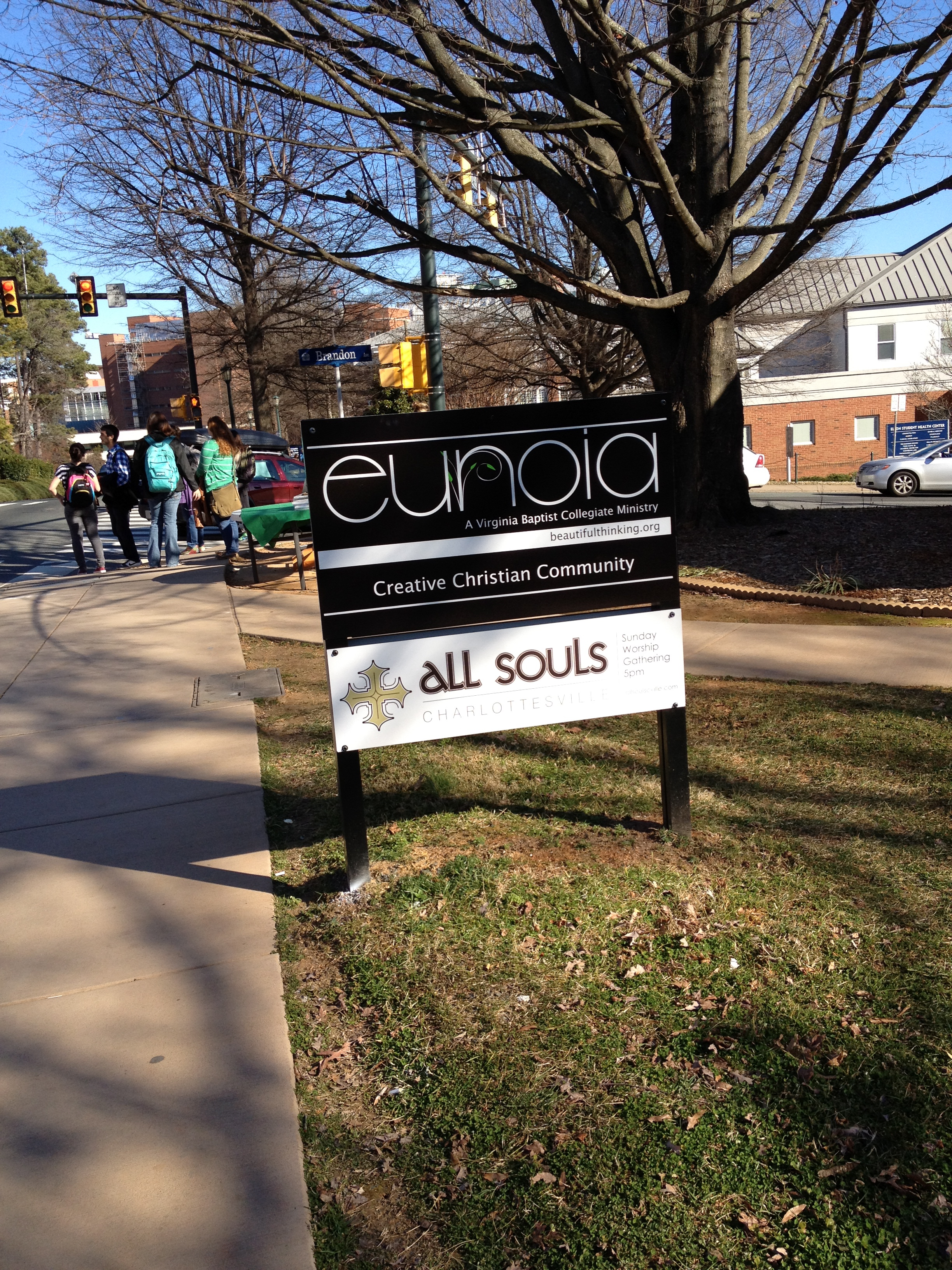
The Chronicle of Higher Education also chronicles the trials and travails of religion in academia. A recent edition of CHE reported on how California State University withdrew official recognition of InterVarsity Christian Fellowship because its leadership is, by definition and constitution, Christian. The organization contested the decision, and, in this thorny situation, I think, rightly. The disestablishment clause cuts both ways. Government can’t establish a religion, but it can’t prevent one either. InterVarsity, although not exactly to my taste, has been a fixture on campuses for decades. It offers alternatives to pong and related forms of diversion without being pushy about faith. Indeed, it does not insist that participants be Christian, and, in my experience, doesn’t try to convert them. It offers a service that is useful for undergrads and has every right to be on campus, as much as the young republicans do. Can an organization be banned for having Christian leadership? How much can we disestablish before we become oppressors?

I recently had a conversation with a college humanist chaplain. There aren’t many of these, but they are beginning to appear on campuses, offering the services traditionally given by religious organizations. Many people don’t know what to make of this. Not all rationalists, humanists, agnostics, and atheists are enemies of spirituality. We can be both spiritual and human. Some would argue that we have no choice in the matter but to be. Some express it as Christianity. Others as a non-doctrinal recognition that being human means wanting to affirm unions and weep at funerals. Maybe it is more than just chemico-electrical signals across gray matter after all. Colleges and universities should be places to explore. Like it or not, without the influence of the church, and before that the synagogue, the concept of higher education likely would never have developed at all.

How much of the baby do we throw out with the bathwater? Evangelicals cost me my first real job. I had, however, grown up among them. Although not in InterVarsity, I did participate in Christian groups in college. I don’t think it damaged my education. How can a person learn to compare when one of the options is displaced? Will Newman House be permitted to stay? Even government officials can’t agree on exactly what it means to have a religion-free government in a religious, if post-Christian, nation. Why antagonize an organization that is only trying to offer a service? Every time I pull up to a gas pump chances are pretty good that I disagree at a pretty visceral level with the ideology behind the company supplying me my fuel. And yet, here I am, running on empty. Ideologies and services, it seems to me, are very different things. Those that don’t cause harm should be the least of our concerns.
IMG_0066


Gothic American

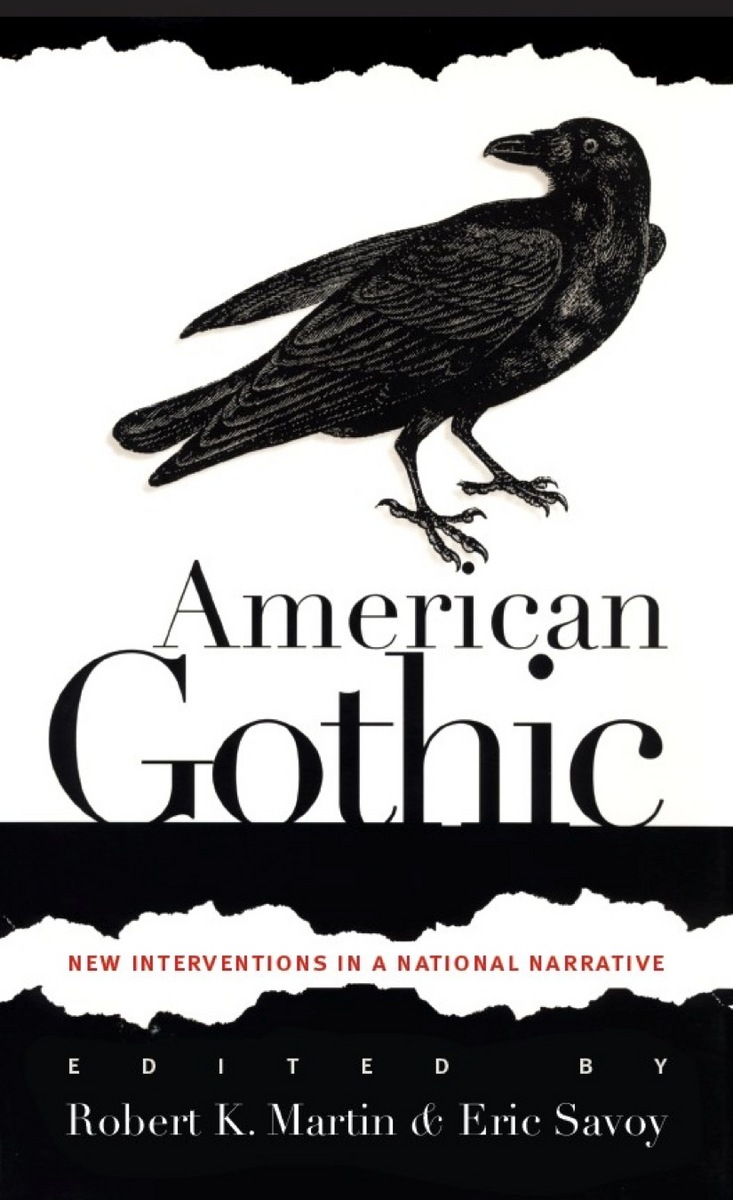
AmericanGothAmerican Gothic, the painting by Grant Wood, caused me trouble at Routledge. An author wanted to use the image on the cover of his book (we eventually managed it) but the choice was contested at every step. Along the way editors, editorial assistants, and marketers all told me what the painting represented and how it was inappropriate. I’ve learned, however, a few things from the post-modernist movement: nobody can say what an artwork means definitively. So when I read American Gothic: New Interventions in a National Narrative by Robert K. Martin and Eric Savoy, I was ready for a combination of po-mo and the macabre. Like post-modernism, Gothic is a difficult term to define. Indeed, the first set of essays in this collection struggle with definitions. Being literary criticism, the book points out that the novel and Gothic more or less developed together. When people read to be entertained, as early as the eighteenth century, they wanted to read Gothic tales.

Being a life-long fan of Poe, I was pleased to see that he made a good showing in the pieces contained in the book. What makes it appropriate to this blog—other than it being October, a comment that requires no explanation in the northern hemisphere—is a notion I found early in the book. People read horror literature for healing. Anthropologically, the wounded healer is a well-recognized figure. In a world where we expect opposites to go together health comes from disease and healing from being wounded. The gothic is a wounding of the mind to lend it healing. To be sure, many of us who read gothic literature do not relish scenes of violence or hurt. We do, however, find a kind of therapy within such darkness. In the darkness light is best appreciated. Who uses a flashlight outdoors on a sunny day?

As with most books from multiple authors, there’s some unevenness to the contributions here, yet more often than not, I found deep insight throughout its pages. Religion makes occasional appearances. Indeed, the figures of the monk and the debased church are stock images for early gothic literature. The sacred, if we’re honest, is a bit creepy. Having spent many nights in churches on retreats or for hospitality when youth groups couldn’t afford a hotel, I know that fewer places are scarier at night than an unlit, empty sanctuary. The gothic, following culture, has tended to move away from monasteries and churches into the more scientific spaces of the twenty-first century. Nevertheless, ravens and haunted houses still evoke the age-old fears of a coming period of darkness, the Halloween of the soul. And for those who want to know how a post-modern crowd scans the darkness, this book will not disappoint.


Autumn Music

It is an experience as old as humanity itself. At least humanity that started to realize that age, as remote as it may seem, will always eventually catch up with you. This past weekend was Family Weekend at my daughter’s college. Since her school does things up right, there were a variety of events on offer, one of which was an a cappella group concert. A cappella has come a long way since my college days, with students able to use their voices to sound like a band, professionally mixed, and full of energy. Somehow, I don’t recall that much energy from when I was a student. In any case, the inevitable group doing “oldies” took the stage an opened with a song from 1987. Wait. What? Since when was a song of which I remember the first release an oldie? The kids did a great cover, and I suspect in their minds it was really an old song. I was only 25 when it was given to the world. Can I really be an oldie? Outside the leaves on the trees were brilliant, as if on cue for the tuition payers to have their heartstrings wrung. Trees become their most alluring as they are about to die.

Songs, however, have a way of becoming part of you. Back when we were young(er) and idealistic, my wife had thought to study music therapy. Nashotah House, however, decided to change the career trajectories of an entire family in the name of orthodoxy. One of the things she learned in her classwork, prior to being sent back to the work-a-day world, was that patients suffering from dementia can often sing a song from their youth, even if they can’t speak a word. Music gets into our brains in a way that language learning doesn’t, and when we hear that song we are, to borrow a phrase from Bob Dylan (which another of the groups sang), forever young. It is a beautiful wish, endlessly covered and recovered. Watching those kids on stage, I recalled being on the cusp of adulthood myself. Everything seemed possible then. Then a world that others constructed imposed its constraints on me. My hair began to grow gray even as the leaves lit up yellow and scarlet and fire orange.

DSCN4928

Religion is the business of those who are old. Even as a religion major in college I was classed among those old before my time. We think of the hereafter on our deathbeds, not when we’re twenty. For those who teach their children to ponder eternity at a young age, however, that portal is never far from view. My fellow students were looking ahead to careers in all kinds of fields that would make their fortunes and reputations. My modest attempt to bring a younger generation to a more mature outlook faltered at the hands of Fundamentalists, and it was music that helped me through that terrible shock. Little do we think that that song we like so much is marking us indelibly as a child of our age. Time will not relent. We will be the ones, like the trees, showing our signs of age as our children show us where the future lies. And the attitude of that song from 1987 will be, for any who truly listen, forever young.


The Open Sea

498px-Christopher_Columbus“In 1492,” they tell me, “Columbus sailed the ocean blue.” As a feat of science in the age of discovery, there is no doubt that this was an event worth celebrating. Over time, however, the luster has diminished somewhat. Although I can speak only for myself, I often feel that being a male caucasian is a decided liability. It certainly has been in my professional life. Although my ancestors were probably busy grubbing an existence from the soil as Columbus nobly stood on the forecastle, spyglass in hand and India in his heart, we are classed together. Attitudes toward divine destiny were much different then. The European powers that had made the world they discovered in their image could only see this as the will of the Almighty. That’s the liability of omnipotence. What happens is, by definition, God’s will. As technology led from success to success, Columbus set off to shrink his world. And get rich in the process. What’s so wrong with that?

The view among the displaced may be very different. People, if pagan, happened to be living in Canaan before Moses arrived, according to Holy Writ. They were, however, an annoying inconvenience to a God who had it all planned out. And since that torch had been passed to the Christian leaders of Europe, although contested by the Muslim leaders elsewhere, they had to follow their destiny to these sacred shores. Oh, I’m sorry! Were you sitting here? And those who march in the parades do it a bit more self-consciously while the majority of us continue to work in New Amsterdam as if nothing extraordinary had happened. As if a genocide hadn’t led to prosperity. As if, although God has disappeared, this wasn’t manifest destiny after all.

Humans can’t be blamed for being curious. It is part of our nature. I do wonder what will happen when we finally stop fighting one another and land ourselves on another inhabited planet. One where they haven’t achieved the technology that we have. Will we have learned anything from the St. Columbus Day massacre or will we still be guided by our confidence in lenses that can see billions of years into the past, see the havoc we’ve visited upon our own planet and still say, “it is good”? Even on the bridge of the Enterprise there is only one alien standing, and he is wearing earth clothes. Can we be disinterested observers when potential wealth lies below the feet of those we meet? We respect your culture, but hey, what’s that you’re standing on? Mind if we take it? You’re not using it. And once their voices have been silenced, we’ll seek other oceans blue to sail.


The Joy of Tech

In the age of Steampunk, New Jersey is among the world capitals. Indeed, today is the second day that the International Steampunk City will be inhabited in Speedwell, home of the telegraph. For yours truly, Steampunk is an escape. Alternate realities often look better than the pedestrian one we’ve inherited, so we like to look at the world through steamy lenses and imagine how it might have turned out differently. New Jersey, in the spring, also hosts the Steampunk World’s Fair. Perhaps we have more pressures to escape here in the Garden State. Imagination is certainly in no short supply. I attended the International Steampunk City last year and decided that I’d like to be a part of it. Knowing a thing or two about ancient technology, I thought I might share a bit with the Steampunk crowd. What is Steampunk without tech? Some ancient technology, although not very well known, is perhaps of even greater influence than we might imagine.

One of the connections that is easily misplaced in this era of purely scientific advance, is that technology was devised in the service of religion. At least in the early days. The greatest architectural achievements came under the aegis of temple building. Domes, arches, and eventually flying buttresses that could hold tons of stone high over your head—these were to please the gods. We can’t imagine Stonehenge as anything other than a capitalist venture these days, a way of drawing in the money. Of course, ancient builders knew of the financial benefits as well; temples were often the equivalent of ancient banks. Still, beneath all the pride of accomplishment there was the belief that the gods were somehow pleased with our innovation. Perhaps we’ve just done away with the convenient myth. Steampunk often has a religious underpinning. Many of the stories I’ve read touch on our ancient mythologies. Only, in fantasy, there are different possible permutations.

We sometimes think that technology is a modern phenomenon. Actually, it is quite ancient, as far as human culture goes. The first “computer” was invented around about the first century. Since it didn’t have an obvious benefit to the control of the masses, however, no technological revolution took place. The steam engine was, in nascent stages, invented also in ancient times. Until we learned, however, that it could be enslaved to make certain industrialists rich, we had no need for it beyond a diverting toy. Technology does not take hold without a deeper purpose. Every now and again I get a little paranoid knowing that I carry a telephone that knows my exact location at all times. As if I were important enough for anyone to care. Then the feeling passes and I open my iBooks app and turn to my latest Steampunk novel. I am a slave. I wonder what innovations there will be at International Steampunk City this year that might change the world. Only the imagination will limit the possibilities.

DSCN4341


Lions Among Men

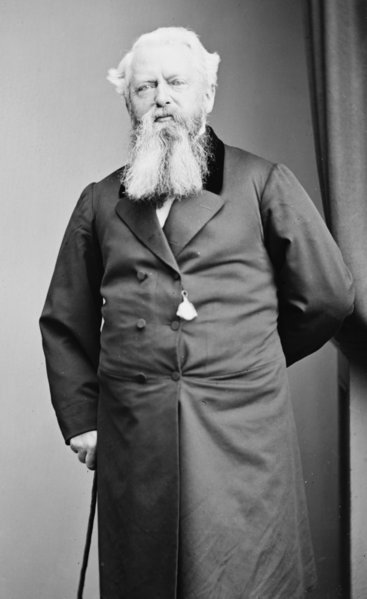
Facial follicle emasculation, i.e. shaving, has some interesting religious implications. A recent Associated Press story highlighted this when students at Brigham Young University began a protest against the ban on beards at the school. Shaving has a very long pedigree but, as one who doesn’t shave I feel obligated to point out, not as long a pedigree as not shaving. Nobody knows for certain where or when shaving began, but it has been suggested Egyptian priests began the tradition. Others suggest it was an attempt among some early societies to control lice. Homophobic religions, it used to be, promoted beards as signs of masculinity. Alexander the Great, however, noted that beards are easy to pull during battle, although, for those who don’t fight it isn’t such an issue. Of the major monotheistic religions, Christianity is the only one that generally promotes shaving as the norm, and here it is only the practice in the western branch of the religion. Eastern Orthodox churches still retain bearded clergy. It has been suggested that the Roman preoccupation with shaving led to early Christian preferences for this practice, and there may be something to that.

Having an old-growth beard (I last shaved over a quarter of a century ago) I have often found myself in the minority. While beards—mostly highly styled or glorified stubble—are making a bit of a comeback in New York City, they are still not as common as the alternative. In one of my many preprofessional jobs (that of a bag-boy at a Pittsburgh grocery store) I was told I had to shave. “Customers don’t trust a man with facial hair,” my manager told me. Delving into this a bit, I was told that beards mask the facial nuances that an honest man wants to show. What’s a beard trying to hide? Watching what clean-shaven presidents and Wall Street moguls get away with as “honesty,” I think I’ll stick with my beard, thank you.

I'd trust this man.

I’d trust this man.

Evangelical traditions, such as Mormonism, I long ago noticed, wish to control nature. Lawns must be manicured and trees, with their sloppy abundance of leaves, must be few and carefully spaced. Faces should be rid of the hair that Jesus and the disciples were said to wear, and clothes must be neat and tidy at all times. It’s an image thing. Among the evangelical crowd, those with beards keep them neatly trimmed, tamed, and penitent. For me, scraping my face with a cold bit of metal first thing in the morning is about the least civilized thing I can imagine. Spending too much time shaping and toying with DNA’s dictates seems to go against nature. Much of my beard may have gone white, but I have nothing to hide. Neither orthodox nor evangelical, my beard simply represents what it means to be human. Trust me.


De Profundis

IMG_1591In a grocery store last week a friend pointed out how many magazines had pictures of Robin Williams on the cover. Although his suicide two months ago was tragic, I wonder about the message we send to young people (and maybe some older ones as well) about this fixation. As we probe, attempting to understand the sad clown (and they generally all are), are we inadvertently telling our kids that suicide will make you an icon? We often hear accusations that extremist Muslims “brainwash” their youth into thinking that a righteous suicide will lead to glory. Perhaps the glory we perceive is somewhat different here in the post-Christian west than it is in the post-Christian east, yet I wonder what the essential difference really is. Why can’t we see that the cult of celebrity seldom ends well? The worship of the successful does not really grant them eternal life, as much as we may think otherwise.

Call me a curmudgeon—I probably deserve that—but when I overhear office mates in their cubicles or young people on campuses talking about stars I feel not a little like Rip van Winkle. Most of the names I do not recognize, and even showing me a picture doesn’t really help. Of course, I enjoy movies as much as the next dinosaur, but apart from the bargain bin and the occasional indulgence in Amazon Prime I really can’t much afford them anymore. I walk into a bookstore (where they can still be found) and the authors I want to read are not on the shelves. They are gone and all but forgotten. Many of them having left profound ideas in their wake. I guess I could pick up a magazine. Robin Williams looks happy on the cover.

I used to watch some late-night television before my job required waking between three and four a.m. One of the things I quickly noticed is that those stars our society worships had little of substance to say. That’s not to say all actors and media darlings are shallow, but I often wondered why their interviews always seemed to come down to the lowest common denominators. Have we lost our interest in probing beneath the surface? Isn’t there some profundity left to explore? Don’t get me wrong—I find Robin Williams’s death a tragedy. He may have been a deep and philosophical man. Who really knew him? Nevertheless, I wonder if perhaps, if we challenged ourselves a bit more, we might just consider the messages that our media broadcast. After all, they have to turn a profit. Do we really mean what our magazine covers seem to imply?


Monster Mash

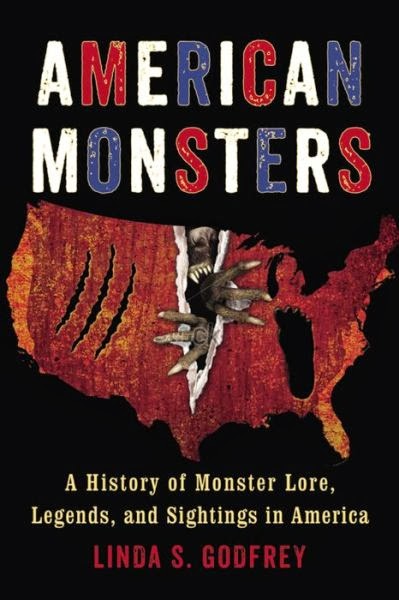
American MonstersIn one of those ironies of personal history, I never met Linda Godfrey although we lived not far from one another and shared a great many common interests. I’m not sure she would return the sentiment, but while I lived at Nashotah House many odd things happened. Academics can be pretty deep in denial about what they experience, and although I never saw any man-wolves, as I stood outside one night to photograph a comet I felt terribly exposed and in not a little danger. This was on a rural seminary campus. Nashotah was still wooded then, before evangelical shaving of the landscape, and certainly among the most gothic of seminaries I’ve ever seen. Meanwhile Linda Godfrey was researching, just a few miles down the road, weird animal sightings on Bray Road. I began a correspondence with her after we left Wisconsin and I have read all of her books. Local history has always fascinated me, and although I was an accidental Wisconsonite, I nevertheless enjoyed learning about the strangeness of the state I formerly called home.

Godfrey’s latest book, American Monsters: A History of Monster Lore, Legends, and Sightings in America, throws a wider net. We are all in here with the monsters. Blending, as the subtitle suggests, lore and legends with eyewitness accounts, American Monsters can leave the reader a little disoriented, in a good way. We’ve been taught to discount anything that doesn’t match the everyday—what boss wants a worker with a higher vision?—and pretend that such things don’t exist. Weird creatures don’t donate their bodies to science readily, and we are left wondering if something is really peering at us from these October woods. Inside you’ll find stories of flying, swimming, and running monsters. We are safe nowhere. Either from the scientifically undocumented or from those that are purely imaginary. I stand outside in the dark in a smallish town waiting for a bus. What was that sound behind me?

Monsters are only now beginning to gain academic respectability. When I was in graduate school the topic felt so puerile that no respectable Ph.D. candidate would dare suggest such a dissertation to a button-down committee. Now they are beginning to roll off the presses. As part of the religious imagination, monsters are not so easily dismissed. We can assign them to the dark caverns of fantasy and under-stimulated imagination, but they will burst out in their own time and, like gods, demand our devotion. I have no idea whether these cryptids creep, flap, or swish around in our world. People see them all the same. And believing may be seeing. I’m glad for Godfrey’s success at pointing out that our rational world is full of monsters. Hers is a perfect book for days of effacing light and lengthening shadows, all across the country.


Small Town Heroes

When World War Three starts I hope someone will let me know. You see, I barely have time to satisfy the needs of employers and tax collectors to get everything done in a day, let alone read newspapers. Or Facebook. I check my page, very briefly, twice a day and get on with the business that I’m assigned in life. But yesterday I had a notice from a high school friend that one of my teachers had died. Since I don’t name people I know here without their permission, suffice it to say I took a current events course with this teacher in either my junior or senior year. Then, as now, I didn’t read newspapers. Given the small town rags available in rustic regions, there was often not much mentioned beyond deer season and local tragedy anyway. Originally enrolled in the regular curriculum, several friends told me, “You’ve got to take Current Events! The teacher is great!” Those who’ve influenced my life for the good were great teachers, and despite my reservations, I took the class. When it came time to sign up for projects, I was a bit flummoxed. What did I know of current events?

Our teacher kindly allowed me to offer evolution as a topic. It was occasionally in the news then. Six of us decided to debate the issue, three for, three against. My religion having held me in a headlock, I was the lead debater against evolution. The day for the debate came and we ran over the bell. Our teacher, with his usual calm wisdom, suggested we continue the next day. And the next. Three days of sometimes acrimonious debate and it looked, from my point of view, as if creationism had demolished evolution. How terribly naive I was. Ironically, I had just posted a piece on evolution yesterday when I saw the notice about my teacher’s demise. The position in my post was a sharp 180 from high school. It was a tribute to the love of education.

Source: Wellcome Images, Wikimedia Commons

Source: Wellcome Images, Wikimedia Commons

I was an outsider in high school. I literally lived outside of town and after school activities were not really feasible. We were poor and couldn’t afford extra-curriculars anyway. I wore a large cross on my chest and although I was shy, I felt that it said all I had to say. My teachers, to their eternal credit, let me explore. In college I learned about Fundamentalism. I had never heard the term although I grew up in it. Gently my teachers nudged me to think more deeply about things. Through three degrees delving more profoundly into the origins of religion, as well as humankind, I came to see the errors of my ways. Had I been forced in high school I would’ve fought back. Instead, a persistent, patient wisdom guided many of my teachers. I don’t know how they recognized that I might be worth salvaging, but they apparently did. They let me speak, they let me trip. Just as I was about to fall they caught me. And I hope, in my own small way, to repay this favor in kind.


Literally Biology

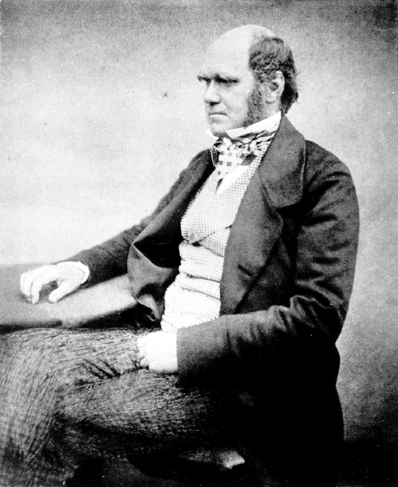
In a New York Times opinion piece on a recent Sunday (ironically, always on a Sunday), college biology professor David P. Barash submitted an article entitled “God, Darwin and My College Biology Class.” Barash notes that increasingly students come to his class thinking evolution is more or less optional. I found the same thing teaching religion classes. When student presentations at state universities addressed Genesis it was fairly common to have a large number of undergraduates suggesting that evolution is “just a theory” and “intelligent” design was a viable option. I tried to show them in class that the Bible does not support the shenanigans that creationists impose upon it, but the message rolled off like rain from an evolved waterfowl. Still, I do have to take exception to some of Barash’s broad strokes. He feels that religion and science cannot coexist. I wonder, however, what he means by religion.

Religion is an ill-defined word. One of the most pragmatic usages I’ve heard is that religion is what people use to give meaning to their lives. Religions may be theistic or a. Religions may be anti-science or pro. Religion, per se, is no threat to science. Fundamentalism is not religion. Fundamentalists use religion to further their ends, which are often political. Since many religions grew up around sacred writings the urge was there from the beginning to take these holy words literally. They gave meaning in a pre-scientific era. Newton, Galileo, Darwin—and even before them Plato and Aristotle—simply shifted the angle of illumination. The problem is that many religious believers feel they have the answers already. New facts only confuse the issue. Left to their own devices such beliefs quietly go extinct.

Charles_Darwin_aged_51

It is only when a conscious decision is made to champion archaic writ against empirical evidence that science and religion join combat. Most religious people in scientifically advanced societies have no problems with evolution or particle physics. They simply show the way the world is. The vastness of the universe should give us all pause, but it does make you wonder which way to point your telescope to spy the almighty. I sympathize with Barash. It is not easy to find many of your students, in either science or religion classes, with their minds already made up. Still, it might help to realize that religion is not the culprit here. Literalism is a kind of mental problem. Until it is rightfully separated from religion we will all be left wasting valuable class time trying to convince students of the facts of life.


See Serpent

GreatNewEnglandSeaSerpentSeeing, it is said, is believing. I have a feeling that this truism may have become effaced somewhat in this age of deft photo manipulation and apps that are marketed to insert ghosts and UFOs into any picture. Nevertheless, anyone who has seen anything genuinely puzzling knows that it creates a lasting impression. A world without mystery, although a capitalist’s dream, is a nightmare for everyone else. So it was, now that October is here, I settled down with J. P. O’Neill’s The Great New England Sea Serpent. I found O’Neill’s book in a used bookstore a few weekends ago (appropriately water-damaged), and since I have a fascination with the ocean and monsters, this seemed like it would appeal to both of my avocations. It did indeed. O’Neill isn’t a sensationalist writer, but rather she is a normal person with normal jobs who has an interest in strange animals. Beginning in 1751 and up to three-quarters through the twentieth century, people had been spotting a classical sea serpent along the New England coast, and occasionally on ocean voyages across the Atlantic. Of course, we’re told, sea serpents don’t exist.

The Great New England Sea Serpent is a compendium of sightings from many reliable witnesses over the centuries. Of course, to many it is impossible. To me this appears to be the same kind of arrogance we apply to the universe—if we haven’t catalogued it by now, it doesn’t exist—to suggest there are no monsters of the deep. As any oceanographer will tell you, we know more about the surface of the moon than we do about our own oceans. If you turn your globe (or app) just right, there are views of our planet where virtually no land is visible. We are a watery planet. Even with current technology, the deep ocean is difficult, and very expensive, to explore. Who knows what might be lurking there right off the bow? O’Neill’s account is full of old salts and snarky journalists, but at the core of it all is a humility in the face of the largeness of the sea. What do we really know?

Of course, there is a fear of literalism. The Bible (and other ancient texts) take sea monsters for granted. Leviathan is a dangerous beast and, no matter what the pundits say, is no crocodile. And yet, for the past several decades the reports of the New England beast have dried up. Where has our beloved sea serpent gone? I have to wonder with both our polluting our oceans and our increasingly efficient (and massive) ships, if we haven’t simply forgotten that ancient maps used to leave space for dragons. Our great ships, guided by GPS, and our oceans running a temperature, are sure signs that greed has surpassed wonder. Have we, in our self-centeredness, slain the last of our dragons? O’Neill, please understand, does not call them dragons. Hers is a sober and straightforward account. But when October comes I just can’t help but hope there are still some monsters out there, deep under the waves.


Theatrical Desert

LawrenceOfArabia

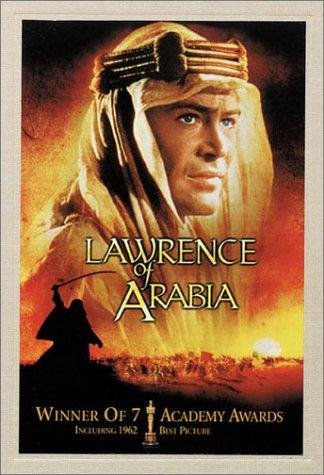
While the appellation T. E. Lawrence may leave many scratching their heads, “Lawrence of Arabia” will still garner nods of recognition. Of course, having a major movie made after you is a pretty good way to retain currency. Being a student of the history of religions, focusing on those of ancient West Asia, I read about Lawrence as I was doing background reading on what would eventually become known as the Middle East—another contrived name. Lawrence, who apparently disliked being called, “of Arabia,” along with Gertrude Bell, played a formative role in what would become a theater of European entanglements that continue to cause trouble to this day. The First World War gave opportunity for colonial interests to play out in the tribal polities that had worked in that part of the world for centuries. The fact that many of these countries are oil rich didn’t hurt.

Yesterday, starting very early, my wife and I settled in to watch the movie Lawrence of Arabia. Since it was released the year that I was born I might be forgiven for missing the first run in theaters, but I really hadn’t had the opportunity to see it before. Sure, you can pick up the DVD in many bargain bins at video stores—now also becoming rare—but a day with four free hours to watch a movie is also an endangered species. What struck me the most about the movie, after the commitment it takes to spend so long watching it, is that the few women who appear in it have no lines. Or lives. No woman speaks for this entire film. Although the portrayal of the Arabs is positive, the utter invisibility of half of all people on the planet is somewhat bewildering. Although not shown in the movie, Lawrence was known to be able to pass himself off as a woman, it is said. Yet the real women are missing, as if their stake in the world following the war just didn’t matter.

It may have been intended as a man-cave of a film—fighting scenes (although mild by present-day standards), things blowing up, and an awful lot of masculine bravado make up much of it. Still, men are not known for sitting patiently while minutes and minutes of visually lush desert scenery and blur shots of the sun take up so much of their weekend time. Yes, women did not fight in the field during the war, but they were an important part of the story. Gertrude Bell, as I mentioned, was a key figure in the drawing up of the boundaries of the Arab world. The movie isn’t about her, nevertheless the women show up in numbers only twice, once to wave goodbye the to army off to take Aqaba and then as nurses to help the overflowing hospital in Damascus. In neither scene do they talk. Perhaps it is intentional, but such a tactic made the desert seem very barren indeed. War has victims of all genders.


Books on Wheels

Some unexpected serendipities transport you to childhood. Somewhere on Interstate 80 I passed a bookmobile. The notion felt strangely old-fashioned in this days of Nooks and Kindles. Indeed, a Kindlemobile would have been no less surprising. The idea, I recall, that someone cared enough about my little school to drive a bus full of books right up to it, made me feel special. I mean, these were books—for me! I don’t recollect ever checking any out since it was the ’60’s and everything communal had a strangely communist cast to it. We couldn’t afford many books. Indeed, growing up, we didn’t have a proper bookshelf anywhere in the house. When I began to buy books, I kept them in a cheap suitcase. The only trips I made, really, were in my mind.

IMG_1587

In Manhattan I occasionally see the Mitzvah Tank. New York is often thought of as one of the most literate cities around. Even here, books can come to your door. With chutzpah. Religions, at least many of them, coalesced around books. Sacred writings are among the omnipresent symbols that you’ve come into religious territory. The act of writing itself is somehow holy, even to the most secular, beyond the most cynical. We share our minds through our fingers and others are invited to see, or at least to glimpse, what might be going on inside this three-pound universe locked in our craniums.

IMG_1116

What would I put in a bookmobile? The other day my family began putting together a list of the influential authors in our lives. We all read quite a bit, and the list grew lengthy rather quickly. What would be in the canon of a Bible for the twenty-first century? What books would we want others to share? Ironically, many would find religious books objectionable on some level or another. The armored personnel carrier of Christian soldiers might well set us on the run. Nevertheless, with enough reading even the extremes can be viewed in perspective. On this highway I’ve found a kindred spirit, and when books are coming your way, it is a mitzvah indeed.


Trisagion

Irony is all around. When we hook words up into phrases or titles they often take on unexpected connotations. I often see the sign for Jesus’ Bookstore on a highway not far from here. I didn’t know the Lord sold books. In this economic climate, I hope he’s diversified his portfolio. One of the other ironies of life is that as soon as I started getting mailings from AARP (aarrpp, indeed! Retirement is a myth!) I also started to receive advertisements for funeral homes. While you’re planning for retirement (hah!) why not plan for the next step beyond? It is more certain. A nice, long sleep sounds good right about now. So I didn’t ignore the flier from the Mausoleum of the Holy Spirit. What’s not to like about that?

Mausoleum

That name, though. Mausoleum of the Holy Spirit. What sense of that troubling little preposition “of” is intended? Has the Holy Spirit been buried here? Or is it the of of ownership? One should probably be concerned with whom will be around the premises if one is to spend the rest of eternity there. Where your treasure is, there your heart will be also. The drawing of the mausoleum indicates that this is an effort at fund raising. We certainly prefer our graves to be whitewashed. That is the biblical way.

“We sincerely regret,” the reverse reads, “if this should reach any home where there is illness or sorrow, as this was certainly not intended.” In a world of ubiquitous illness and sorrow, such must be a risky proposition from the start. Also, one might note, if one is not Catholic. Are those not welcome at the eucharistic altar welcome at the Mausoleum of the Holy Spirit? What if one has a down-payment? Isn’t all of life a down-payment on eternity? In this day of facile information sharing, it isn’t unusual to have people you don’t even know wishing you happy birthday online (by the way, it’s not). It seems we’ve now gone to the other extreme to anticipate a happy death-day. That is, if I’m reading that preposition correctly.


Growing Up

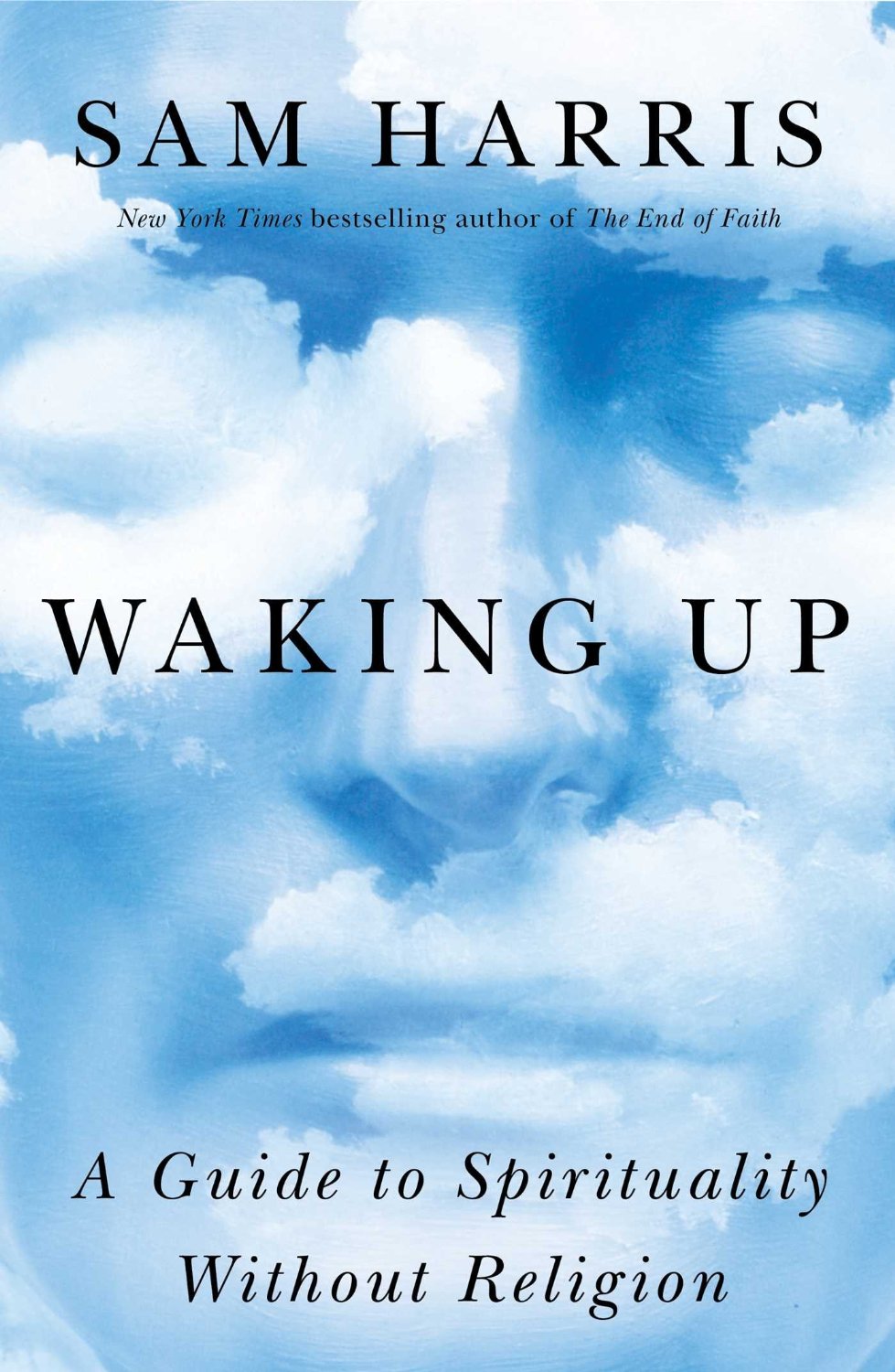
WakingUpI am in two minds about Sam Harris’s Waking Up. Literally. I haven’t read Harris since The End of Faith, and I have to admit that I found Waking Up to be a very engaging book. I can’t agree with everything Harris writes—that’s an occupational hazard of acquiring advanced degrees—but to have a scientist, an atheist no less, praise spirituality felt incredibly genuine. Spiritual experiences happen. I’ve had a few doozies over the years. I’ve also read a number of scientists who tell me they’re all an illusion. Harris admits that consciousness is a mystery. His use of “mind” instead of “brain” won me over from the beginning. I discovered that the atheist can also be a seeker. Dogmatism, of whatever stripe, is the enemy.

Harris has considerable experience meditating. This is no activity for posers or wimps. It is, despite minimal physical demands, hard work. Throughout the book we get the sense that Buddhism is among the least objectionable religions, when divested of its myths. I do wonder, however, if demythologized Christianity was ever given a fair chance. From my own experience, some of the selflessness advocated by Harris can be found in taking aspects of Christianity seriously. I understand, I think, Harris’s objections to religion. It can, and does, lead to horrors both obvious and subtle. Yet, every once in a perhaps great while, it does offer redemption. Meditation, for example, has its roots in religious practice. It is this that Harris calls spirituality. And it is good.

A Guide to Spirituality without Religion is an apt subtitle for this brutally honest and open book. Harris’s knowledge as a neuroscientist endows his ideas with great authority. He opines, and he is not alone, that meditation demonstrates that “I” is only an illusion. This loss of self will haunt me for some time. For decades I is all I seem to have. Still, I am pleased to find an open-minded scientist on this same path I tread. Raised to be both spiritual and religious set the trajectory of my otherwise logic-driven life. You can’t go back and change all that, but you can grow up. To read of Harris’s spiritual experiences in the geography of great spiritual masters as well as in the laboratory instill in this reader a profound hope. Whether or not this reader is merely an illusion. There may be morning after this long night, after all.